Infiray TH50 V2 Thermal Scope — Is £1,600 the Sweet Spot?
By Peter Makulek · Senior Optics Editor · · Live prices from UK retailers
The Infiray TH50 V2 has rapidly become one of the most talked-about thermal rifle scopes in UK shooting circles, largely because it sits at a price point — around £1,600 — that would have been unthinkable for a 50 mm objective thermal optic just a few years ago. For foxers, pest controllers, and deer stalkers who work at night or in low-light conditions, this scope promises a genuine step up from entry-level thermals without demanding the £3,000-plus outlay that flagship units from Pulsar or Thermion still command. But does it truly deliver at this price, or are corners being cut? This guide breaks it all down for UK buyers.
Thermal imaging scopes detect infrared radiation emitted by warm bodies — mammals, birds, even residual heat on the ground — and render it as an on-screen image regardless of ambient light. Unlike traditional night vision, which amplifies existing photons and struggles in total darkness, a thermal scope works in pitch black, fog, and even light rain. For UK night shooting — whether you are lamping foxes across arable fields or controlling rabbits on a permission — thermal gives you target identification at distances that would be impossible with a lamp and conventional optic.
The TH50 V2 sits in what we might call the 'serious mid-range' bracket. It uses a 384×288 pixel, 12 µm VOx sensor paired with a 50 mm germanium objective lens, which Infiray quotes as giving a detection range exceeding 2,000 metres on a human-sized target. Detection range is not the same as identification or shot-taking range, and we will explain the distinction below, but these are strong numbers for a scope at this price. The V2 revision brought improvements to the image processing algorithm, a faster refresh rate, and a more intuitive menu system compared to the original TH50.
For UK shooters specifically, the TH50 V2 appeals across several disciplines. Fox controllers using centrefire rifles chambered in .223 Remington or .243 Winchester will find the 2× base magnification and 4× digital zoom adequate for typical engagement distances of 80–250 yards across British farmland. Deer stalkers — noting that thermal scopes may only be used where lawful and appropriate, and not during close seasons — can benefit from thermal for observation and target acquisition in approved night-shooting situations. Meanwhile, FAC air rifle users tackling rabbit or corvid populations may find the TH50 V2 somewhat over-specified, but it remains a versatile tool if budget allows.
Top Picks — Live UK Prices
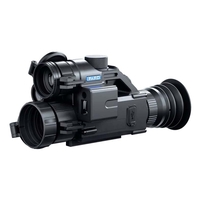
Pard Landsat 256 Mini Mulit-Spectral LRF Thermal/Night Vision Scope
via Uttings
£599.00
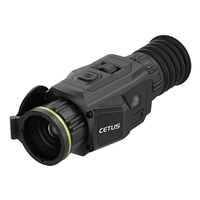
Pixfra Cetus C225 Thermal (256x192) Rifle Scope
via Uttings
£679.95
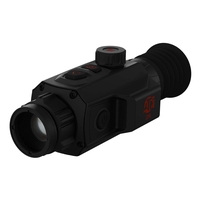
ATN Thor 6 Mini 215 (2-16x) Compact Thermal (256x192) Rifle Scope
via Uttings
£699.00
Buying Advice
Understanding the core specifications of a thermal scope like the TH50 V2 is essential before committing to a purchase. The sensor resolution of 384×288 gives you 110,592 pixels — enough for a clean image at moderate magnifications but noticeably grainier than the 640×512 sensors found in premium units costing £3,000 and above. The 12 µm pixel pitch is the current standard for mid-range thermals and represents good sensitivity. NETD (Noise Equivalent Temperature Difference) of ≤25 mK means the sensor can distinguish temperature differences as small as 0.025°C, which is critical for picking out a fox bedded down in long grass. The 50 Hz refresh rate on the V2 delivers smooth panning with minimal image lag — a significant improvement over older 25 Hz models that could blur when sweeping across a hedgerow.
In GBP terms, the UK thermal scope market broadly divides into three tiers. Below £1,000 you find clip-on modules and basic hand-held monoculars — useful for observation but rarely satisfying as a primary rifle scope. Between £1,000 and £2,000, where the TH50 V2 sits, you get dedicated rifle scopes with 384-pixel sensors, respectable detection ranges, and usable digital zoom; this is the bracket that has exploded in popularity among UK pest controllers. Above £2,000, and particularly above £3,000, you enter 640-sensor territory with superior image clarity, longer battery life, Wi-Fi streaming, and premium build quality from brands like Pulsar and Guide. The TH50 V2 punches into this tier's territory on several metrics, which is precisely why it has generated so much interest.
Common mistakes UK buyers make when purchasing a thermal scope include overvaluing detection range figures and undervaluing image quality. A quoted detection range of 2,000 m means the scope can register a heat signature at that distance — it does not mean you can identify the target as a fox versus a badger, let alone place an ethical shot. Recognition range, typically around half the detection figure, is far more relevant. Another frequent error is neglecting zero retention: cheaper thermals can lose zero under recoil from centrefire rifles. The TH50 V2 reportedly holds zero well on .223 and .308 platforms, but always confirm with the retailer's return policy before committing. Finally, many buyers forget that thermal scopes cannot see through glass, so shooting from inside a vehicle with windows closed is not viable.
UK-specific context is critical when choosing a thermal scope. In England and Wales, there is no general prohibition on owning a thermal scope, but its use must comply with the conditions on your Firearms Certificate and any permissions you hold. If you are foxing on a permission, ensure the landowner is aware you are using thermal and that your FAC conditions cover night shooting if relevant. In Scotland, additional restrictions may apply — always check with Police Scotland or BASC Scotland. For deer, thermal observation aids are increasingly common, but using a thermal scope as your primary sighting device for deer is subject to the specific legal requirements around approved firearms and ammunition for each deer species. Close seasons for roe does (1 April–31 October in England and Wales) and all deer species must be respected regardless of equipment. Purchase from reputable UK dealers — companies such as Thomas Jacks, Nitesite, Optics Warehouse, and CHGBB stock Infiray products with UK warranty support.
Matching the TH50 V2 to your use case requires honest assessment of your shooting. If you predominantly fox over open arable land at 100–300 yards, the 384-sensor and 50 mm objective deliver an excellent balance of field of view and detection range. For woodland stalking at closer quarters, consider whether the 2× base magnification gives you a wide enough field of view through dense cover — some shooters prefer a 35 mm objective model with wider FoV for driven or walked-up work, even though detection range is shorter. If you shoot high-volume pest control year-round, battery life matters: the TH50 V2 claims around six to eight hours on a single charge, but cold weather and high screen brightness reduce this, so carry a spare battery or a USB power bank compatible with the scope's charging port.
The brand landscape for thermal scopes in the UK market has shifted dramatically. Pulsar remains the dominant name at the premium end, with the Thermion 2 and Thermion 2 LRF holding strong positions. Guide Sensmart has carved out a niche with competitive pricing. Infiray — also trading through its subsidiary iRay — has emerged as perhaps the most disruptive force in the £1,000–£2,000 bracket, offering specifications that rival units costing considerably more. The TH50 V2 competes directly with the Pulsar Thermion XM30 and the Guide TU Series, and on paper it matches or exceeds both in sensor sensitivity and refresh rate. Aftermarket support and firmware updates are an area where Pulsar still leads, but Infiray's UK distributor network is maturing. As with any optic, buy from a UK-authorised dealer to ensure warranty coverage and access to servicing.
Frequently Asked Questions
What sensor does the Infiray TH50 V2 use and how does it compare to 640-pixel thermals?
The TH50 V2 uses a 384×288 resolution VOx uncooled microbolometer with a 12 µm pixel pitch. This delivers a clear image at moderate magnifications and is more than adequate for identifying quarry at typical UK shooting distances of 50–300 yards. A 640×512 sensor offers roughly three times the pixel count, which translates to a noticeably sharper image and better identification at extreme range, but those scopes typically cost £2,500 to £4,000 or more. For most UK foxing and pest control scenarios, the 384 sensor is the sweet spot in terms of performance per pound spent.
Does the TH50 V2 hold zero on centrefire rifles?
Reports from UK shooters using the TH50 V2 on .223 Remington, .243 Winchester, and even .308 Winchester rifles indicate that zero retention is generally reliable. The V2 revision incorporated a more robust internal mounting mechanism than the original TH50. That said, always torque your rings or mount to the manufacturer's specification and confirm zero before each outing. If you are using a particularly heavy-recoiling calibre, consult the dealer about suitability and keep receipts in case you need to exercise warranty or return rights.
Can I use a thermal scope like the TH50 V2 for deer stalking in the UK?
Thermal scopes may be used for deer observation and, in certain circumstances, for shooting — but strict legal requirements govern the firearms and ammunition approved for each deer species, and close seasons must be respected. In England and Wales, the Deer Act 1991 sets out these requirements; Scotland has its own legislation under the Deer (Scotland) Act 1996. Always ensure that your Firearms Certificate conditions permit the use of your chosen equipment in the manner intended. Contact BASC, the British Deer Society, or your local police firearms licensing department for up-to-date guidance specific to your situation.
What is the difference between detection range and recognition range?
Detection range is the maximum distance at which the thermal sensor can register a heat signature — typically quoted against a 1.7 m × 0.5 m target (approximating a standing person). Recognition range is the distance at which you can identify what the target actually is, and it is usually around 40–50% of the detection figure. For ethical shooting, you need to positively identify your quarry before pulling the trigger, so recognition range is the more meaningful specification. On the TH50 V2, a detection range exceeding 2,000 m translates to a practical recognition range of roughly 800–1,000 m under good conditions.
How long does the TH50 V2 battery last in cold UK winter conditions?
Infiray quotes approximately six to eight hours of continuous use, but real-world performance in a British winter — where temperatures routinely drop to 0°C or below during night shoots — can reduce this by 20–30%. Screen brightness, Wi-Fi streaming (if enabled), and frequent use of digital zoom also increase power draw. It is sensible to carry a spare rechargeable battery or a compatible USB-C power bank. Some UK shooters report getting a full night's foxing (four to five hours) from a single charge in sub-zero temperatures, which is adequate if you plan ahead.
Is the TH50 V2 suitable for sub-12 ft-lb air rifle use?
You can physically mount the TH50 V2 on a sub-12 ft-lb air rifle, and the negligible recoil of a PCP air rifle will not damage the scope. However, the TH50 V2's 2× base magnification and thermal imaging characteristics are arguably over-specified for sub-12 ft-lb use, where humane-kill distances on rabbits and squirrels are limited to roughly 35–45 yards. At those ranges, a lower-cost thermal monocular combined with a conventional scope might offer better value. If you also shoot centrefire or FAC air, the TH50 V2 becomes a more logical dual-purpose investment.
Where can I buy the Infiray TH50 V2 in the UK with warranty support?
Several established UK dealers stock Infiray thermal products, including Thomas Jacks (the official UK distributor for many Infiray lines), Optics Warehouse, CHGBB, and various independent firearms dealers. Prices hover around the £1,500–£1,700 mark depending on any bundled accessories. Always buy from a UK-authorised retailer to ensure you receive a valid UK warranty, access to firmware updates, and proper after-sales service. Avoid grey imports, which may lack UK-spec firmware, correct mains charger adapters, or enforceable warranty terms.
Can the TH50 V2 record video and stream to a phone?
Yes, the TH50 V2 includes built-in video recording and can store footage on an internal memory card. It also supports Wi-Fi connectivity, allowing you to stream the thermal image to a smartphone or tablet via the Infiray Outdoor app. This is useful for showing a companion what you are seeing, reviewing shots after a session, or sharing footage with landowners as evidence of pest control work. Video quality is functional rather than cinematic — adequate for documentation and social media but not broadcast-grade.
How does the TH50 V2 cope with rain, fog, and British weather?
Thermal imaging is less affected by poor weather than traditional night vision or lamp-based shooting. The TH50 V2 can detect heat signatures through light rain and mist, though heavy downpour will degrade the image noticeably because water droplets absorb infrared radiation. Fog reduces contrast and effective range but does not blind the sensor entirely. The scope carries an IP67 weather-resistance rating, meaning it is sealed against dust and can withstand temporary submersion — more than adequate for a wet January night on a Midlands permission. Always dry the scope and store it properly after use to prevent moisture damage to the battery contacts.
Related guides
Our expert-tested guide to the best thermal spotter monoculars under £1,000 for UK deer stalking and foxing.
HIKMICRO Stellar 3.0 Price Reductions ExplainedHIKMICRO Stellar 3.0 thermal scope prices have dropped across UK dealers. Our 2026 guide covers what you get, how it compares…
GOYOJO GRL335 Thermal Scope – Initial UK ThoughtsFirst impressions of the GOYOJO GRL335 thermal scope for UK shooters. We cover specs, image quality, build, value for money…
Thermal & Night Vision Optics: UK Buyer's Guide 2026Expert UK guide to thermal and night vision rifle scopes for 2026. FFP vs SFP, MOA vs MRAD, legal considerations, budget tiers in GBP…
Pulsar Helion XP38 Thermal Monocular GuideComprehensive UK buyer's guide to the Pulsar Helion XP38 thermal monocular. Covers specs, use cases, budget tiers…
TKN-1 Night Vision Periscope: Your Questions AnsweredExplore the TKN-1 night vision periscope with real pictures, technical breakdown, and UK-relevant buying advice.
Goyojo GRL635 640 Thermal Scope – First LookFirst look at the Goyojo GRL635 640 thermal scope for UK shooters. We explore its 640-resolution sensor, key specs…
Not sure which scope is right for you?
Try our AI-powered scope finder — answer a few questions and get personalised recommendations.
Find My Scope →Get a UK scope tip every day
Follow AiScopes on Facebook for daily buying guides, deals and gear advice.
Follow on Facebook