Pulsar Helion XP38 Thermal Monocular Guide
By Peter Makulek · Senior Optics Editor · · Live prices from UK retailers
Thermal imaging has transformed how UK stalkers, pest controllers and gamekeepers work after dark. The Pulsar Helion XP38 sits in a sweet spot that many UK users gravitate towards: a handheld thermal monocular with a 38 mm objective that balances detection range, field of view and portability. Unlike a clip-on or dedicated thermal riflescope, a monocular like the Helion XP38 is not mounted to a firearm, making it a versatile scouting and observation tool for surveying fields of rabbits, scanning hedgerows for foxes, or assessing deer movement before a stalk.
Pulsar is one of the most established names in thermal and night-vision optics available to UK shooters. Their Helion line has earned a strong reputation for build quality, intuitive menus and solid after-sales support through UK distributors. The XP38 variant uses a 640×480 microbolometer sensor paired with a 38 mm germanium lens, delivering a NETD (noise equivalent temperature difference) that allows clear heat signatures in challenging British weather — fog, drizzle and low ambient temperatures included.
Choosing a thermal monocular over a thermal scope is a deliberate decision. A monocular keeps your observation legally separate from your firearm and lets you use the same device across disciplines — from lamping foxes on an FAC-rated rifle setup to scanning for muntjac from a high seat. The Helion XP38 is also popular with professional pest controllers who need to glass large areas quickly before committing to a shot with a separate weapon-mounted optic such as a Pulsar Thermion or a HikMicro Thunder.
In this guide we break down what the Helion XP38 offers UK users in practical terms, how it compares across price tiers, what to look for if you are considering alternatives from brands like HikMicro or Pulsar's own wider range, and the UK-specific legal and practical factors that should shape your purchase decision. Whether you are a part-time rabbit controller or a full-time deer manager, understanding the nuances of thermal monocular specifications will save you hundreds of pounds and a great deal of frustration.
Top Picks — Live UK Prices
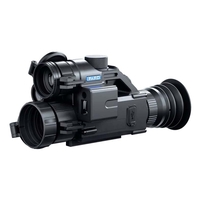
Pard Landsat 256 Mini Mulit-Spectral LRF Thermal/Night Vision Scope
via Uttings
£599.00
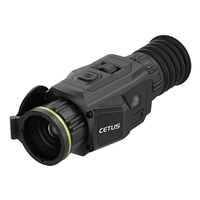
Pixfra Cetus C225 Thermal (256x192) Rifle Scope
via Uttings
£679.95
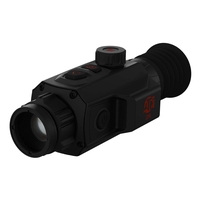
ATN Thor 6 Mini 215 (2-16x) Compact Thermal (256x192) Rifle Scope
via Uttings
£699.00
Buying Advice
The headline specs on any thermal monocular are sensor resolution, NETD, lens diameter and refresh rate. The Helion XP38's 640×480 sensor is a significant step up from 384×288 units, delivering a noticeably crisper image that makes it easier to distinguish between a fox and a hare at range. NETD — typically quoted below 50 mK on the Helion XP38 — tells you how sensitive the detector is to small temperature differences; lower is better, especially in mild UK autumns when ambient and body temperatures converge. The 38 mm lens gives a useful balance: wide enough for good detection range but not so large that the unit becomes unwieldy. Refresh rate at 50 Hz keeps the image smooth when panning across a field.
In the UK market, thermal monoculars sit in broadly three budget tiers. Entry-level units from HikMicro and Pulsar's Axion line start from roughly £800–£1,400 and use 384×288 sensors with smaller objectives — adequate for short-range pest control but limited beyond 200–300 metres of detection. Mid-range devices like the Helion XP38 typically fall between £2,000 and £3,000, offering 640×480 sensors, better NETD and more refined software with Wi-Fi streaming and recording. At the top end, above £3,500, you find units with 12 µm pitch sensors, longer-range lenses (50 mm+) and integrated laser rangefinders. Choose the tier that matches your realistic detection-range needs and budget.
A common mistake UK buyers make is conflating detection range with identification range. A manufacturer may quote a detection range of 1,800 metres, but that means you can see that a heat source exists — not that you can tell if it is a fox, a badger (which is protected) or a domestic cat. Identification range is typically a third to a half of detection range, depending on conditions. Another frequent error is buying a thermal monocular expecting it to serve as a weapon sight. The Helion XP38 is not recoil-rated for mounting on a rifle, and attempting to do so will void any warranty and risk damaging the sensor. If you need a weapon-mounted thermal, look at dedicated thermal scopes or clip-on systems.
UK-specific context matters enormously. Using thermal for deer stalking observation is entirely lawful, but remember that shooting deer at night requires specific authorisation — in England and Wales this means a licence from Natural England or the relevant authority, and conditions vary by deer species and season. For foxing and rabbit control at night, thermal monoculars paired with a separate lamp or thermal scope on a centrefire or rimfire rifle is a common professional setup. Scotland's Air Weapon Certificate regime means even airgun users doing pest control should ensure all their equipment and activities are properly authorised. Always check with your local police firearms licensing department or BASC for current guidance.
Matching the monocular to your use case is critical. If you primarily manage a small rabbit permission of 50–100 acres with hedgerow boundaries, a 384-sensor monocular with a 19 mm or 25 mm lens may be perfectly adequate and save you over a thousand pounds. If you are a professional deer manager scanning 500+ acres of open hill ground in Scotland or large arable estates in East Anglia, the 640×480 sensor and 38 mm lens of the Helion XP38 earn their premium. Consider battery life too — the Helion XP38 uses Pulsar's removable IPS battery packs, and carrying a spare is essential for long winter nights. Wi-Fi streaming to a phone is useful for showing landowners footage or logging pest-control records.
The brand landscape for thermal monoculars in the UK is dominated by Pulsar and HikMicro, with smaller shares held by Guide Sensmart, InfiRay and others. Pulsar benefits from long-established UK distribution, widespread dealer support and a mature app ecosystem via Stream Vision. HikMicro offers aggressive pricing and increasingly competitive sensor technology, making their Falcon and Gryphon lines serious mid-range rivals. Established optics brands like Swarovski and Leupold have thermal offerings, but at substantially higher price points that appeal mainly to well-funded stalkers or professional outfitters. Vortex has yet to make major inroads into thermal in the UK. For most UK shooters balancing performance and value, Pulsar remains the benchmark — and the Helion XP38 exemplifies why.
Frequently Asked Questions
Can I mount the Pulsar Helion XP38 on a rifle as a thermal scope?
No. The Helion XP38 is a handheld thermal monocular designed for observation and scouting, not as a weapon sight. It is not recoil-rated and lacks a reticle system for aiming. If you need a weapon-mounted thermal optic, consider Pulsar's Thermion range or a dedicated clip-on thermal unit that attaches in front of your existing day scope.
What is the realistic identification range of the Helion XP38 on a fox-sized target?
While Pulsar quotes detection ranges well beyond 1,000 metres, practical identification of a fox-sized animal in typical UK conditions is more realistically in the region of 400–700 metres, depending on humidity, temperature differential and background clutter. Detection range means you can see a heat source exists; identification means you can confirm the species, which is critical for legal and ethical shooting.
How long does the battery last on the Helion XP38?
Pulsar quotes approximately 8 hours on a single IPS7 battery pack, though real-world use with Wi-Fi streaming, frequent colour palette changes and cold weather can reduce this. The removable IPS battery system allows hot-swapping, so carrying one or two spares is strongly recommended for extended sessions. Spare batteries and an external charger are widely available from UK Pulsar stockists.
Is it legal to use a thermal monocular for deer stalking in the UK?
Using a thermal monocular for observation and planning during deer stalking is lawful. However, shooting deer at night is subject to specific authorisation requirements that vary across England, Wales, Scotland and Northern Ireland. Night shooting of deer without the appropriate licence is an offence. Always consult your local police firearms licensing department, Natural England, NatureScot or BASC for current regulations before undertaking any night-time deer management.
What is the difference between a 384 and 640 sensor resolution in thermal monoculars?
A 640×480 sensor, as used in the Helion XP38, has roughly 2.8 times as many pixels as a 384×288 sensor. This translates directly into a sharper, more detailed thermal image, which extends your practical identification range and makes it easier to distinguish between species at distance. For professional use or scanning large areas, the 640 sensor is a worthwhile investment, though 384 units remain perfectly capable for shorter-range pest control.
How does the Helion XP38 compare to HikMicro thermal monoculars?
HikMicro's competing models, such as the Falcon and Gryphon ranges, offer strong value and increasingly competitive image quality. The Helion XP38 generally holds an edge in software maturity, colour palette options and the Stream Vision app ecosystem. HikMicro units often undercut Pulsar on price at equivalent sensor specifications. Both brands have solid UK dealer networks, so the choice often comes down to personal preference in ergonomics and budget.
Can I record video and stream footage from the Helion XP38?
Yes. The Helion XP38 has built-in video recording to onboard memory and supports Wi-Fi streaming to a smartphone or tablet via Pulsar's Stream Vision app. This is useful for sharing footage with landowners, logging pest-control activity for compliance records, or simply reviewing animal behaviour. Recorded footage can be exported and shared directly from the app.
Is the Helion XP38 waterproof enough for typical UK conditions?
The Helion XP38 carries an IPX7 rating, meaning it can withstand temporary submersion in up to one metre of water. In practical terms, it handles rain, drizzle and damp British field conditions without issue. However, it is good practice to dry the unit thoroughly after use in wet weather and store it in its case to protect the germanium lens from condensation or accidental damage.
What accessories should I buy alongside the Helion XP38?
At a minimum, invest in one or two spare IPS battery packs and an external charger so you can rotate batteries during long sessions. A quality neck strap or lanyard prevents drops in the dark. A protective lens cap and microfibre cloth will preserve the germanium objective lens. Some users also find a tripod adaptor useful for extended static observation, particularly when scanning from a vehicle or high seat.
Related guides
Considering an ex-demo Pulsar Symbian DXT50 thermal binocular at £2,750? Our 2026 UK guide covers specs, what to check, alternatives, and how to buy smart.
Best Thermal Monoculars Under £1,000 for UK Stalking & FoxingOur expert-tested guide to the best thermal spotter monoculars under £1,000 for UK deer stalking and foxing.
HIKMICRO Stellar 3.0 Price Reductions ExplainedHIKMICRO Stellar 3.0 thermal scope prices have dropped across UK dealers. Our 2026 guide covers what you get, how it compares…
GOYOJO GRL335 Thermal Scope – Initial UK ThoughtsFirst impressions of the GOYOJO GRL335 thermal scope for UK shooters. We cover specs, image quality, build, value for money…
Infiray TH50 V2 Thermal Scope — Is £1,600 the Sweet Spot?Is the Infiray TH50 V2 thermal scope worth £1,600 for UK night shooting? Our 2026 guide covers specs, detection range, rivals, and where to buy in the UK.
Urban Precision Rifle Optics: UK Buyer's GuideChoosing a scope for urban precision rifle shooting in the UK? Our 2026 guide covers magnification, reticle, turret specs…
Discovery XED 6-36×56: Is It Worth It for UK Shooters?In-depth UK guide to the Discovery Optics XED 6-36×56 FFP rifle scope. We cover reticle, turrets, parallax, build quality, and how it compares to Vortex…
Not sure which scope is right for you?
Try our AI-powered scope finder — answer a few questions and get personalised recommendations.
Find My Scope →Get a UK scope tip every day
Follow AiScopes on Facebook for daily buying guides, deals and gear advice.
Follow on Facebook