PARD vs Pulsar: Which Thermal Scope Brand for UK Shooters?
By Peter Makulek · Senior Optics Editor · · Live prices from UK retailers
PARD and Pulsar are two of the most visible thermal riflescope brands on UK retailer shelves, and they are aimed at genuinely different parts of the market — which makes them a useful comparison rather than a straight like-for-like contest. Pulsar, through its Thermion 2 and Talion ranges, has been the default choice for UK fox shooters and stalkers for years. PARD, through its Pantera riflescope range, has grown quickly on the strength of aggressive pricing and, on some models, sensor specifications that genuinely compete with scopes costing considerably more.
The comparison that actually matters to a UK buyer is not “which brand is better” in the abstract, but which one gets you the sensor resolution, sensitivity and features you need at the price you are prepared to pay. On paper the two brands overlap heavily in sensor generation — both sell 384×288 and 640-class thermal sensors — but they price and package those sensors very differently, and that difference is where most buying decisions actually get made.
This guide compares PARD's Pantera range against Pulsar's Thermion 2 and Talion lines across sensor resolution and NETD, integrated features like laser rangefinding, and current UK retail prices — not manufacturer list prices, which frequently do not reflect what you will actually pay.
The UK legal position is identical regardless of which brand's scope is mounted on the rifle. Fox and rabbit control at night is legal with the landowner's permission and needs no separate licence for the optic itself. Deer are different: night shooting of deer requires a specific licence from Natural England, Natural Resources Wales or NatureScot depending on jurisdiction, whichever brand of thermal scope you are using. Buying the right scope solves an optical problem, not a legal one.
Top Picks — Live UK Prices
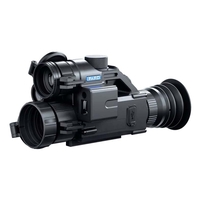
Pard Landsat 256 Mini Mulit-Spectral LRF Thermal/Night Vision Scope
via Uttings
£599.00
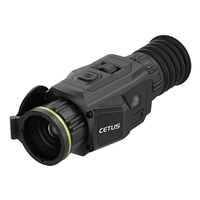
Pixfra Cetus C225 Thermal (256x192) Rifle Scope
via Uttings
£679.95
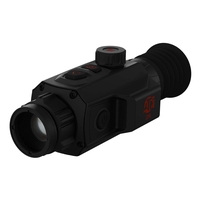
ATN Thor 6 Mini 215 (2-16x) Compact Thermal (256x192) Rifle Scope
via Uttings
£699.00
Buying Advice
At a genuinely comparable price point, PARD currently undercuts Pulsar on raw sensor specification. The PARD Pantera EX 640, at £2,499.99, pairs a 640×512 sensor with a ≤14mK NETD rating and a circular OLED display — on paper, a higher resolution and more sensitive sensor than Pulsar's closest-priced model, the Thermion 2 LRF XQ50 Pro at £2,659.95, which uses a 384×288 sensor at sub-25mK NETD with a built-in 800m laser rangefinder. Comparing purely on sensor numbers, the PARD looks like significantly better value; comparing on the whole package — Pulsar's integrated LRF, its longer-established UK service network and its Stream Vision app ecosystem — the picture is less one-sided.
In the mid tier, the PARD Pantera 384 Mini with LRF (£1,399.00) and the Pulsar Talion XQ35 Pro (£1,989.95) both use a 384×288 sensor, and both include useful extras — the PARD has an integrated laser rangefinder as standard, the Talion does not at this price point. The practical difference buyers notice most is magnification range: the Pantera Mini's 2.4x–3.4x window is narrow and close to fixed, built for a compact, lightweight scope rather than a variable-power one, while the Talion's 2.5x–10x range gives genuinely useful zoom across a wider spread of shot distances. For close-range vermin work where weight and an integrated rangefinder matter more than magnification, the PARD is the more specialised tool; for a single scope covering a wider spread of distances, the Talion earns its extra cost.
At the true entry level, PARD covers ground Pulsar's dedicated riflescope range simply does not reach. The PARD Pantera 256Q, at £739.00, is a genuine thermal riflescope built around a 256-class sensor aimed squarely at vermin control — Pulsar's cheapest current Thermion 2 or Talion riflescope, the Talion XQ35 Pro, costs £1,989.95, well over double. If your budget realistically tops out under £1,000 and your quarry is rats, rabbits and the occasional close-range fox rather than longer-distance deer or foxing work, PARD's entry tier is worth serious consideration on value alone — a 256-class sensor resolves less detail at range than a 384 or 640-class unit, but it is a genuine, purpose-built thermal riflescope rather than a compromise.
Sensor specification on a spec sheet is only part of the buying decision, and it is worth being honest about where Pulsar's higher prices are going. Pulsar's Stream Vision 2 app and firmware update ecosystem is more mature than PARD's equivalent software, and Pulsar's UK dealer and repair network, built up over a decade of being the default UK thermal brand, is more extensive. PARD's software and UK support infrastructure have both improved substantially in recent years and are genuinely usable, but buyers who value a long-established repair and warranty pathway more than headline sensor numbers should weigh that into the price difference rather than treating the two brands as interchangeable at the same sensor spec.
Match the brand to what you actually shoot rather than to sensor numbers alone. A UK fox controller on a tight budget, working mostly at closer range, is well served by PARD's Pantera 256Q or 384 Mini — genuine thermal capability at a price Pulsar simply does not compete at. A shooter who wants the widest possible magnification range, an established UK service network, and is prepared to pay for it, is better served by Pulsar's Thermion 2 or Talion ranges. A buyer chasing outright sensor specification at the lowest possible price per pixel — resolution and NETD, not brand reputation — currently finds the PARD Pantera EX 640 hard to beat at its price point.
Both brands are stocked by the same major UK thermal retailers, with consistent UK-warrantied pricing across the main dealers — a sign of a settled UK market rather than a short-term promotion. Mounting hardware is brand- and model-specific for both PARD and Pulsar, so budget for the correct quick-release mount separately rather than assuming compatibility across brands or even across a single brand's different scope bodies.
Frequently Asked Questions
Is PARD as good as Pulsar for UK thermal shooting?
It depends which models you compare. At a similar price, PARD's Pantera EX 640 offers a higher-resolution 640×512 sensor and lower (better) NETD than Pulsar's closest-priced Thermion 2 model, which makes PARD look like strong value on paper. Pulsar's advantage is a more mature software ecosystem, integrated laser rangefinding on more models, and a longer-established UK dealer and repair network — factors that matter more to some buyers than raw sensor specification.
What is the cheapest genuine thermal riflescope for UK fox control?
The PARD Pantera 256Q, at £739.00, is the most affordable dedicated thermal riflescope from either brand covered in this guide, built around a 256-class sensor aimed at vermin and close-range fox control. Pulsar's cheapest current riflescope, the Talion XQ35 Pro, costs £1,989.95 — well over double — so PARD is genuinely the only option of the two brands under roughly £1,000.
Does PARD or Pulsar have better UK after-sales support?
Pulsar has the more established UK infrastructure, with a long-standing dealer and repair network and a mature Stream Vision 2 app and firmware ecosystem. PARD's UK support has improved significantly and is genuinely usable, but buyers who prioritise a long track record of UK warranty and repair service over sensor specification should factor that into the decision, not just the price difference.
What sensor resolution do I need for UK fox and deer work?
For fox control at typical UK engagement distances, a 384-class sensor with sub-25mK NETD, available from both brands at broadly similar prices, is genuinely capable. A 640-class sensor, such as PARD's Pantera EX 640 or Pulsar's Thermion 2 XP50 Pro, resolves noticeably more detail at longer range and is worth the extra cost if you regularly shoot across open ground at distance rather than working closer cover.
Can I use a PARD or Pulsar thermal scope for deer stalking at night in the UK?
The scope itself is legal to own and mount regardless of brand, but shooting deer at night additionally requires a specific licence from Natural England, Natural Resources Wales or NatureScot depending on where you are — neither a PARD nor a Pulsar thermal scope grants that authorisation on its own. Fox and rabbit control at night needs only the landowner's permission.
Related guides
Comprehensive UK buyer's guide to the Pulsar Helion XP38 thermal monocular. Covers specs, use cases, budget tiers…
Pulsar Symbian DXT50 Thermal Binocular: Ex-Demo Buying GuideConsidering an ex-demo Pulsar Symbian DXT50 thermal binocular at £2,750? Our 2026 UK guide covers specs, what to check, alternatives, and how to buy smart.
Pulsar Thermion 2 vs Talion: Which Thermal Scope for UK Shooters?Choosing between Pulsar's Thermion 2 and Talion thermal riflescopes? Compare real 2026 UK prices, sensors and magnification ranges.
Best Thermal Monoculars Under £1,000 for UK Stalking & FoxingOur expert-tested guide to the best thermal spotter monoculars under £1,000 for UK deer stalking and foxing.
HIKMICRO Stellar 3.0 Price Reductions ExplainedHIKMICRO Stellar 3.0 thermal scope prices have dropped across UK dealers. Our 2026 guide covers what you get, how it compares…
Best Air-Rifle Ballistic Apps & Building Reticle Aim PointsChairgun is gone — discover the best air-rifle ballistic apps for UK shooters in 2026, plus how to build accurate reticle aim points for sub-12 and FAC…
Not sure which scope is right for you?
Try our AI-powered scope finder — answer a few questions and get personalised recommendations.
Find My Scope →Get a UK scope tip every day
Follow AiScopes on Facebook for daily buying guides, deals and gear advice.
Follow on Facebook