Pulsar Symbian DXT50 Thermal Binocular: Ex-Demo Buying Guide
By Peter Makulek · Senior Optics Editor · · Live prices from UK retailers
Thermal binoculars have transformed the way UK stalkers, pest controllers, and land managers survey terrain after dark. Unlike a thermal scope mounted on a rifle, a handheld thermal binocular such as the Pulsar Symbian DXT50 allows you to scan fields, hedgerows, and woodland edges without pointing a firearm at anything — a critical distinction under UK firearms safety culture. For anyone working foxes at night under lamplight or identifying deer movement before a dawn stalk, a quality thermal binocular is arguably more useful than a riflescope-mounted unit, because it separates detection from engagement and keeps you legal and safe at all times.
The Pulsar Symbian DXT50 is a dedicated thermal imaging binocular featuring a 50 mm objective lens and a 640×480 microbolometer sensor, giving it a generous detection range that suits open farmland, moorland, and the mid-range woodlands typical of British shooting permissions. Its binocular eyepiece design reduces fatigue during extended observation sessions compared to monoculars, and it includes onboard recording, Wi-Fi streaming, and multiple colour palettes. At full retail these units sit at a premium price point, but at an ex-demo price of around £2,750 they become significantly more accessible — provided you know what to inspect before buying.
Buying ex-demo or refurbished thermal kit is increasingly common in the UK market. Dealers such as those listed on AIScopes regularly rotate demonstration stock, and the savings — sometimes 20–30 per cent off retail — can be substantial. However, thermal sensors are delicate, and issues like dead pixels, calibration drift, or cosmetic damage to the magnesium housing can erode the value of any bargain. This guide explains what the Symbian DXT50 offers, how it compares to alternatives from Pulsar, HikMicro, and others, and exactly what to check on an ex-demo unit before handing over your money.
We have structured this guide around UK-specific use cases: foxing over lambing fields, pre-stalk reconnaissance for roe and muntjac, rabbit and corvid survey work, and general land management. We will also place the Symbian DXT50 within the broader landscape of thermal devices — from entry-level monoculars at a few hundred pounds up to premium clip-on and riflescope systems costing well north of £5,000 — so you can judge whether this particular unit, at this price, truly fits your requirements.
Top Picks — Live UK Prices
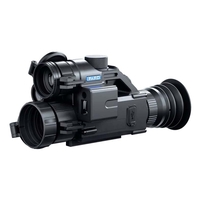
Pard Landsat 256 Mini Mulit-Spectral LRF Thermal/Night Vision Scope
via Uttings
£599.00
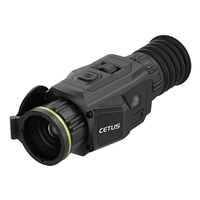
Pixfra Cetus C225 Thermal (256x192) Rifle Scope
via Uttings
£679.95
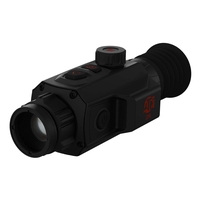
ATN Thor 6 Mini 215 (2-16x) Compact Thermal (256x192) Rifle Scope
via Uttings
£699.00
Buying Advice
The key specifications to interrogate on any thermal binocular are sensor resolution, NETD (noise-equivalent temperature difference), refresh rate, objective lens diameter, and detection range. The Symbian DXT50's 640×480 sensor is a high-resolution core by handheld standards, delivering noticeably crisper imagery than the 384×288 sensors found in budget devices. NETD below 40 mK is considered very good; lower figures mean the unit can distinguish smaller temperature differences, which matters when you are trying to spot a fox lying flat against warm soil. The 50 mm objective gathers plenty of infrared energy for UK conditions, and a 50 Hz refresh rate ensures smooth panning without the judder that plagues cheaper 25 Hz units.
In the UK thermal market, budget handheld monoculars from HikMicro and Pulsar start from roughly £350–£700 for 256- or 384-core units. Mid-range monoculars and entry binoculars sit between £1,000 and £2,500, while premium binoculars and riflescope-grade units run from £2,500 up to £6,000 or more. At £2,750 for an ex-demo Symbian DXT50, you are getting a unit that would retail new for considerably more, placing you firmly in the premium observation tier without paying full freight. Always confirm whether the ex-demo price includes the original carry case, neck strap, lens covers, and — crucially — any remaining manufacturer warranty or dealer guarantee.
Common mistakes UK buyers make with ex-demo thermal kit include failing to test the unit in person, ignoring firmware version, and overlooking cosmetic damage that hints at drops or impacts. Dead or stuck pixels on a thermal sensor are not always visible in a warm shop; ideally, test outdoors or against a cool, uniform background. Check every colour palette and zoom level. Confirm that the Wi-Fi streaming and recording functions work, because a faulty internal board is an expensive fix. Ask the dealer explicitly whether the unit has been factory-recalibrated, and whether any non-uniformity correction (NUC) issues have been addressed.
From a UK-specific standpoint, thermal devices are not firearms accessories in the eyes of the law — you do not need a firearms certificate to purchase or own one. However, using a thermal device in conjunction with a lamp or night-vision for shooting at night typically requires the landowner's permission and, for deer, a specific authorisation from Natural England, NatureScot, or the relevant body. Foxes, rabbits, and certain pest species may be shot at night with the landowner's consent, but always confirm current guidance with BASC or your local firearms licensing department. These devices are sold openly by UK dealers and there are no import restrictions on civilian-grade thermal imagers at the time of writing.
Matching the Symbian DXT50 to your use case is straightforward: if you spend significant time scanning before you shoot — lambing patrols, pre-dawn deer surveys, or vermin reconnaissance across multiple fields — a binocular-format thermal is hard to beat. The twin-eyepiece design is far more comfortable than squinting through a monocular for hours, and the 50 mm lens gives you the detection range to spot a fox-sized target at realistic UK engagement distances. If, however, you primarily need a thermal device mounted on a rifle for direct-engagement pest control, a dedicated thermal riflescope or clip-on from Pulsar, HikMicro, or others will serve you better. Consider whether you need observation, engagement, or both before committing.
In the UK brand landscape, Pulsar remains the dominant name in handheld and riflescope thermal optics, with a strong dealer network and generally responsive warranty service through their UK distributor, Thomas Jacks. HikMicro has gained serious ground in the sub-£1,500 bracket, offering impressive sensor specs at aggressive prices — their Falcon and Condor lines are popular with UK pest controllers. Zeiss and Leupold are better known for daylight glass and currently have limited thermal offerings in the UK. For anyone cross-shopping, compare the Pulsar Merger LRF XL50, the HikMicro Habrok, and the Pulsar Accolade 2 LRF XP50 Pro alongside the Symbian DXT50 to ensure you are getting the feature set and sensor quality that match your budget.
Frequently Asked Questions
What should I check before buying an ex-demo Pulsar Symbian DXT50?
Inspect the sensor for dead or stuck pixels by viewing a cool, uniform surface in every colour palette and at every zoom level. Test Wi-Fi streaming, onboard recording, and the physical controls for any unresponsiveness. Ask the dealer whether the unit has been factory-recalibrated and whether any remaining manufacturer warranty transfers to you.
Is £2,750 a fair price for an ex-demo Symbian DXT50 in 2026?
At around 20–30 per cent below typical new retail pricing, £2,750 represents a reasonable saving provided the unit is in fully functional condition with no significant sensor defects. Always compare against current new prices from authorised UK dealers, as thermal pricing can shift with new model releases. Factor in the value of any remaining warranty coverage.
Do I need a licence to buy a thermal binocular in the UK?
No. Thermal imaging devices are not classified as firearms or controlled items under current UK law, and you do not need a firearms certificate or any other licence to purchase or own one. However, how and when you use a thermal device in conjunction with shooting activities may be subject to specific permissions and regulations — consult BASC or your local police firearms licensing team for current guidance.
Can I use the Symbian DXT50 for deer stalking reconnaissance?
Yes, a thermal binocular is an excellent tool for pre-dawn or dusk surveys to identify deer presence, movement patterns, and approximate numbers before commencing a stalk. It will not replace quality daylight binoculars or a riflescope for species identification and shot placement, but it gives you a significant advantage in locating quarry. Always observe close seasons for your target species.
How does the Symbian DXT50 compare to the Pulsar Merger LRF XL50?
Both feature high-resolution 640×480 sensors and 50 mm objectives, but the Merger LRF XL50 includes a built-in laser rangefinder — a substantial advantage if you need precise distances for subsequent rifle shots. The Symbian DXT50 may offer a price advantage, especially ex-demo, but lacks that rangefinding capability. Your choice depends on whether observation alone suffices or whether integrated ranging is worth the premium.
What is the realistic detection range for a fox-sized target in UK conditions?
With a 640×480 sensor and a 50 mm objective, the Symbian DXT50 can typically detect a fox-sized heat signature well beyond 1,000 metres in open terrain. Recognition and identification ranges will be shorter — often 400–600 metres depending on conditions. Humidity, rain, and fog reduce thermal contrast significantly, so real-world UK performance will vary with the weather.
Is a thermal binocular better than a thermal monocular for UK fieldwork?
For extended observation sessions — lambing patrols, deer surveys, or scanning large permissions — a binocular format is far more comfortable and less fatiguing than a monocular. However, monoculars are lighter, cheaper, and easier to pocket. If your primary need is quick spot-checks rather than prolonged scanning, a quality monocular may be the more practical and cost-effective choice.
What accessories should come with an ex-demo Symbian DXT50?
A complete kit typically includes the binocular unit, neck strap, carry case, lens covers, USB charging cable, and user manual. Missing accessories are not expensive to replace individually, but a significantly incomplete kit may indicate rough handling or suggest the unit was a trade-in rather than a genuine dealer demo. Always confirm the contents with the seller before purchase.
Can I mount the Symbian DXT50 on a tripod for static observation?
Most Pulsar thermal binoculars, including the Symbian DXT50, feature a standard quarter-inch tripod thread on the underside. Mounting on a tripod or a window-clamp is highly recommended for static observation points — particularly on lambing fields or at known fox runs — because it eliminates hand shake and allows you to maintain a steady image at higher magnification settings over long periods.
Related guides
Comprehensive UK buyer's guide to the Pulsar Helion XP38 thermal monocular. Covers specs, use cases, budget tiers…
Best Thermal Monoculars Under £1,000 for UK Stalking & FoxingOur expert-tested guide to the best thermal spotter monoculars under £1,000 for UK deer stalking and foxing.
HIKMICRO Stellar 3.0 Price Reductions ExplainedHIKMICRO Stellar 3.0 thermal scope prices have dropped across UK dealers. Our 2026 guide covers what you get, how it compares…
GOYOJO GRL335 Thermal Scope – Initial UK ThoughtsFirst impressions of the GOYOJO GRL335 thermal scope for UK shooters. We cover specs, image quality, build, value for money…
Infiray TH50 V2 Thermal Scope — Is £1,600 the Sweet Spot?Is the Infiray TH50 V2 thermal scope worth £1,600 for UK night shooting? Our 2026 guide covers specs, detection range, rivals, and where to buy in the UK.
Scope Mounts, Rings & Rails: 2026 UK Buyer's GuideYour 2026 UK guide to scope mounts, rings and rails for air rifles and rimfire rifles. Dovetail vs Picatinny, ring height, return to zero…
Calculate Group Size & MOA With Your iPhoneLearn how to build an iPhone Shortcut that calculates group size in MOA from a photo. Covers sub-12 ft-lb airguns to FAC rifles…
Not sure which scope is right for you?
Try our AI-powered scope finder — answer a few questions and get personalised recommendations.
Find My Scope →Get a UK scope tip every day
Follow AiScopes on Facebook for daily buying guides, deals and gear advice.
Follow on Facebook