GOYOJO GRL335 Thermal Scope – Initial UK Thoughts
By Peter Makulek · Senior Optics Editor · · Live prices from UK retailers
The thermal scope market has exploded in the last few years, with established European and American brands facing a wave of Chinese-manufactured competitors offering aggressive pricing. The GOYOJO GRL335 has appeared on the radar of UK night shooters looking for a capable thermal weapon sight without the £3,000-plus price tag that names like Pulsar, Thermion, or HIKMICRO command for their flagship models. We have been fielding questions about this scope since early 2026, and these are our initial thoughts based on handling, spec-sheet analysis, and early user feedback from UK shooters who have mounted it.
For UK pest controllers and fox shooters, thermal scopes have become almost indispensable. Whether you are lamping rabbits on pasture, controlling foxes on livestock farms, or managing corvid roosts at dusk, a thermal weapon sight that lets you detect, identify, and humanely dispatch quarry in total darkness is a genuine game-changer. The GRL335 enters a segment of the market where competition is fierce — budget-to-mid-range thermals priced roughly between £600 and £1,200 — and the question UK buyers keep asking is whether it delivers enough image quality and reliability to trust on a real night out.
Before diving into our observations, some important context: any thermal scope mounted on a firearm in the UK is subject to standard firearms law. If you are using it on a centrefire rifle for fox or deer, you will need a valid Firearms Certificate with the appropriate conditions. Sub-12 ft-lb air rifles do not require a licence in England and Wales (though Scotland requires an Air Weapon Certificate for any air weapon), but thermal on a sub-12 airgun is generally overkill for the effective ranges involved — roughly 35 to 45 yards on rabbit or squirrel. Thermal comes into its own on FAC-rated rimfire or centrefire platforms at longer ranges.
In this guide we will walk through what the GRL335 offers on paper, how it feels in hand, what early adopters are reporting, and how it compares to the established brands UK shooters already know. We will also cover key decision factors — sensor resolution, refresh rate, detection range, reticle options, and battery life — so you can judge whether this newcomer deserves a place on your shortlist. Several UK owners have posted video footage of the GRL335 in use; we have linked to some of these in our image captions where available, so you can see real-world output for yourself.
Top Picks — Live UK Prices
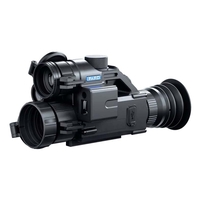
Pard Landsat 256 Mini Mulit-Spectral LRF Thermal/Night Vision Scope
via Uttings
£599.00
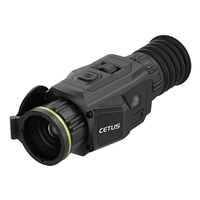
Pixfra Cetus C225 Thermal (256x192) Rifle Scope
via Uttings
£679.95
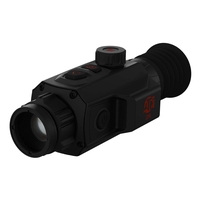
ATN Thor 6 Mini 215 (2-16x) Compact Thermal (256x192) Rifle Scope
via Uttings
£699.00
Buying Advice
The headline specs of the GOYOJO GRL335 centre on its sensor resolution and refresh rate, two figures that matter more than almost anything else for thermal image quality. A 384×288 sensor at 50 Hz is now the baseline for a usable weapon sight; anything below 25 Hz produces noticeable lag when panning, which makes target acquisition frustrating. The GRL335 reportedly uses a 12-µm pixel-pitch detector, which is the current sweet spot for compact thermal optics — smaller pixels mean a shorter lens can achieve the same field of view, keeping weight and bulk down. Detection range claims should always be taken with a pinch of salt; manufacturers quote ideal conditions, but UK hedgerows, rain, and humidity degrade thermal contrast significantly.
Budget tiers in the UK thermal market are roughly as follows: entry-level clip-ons and monoculars sit between £400 and £800, offering basic detection but limited weapon-sight functionality. Dedicated thermal weapon sights with usable resolution and reticle systems start around £800 to £1,200 — this is where the GRL335 appears to sit. Mid-range units from HIKMICRO, Pulsar, and InfiRay occupy the £1,200 to £2,500 bracket, with noticeably better image processing, build quality, and after-sales support. Flagship models — Thermion 2 LRF, HIKMICRO Thunder Pro, and similar — run from £2,500 to well over £4,000. The GRL335's value proposition depends entirely on whether its image quality and durability genuinely compete with that £1,200-plus tier.
Common mistakes UK buyers make when purchasing thermal scopes include prioritising detection range over image clarity, ignoring battery life in cold weather, and underestimating the importance of UK-based warranty support. A scope that claims a 1,500-metre detection range is meaningless if the image quality at 150 metres is too grainy to positively identify your target — and positive identification before the shot is both a legal and ethical obligation. Battery life drops significantly in British winter conditions; if the manufacturer quotes six hours, budget for four in January. And if the scope develops a fault, sending it back to a Shenzhen warehouse for repair is a very different experience from dealing with a UK distributor with a service centre.
For UK-specific use, consider what you are actually mounting this on and what you are shooting. Fox control on farmland with a .223 or .243 centrefire is the most common thermal application, and you need a scope that holds zero reliably under recoil, offers a clear image at 100 to 200 metres, and has a reticle system you can zero precisely — ideally with a one-shot-zero function. For rabbit and rat control with a FAC-rated .22 LR or .17 HMR, you can get away with a slightly lower specification, but you still need enough resolution to distinguish a rabbit from a clump of warm earth at 80 yards. Sub-12 ft-lb airgun users are far better served by a clip-on thermal spotter or a handheld monocular; the ranges involved simply do not justify a dedicated thermal weapon sight.
Matching the GRL335 to your use case means being honest about your expectations. If you are a professional pest controller putting hundreds of rounds downrange each month, the long-term durability and UK warranty support of an established brand like Pulsar, HIKMICRO, or InfiRay is probably worth the premium. If you are an occasional night shooter who wants thermal capability without committing to a four-figure outlay from a known brand, the GRL335 could be a sensible way to enter the thermal world — provided you accept the risks of limited UK support. Early video footage from UK users suggests the image quality is respectable for the price, but we have not yet seen enough long-term data on zero retention, weatherproofing in sustained rain, or battery longevity over a full British winter.
The broader brand landscape is worth understanding. GOYOJO is one of dozens of Chinese optics brands now exporting thermal products to the UK via Amazon, AliExpress, and occasionally specialist dealers. Some of these brands are genuinely investing in R&D and quality control; others are rebadging generic sensor modules with minimal testing. Without a UK distributor offering hands-on support, your recourse if something goes wrong is limited. If you do decide to try the GRL335, buy from a platform with strong buyer protection, keep all packaging for potential returns, and ideally zero and test it thoroughly before committing to a serious outing. We will update this guide as more UK field data becomes available.
Frequently Asked Questions
What sensor resolution does the GOYOJO GRL335 thermal scope use?
The GRL335 is reported to use a 384×288 resolution thermal sensor with a 12-µm pixel pitch. This is a common specification in the budget-to-mid-range thermal segment and should produce a usable image for target identification at moderate ranges. However, real-world image quality also depends heavily on the image processing algorithms and lens quality, which can vary significantly between brands at this price point.
Is the GOYOJO GRL335 suitable for UK fox control?
On paper, the GRL335 could be used for fox control on a centrefire rifle, provided it holds zero reliably under recoil and delivers sufficient image clarity to positively identify your target before the shot. Early UK user videos suggest the image is reasonable at ranges typical for fox shooting (50-200 metres). However, we would recommend thorough zeroing and testing before relying on it in the field, and you must of course hold a valid Firearms Certificate for the rifle it is mounted on.
Can I use a thermal scope on a sub-12 ft-lb air rifle?
You can, but it is generally not practical or cost-effective. Sub-12 ft-lb air rifles are humane-kill effective to roughly 35-45 yards on rabbit or squirrel, and at those short ranges a handheld thermal spotter paired with a conventional lamp or NV scope is usually a better solution. A dedicated thermal weapon sight like the GRL335 is far better suited to FAC-rated rimfire or centrefire platforms where the longer engagement distances justify the technology.
Does the GOYOJO GRL335 have a UK distributor or warranty support?
At the time of writing, we are not aware of an official UK distributor for GOYOJO thermal products. Most UK buyers appear to be purchasing through Amazon UK or similar online marketplaces. This means warranty claims would likely need to be handled through the platform's returns process or directly with the manufacturer. This is a significant consideration compared to brands like Pulsar or HIKMICRO, which have established UK service networks.
How does the GRL335 compare to HIKMICRO or Pulsar thermals at a similar price?
Direct comparison is difficult without side-by-side testing, but on paper the GRL335 competes with entry-level models from HIKMICRO and Pulsar in terms of sensor resolution. Where established brands typically pull ahead is in image processing quality, build durability, weatherproofing ratings, and crucially UK after-sales support. If the GRL335 is priced significantly below comparable HIKMICRO or Pulsar units, the saving may justify the trade-offs for some buyers.
What refresh rate does the GRL335 offer and why does it matter?
The GRL335 is reported to offer a 50 Hz refresh rate, which is the standard for a smooth, lag-free image when panning or tracking moving quarry. Scopes with lower refresh rates (25 Hz or below) can produce a choppy, stuttering image that makes it harder to follow a moving fox or rabbit. For a weapon sight intended for live shooting, 50 Hz is essentially the minimum you should accept.
Will the GOYOJO GRL335 withstand centrefire recoil?
The manufacturer claims the GRL335 is rated for centrefire recoil, but without independent UK testing data we cannot verify this. Thermal scopes that lose zero after repeated recoil are not uncommon in the budget segment. If you mount it on a centrefire rifle, we would strongly recommend checking zero regularly during your first few outings. Note that springer air rifles produce a unique double-recoil impulse that destroys many optics not specifically rated for it — though mounting a thermal on a springer is unusual.
What battery life can I expect from the GRL335 in UK winter conditions?
Manufacturer claims for battery life should always be treated as best-case figures achieved at room temperature. In typical UK winter shooting conditions (0-5°C), expect roughly 60-75% of the quoted battery life. Carrying a spare battery or a USB power bank that can top up the scope between stands is good practice. Cold-weather battery degradation affects all thermal scopes, not just budget models.
Do I need any licence to own a thermal scope in the UK?
A thermal scope itself is not a controlled item in England, Wales, or Scotland — you do not need a licence to purchase or own one. However, the firearm it is mounted on is subject to the usual legal requirements: centrefire and FAC-rated rimfire rifles require a Firearms Certificate, sub-12 ft-lb air rifles need no licence in England and Wales but do require an Air Weapon Certificate in Scotland, and Northern Ireland has its own separate regime. Always check with your local police force or BASC for guidance specific to your circumstances.
Related guides
First look at the Goyojo GRL635 640 thermal scope for UK shooters. We explore its 640-resolution sensor, key specs…
Best Thermal Monoculars Under £1,000 for UK Stalking & FoxingOur expert-tested guide to the best thermal spotter monoculars under £1,000 for UK deer stalking and foxing.
HIKMICRO Stellar 3.0 Price Reductions ExplainedHIKMICRO Stellar 3.0 thermal scope prices have dropped across UK dealers. Our 2026 guide covers what you get, how it compares…
Infiray TH50 V2 Thermal Scope — Is £1,600 the Sweet Spot?Is the Infiray TH50 V2 thermal scope worth £1,600 for UK night shooting? Our 2026 guide covers specs, detection range, rivals, and where to buy in the UK.
Thermal & Night Vision Optics: UK Buyer's Guide 2026Expert UK guide to thermal and night vision rifle scopes for 2026. FFP vs SFP, MOA vs MRAD, legal considerations, budget tiers in GBP…
New to Stalking? Rifle & Scope Advice for UK BeginnersStarting deer stalking in the UK? Our 2026 guide covers rifle calibres, scope choices, budget tiers in GBP, and legal essentials to help new stalkers…
Not sure which scope is right for you?
Try our AI-powered scope finder — answer a few questions and get personalised recommendations.
Find My Scope →Get a UK scope tip every day
Follow AiScopes on Facebook for daily buying guides, deals and gear advice.
Follow on Facebook