Goyojo GRL635 640 Thermal Scope – First Look
By Peter Makulek · Senior Optics Editor · · Live prices from UK retailers
The thermal scope market in the UK has expanded dramatically, with brands like Pulsar, HikMicro, and now Goyojo pushing 640-resolution sensors into increasingly competitive price brackets. The Goyojo GRL635 is the latest entrant generating serious buzz on UK forums and social media, promising a 640×512 uncooled microbolometer core — the same native resolution class found in thermal optics costing considerably more just two or three years ago. For UK shooters conducting pest control at night or stalking deer in low-light conditions, the arrival of another credible 640 thermal rifle scope is genuinely significant.
What makes the GRL635 interesting is not just its sensor resolution but the combination of features Goyojo are reportedly packaging around it. Early specification sheets suggest a 35 mm or 50 mm germanium objective lens, multiple colour palettes including white-hot, black-hot, and red-hot modes, onboard video recording, and a reticle system with ballistic holds. If accurate, this places the GRL635 in direct competition with established thermal scopes from Pulsar's Thermion 2 line and HikMicro's Thunder Pro series — optics that UK night shooters already know and trust.
For the UK market specifically, thermal scopes occupy a unique legal and practical niche. They are legal to use for pest control on private land with permission, and increasingly popular among deer stalkers who need to identify quarry in fading light or verify that a field is clear before taking a shot. Whether you are lamping foxes with a centrefire rifle on an FAC or controlling rabbits and corvids, a capable thermal scope can transform your effectiveness. The critical question with any new brand, however, is whether the optics, build quality, and after-sales support justify the outlay.
In this first-look guide, we examine everything currently known about the Goyojo GRL635 640 thermal scope, place it in context against the thermal optics UK shooters are already using, and offer practical buying advice for anyone considering a thermal rifle scope in 2026. We also address common questions about sensor resolution, refresh rates, detection range versus identification range, and how to avoid costly mistakes when choosing your first — or next — thermal optic.
Top Picks — Live UK Prices
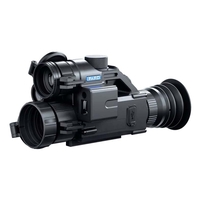
Pard Landsat 256 Mini Mulit-Spectral LRF Thermal/Night Vision Scope
via Uttings
£599.00
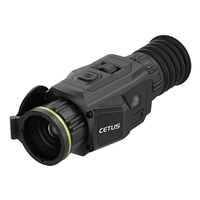
Pixfra Cetus C225 Thermal (256x192) Rifle Scope
via Uttings
£679.95
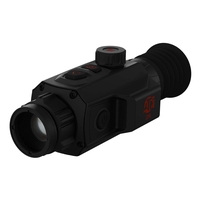
ATN Thor 6 Mini 215 (2-16x) Compact Thermal (256x192) Rifle Scope
via Uttings
£699.00
Buying Advice
When evaluating any thermal rifle scope, the headline spec is sensor resolution. The Goyojo GRL635's 640×512 sensor produces over 327,000 pixels, compared to roughly 98,000 on a 384×288 unit. In practical terms, this means finer detail at longer ranges — you can positively identify a fox versus a domestic cat at distances where a 384 sensor shows only a blob of heat. Pixel pitch matters too: a 12-micron pitch sensor offers a wider field of view than a 17-micron sensor at the same resolution, though the latter may perform slightly better in very low-contrast thermal conditions. Refresh rate is another critical number; 50 Hz delivers smooth, real-time imagery suitable for tracking moving quarry, whereas 25 Hz can appear slightly laggy when panning. Always check the NETD (noise equivalent temperature difference) figure — anything below 40 mK is considered excellent sensitivity for UK night shooting conditions.
Budget tiers for thermal rifle scopes in the UK currently break down roughly as follows. Entry-level 256-resolution clip-on or standalone units start from around £800–£1,200, suitable for shorter-range pest control but limited in identification range. Mid-range 384-resolution scopes from brands like HikMicro typically sit between £1,500 and £2,500 and represent the sweet spot for many UK fox and rabbit shooters. The 640-resolution tier, where the Goyojo GRL635 aims to compete, generally runs from £2,500 to £4,500 depending on objective lens size and feature set. Premium options from Pulsar and others can exceed £5,000. If the GRL635 genuinely delivers 640 performance below the £3,000 mark, it would be a significant disruption in UK pricing.
A common mistake UK buyers make is focusing solely on detection range figures quoted by manufacturers. Detection range — the distance at which the scope can register a heat source — is typically measured against a standardised 1.7 m × 0.5 m target (NATO standard). Identification range, which is the distance at which you can positively confirm what you are looking at, is usually one-quarter to one-third of the detection range. For responsible shooting in the UK, identification range is the figure that matters. Another frequent error is underestimating battery life in cold British winters; lithium-ion cells lose capacity in low temperatures, so always carry spares and consider an external power bank connection if the scope supports one.
UK-specific context is essential when choosing a thermal scope. If you are using a sub-12 ft-lb air rifle — legal without a licence in England and Wales — a thermal scope is technically mountable, but the effective humane-kill range on rabbits and squirrels remains roughly 35–45 yards regardless of how clearly you can see the target. For FAC-rated rifles used in fox control or deer stalking, thermal optics genuinely extend your effective operating window into complete darkness. Remember that in Scotland, any air weapon requires an Air Weapon Certificate, and Northern Ireland operates its own firearms licensing regime — always check with your local police force or consult BASC for current guidance. Regarding quarry, observe all close seasons: roe deer bucks have a close season from 1 November to 31 March in England and Wales, and other deer species have their own statutory periods.
Matching a thermal scope to your use case is crucial. A foxer working open farmland at 150–250 yards benefits most from a 640 sensor with a 50 mm objective for maximum identification range. A rabbit shooter working hedgerows and field margins at 50–100 yards may find a 384 sensor with a 35 mm lens perfectly adequate and considerably lighter. For deer stalkers, a thermal spotter paired with a conventional day scope is sometimes preferred over a dedicated thermal rifle scope, as it allows positive species and sex identification before switching to a zeroed optic. Consider weight and balance too — mounting a 700 g+ thermal scope on a lightweight rimfire or sporting rifle can shift the centre of gravity noticeably.
The brand landscape in UK thermal optics is currently dominated by Pulsar and HikMicro, with established optics houses like Zeiss and Leupold offering thermal products at the premium end. Vortex has shown increasing interest in the thermal and night vision space. Bushnell and Nightforce remain better known for conventional day scopes and long-range tactical optics, though both have thermal-adjacent products. Newer brands like Goyojo face the challenge of proving reliability and after-sales support in a market where UK dealers and end users value warranty backup highly. Before committing to any new-brand thermal scope, check that there is a UK-based distributor or service centre — sending a faulty scope overseas for repair is neither quick nor cheap. Athlon, while primarily a day-optic brand, demonstrates how newer manufacturers can build trust through competitive pricing and responsive UK distribution.
Frequently Asked Questions
What sensor resolution does the Goyojo GRL635 thermal scope use?
The Goyojo GRL635 is reported to feature a 640×512 uncooled microbolometer sensor, which is the higher-resolution class currently available in consumer thermal rifle scopes. This resolution provides significantly more detail than 384×288 sensors, particularly at longer identification distances. A 640 sensor is especially beneficial for positive quarry identification, which is a legal and ethical requirement for UK shooters.
How does the GRL635 compare to Pulsar and HikMicro thermal scopes?
Based on early specifications, the GRL635 appears to target the same 640-resolution bracket as Pulsar's Thermion 2 XP50 Pro and HikMicro's higher-end Thunder models. The key differentiators will likely be price, build quality, software refinement, and UK after-sales support. Pulsar and HikMicro both have well-established UK distributor networks and proven track records, which any new entrant must match to compete credibly.
Is it legal to use a thermal scope for shooting in the UK?
Thermal scopes are legal to own and use in England and Wales for pest control and deer stalking on private land with the landowner's permission. They are not classified as prohibited accessories under current firearms legislation. However, the underlying firearm must be held legally — sub-12 ft-lb air rifles need no licence in England and Wales, while anything above requires a Firearms Certificate. In Scotland, all air weapons require an Air Weapon Certificate. Always verify current regulations with your local police force or BASC.
What is the difference between detection range and identification range on a thermal scope?
Detection range is the maximum distance at which the scope can register a heat signature, typically measured against a NATO-standard 1.7 m × 0.5 m target. Identification range — usually one-quarter to one-third of the detection range — is the distance at which you can positively confirm what the target is. For responsible UK shooting, identification range is far more important, as you must positively identify your quarry and confirm a safe backstop before taking any shot.
Can I mount a thermal scope on a sub-12 ft-lb air rifle?
Physically, yes — most thermal scopes use standard 30 mm or Picatinny mounts compatible with air rifle rails. However, a sub-12 ft-lb air rifle remains effective for humane kills on rabbits and squirrels only to approximately 35–45 yards, regardless of how well your optic performs. Be aware that spring-powered air rifles produce a unique double-recoil that can damage optics not rated for that stress, so confirm the scope is springer-compatible if applicable.
What refresh rate should I look for in a thermal rifle scope?
A 50 Hz refresh rate delivers smooth, real-time thermal imagery and is strongly recommended for any shooting application where you may need to track moving quarry such as foxes or rabbits. A 25 Hz display can appear noticeably jerky when panning or following a moving target. Most serious thermal rifle scopes marketed in the UK now offer 50 Hz, and the Goyojo GRL635 is expected to follow this standard.
How important is NETD sensitivity in a thermal scope?
NETD (noise equivalent temperature difference) measures the smallest temperature difference the sensor can detect. A lower NETD figure means greater sensitivity — anything below 40 mK is considered excellent for UK conditions. This matters most in marginal thermal contrast situations, such as cool summer evenings when the temperature difference between quarry and background is small. A scope with poor NETD may struggle to produce a clear image in these conditions, even if its resolution is high.
Should I buy a thermal rifle scope or a separate thermal spotter?
It depends on your shooting discipline. A dedicated thermal rifle scope lets you scan and shoot through one optic, which is ideal for foxing where speed matters. However, many deer stalkers prefer a handheld thermal spotter for identification, paired with a conventional day scope for the shot, as this allows more precise species and sex confirmation. Some shooters invest in both. Consider that a thermal rifle scope adds weight and alters the balance of your rifle, which may be a factor on long stalks.
What UK after-sales support should I expect from a new thermal scope brand like Goyojo?
Before purchasing any thermal scope from a newer brand, confirm that there is a UK-based distributor or authorised service centre. Thermal optics are complex electronic devices, and faults such as dead pixels, calibration drift, or battery issues can occur. Established brands like Pulsar and HikMicro offer UK warranty repairs through their distributor networks. If Goyojo does not yet have a comparable UK presence, factor in the potential cost and delay of overseas returns when making your buying decision.
Related guides
First impressions of the GOYOJO GRL335 thermal scope for UK shooters. We cover specs, image quality, build, value for money…
Best Thermal Monoculars Under £1,000 for UK Stalking & FoxingOur expert-tested guide to the best thermal spotter monoculars under £1,000 for UK deer stalking and foxing.
HIKMICRO Stellar 3.0 Price Reductions ExplainedHIKMICRO Stellar 3.0 thermal scope prices have dropped across UK dealers. Our 2026 guide covers what you get, how it compares…
Infiray TH50 V2 Thermal Scope — Is £1,600 the Sweet Spot?Is the Infiray TH50 V2 thermal scope worth £1,600 for UK night shooting? Our 2026 guide covers specs, detection range, rivals, and where to buy in the UK.
Thermal & Night Vision Optics: UK Buyer's Guide 2026Expert UK guide to thermal and night vision rifle scopes for 2026. FFP vs SFP, MOA vs MRAD, legal considerations, budget tiers in GBP…
Best Second-Hand Spotting Scopes for 900–1100m Range WorkBuying a used spotting scope for 1000-yard range sessions? Our 2026 UK guide covers magnification, objective size…
Read next
- best thermal rifle scope UK
Best Thermal Rifle Scopes in the UK (2026 Buyer's Guide)
Not sure which scope is right for you?
Try our AI-powered scope finder — answer a few questions and get personalised recommendations.
Find My Scope →Get a UK scope tip every day
Follow AiScopes on Facebook for daily buying guides, deals and gear advice.
Follow on Facebook