Best Thermal Rifle Scopes in the UK (2026 Buyer's Guide)
By Peter Makulek · Senior Optics Editor · · Live prices from UK retailers
The best thermal rifle scope in the UK for 2026 is, for most shooters, a 384x288 sensor with a NETD figure under 25mK and a 50Hz refresh rate - enough to pick a fox out of wet grass at a couple of hundred yards and track it cleanly on the move. HIKMICRO and Pard dominate the sub-£2,000 bracket that most foxing and pest-control permissions actually run; Pulsar sits above them on glass, build quality and UK after-sales support. Step up to a 640 core only if you need to confirm species and sex before the shot, which in practice means deer. Sensor resolution matters far more than magnification - digital zoom on a thermal adds no real detail.
Thermal imaging has moved from a niche military luxury to the single most transformative optic a UK shooter can own. Whether you are lamping foxes on an arable permission or clearing rats from a poultry unit, a thermal scope turns complete darkness into a high-contrast theatre where warm-bodied quarry stands out against cool ground. In 2026 the market has matured significantly: sensor resolutions have climbed, refresh rates have smoothed, and — crucially — prices have fallen far enough that a capable budget thermal scope now sits within reach of most serious shooters. This guide cuts through the noise and tells you exactly what to buy, what to avoid, and what the law says about using thermal in the UK.
The UK context matters enormously when choosing a thermal scope. Our legal framework is different from mainland Europe or North America: there is no general ban on thermal for shooting, but deer stalking with thermal is tightly regulated in England, Wales and Scotland under separate legislation. Fox shooting and pest control at night, on the other hand, are the primary disciplines driving thermal sales here. Most UK thermal shooters run .223 Rem, .243 Win or rimfire .22 LR for foxes and vermin, and the optic must pair well with those lighter-recoil platforms — a factor that affects which mounts, eye relief and recoil ratings you need to consider.
Resolution, refresh rate, objective lens size, detection range and battery life are the headline specifications, but the numbers alone do not tell you how a scope will perform on a January night in the Fens. A 384 × 288 sensor with a high NETD (noise-equivalent temperature difference) will look grainy in cold, damp air, while a 640 × 512 sensor at 12 µm pitch paired with a 50 Hz refresh rate delivers a television-smooth image that lets you identify a fox from a farm cat at several hundred metres. We explain what every number means in the buying advice below so you can make the right call without overspending.
In this guide we cover the best thermal scope options across budget, mid-range and premium tiers, compare clip-on thermal versus dedicated thermal scope configurations, and answer the most common questions UK shooters are asking right now — from Pard vs Hikmicro vs Pulsar brand comparisons through to the legal position on thermal for deer. Every recommendation is grounded in real-world UK use, and we include only products that are readily available through UK dealers with full warranty support.
Top Picks — Live UK Prices
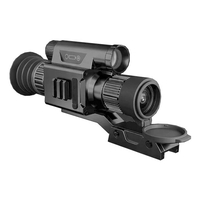
Fuego DS-X7 4K Day & Night Vision Rifle Scope
via Uttings
£299.99
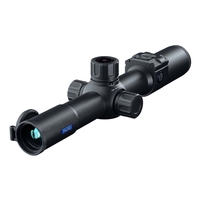
Pard Night Stalker Mini Night Vision Riflescope - 35mm
via Uttings
£339.00
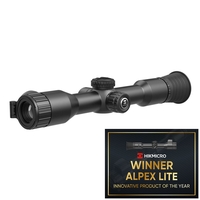
HIKMicro Alpex 4K Lite Digital Day/Night Riflescope
via Uttings
£399.00
Buying Advice
Understanding thermal specifications is the first step to avoiding expensive mistakes. The sensor resolution — typically 256 × 192, 384 × 288 or 640 × 512 pixels — determines how much detail you can resolve at range. A higher pixel count on a smaller pixel pitch (12 µm versus 17 µm) produces a sharper image. Refresh rate, quoted in hertz, governs motion fluidity: 25 Hz is usable but produces slight lag when panning; 50 Hz is noticeably smoother and strongly preferred for scope fox shooting where you track a moving target before the shot. NETD, measured in millikelvins (mK), indicates thermal sensitivity — look for sub-40 mK for best contrast in cool, damp UK conditions. Detection range tells you how far the scope can register a heat signature, but identification range (where you can distinguish species) is the more honest figure. Finally, battery life varies from three to ten hours; always carry a spare, especially on extended winter outings.
Budget thermal scopes — broadly under £1,500 — have improved dramatically. Entry-level units from Pard and Hikmicro now offer 384 × 288 resolution, 50 Hz refresh and onboard recording. A Pard thermal scope such as the SA series or the Hikmicro Thunder range will get you into genuine thermal-scope fox shooting without a second mortgage. Expect slightly shorter detection ranges, smaller objective lenses and simpler reticle options. Mid-range models between £1,500 and £3,000 step up to 640 × 512 sensors, better glass, more colour palettes and often integrated laser range-finders. Premium scopes above £3,000 — Pulsar Thermion 2 LRF XP50 Pro or the latest InfiRay Tube series — deliver military-grade clarity, ballistic calculators, wireless streaming and extreme detection ranges beyond 2,000 metres. Match the tier to your frequency of use and the distances you typically shoot.
Common mistakes cost UK buyers time and money. First: buying on detection range alone. A scope claiming 2,500 m detection may only identify a fox reliably at 400 m — always check the identification and recognition figures. Second: ignoring recoil rating. Thermal scopes contain sensitive microbolometer arrays; fitting a unit rated for rimfire onto a .308 Win will void the warranty and may crack the sensor. Third: overlooking zeroing practicalities. Most thermals use a digital zero that shifts the reticle across the sensor rather than mechanically adjusting the tube, so check that the adjustment range (MOA or MRAD) is sufficient for your rifle and mount combination. Fourth: skipping eye-relief requirements. Many thermal scopes offer generous eye relief of 50 mm or more, but clip-on units mounted ahead of a day scope introduce additional length — measure your rail space before committing.
UK law does not specifically ban thermal optics, but the legal picture varies by quarry and country. In England and Wales, thermal is widely used for night-time fox control and pest species under the General Licence or landowner authority — no additional firearms certificate condition is needed beyond the standard FAC. Deer stalking is more nuanced: in England and Wales the Deer Act 1991 prohibits shooting deer at night, so a thermal scope offers limited legal advantage beyond dawn and dusk identification. In Scotland, SNH (NatureScot) can issue specific authorisations for night shooting of deer in crop-damage situations, and thermal is sometimes permitted under those licences. Always confirm the legal position with your local firearms licensing department and landowner before deploying thermal on any quarry. Calibre minima for deer — .240 / 100 gr in England and Wales, .240 / 100 gr in Scotland — apply regardless of optic type.
Matching the scope to your use case is where the real value lies. If you shoot foxes at moderate ranges (out to 200 m) from a high seat or vehicle, a mid-range 384 sensor with a 35 mm objective will be more than adequate and keeps weight manageable. For long-range permissions across open ground where shots may stretch to 300 m or beyond with a .243 or .223, a 640 × 512 / 50 Hz unit with a 50 mm objective justifies its premium. Airgun pest controllers working inside barns at sub-50-yard ranges should consider a compact clip-on or a smaller-objective handheld monocular paired with their existing scope — remember that sub-12 ft/lb air rifles are not effective beyond approximately 50–75 yards, so extreme thermal detection range is unnecessary. Clip-on thermal units sit ahead of your existing day scope and let you keep a familiar reticle and zero; dedicated thermal scopes offer a cleaner, lighter setup. Many UK shooters now own both: a dedicated best thermal scope for the fox rifle and a clip-on for the deer rifle that doubles as a day-optic platform.
The UK brand landscape in 2026 is dominated by a handful of manufacturers. Pulsar remains the aspirational choice, offering mature software, robust build quality and an extensive UK dealer network — but you pay a clear premium. Hikmicro has emerged as perhaps the strongest value-for-money brand, leveraging parent company Hikvision's sensor expertise to deliver excellent image quality at aggressive price points. Pard has carved out a loyal following among budget-conscious UK shooters: their clip-on and dedicated thermal scopes punch above their weight, and after-sales support via UK distributors such as Thomas Jacks has improved markedly. InfiRay (sold under the iRayUSA and Haiwei labels) offers cutting-edge 12 µm sensors at competitive prices but has a thinner UK support network. Guide Sensmart, Nitehog and Lahoux also serve the market. Whichever brand you choose, buy from an authorised UK dealer to ensure warranty coverage, correct firmware and access to spare parts.
Where you buy matters as much as which model you choose, and it is the part of a thermal purchase that is easiest to get wrong. A thermal scope is not a firearm component in law, so no firearms certificate is needed to buy one and there is no requirement to go through an RFD — which is precisely why so many grey-market listings exist. The real choice is between an authorised UK dealer and a direct import from continental Europe or Asia. An authorised UK dealer gives you a warranty you can actually claim against, UK-region firmware and updates, and somebody to talk to when a sensor develops a fault; UK distributors such as Thomas Jacks handle warranty work for several of the major brands. An import can look materially cheaper on the listing price, but since Brexit you pay import VAT at 20 per cent and potentially duty on arrival, the warranty is normally held by the distributor in the country of sale rather than transferring to the UK, and returning a faulty unit means shipping it back at your own cost. Once those charges are added the saving is usually smaller than it first appeared. If you want to see a unit switched on before committing — worth doing, because sensor quality is hard to judge from a specification sheet — our dealer locator lists UK gun and optics retailers by area.
Budgeting for a thermal rifle scope in the UK breaks down roughly as follows: £1,000-£1,800 buys a capable 384 core suitable for foxing and vermin control, £1,800-£3,000 moves you to a 640 core with the resolution to identify deer confidently, and above £3,000 you are paying for premium glass, better software and longer warranty support rather than a fundamentally different image.
Frequently Asked Questions
Where is the best place to buy a thermal scope in the UK?
Buy from an authorised UK dealer or the brand's UK distributor rather than a grey-market or direct-import listing. Thermal scopes need no firearms certificate and are not restricted items, so anyone can sell them — which means the cheapest listing you find is often an import with no UK warranty behind it. An authorised dealer gives you a claimable warranty, UK-region firmware and support if the sensor fails, and distributors such as Thomas Jacks handle warranty work for several major brands here. Direct imports from the EU can look cheaper on the sticker price, but since Brexit you pay 20 per cent import VAT and possibly duty on arrival, and the warranty normally stays in the seller's country rather than following the unit to the UK. Buying in person also lets you switch a unit on and judge the image yourself, which a specification sheet will never tell you.
What is the best budget thermal scope for fox shooting in the UK?
For dedicated scope fox shooting on a budget, the Pard SA series and Hikmicro Thunder 2.0 TQ35 are the standout choices in 2026. Both offer 384 × 288 resolution, 50 Hz refresh and built-in video recording at price points that sit well under £1,500. They handle .223 and .22 LR recoil comfortably and are widely stocked by UK dealers, making warranty support straightforward.
Pard vs Hikmicro vs Pulsar: which thermal scope brand offers the best value for UK shooters?
Hikmicro currently offers arguably the best balance of image quality, build and price for UK shooters — their 640-sensor models compete with Pulsar units costing significantly more. Pard thermal scope options are the budget kings, delivering solid performance at entry-level prices with improving UK support. Pulsar commands a premium but justifies it with superior software, reliability and the widest UK dealer network. Your budget and how heavily you shoot at night should guide the decision.
Can you use a thermal scope for deer stalking legally in the UK?
In England and Wales the Deer Act 1991 prohibits shooting deer at night, which limits the practical advantage of thermal to low-light identification at dawn and dusk — using one as your primary scope during legal shooting hours is not in itself unlawful. In Scotland, NatureScot may grant specific authorisations for night shooting of deer causing crop damage, under which thermal optics can be used. Always check the current regulations and consult your firearms licensing department before fitting thermal to a deer rifle.
What thermal scope resolution and refresh rate do you actually need for night shooting?
For most UK night shooting — foxes and pest species at ranges out to 200 metres — a 384 × 288 sensor at 50 Hz is the practical sweet spot. The 50 Hz refresh rate eliminates the perceptible judder you get at 25 Hz when tracking a moving fox. If you regularly shoot beyond 250 metres or need to identify species at longer distances, stepping up to a 640 × 512 sensor makes a material difference to image clarity and confident shot placement.
Clip-on thermal vs dedicated thermal scope: which setup is better for UK hunters?
A clip-on thermal unit mounts ahead of your existing day scope, letting you keep your familiar reticle, zero and ballistic turret — ideal if you use one rifle for day and night work, especially on a deer-legal calibre. A dedicated thermal scope is lighter, simpler to set up and generally offers a wider field of view. Many UK shooters eventually own both: a dedicated best thermal scope on a fox rifle and a clip-on for the stalking rifle that must also function in daylight.
How far can you realistically shoot with a thermal scope in the UK?
Detection ranges quoted by manufacturers can exceed 2,000 metres, but identification — telling a fox from a badger — is far shorter, typically 300–600 metres depending on sensor resolution and atmospheric conditions. In practice, ethical UK fox shooting with thermal rarely extends beyond 250–300 metres because you must positively identify the target and have a safe backstop. Sub-12 ft/lb air-rifle users should remember that their effective range is only around 50–75 yards regardless of how far the thermal can see.
Do I need to tell my firearms licensing department that I have fitted a thermal scope?
There is no legal requirement in England, Wales or Scotland to notify your constabulary when fitting a thermal optic to a rifle already held on your FAC. However, if your certificate carries specific conditions about night shooting or the use of image-intensifying or thermal equipment, you must comply with those conditions. It is good practice to maintain an open relationship with your FLO, particularly if you intend to use thermal for night-time fox control on new permissions.
What is the difference between thermal and night-vision scopes?
A night vision scope amplifies available ambient light (moonlight, starlight) to produce a green or white-phosphor image, meaning it struggles in complete darkness without an IR illuminator. A thermal scope detects heat radiation emitted by objects, so it works in total darkness, through light fog and regardless of ambient light. For UK fox and pest control at night, thermal is generally the superior choice because it highlights warm-bodied quarry against cool backgrounds with no illuminator that could spook wary foxes.
Are thermal scopes legal to own in the UK without a firearms certificate?
Yes. Thermal optics — scopes, monoculars and clip-ons — are not classified as firearms, ammunition or controlled items under UK law. You can purchase, own and carry a thermal device without any licence. You only need a valid firearms certificate for the rifle itself. That said, possessing thermal equipment alongside an unsecured firearm in the field at night could attract attention, so always ensure you have written permission, correct FAC authority and a lawful reason for being out.
What is the best thermal rifle scope in the UK for 2026?
For most UK shooters the best thermal rifle scope in 2026 is a 384x288 or 640x480 sensor with a sub-25mK NETD figure and a 50Hz refresh rate, mounted on a dedicated rifle rather than swapped between guns. At the practical end, HIKMICRO and Pard dominate the sub-£2,000 bracket and are what most foxing and rat-control permissions actually run; Pulsar sits above them on glass, build and after-sales support. Sensor resolution matters more than magnification: a 640 core at 2x gives you a cleaner, more identifiable image at 200 yards than a 384 core pushed to 6x, because digital zoom on a thermal adds no real detail. If the rifle is used for deer you need enough resolution to confirm species and sex before the shot, which in practice means a 640 core.
What should you look for in a thermal scope for hunting?
A thermal scope for hunting is judged on four things, in this order: NETD (thermal sensitivity - under 25mK is the line worth paying for, and it is what lets you pick a fox out of wet grass at range), sensor resolution (384 for foxing inside 200 yards, 640 if you need species and sex identification for deer), refresh rate (50Hz for anything moving; 25Hz smears on a running animal), and recoil rating - a unit rated only for a .22 rimfire will not survive a centrefire. Battery life and a usable one-shot zero routine matter more in the field than the headline detection range on the box, which is measured against a human-sized target in ideal conditions and is not what you will see on a fox.
Related guides
Our 2026 UK buyer's guide to the best thermal scopes under £500 for foxing and deer stalking. Compare PARD, Hikmicro and more — specs…
Thermal & Night Vision Optics: UK Buyer's Guide 2026Expert UK guide to thermal and night vision rifle scopes for 2026. FFP vs SFP, MOA vs MRAD, legal considerations, budget tiers in GBP…
Trading a PVS-14 for Thermal & LPVO: Is It Worth It?Should you swap a used PVS-14 for a thermal scope and LPVO? We break down the trade-offs, UK legalities, top picks and budget tiers for night vision…
Can Night-Vision Users See Your Thermal Scope Display?Discover whether your thermal rifle scope's display screen is visible to other night-observation device users.
Best Scopes for Rabbit Shooting in 2026Find the best scope for rabbit shooting in the UK for 2026. Expert advice on magnification, reticles, budget picks and night-vision options for air…
Best Scopes for Getting Started in Long-Range ShootingDiscover the best beginner long-range scope UK shooters can buy in 2026. We cover magnification, FFP vs SFP, reticle choice, and top picks from Vortex…
Read next
- best night vision rifle scope UK
Best Night Vision Scopes UK 2026
- best night vision for foxing
Best Night Vision for Foxing in the UK (2026 Guide)
Not sure which scope is right for you?
Try our AI-powered scope finder — answer a few questions and get personalised recommendations.
Find My Scope →Get a UK scope tip every day
Follow AiScopes on Facebook for daily buying guides, deals and gear advice.
Follow on Facebook