Best Night Vision Scopes for Fox Shooting at Night (2026)
By Peter Makulek · Senior Optics Editor · · Live prices from UK retailers
Night vision foxing has moved from a niche pursuit into the mainstream of UK pest control over the past few years, and 2026 sees the widest choice of affordable, capable night vision riflescopes the British market has ever offered. Whether you are a farmer protecting lambs during the spring or a dedicated fox-shooter called out to estates year-round, a dedicated night vision scope now delivers identification and shot-placement confidence that a lamp and conventional optic simply cannot match. This guide cuts through the marketing noise to help UK shooters find the best night vision scope for foxing at real-world distances and budgets.
The core challenge for fox shooting at night in the UK is consistent, positive target identification at ranges typically between 80 and 250 yards — the bread-and-butter lamping envelope on most British farmland. You need enough magnification and sensor resolution to distinguish a fox from a farm cat or badger, paired with an objective lens large enough to gather the available ambient or infrared light. Getting that balance right, without overspending on military-grade capability you will never use, is the central theme of this buying guide.
Technology choice matters enormously. Digital night vision scopes, led by brands such as PARD, Sightmark and Pulsar, have largely displaced traditional image-intensifier tubes for civilian fox control in Britain. They are more affordable, legal to export and import without restriction, and can record video for evidence or social media. Image-intensifier (Gen 2+ and Gen 3) scopes still exist but carry significantly higher price tags and offer fewer smart features. We explain the trade-offs honestly so you can decide which platform suits your foxing conditions.
UK law adds another layer. Fox shooting at night with a rifle is legal in England, Wales and Scotland provided you have the correct firearms certificate, landowner permission, and — in Scotland — comply with additional legislative requirements around pest control. There is no blanket ban on night vision equipment, but you must still ensure a safe backstop and positively identify your quarry before firing. We cover the legal position in detail further down the page, alongside the optical and electronic specifications that actually matter in the field.
Top Picks — Live UK Prices
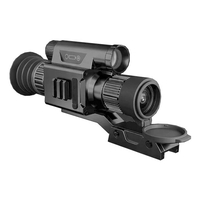
Fuego DS-X7 4K Day & Night Vision Rifle Scope
via Uttings
£299.99
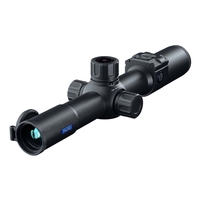
Pard Night Stalker Mini Night Vision Riflescope - 35mm
via Uttings
£339.00
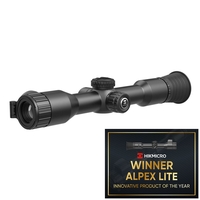
HIKMicro Alpex 4K Lite Digital Day/Night Riflescope
via Uttings
£399.00
Buying Advice
Start with the specifications that genuinely affect foxing performance. Sensor resolution is king on digital units: a 1920×1080 CMOS sensor delivers noticeably sharper target ID than a 1024×768 chip at the same magnification. Optical magnification typically ranges from 2–4× base, with digital zoom pushing to 8× or beyond — but digital zoom degrades the image, so prioritise a higher base magnification if you regularly shoot past 150 yards. Objective lens diameter determines light gathering: 50 mm is a sensible minimum for night work, with 70 mm models offering a brighter, cleaner image in very low ambient light. Refresh rate matters too — 50 Hz gives a smooth picture when panning; 30 Hz can appear jerky and makes picking up a moving fox harder. Finally, check the IR illuminator wavelength: 850 nm is brighter to the user but produces a faint red glow visible to foxes at close range, whereas 940 nm is truly covert at the cost of slightly reduced range.
Budget tiers in the UK market break down fairly neatly. Under £500 you will find entry-level digital units from PARD and Sightmark that work acceptably to around 150 yards with their built-in IR — perfectly adequate for close-quarters farmyard foxing but limited in sensor resolution and build quality. The £500–£1,000 bracket is the sweet spot for most serious fox shooters: this is where PARD's mid-range models and Sightmark's Wraith series sit, offering 1080p sensors, decent IR illuminators, video recording and reliable zero-hold. Above £1,000 you enter Pulsar Digex territory and the higher-end PARD models with laser rangefinders, ballistic calculators, Wi-Fi streaming and premium lens coatings. These are superb tools, but not essential for effective fox control at typical UK distances.
Common mistakes are easily avoided. The biggest is buying on magnification alone: a scope advertising 16× digital zoom sounds impressive but the image at that level is a pixelated mess useless for positive quarry ID. Always judge capability by native optical magnification and sensor resolution. Second, many buyers neglect the IR illuminator — the bundled unit on budget scopes is often weak, so budget an extra £50–£120 for a quality external IR torch such as a Nightmaster or Nitesite unit if you want reliable performance past 200 yards. Third, do not ignore weight and eye relief: a 700-gram add-on scope changes the balance of a light foxing rifle dramatically, and short eye relief on a .243 or .308 can leave you with a bruised brow.
UK-specific context is critical. Under the Firearms Act 1968 (England and Wales) and the Firearms (Scotland) Act, there is no prohibition on fitting night vision to a rifle held on a valid firearms certificate. However, your FAC conditions typically specify the land on which you may shoot and the quarry you may target — you must have written permission from the landowner or occupier specifically for night shooting if your certificate condition requires it. In Scotland, the Wildlife and Natural Environment (Scotland) Act 2011 reinforces the requirement for authorisation. Calibre choice for foxing centres on .223 Remington, .22-250 and .243 Winchester; all produce minimal recoil that digital scopes handle without losing zero. Always zero your night vision scope separately from any daytime optic — POI can shift significantly between the two. Reputable UK dealers such as Thomas Jacks, Sporting Saint, Night Master and PARD UK stock the full range and offer after-sales support that grey imports from Amazon Marketplace do not.
Matching the scope to your use case avoids buyer's remorse. If you shoot exclusively from high seats or vehicle-mounted positions at ranges under 150 yards, a budget night vision scope for foxing — say a PARD NV008S or Sightmark Wraith Mini — paired with a good IR torch is ample. If you cover large arable estates with longer sight lines and need to call foxes at 200-plus yards, step up to a mid-range PARD NV008P LRF or Pulsar Digex C50 for the sharper sensor, stronger built-in IR and rangefinding. For professional pest controllers working multiple nights per week, invest in the premium tier: the superior battery life, tougher housing and recording features pay for themselves. Thermal clip-ons are an alternative approach — they mount ahead of a conventional day scope — but for a dedicated foxing rig, a purpose-built night vision riflescope is simpler and more cost-effective.
The brand landscape in 2026 is dominated by a handful of names. PARD has captured enormous UK mindshare by offering a wide range of digital night vision scopes at competitive prices, backed by a growing UK dealer and service network; the PARD night vision scope range from the NV008 series upwards is the most commonly recommended starting point on UK shooting forums. Pulsar occupies the premium digital tier with the Digex series, offering class-leading sensors and software. Sightmark's Wraith line provides a solid mid-budget alternative, particularly popular with shooters stepping up from lamping for the first time. Hikmicro has entered aggressively with well-specified thermal and digital night vision options. Traditional image-intensifier brands like Yukon and Armasight have largely pivoted to digital. For most UK fox shooters, PARD and Pulsar between them cover every realistic use case and budget.
Frequently Asked Questions
What magnification and objective lens size do you need on a night vision scope for foxing at typical UK lamping distances?
For the 80–250-yard envelope that covers most UK foxing, a base optical magnification of 3–4× with a 50 mm or larger objective works well. A 50 mm objective gathers enough light for the sensor to produce a usable image, while 70 mm models give a noticeably brighter picture in very dark conditions. Avoid relying on high digital zoom — it degrades the image — and instead choose the highest native magnification and sensor resolution your budget allows.
Digital night vision vs image-intensifier tubes for fox shooting: which technology suits UK foxing conditions?
Digital night vision is the clear winner for the vast majority of UK fox shooters. Modern CMOS-sensor scopes from PARD, Pulsar and Sightmark offer excellent image quality at a fraction of the cost of Gen 2+ or Gen 3 intensifier tubes, and they add video recording, reticle customisation and Wi-Fi streaming. Intensifier tubes still offer a more natural, real-time image with no screen lag, but they cannot record, are heavier, and cost substantially more. For civilian pest control rather than military applications, digital is the practical choice.
Is a PARD night vision scope worth it compared to Pulsar and Sightmark for UK fox control?
PARD offers arguably the best value across the widest price range for UK foxing. Their NV008 and NV048 series deliver reliable zero-hold, solid build quality and strong IR illumination at prices well below equivalent Pulsar models. Pulsar's Digex range is superior in sensor quality and software refinement but carries a premium. Sightmark's Wraith line sits in between, offering good all-round performance. For most UK fox shooters, a PARD night vision scope in the £500–£800 bracket represents the sweet spot of performance and value.
Can you legally use a night vision riflescope for foxing in England, Scotland and Wales, and what permissions do you need?
Yes. There is no UK law prohibiting the use of night vision sights on a legally held firearm. In England and Wales you need a valid firearms certificate with appropriate land and quarry conditions, plus written landowner permission for night shooting. In Scotland the same applies, and you should also be aware of the Wildlife and Natural Environment (Scotland) Act 2011, which governs pest-control authorisations. Always ensure a safe backstop and positively identify your quarry before taking a shot — the same duty of care applies at night as during the day.
What is the best night vision scope for foxing under £1,000 in 2026?
The strongest contenders for a night vision scope under £1,000 in 2026 are the PARD NV008S LRF, the Sightmark Wraith 4K Max and the PARD DS35 digital day/night scope. All three offer 1080p-class sensors, integrated or adaptable IR illumination, video recording and reliable zero retention on calibres up to .308. The PARD models edge ahead on IR range and dealer support in the UK. Pair any of them with a quality external 940 nm IR torch for the best results past 200 yards.
How far can you realistically shoot a fox with a digital night vision scope?
Detection range and positive-ID range are very different figures. Most mid-range digital night vision scopes will detect a fox-sized heat signature or reflective eyes at 300-plus yards, but reliable identification — distinguishing species, checking for a clear backstop — is realistic to about 200–250 yards with a good 1080p sensor and a strong IR illuminator. Beyond that distance, image clarity drops off and ethical shot placement becomes uncertain. For shots past 250 yards you should consider thermal imaging or a premium digital scope with a high-resolution sensor.
Do I need a separate IR illuminator or is the built-in one on most scopes sufficient?
Built-in IR illuminators on mid-range and premium scopes are adequate to roughly 150–200 yards in good conditions. However, an external 940 nm IR torch mounted alongside the scope — such as those from Nightmaster or Nitesite — dramatically extends usable range and image brightness. Budget scopes almost always benefit from an external IR unit. If you plan to shoot past 150 yards regularly, budget an additional £50–£120 for a dedicated IR torch and mount.
Will a night vision scope hold zero on a .243 or .308 foxing rifle?
Modern digital night vision scopes from reputable brands are designed to withstand centrefire recoil. The PARD NV008 series, Pulsar Digex and Sightmark Wraith are all rated for calibres up to .308 Winchester and .30-06. Always use quality mounts — a one-piece Picatinny rail is preferable to two-piece bases for consistency — and re-confirm zero every few sessions. The .223 Remington and .243 Winchester generate modest recoil and are the kindest to electronics; heavier-recoiling calibres shorten component lifespan over thousands of rounds.
Should I choose a dedicated night vision riflescope or a clip-on thermal unit for foxing?
A dedicated night vision riflescope is simpler, lighter and more cost-effective for a rifle used primarily for foxing at night. Clip-on thermal or digital units mount ahead of your existing day scope and let you use one rifle for day and night — convenient if you shoot other quarry in daylight with the same gun. However, clip-ons add weight forward of the action, can introduce parallax issues if not mounted rigidly, and cost more for equivalent image quality. For a dedicated foxing setup, a purpose-built night vision scope is the better choice.
Related guides
Our in-depth UK guide to the HIKMICRO Alpex A50T digital night vision scope. Covers specs, performance, price bands, legal context…
Thermal & Night Vision Optics: UK Buyer's Guide 2026Expert UK guide to thermal and night vision rifle scopes for 2026. FFP vs SFP, MOA vs MRAD, legal considerations, budget tiers in GBP…
TKN-1 Night Vision Periscope: Your Questions AnsweredExplore the TKN-1 night vision periscope with real pictures, technical breakdown, and UK-relevant buying advice.
Trading a PVS-14 for Thermal & LPVO: Is It Worth It?Should you swap a used PVS-14 for a thermal scope and LPVO? We break down the trade-offs, UK legalities, top picks and budget tiers for night vision…
Best Budget PRS Scopes Under £500 (UK 2026)Find the best scope for PRS and precision rifle competition under £500 in the UK. Our 2026 guide covers FFP vs SFP, MRAD turrets…
Best Budget Thermal Scopes Under £1,000 (UK 2026)Our expert guide to the best budget thermal scopes under £1,000 for UK fox and vermin shooting in 2026.
Read next
- best night vision for foxing
Best Night Vision for Foxing in the UK (2026 Guide)
Not sure which scope is right for you?
Try our AI-powered scope finder — answer a few questions and get personalised recommendations.
Find My Scope →Get a UK scope tip every day
Follow AiScopes on Facebook for daily buying guides, deals and gear advice.
Follow on Facebook