Best Budget Thermal Scopes Under £1,000 (UK 2026)
By Peter Makulek · Senior Optics Editor · · Live prices from UK retailers
Until recently, the idea of owning a genuine thermal scope for under a thousand pounds would have been dismissed as wishful thinking. Yet in 2026 the market has shifted dramatically, with Chinese-manufactured sensor technology driving prices down while simultaneously improving image quality. For UK shooters involved in foxing and vermin control, a budget thermal scope now offers a genuinely practical route into night-time shooting without the five-figure outlay that once defined the category. Whether you are a farmer protecting lambs from foxes or a sporting shooter keeping rabbit numbers in check, thermal imaging has become surprisingly accessible.
This buyer's guide exists because 'affordable thermal' is still a minefield of confusing specifications, misleading marketing claims, and wildly varying build quality. We have focused specifically on the UK market — where legislation, typical quarry, engagement distances, and weather conditions all differ from the North American or European context most reviews cater to. Our aim is to help you spend wisely, understand the numbers that actually matter, and avoid the common pitfalls that leave shooters disappointed.
The core decision factors when choosing the best budget thermal scope boil down to sensor resolution, refresh rate, detection range versus identification range, recoil rating, and whether you want a dedicated riflescope or a clip-on unit that sits ahead of your existing day scope. Each of these has direct, practical consequences in the field — a 256×192 sensor may detect a fox at 800 metres but only let you positively identify it at 200, which changes your entire approach to a permission.
Throughout this guide we reference real-world UK shooting scenarios: calling foxes across pasture at 80–200 metres with a .223 Rem or .243 Win, lamping rats at closer range with a moderated rimfire, and using sub-12 ft/lb air rifles on farmyard vermin out to 40–50 yards where thermal acts more as a spotter than a primary aiming device. We also address legality across England, Scotland, and Wales, because the rules are not identical and getting them wrong has serious consequences for your certificate.
Top Picks — Live UK Prices
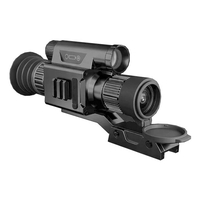
Fuego DS-X7 4K Day & Night Vision Rifle Scope
via Uttings
£299.99
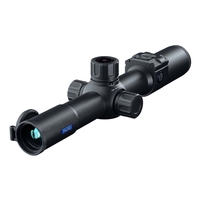
Pard Night Stalker Mini Night Vision Riflescope - 35mm
via Uttings
£339.00
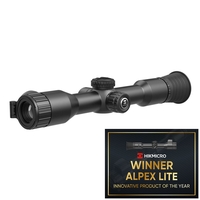
HIKMicro Alpex 4K Lite Digital Day/Night Riflescope
via Uttings
£399.00
Buying Advice
The two specifications that matter most in any thermal scope are sensor resolution and refresh rate, and understanding the relationship between them will save you from overspending or under-buying. Sensor resolution is quoted as pixel dimensions — common budget tiers are 256×192, 384×288, and 640×512. Higher resolution means you can positively identify quarry at greater distances, which is the figure that matters for ethical shooting rather than raw detection range. Refresh rate, measured in hertz, determines how smoothly the image updates: 25 Hz is adequate for static observation, but 50 Hz delivers a noticeably smoother picture when panning or tracking a moving fox. For vermin control at modest UK ranges, 384×288 at 50 Hz is arguably the sweet spot under £1,000 in 2026.
Budget tiers within the sub-£1,000 bracket break down roughly as follows. Entry-level units around £400–£550 typically offer 256×192 resolution at 25 Hz with a 12 µm pixel pitch — adequate for ratting and close-range rabbit work but limiting for foxing beyond 100 metres. Mid-range models from £550–£800 step up to 384×288 sensors, often at 50 Hz, with improved lenses (typically 25 mm or 35 mm objective) and better recoil ratings suited to centrefire calibres. Premium-budget units at £800–£1,000 may offer 640×480 sensors or larger 50 mm objectives, extending positive identification range to 200 metres and beyond. The jump from 256 to 384 resolution is far more noticeable in practical use than the marketing might suggest — it is not merely 50% more pixels but a transformative improvement in image clarity.
Common mistakes UK buyers make include prioritising detection range over identification range, buying a unit not rated for their calibre's recoil, and overlooking battery life in cold weather. Detection range — the distance at which the scope registers a heat signature — is a largely meaningless figure for shooting because you cannot ethically take a shot at a blob of white pixels you cannot identify. Always check the manufacturer's stated identification or recognition range instead. Recoil rating is critical: a scope rated for .22 LR will not survive sustained use on a .308 Win. Budget units sometimes omit this specification entirely, which should be treated as a red flag. Finally, lithium-ion batteries lose capacity in cold conditions, and British winter nights are long — carry a spare or choose a unit that accepts standard 18650 cells.
UK-specific legal context is essential. In England and Wales, there is no law specifically prohibiting the use of a thermal scope for shooting; however, you must hold a valid firearms certificate with the appropriate conditions, and the land must be covered by a permission or occupier's authority for the quarry species in question. Night shooting of foxes and certain pest species is lawful provided you meet these conditions. In Scotland, the law around night shooting differs: the use of artificial light is more tightly regulated under the Wildlife and Countryside Act 1981 and subsequent amendments, though thermal imaging — which emits no light — has generally been considered outside those provisions. Regardless, always verify the current position with your local police firearms licensing department before using a thermal scope at night. Typical UK calibres for foxing — .223 Rem, .22-250 Rem, and .243 Win — all produce moderate recoil that most mid-budget thermal scopes will tolerate, but always confirm the manufacturer's recoil rating against your specific rifle and moderator setup.
Matching a thermal scope to your actual use case prevents overspending. If your primary role is ratting around farm buildings with a .22 LR or .17 HMR at distances under 80 metres, an entry-level 256×192 dedicated scope will serve perfectly — and the money saved is better spent on a decent IR torch or spotter. For foxing across open pasture at 100–200 metres, invest in a 384×288 or better sensor with a 35 mm objective and 50 Hz refresh; this combination lets you confidently identify a fox from a badger or a domestic cat before you commit to a shot. If you already own a quality day scope with a proven zero, consider a clip-on thermal unit — these attach ahead of your existing optic and overlay a thermal image, preserving your familiar reticle and turret setup. Clip-ons under £1,000 exist, though they tend to offer lower resolution than a dedicated scope at the same price. For sub-12 ft/lb air rifles used on farmyard rats and squirrels at 30–50 yards, a lightweight unit is paramount — many thermal scopes weigh 400–700 g, which significantly alters the balance of a spring-piston air rifle and can affect accuracy.
The brand landscape for budget thermal in the UK is dominated by a handful of manufacturers. Pard has established a strong following among UK shooters, with models like the Pard thermal scope range offering competitive specifications at aggressive price points and a solid reputation for surviving rimfire and moderate centrefire recoil. Hikmicro, backed by the vast resources of Hikvision, has rapidly gained market share with well-built units featuring proprietary image-processing algorithms that punch above their weight in image clarity. Pulsar, a Lithuanian brand with deep heritage in night vision thermal optics, sits at the upper end of the budget bracket but delivers build quality and customer support that justify the premium. Smaller brands such as ThermTec and InfiRay are also making inroads, often using the same sensor modules as the bigger names but at lower price points — worth considering if you are comfortable with potentially slower UK warranty turnaround. Buy from established UK dealers such as Sporting Saint, Thomas Jacks, or Optics Warehouse to ensure proper warranty support and after-sales service.
Frequently Asked Questions
What is the best budget thermal scope for fox shooting in the UK?
For foxing under £1,000, look for a dedicated thermal scope with at least 384×288 sensor resolution, a 35 mm objective lens, and a 50 Hz refresh rate. This combination gives you reliable positive identification of a fox at 150–200 metres in typical UK pasture conditions. Pard, Hikmicro, and Pulsar all offer models in this specification bracket, so the best choice often comes down to personal ergonomics, reticle preference, and available UK dealer support.
Pard vs Hikmicro vs Pulsar: which budget thermal scope offers the best value under £1,000?
Pard generally offers the lowest entry price for a given sensor resolution, making it popular with shooters on a strict budget. Hikmicro tends to deliver superior image processing and build quality at a mid-range price. Pulsar commands a premium but provides excellent reliability and strong UK warranty infrastructure. If pure value-for-money on specifications is your priority, Pard is hard to beat; if you want the best overall image quality, Hikmicro typically edges ahead at similar price points.
Can you use a thermal scope as a clip-on with an existing day scope?
Yes — clip-on thermal units mount ahead of your existing day scope's objective lens and project a thermal image through it. This preserves your day scope's reticle, zero, and turret adjustments, which is a significant advantage if you already have a well-zeroed setup. Budget clip-ons under £1,000 do exist, but they generally offer lower sensor resolution than a dedicated thermal scope at the same price. Ensure the clip-on's output is compatible with your day scope's magnification range to avoid vignetting.
What thermal resolution and refresh rate do you need for UK vermin control at night?
For rats and rabbits at close range (under 80 metres), a 256×192 sensor at 25 Hz is workable and keeps costs low. For foxing at 100–200 metres, a 384×288 sensor at 50 Hz is the practical minimum for reliable positive identification before taking a shot. Higher resolutions such as 640×512 extend identification range further but push prices towards or above £1,000. Refresh rate matters most when tracking moving quarry — 50 Hz produces a noticeably smoother image than 25 Hz during panning.
Are budget thermal scopes legal for night shooting in England, Scotland and Wales?
In England and Wales, using a thermal scope for night shooting is lawful provided you hold a valid firearms certificate, have appropriate permission for the land, and are shooting a legal quarry species. Thermal scopes emit no light, so they fall outside lamp-related restrictions. In Scotland, night shooting regulations differ and are more restrictive — while thermal imaging itself is not classified as artificial light, specific rules around authorised quarry and methods apply. Always confirm the current legal position with your local firearms licensing department before heading out.
How far can you realistically shoot with a budget thermal scope under £1,000?
Detection range — seeing a heat signature — can exceed 1,000 metres even on budget models, but this figure is misleading. What matters is identification range: the distance at which you can positively confirm your target species. On a 384×288 sensor with a 35 mm lens, expect reliable identification of a fox-sized target at 150–250 metres depending on atmospheric conditions. Ethical shooting demands positive identification, so base your expectations on this figure rather than headline detection claims.
Will a budget thermal scope survive recoil from a centrefire rifle like a .243 Win?
Most mid-range budget thermal scopes from reputable brands such as Pard and Hikmicro are rated for centrefire recoil up to at least .308 Win levels, which comfortably covers .223 Rem, .22-250 Rem, and .243 Win — the most popular UK foxing calibres. However, some entry-level units are rated only for rimfire or air rifle use. Always check the manufacturer's stated recoil rating before mounting any thermal scope on a centrefire rifle, and be aware that using a moderator reduces felt recoil and extends the scope's service life.
Can I use a thermal scope on a sub-12 ft/lb air rifle for ratting?
Yes, and recoil is a non-issue on pre-charged pneumatic (PCP) air rifles. However, weight and balance are important considerations — a 600 g thermal scope significantly alters the handling of a lightweight air rifle. On spring-piston airguns, the unique bidirectional recoil pattern can damage optics not rated for it, so check compatibility carefully. Remember that sub-12 ft/lb air rifles are only effective to around 40–50 yards, so a high-resolution thermal sensor is less critical than ergonomics and a clear, well-defined reticle at low magnification.
What accessories should I buy alongside a budget thermal scope?
A spare battery is essential for long winter sessions — cold temperatures reduce lithium-ion capacity significantly. A suitable mounting solution (30 mm or Picatinny depending on the unit) with proper torque settings ensures the scope holds zero. A lens-cleaning pen and microfibre cloth protect the germanium objective lens, which is softer and more expensive to replace than standard glass. Finally, consider a good-quality bipod or shooting stick to maximise stability, since thermal image clarity improves dramatically when the scope is held steady.
Related guides
Our expert-tested guide to the best thermal spotter monoculars under £1,000 for UK deer stalking and foxing.
Best Budget Thermal Scopes for Fox & Deer Shooting in the UKOur 2026 UK buyer's guide to the best thermal scopes under £500 for foxing and deer stalking. Compare PARD, Hikmicro and more — specs…
Pulsar vs Hikmicro: Which Thermal Scope Suits UK Shooters?Pulsar or Hikmicro thermal scope for UK shooting in 2026? Our in-depth comparison covers specs, budget tiers, deer stalking…
Best Rifle Scopes Under £100 for UK Shooters (2026)Our expert guide to the best rifle scopes under £100 for UK shooters in 2026. Covers air rifle, rimfire and centrefire optics with buying advice…
Best Budget Bench Rest Scopes Under £500 (UK 2026)Our expert 2026 guide to the best scope for bench rest shooting UK. Compare precision optics under £500 with the magnification…
Best Budget Air Rifle Scopes Under £100 (2026 UK Guide)Our UK experts pick the best air rifle scopes under £100 for springer and PCP shooting in 2026. Covers magnification, recoil resistance, parallax and more.
Not sure which scope is right for you?
Try our AI-powered scope finder — answer a few questions and get personalised recommendations.
Find My Scope →Get a UK scope tip every day
Follow AiScopes on Facebook for daily buying guides, deals and gear advice.
Follow on Facebook