Best Driven Shooting Scopes Under £500 in 2026
By Peter Makulek · Senior Optics Editor · · Live prices from UK retailers
Driven shooting places unique demands on your optic. Whether you are standing at a peg on a driven game day or posted on a high seat during a driven deer cull, targets appear fast, move unpredictably, and present only fleeting shot windows. The best scope for driven shooting must offer a wide field of view, rapid target acquisition, and an illuminated reticle that draws your eye to the aiming point instinctively. In the UK, where driven days on pheasant, partridge, and increasingly managed deer culls rely on quick, humane shots, choosing the right glass is not a luxury — it is an ethical obligation.
The good news for 2026 is that the market for budget-friendly, fast-target optics has never been stronger. Several well-respected brands now produce low power variable scopes specifically designed for driven shooting at prices well below the £500 mark. Names like Vortex, Burris, Leupold, and even newer entrants like PARD are competing hard for UK shooters who want performance without paying four figures. This guide cuts through the marketing noise and focuses on what genuinely matters for fast-target work on a sensible budget.
Understanding why driven shooting optics differ from stalking or target scopes is critical before you spend a penny. A stalking scope at 4-16x magnification gives you detailed target identification at range, but its narrow field of view at higher powers makes tracking a moving boar or a driven deer almost impossible. Conversely, a driven shooting scope typically sits in the 1-6x or 1-8x range, offering a wide, bright image at 1x that behaves almost like a red dot, while still giving enough magnification for a precise shot out to moderate distances when dialled up.
This guide is written specifically for UK buyers navigating the 2026 market. We cover the key optical and mechanical specifications you need to understand, explain the real-world differences between first and second focal plane reticles for this discipline, compare the best budget scope brands head to head, and answer the most common questions UK shooters are asking right now. Whether you are preparing for your first driven day or upgrading from an ageing scope, this is the definitive resource for finding a driven shooting scope under £500 that truly delivers.
Top Picks — Live UK Prices
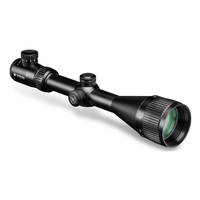
Vortex Crossfire II 3-12x56 AO Hog Hunter Riflescope
via Uttings
£279.00
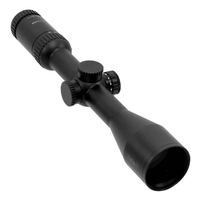
OptiMate Hunter 2-12x50 WA IR Rifle Scope
via Uttings
£279.99
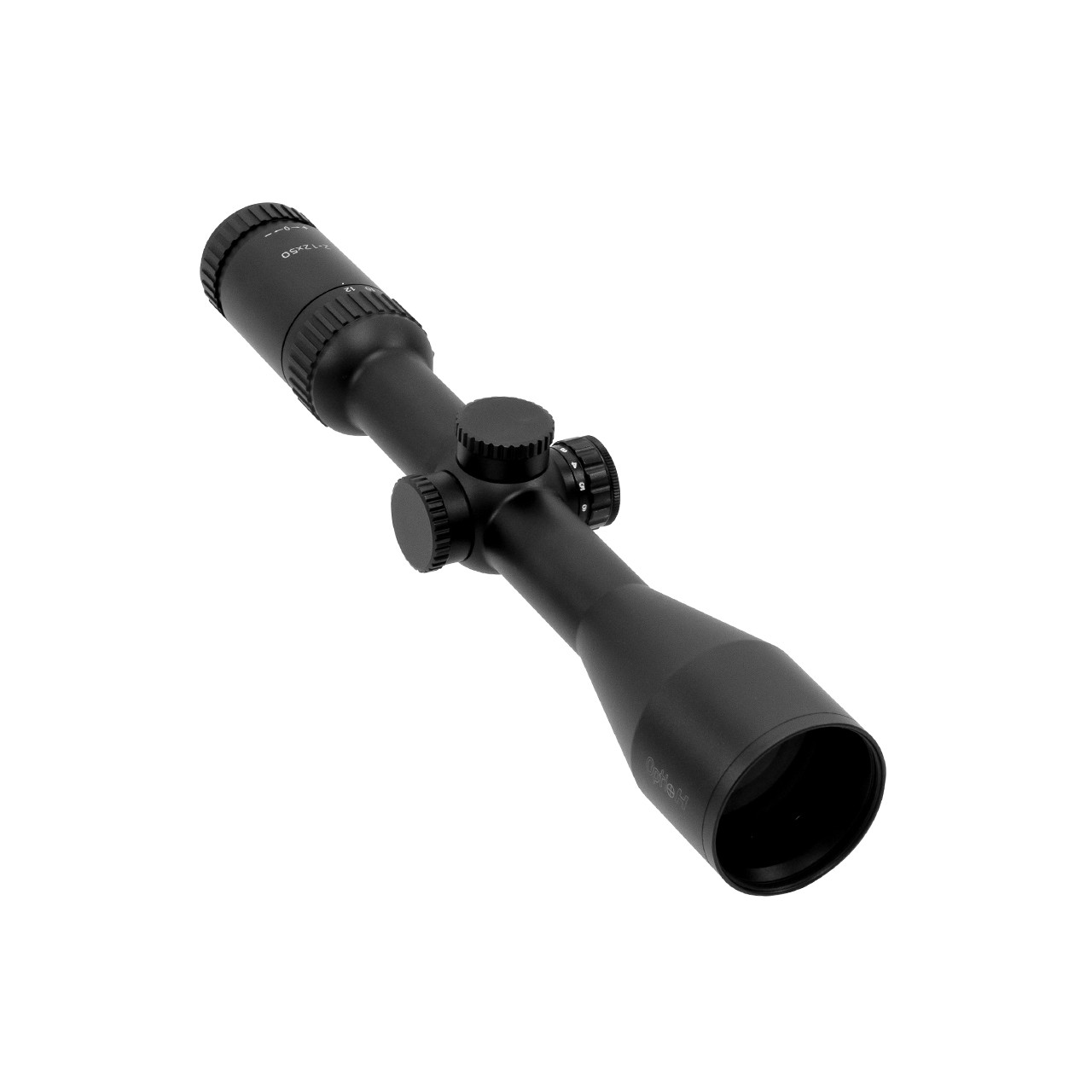
OptiMate Hunter 2-12x50 WA IR BT Rifle Scope
via Livens
£280.00
Buying Advice
When evaluating any scope for driven shooting, the specifications that matter most are magnification range, field of view at 1x, eye relief, illumination brightness, and optical clarity. A 1-6x24 or 1-8x24 low power variable scope (LPVO) is the sweet spot for this discipline. At 1x, the field of view should be at least 35 metres at 100 metres — anything less and you will struggle to track fast-crossing targets. Eye relief of 90mm or more is important for comfortable shooting with heavier calibres. The illuminated reticle should be daylight-visible, not merely a dim glow that washes out in bright conditions. Finally, edge-to-edge clarity at low power matters enormously because you will be scanning with both eyes open.
Budget tiers in 2026 break down roughly as follows. Entry-level scopes between £150 and £250 — such as the Vortex Crossfire II 1-4x24 or Burris RT-1 — offer solid optical performance and reliable construction but may lack daylight-bright illumination or true 1x magnification. Mid-range options between £250 and £400, including the Vortex Viper PST Gen II 1-6x24 and Burris RT-6, deliver noticeably better glass coatings, crisper reticles, and more robust turret mechanisms. At the top end of the sub-£500 bracket you will find scopes like the Leupold VX-Freedom 1.5-4x20 and select PARD offerings that compete with optics costing twice the price, featuring ED glass elements and exceptionally bright illumination systems.
Common mistakes buyers make when choosing a driven shooting scope include over-specifying magnification, ignoring mount height, and neglecting reticle design. A 3-12x or 4-16x scope is simply too much magnification for driven work — you will spend precious seconds trying to find the target in a narrow field of view. Mount height matters because a low-mounted LPVO with a 24mm objective needs no sunshade and sits naturally on most sporting rifles, whereas a tall mount creates an inconsistent cheek weld. On reticles, avoid complex Christmas-tree or mil-hash designs intended for long-range precision; a simple illuminated dot, circle-dot, or German #4 style reticle with an illuminated centre is far faster for snap shooting.
UK-specific context is important. Under current firearms legislation, your scope choice must be appropriate for the quarry and conditions specified on your firearm certificate. For driven deer, calibres such as .243 Winchester, .270 Winchester, and .308 Winchester are standard, and these generate enough recoil that robust scope construction and generous eye relief are non-negotiable. For driven game bird shooting with a rifle — less common but encountered on some Scottish estates for fox control during drives — a low-power variable scope is vastly preferable to iron sights. Buy from established UK retailers such as Sporting Saint, John Rothery, or Edgar Brothers distributors who offer proper UK warranty support and can advise on compatibility with your specific rifle and moderator setup.
Matching the scope to your personal use case requires honesty about how you actually shoot. If your driven days are exclusively close-range woodland work at 30-80 metres, a true 1x scope or even a quality red dot sight like the Vortex SPARC Solar may be the fastest option. If you also stalk in the morning and stand at a driven peg in the afternoon, a 1-6x or 1-8x LPVO gives you the versatility to do both without swapping optics. Consider whether you shoot with both eyes open — if so, a true 1x with no magnification distortion is essential. If you wear glasses, check that the eye box is forgiving enough to maintain a full image without head repositioning.
The brand landscape for the best budget scope for driven shooting in 2026 is dominated by a few key players. Vortex remains the benchmark for value, with its unconditional lifetime VIP warranty honoured in the UK through their European service centre. Burris offers excellent optical quality at competitive prices and their Ballistic CQ reticle is purpose-designed for close-quarters work. Leupold's lightweight American-made scopes are favoured by traditionalists. PARD, better known for thermal and digital night vision, has begun producing surprisingly capable daylight optics that merit serious consideration at this price point. In a Burris vs Vortex comparison, both brands deliver outstanding reliability; the choice often comes down to reticle preference and which model fits your rifle's rail system. Do not overlook lesser-known European brands like Meopta or GPO, which occasionally dip below £500 during seasonal sales and offer genuinely premium glass.
Frequently Asked Questions
What magnification range works best for driven shooting where targets move fast?
A 1-6x or 1-8x low power variable scope is ideal for driven shooting. At 1x you get a wide field of view — typically over 35m at 100m — that lets you acquire and track fast-moving targets with both eyes open. The upper end of 6x or 8x provides enough magnification for positive target identification and precise shot placement out to 150-200 metres when needed. Avoid going above 10x maximum, as higher magnification dramatically narrows the field of view and slows acquisition.
Do you need a first focal plane or second focal plane scope for driven shooting?
For driven shooting, a second focal plane (SFP) scope is generally the better choice. In an SFP scope the reticle stays the same apparent size regardless of magnification, so your illuminated dot or circle-dot remains consistent and uncluttered at 1x where you will spend most of your time. First focal plane (FFP) scopes shrink the reticle at low magnification, which can make the aiming point too small and slow for snap shooting. FFP is better suited to long-range precision work where holdover markings must remain accurate at all powers.
What is the best low-cost scope for driven game days in the UK in 2026?
The best scope for driven shooting in the UK under £500 in 2026 depends on your exact needs, but strong contenders include the Vortex Viper PST Gen II 1-6x24, the Burris RT-6, and the Leupold VX-Freedom 1.5-4x20. All three offer daylight-visible illumination, excellent low-power optical clarity, and robust construction suited to UK weather. Check current UK retail prices as they fluctuate, and buy from an authorised dealer to ensure your warranty is valid.
Is a red dot or low-power variable scope better for driven shooting?
Both have merits, but a low power variable scope for driven shooting offers greater versatility. A red dot is arguably the fastest option for pure snap shooting at close range, but it provides no magnification for target identification or longer shots. An LPVO set to 1x performs almost identically to a red dot for speed, while offering the option to dial up to 6x or 8x when you need to confirm your target or take a more precise shot. For most UK driven shooting scenarios, an LPVO is the more practical single-optic solution.
Which budget brands like Burris or Vortex offer the best driven shooting scope under £500?
Vortex and Burris are the two strongest contenders in the driven shooting scope under 500 bracket. Vortex's unconditional VIP lifetime warranty and wide UK dealer network make it exceptionally safe to buy, while Burris scopes often feature purpose-designed close-quarters reticles like the Ballistic CQ. PARD is an emerging option worth watching in 2026, particularly for shooters who value integrated technology. Leupold and Meopta also occasionally fall within budget during promotions and offer outstanding optical quality.
What reticle type is best for driven shooting?
A simple illuminated reticle is essential for driven shooting. The best options are a circle-dot, a single illuminated dot, or a German #4 with an illuminated centre post. These designs draw your eye instantly to the aiming point without cluttering the image. Avoid complex mil-dot, Christmas-tree, or BDC reticles designed for long-range work — they add visual noise that slows target acquisition. Ensure the illumination is daylight-bright, as many budget scopes offer illumination that is only visible in low light.
How important is eye relief for a driven shooting scope?
Eye relief is critically important. During driven shooting you mount the rifle quickly and your cheek weld may not be as consistent as on a deliberate stalking shot. Eye relief of at least 90mm ensures you see a full, clear image even with slightly imperfect head position. With heavier calibres like .308 Winchester or .30-06, generous eye relief also protects against scope strike under recoil. Many LPVOs in the sub-£500 range offer 90-100mm of eye relief, which is adequate for most shooters.
Can I use a driven shooting scope for deer stalking as well?
Yes, a 1-6x or 1-8x LPVO can double as a stalking scope for woodland and medium-range work. At 6x or 8x you have sufficient magnification for confident shot placement on deer out to 200 metres in good light. However, if you regularly stalk in open hill country at longer ranges, you may find the upper magnification limiting. Many UK shooters use a 1-6x LPVO on their driven and woodland rifle and a dedicated higher-magnification scope on a separate hill rifle. This two-rifle approach is common and practical.
Do I need to worry about parallax settings on a driven shooting scope?
Most LPVOs in the 1-6x and 1-8x range are factory-set to be parallax-free at around 100 metres, which is perfectly adequate for driven shooting distances. At the low magnifications used for driven work, parallax error is minimal even if the target is closer or further than the set distance. You do not need an adjustable parallax turret for this discipline — that feature adds cost and complexity better suited to long-range target shooting. Simply ensure your chosen scope states its parallax-free distance in the specifications.
Related guides
Expert UK guide to the best scope for fox shooting under £500 in 2026. Covers day and night-ready optics for .223 and .243, illuminated reticles, FFP vs SFP, and clip-on compatibility.
Best Budget Thermal Scopes & Clip-Ons for Foxing in 2026Our 2026 UK buyer's guide to the best thermal scopes and clip-ons for foxing under £500. Compare Pard, Hikmicro and more for affordable night-time vermin control.
Best Budget Bench Rest Scopes Under £500 (UK 2026)Our expert 2026 guide to the best scope for bench rest shooting UK. Compare precision optics under £500 with the magnification, turrets and parallax features that matter for group shooting.
Best Scopes for Driven Shooting in 2026Find the best scope for driven shooting in 2026. Our UK buyer's guide covers magnification, reticles, red dots and budget picks for fast, ethical shots on driven game.
Best Budget PRS Scopes Under £500 (UK 2026)Find the best scope for PRS and precision rifle competition under £500 in the UK. Our 2026 guide covers FFP vs SFP, MRAD turrets, top brands and real buying advice.
Best Budget Air Rifle Scopes Under £100 (2026 UK Guide)Our UK experts pick the best air rifle scopes under £100 for springer and PCP shooting in 2026. Covers magnification, recoil resistance, parallax and more.
Best Scopes for Deer Stalking in 2026: A UK Buyer's GuideFind the best scope for deer stalking in the UK for 2026. Expert advice on magnification, low-light performance, reticles, and budget picks for woodland and hill hunting.
Not sure which scope is right for you?
Try our AI-powered scope finder — answer a few questions and get personalised recommendations.
Find My Scope →Get a UK scope tip every day
Follow AiScopes on Facebook for daily buying guides, deals and gear advice.
Follow on Facebook