Best Scopes for Foxing Under £500 in 2026
By Peter Makulek · Senior Optics Editor · · Live prices from UK retailers
Choosing the best scope for fox shooting in the UK demands a particular blend of optical performance: enough magnification to identify and cleanly dispatch a fox at 200–300 yards, a reticle that remains usable in the failing light of dusk and dawn, and build quality robust enough to survive the jolts of a .223 Remington or .243 Winchester without losing zero. Under £500, the market in 2026 is more competitive than ever, with several manufacturers offering genuinely impressive glass, reliable turrets, and illuminated reticles that were the preserve of four-figure scopes just a few years ago. This guide cuts through the noise to help UK shooters find the right optic for their foxing and vermin-control needs.
Fox shooting in the UK typically involves calling or lamping from a high seat, vehicle, or prone position, often across mixed farmland where shots can vary from 80 yards across a stubble field to 300 yards along a hedgerow. Your scope must therefore handle a wide magnification range without becoming unwieldy, and it must transmit enough light for positive target identification during legal shooting hours and beyond — particularly if you plan to pair it with a clip-on night vision or thermal add-on for night foxing under the authority of your firearms certificate conditions.
The .223 and .243 remain the two most popular centrefire calibres for fox and vermin control on UK FACs, and both are relatively mild in recoil, which opens the door to scopes with slightly lighter construction. That said, any scope for foxing still needs to hold zero reliably under repeated firing and seasonal temperature swings. We prioritise scopes with capped or locking turrets (to prevent accidental dial shifts in the dark), adjustable parallax (essential for sharp focus at varying distances), and well-coated lenses that maximise twilight performance without blowing the budget.
Below, we highlight a curated selection of scopes suited to foxing with a centrefire rifle, all available from UK retailers and priced under £500. After the picks, our in-depth buying advice covers every decision factor — from objective lens diameter and reticle plane to clip-on night-vision compatibility — so you can make an informed choice whether you are setting up your first fox rifle or upgrading an existing rig.
Top Picks — Live UK Prices

Vortex Crossfire II 3-12x56 SFP AO Hog Hunter IR 30mm Rifle Scope
via Optics Warehouse
£324.99

Vector Continental X6 1.5-9x42 German No4 Hunting Reticle Rifle Scope
via Optics Warehouse
£299.99
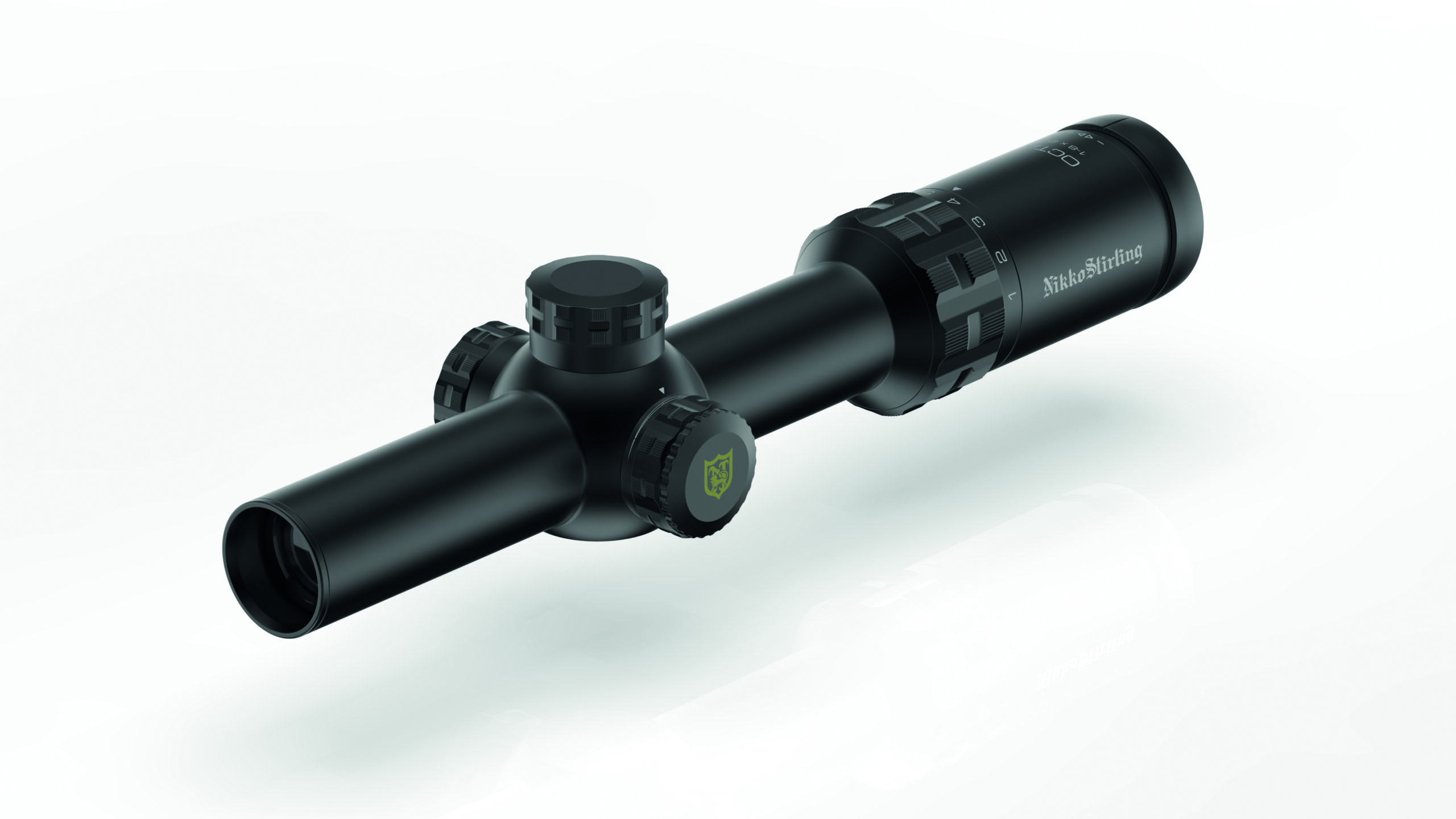
NIKKO STIRLING OCTA 8X ZOOM ILLUMINATED HUNTING SCOPE, 30MM TUBE ILLUMINATED BDC RETICLE 1-8X24
via Livens
£290.00
Buying Advice
When evaluating any fox shooting scope under £500, start with the specification numbers that matter most in practice. Magnification range is critical: a 4–16× or 5–20× variable covers the vast majority of UK foxing scenarios, giving you a wide enough field of view at the bottom end for snap shots at closer ranges and sufficient reach at the top end for 300-yard crosswind holds. Objective lens diameter — typically 44mm or 50mm in this bracket — determines the exit pupil at high magnification (divide objective by magnification), which directly affects image brightness in low light. A 50mm objective at 16× gives a 3.1mm exit pupil; a 44mm at the same power yields 2.75mm. The difference is modest, but noticeable at last light. Parallax adjustment, ideally a side-focus turret, lets you eliminate parallax error at your actual shooting distance rather than relying on a fixed 100-yard setting, which matters when shots vary from 80 to 300 yards.
In the sub-£500 bracket, scopes fall into roughly three tiers. Entry-level options between £150 and £250 offer perfectly serviceable glass for daytime foxing and basic illumination, but may have slightly narrower fields of view, less refined turret feel, and coatings that lose their edge in deep twilight. The mid-range sweet spot — £250 to £400 — is where you find the best value for serious foxing: multi-coated or fully multi-coated lenses, reliable click adjustments in MRAD (0.1 mil per click, equating to 1 cm at 100 metres) or MOA (typically ¼ MOA, roughly 0.7 cm at 100 metres), and well-implemented illuminated reticles with off positions between brightness settings. Premium sub-£500 scopes, typically £400 to £500, begin to incorporate features like zero-stop turrets, locking elevation dials, and glass approaching the clarity of scopes costing twice as much.
The most common mistakes UK buyers make when choosing a scope for foxing are over-magnifying, ignoring reticle suitability, and neglecting compatibility with night-shooting accessories. A 6–24×50 sounds impressive on paper, but at 24× the field of view is narrow, mirage becomes visible on warm evenings, and the scope is heavier than necessary for a foxing rifle you may carry for hours. For most UK fox shooting at ranges up to 300 yards, 16× or 20× maximum is ample. On reticles, a standard duplex with no holdover references wastes the potential of a scope for foxing — choose a reticle with mil-dot or BDC hashmarks so you can hold over for a 200-yard fox without dialling. Finally, if you intend to add a clip-on night-vision or thermal unit, check the objective bell diameter and ensure the scope's eyepiece relief and magnification range are compatible with the device's sensor resolution.
UK-specific context matters. Fox control is carried out under the authority of a Firearms Certificate, and night shooting usually requires a specific condition or landowner permission aligned with your FAC. The .223 Remington and .243 Winchester are the workhorses: the .223 is quiet, cheap to feed, and effective on foxes to about 250 yards with appropriate expanding ammunition; the .243 extends that range comfortably and handles the occasional deer-legal role where your certificate permits it. For scope purchases, reputable UK dealers such as those stocking major European and Japanese optics brands offer warranty support and proper import channels — avoid grey imports that may void manufacturer guarantees. Many UK retailers also offer try-before-you-buy or easy-return policies that are worth exploiting if you are unsure about eye relief or reticle preference on your specific rifle and mount combination.
Matching the scope to your exact use case is the final step. If you fox primarily from a vehicle or high seat, weight is less critical, so a 50mm objective and slightly heavier tube is fine. If you walk in across rough ground or stalk on foot, a 44mm or even 40mm objective on a 30mm tube saves significant weight and profile. For those planning night foxing with a dedicated clip-on thermal or digital night-vision add-on, keep your day scope at a sensible magnification — around 4–12× or 4–16× — because the clip-on device adds its own slight magnification and any excessive power makes the combined image too shaky to use freehand. Conversely, if you are looking at the best budget night vision approach and considering a standalone NV scope or a separate NV rear add-on, your day scope choice becomes less constrained.
The brand landscape under £500 in the UK is broad and genuinely competitive. Several well-established European, Japanese, and Filipino-manufactured optics houses produce scopes in this range with excellent reputations for reliability and optical clarity. Some brands focus on hunting-optimised features like wide-view eyepieces and fast-focus oculars, while others lean towards precision turrets and first-focal-plane reticles that appeal to shooters who also enjoy range work. There is no single best brand — the best scope for foxing is the one whose reticle, turret style, weight, and optical quality align with how and where you shoot. Read user reviews from UK fox shooters, handle the scope in a shop if possible, and remember that a well-mounted mid-range scope will outperform a poorly mounted premium one every time.
Frequently Asked Questions
What magnification range do I need on a scope for foxing at 100–300 yards with a .223 or .243?
A variable scope in the 4–16× or 5–20× range covers virtually all UK foxing scenarios with a .223 or .243. At the lower end you retain a wide field of view for picking up foxes responding to a call at close quarters, while 16–20× is more than sufficient to place a shot precisely at 300 yards. Going higher than 20× adds weight and narrows the field of view without meaningful practical benefit for fox-sized quarry at UK distances.
Should I choose an FFP or SFP reticle for fox shooting at varying distances?
Both work well for foxing, but each has trade-offs. A first focal plane (FFP) reticle scales with magnification, so your holdover references — mil-dots or BDC hashmarks — remain accurate at any power setting, which is useful if you change magnification between shots at different ranges. A second focal plane (SFP) reticle stays the same apparent size regardless of magnification, giving a cleaner sight picture at low power, but holdover marks are only accurate at one specific magnification (usually the highest). For most foxing under £500, SFP scopes tend to offer better optical quality at a given price, and the holdover limitation is manageable if you simply dial to full magnification before a measured shot.
Can I use a day scope under £500 with a clip-on night vision or thermal add-on for night foxing?
Yes, and this is one of the most practical approaches to night foxing on a budget. A clip-on unit mounts in front of your day scope's objective lens, letting you use your familiar reticle and zero. Ensure your day scope's objective bell is not too large for the clip-on's attachment system, and keep magnification moderate — around 4–12× or 4–16× — because the clip-on adds slight magnification of its own. Check that the scope's eye relief is generous enough (ideally 90mm or more) to remain comfortable with the slightly altered optical path.
What are the best illuminated reticle options for foxing at dusk and dawn under £500?
Look for a scope with a red or red-green illuminated centre dot or crosshair rather than a fully illuminated reticle, as this preserves your night-adapted vision and avoids washing out the image in low light. The best implementations feature multiple brightness levels with off positions between each setting, so you can click quickly to your preferred intensity without cycling through blinding steps. Etched glass reticles with illumination are preferable to wire reticles, as they remain usable even if the battery fails.
Is a 50mm objective worth the extra weight for foxing in low light, or is 44mm enough?
A 50mm objective gathers more light and provides a slightly larger exit pupil at high magnification, which helps in the final minutes of legal shooting light. However, the practical difference over a 44mm lens is modest — perhaps five to ten minutes of additional usable twilight — and the 50mm adds both weight and height, often requiring taller mounts that raise the cheek weld. If you shoot primarily from a supported position (vehicle, bipod, high seat), the 50mm is a sensible choice. If you walk in and value a compact, lighter rifle, 44mm is more than adequate for foxing in the UK.
What turret adjustment system is best for a foxing scope — MOA or MRAD?
Either system works perfectly well for fox shooting. MRAD (milliradians) is increasingly popular because the metric maths is intuitive: 0.1 mil per click equals 1 cm of shift at 100 metres. MOA (minutes of angle) remains widespread, with ¼ MOA clicks equating to approximately 0.7 cm at 100 metres (or about 0.26 inches at 100 yards). The key is to match your turret adjustment unit to your reticle unit — a mil reticle with mil turrets, or an MOA reticle with MOA turrets — so that holdover and dial-up calculations are consistent.
Do I need a side-parallax adjustment for foxing, or is a fixed-parallax scope acceptable?
A side-parallax (or adjustable objective) control is strongly recommended for foxing with a centrefire rifle. Fixed-parallax scopes are typically set at either 100 yards or 150 yards, meaning targets at 200–300 yards will exhibit noticeable parallax error — the reticle appears to shift against the target as your eye moves slightly behind the scope. With shots on foxes often taken quickly in poor light, eliminating parallax at your actual shooting distance improves both accuracy and confidence.
Is it legal to use night vision for foxing in the UK?
Night-vision and thermal devices are legal to own and use for foxing in England, Wales, and Scotland, provided you have lawful authority to shoot on the land in question and your Firearms Certificate conditions permit night shooting. There is no separate licence required for the night-vision equipment itself. However, you must still positively identify your target before firing, which is why quality optics — whether a clip-on NV add-on or a dedicated night-vision scope — are essential for safe and responsible night foxing. Always check your specific FAC conditions and any local police guidance.
How does choosing a scope for foxing differ from choosing one for air-rifle pest control?
The key differences are recoil management, effective range, and optical demands. A sub-12 ft/lb air rifle is realistically effective to around 50 yards on pests, so high magnification and long-range holdover reticles are unnecessary; a simple 3–9×40 or 4–12×40 is ideal. Centrefire foxing scopes must withstand far greater recoil forces, need parallax adjustment for ranges well beyond 100 yards, and benefit from larger objectives and better coatings because foxing often takes place at the edges of daylight. Never assume a scope rated for spring-piston air rifles will survive centrefire recoil, or vice versa — always check the manufacturer's recoil rating.
Related guides
Our 2026 UK buyer's guide to the best thermal scopes and clip-ons for foxing under £500. Compare Pard, Hikmicro and more for affordable night-time vermin…
Best Binoculars for Deer Stalking in the UK: What to Buy Under £300 and Under £500Choosing binoculars for deer stalking in the UK: 8x42 or 10x42, exit pupil at dusk, glass and coatings, and what under £300 and under £500 buys you.
Best Thermal Monoculars Under £1,000 for UK Stalking & FoxingOur expert-tested guide to the best thermal spotter monoculars under £1,000 for UK deer stalking and foxing.
Best Budget Thermal Scopes for Fox & Deer Shooting in the UKOur 2026 UK buyer's guide to the best thermal scopes under £500 for foxing and deer stalking. Compare PARD, Hikmicro and more — specs…
Best Scopes for Deer Stalking Under £300 in 2026Our 2026 UK buyer's guide to the best scopes for deer stalking under £300. Expert advice on riflescopes for deerstalking — magnification…
Not sure which scope is right for you?
Try our AI-powered scope finder — answer a few questions and get personalised recommendations.
Find My Scope →Get a UK scope tip every day
Follow AiScopes on Facebook for daily buying guides, deals and gear advice.
Follow on Facebook