Best Budget Scopes for Deer Stalking Under £500 (2026)
By Peter Makulek · Senior Optics Editor · · Live prices from UK retailers
Choosing the best scope for deer stalking in the UK is one of the most consequential decisions a new or upgrading stalker will make. The glass sitting atop your rifle determines how confidently you can identify your quarry, judge shot placement, and perform ethically in the low-light conditions that define so much British stalking. The good news for 2026 is that the budget optics market has matured enormously: a well-chosen rifle scope under £500 can now deliver optical clarity, mechanical reliability, and low-light performance that would have cost twice as much a decade ago. This guide is built specifically for UK shooters navigating that decision.
Deer stalking in Britain spans hugely varied terrain. Woodland roe stalking in the south of England might present shots at 40 to 80 metres through dappled canopy, while open-hill red deer stalking in the Scottish Highlands could demand confident holds at 200 metres or beyond across featureless peat and heather. These two disciplines place very different demands on your optic—magnification range, field of view, reticle design, and objective lens diameter all shift in priority. Understanding these trade-offs before you spend is the purpose of this guide.
We also need to address a common concern head-on: is a best budget rifle scope genuinely adequate for legal deer stalking in the UK? The short answer is yes, provided you choose wisely. The Deer Act 1991 and its Scottish equivalents set minimum calibre and bullet-weight requirements for the firearm, but place no statutory minimum on optic quality. What the law does demand, however, is that every shot is humane—and that places a practical obligation on every stalker to use an optic that allows positive species identification and precise shot placement in the conditions they actually hunt in. A poorly chosen scope under £100 might compromise that; a carefully selected one in the £300–£500 bracket almost certainly will not.
In this guide we first let you browse our curated product picks from the UK market, then follow up with detailed buying advice covering the key specifications, common mistakes, UK-specific legal and practical context, and an honest brand comparison spanning names like Vortex, Hawke, Burris, and others with genuine UK availability. Whether you are a new DSC1 holder fitting out your first stalking rifle or an experienced deer stalker looking for a capable second optic, this is designed to be the most thorough resource you will find on scope deer selection under £500 in 2026.
Top Picks — Live UK Prices

Vector Continental X6 1.5-9x42 German No4 Hunting Reticle Rifle Scope
via Optics Warehouse
£269.99
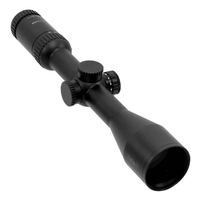
OptiMate Hunter 2-12x50 WA IR Rifle Scope
via Uttings
£279.99
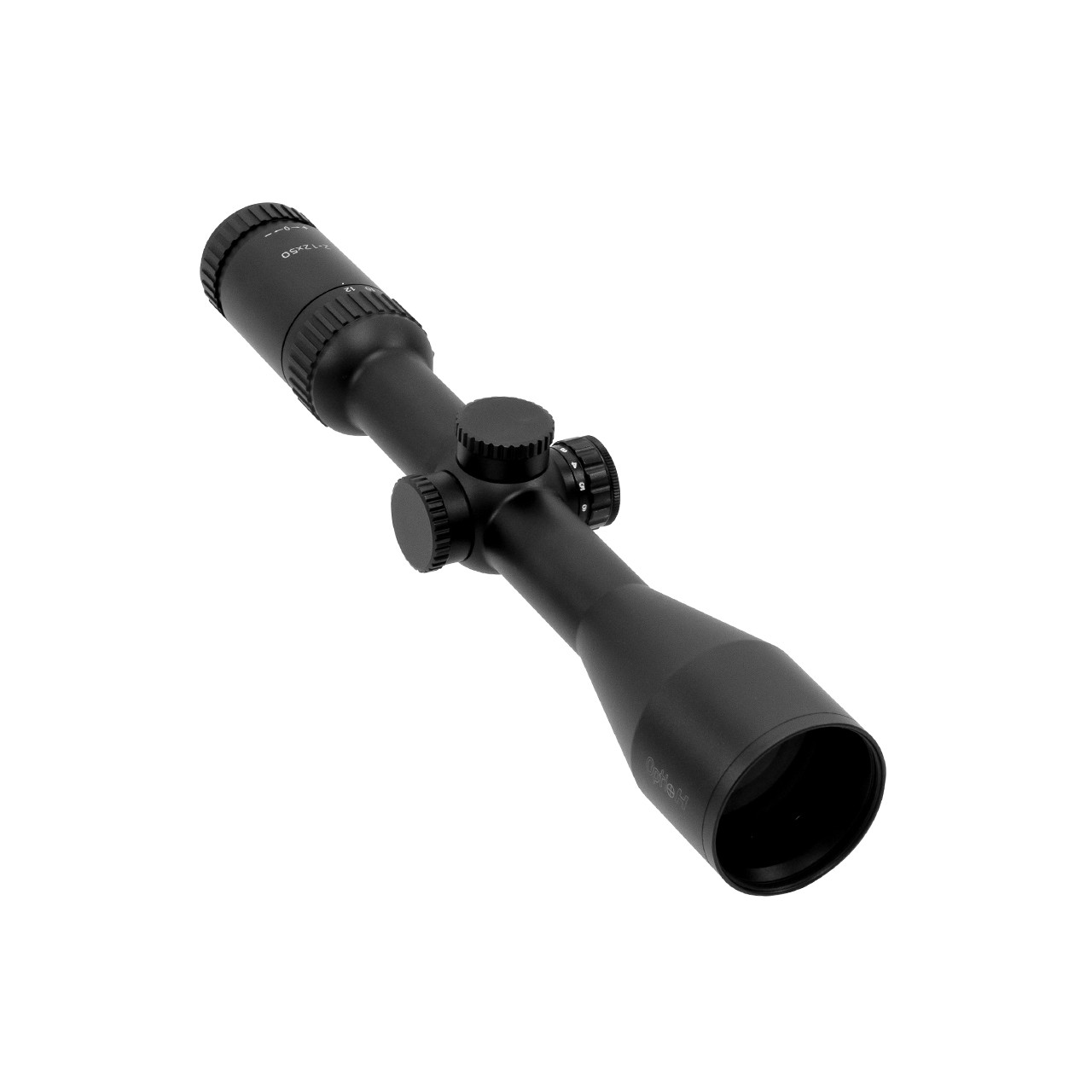
OptiMate Hunter 2-12x50 WA IR BT Rifle Scope
via Livens
£280.00
Buying Advice
Start with the key specifications and what they actually mean for deer stalking. Magnification range is paramount: a 3-12×56 or 2.5-10×50 scope covers the vast majority of UK stalking scenarios, offering a wide field of view at the low end for close woodland shots and enough reach for open hill ground. Objective lens diameter directly affects light transmission—a 50mm or 56mm objective gathers substantially more light than a 40mm, which matters enormously during the legal shooting hours around dawn and dusk when deer are most active. Tube diameter (30mm versus 1 inch) affects the range of internal adjustment and, to a degree, light throughput. Look for fully multi-coated lenses as a minimum; this is where budget scopes have improved most dramatically, and coatings are the primary driver of image brightness and contrast rather than raw objective size alone.
It helps to think in three budget tiers. Below £150 you will find basic hunting scopes—some surprisingly competent for daylight woodland use, but generally with noticeable chromatic aberration, less consistent tracking, and compromised edge-to-edge sharpness. The £150–£300 bracket is where the best budget options sit for dedicated stalkers: expect reliable click adjustments, decent low-light performance, and robust enough construction for a season of hard use. Between £300 and £500 you enter genuinely impressive territory—scopes with excellent glass, capped turrets with repeatable tracking, good-quality illuminated reticles, and build quality that can withstand years of Scottish hill work. The difference between a budget hunting scope and a premium one costing £1,000+ typically shows in extreme low-light edge resolution, turret precision over many rotations, and the refinement of features like zero-stop mechanisms and side-parallax adjustment.
Common mistakes are worth flagging because they cost stalkers money and, worse, confidence in the field. First, over-magnifying: a 6-24×50 target scope sounds impressive but offers a painfully narrow field of view at close range, slow target acquisition in woodland, and is heavier than necessary. For most UK deer stalking, you rarely need more than 12× or 14× at the top end. Second, ignoring eye relief: budget scopes sometimes offer less than 80mm, which with a magnum calibre can result in a nasty scope-eye cut. Aim for 90mm or more, especially if you shoot .308 Win or larger. Third, neglecting the reticle: a thick duplex reticle that obscures detail at 10× is a poor choice for precise shot placement on a roe doe at 150 metres. Look for a second-focal-plane reticle with a fine central crosshair and heavier outer posts, or a first-focal-plane design if you intend to use holdover marks at varying magnifications.
UK-specific context matters more than many guides acknowledge. Legal shooting times for deer vary by species and country within the UK, but dawn and dusk stalking is the norm—so low-light optical performance is not a luxury, it is a practical requirement. The most common stalking calibres in Britain—.243 Win, 6.5 Creedmoor, .308 Win, and increasingly .223 Rem for smaller species in England—all produce moderate recoil that any reputable scope in this price range should handle without issue. Mounting matters too: buy quality bases and rings appropriate to your action (Tikka, Sako, CZ, Howa, and Remington actions all have specific mount requirements). When it comes to purchasing, UK dealers such as Sporting Saint, JH Steward, Highland Outdoors, and RUAG supply all the major brands. Buying from a UK stockist ensures proper warranty support and avoids any import complications. PARD and similar digital night-vision and thermal clip-on devices are increasingly popular for foxing, but note that using any form of night-vision or thermal for deer is illegal across the UK—your daylight optic must stand on its own merits.
Matching the scope to your specific use case is the final and most important step. If you stalk primarily in dense woodland—English coppice, Welsh valleys, lowland forestry—prioritise a lower magnification range (say 1-6× or 2-10×), a wide field of view, and a large exit pupil for fast target acquisition in shadow. An illuminated reticle becomes genuinely useful here, allowing your eye to find the centre point quickly against a dark background of undergrowth; several excellent options with illuminated dots exist under £500. If you stalk open hill ground in Scotland or the north of England, prioritise the upper magnification range (4-16× or 3-12×), a finer reticle for precision at distance, and consider whether MRAD or MOA turrets suit your mental model for dialling elevation—MRAD is metric-friendly and increasingly standard, where 0.1 mil equals 1 cm at 100 metres. For the stalker who does both, a versatile 2.5-10×50 or 3-12×56 is the classic compromise and the configuration we most commonly recommend under £500.
Finally, the brand landscape in the UK budget hunting scope market deserves an honest summary. Vortex has earned a formidable reputation through aggressive lifetime warranties and consistently strong optical performance across their Crossfire II and Diamondback Tactical lines—the Burris vs Vortex debate at this price point often comes down to personal ergonomic preference, as Burris's Fullfield and Droptine series offer excellent glass with slightly different turret and reticle philosophies. Hawke is a UK-based brand with deep roots in the sporting optics market; their Vantage and Frontier lines are well regarded for deer stalking and benefit from easy UK warranty service. Other names worth considering include Meopta (Czech-made optics punching above their weight), Leupold's entry-level VX-Freedom series, and GPO whose German-designed Passion line offers remarkable value. Whichever brand you choose, buy from a reputable UK dealer, ensure the scope is correctly mounted and zeroed by a competent person, and practice at the ranges and in the light conditions you will actually hunt in. The best scope for hunting deer is ultimately the one you know intimately and trust completely.
Frequently Asked Questions
What magnification range do you need for deer stalking in woodland versus open hill ground?
For woodland stalking, where shots are typically 30–100 metres through cover, a lower magnification range such as 1-6× or 2-10× is ideal because it offers a wide field of view and fast target acquisition. For open hill ground, where shots may extend to 200 metres or beyond, a scope reaching 12× to 16× is more appropriate for precise shot placement. A versatile 3-12×50 or 2.5-10×56 covers both scenarios well and is the most popular configuration among UK stalkers who hunt varied terrain.
Is a £300–£500 scope good enough for legal deer stalking in the UK?
Yes, absolutely. While UK law sets minimum calibre and bullet-weight requirements for deer, it does not specify optic standards—however, it does require humane dispatch, which in practice demands clear target identification and precise aiming. Modern scopes in the £300–£500 range from reputable brands deliver excellent optical clarity, reliable mechanical adjustments, and genuine low-light capability. Many experienced stalkers use optics in this bracket as their primary scope and achieve consistently clean kills across all legal UK deer species.
What is the difference between a budget hunting scope and a premium one for deer stalking?
The differences show most in extreme conditions. A premium scope costing £1,000 or more typically offers superior edge-to-edge sharpness, better chromatic aberration control, finer turret repeatability over many adjustment rotations, and noticeably brighter images in the last minutes of legal shooting light. Premium scopes also tend to have more refined features such as zero-stop turrets, locking dioptre rings, and superior waterproof seals. However, a well-chosen scope in the £300–£500 range will handle the vast majority of UK stalking scenarios with confidence.
Do you need an illuminated reticle for early-morning and late-evening stalking under £500?
An illuminated reticle is not strictly necessary but is highly beneficial for UK stalking, where much activity occurs in the low-light periods around dawn and dusk. In dark woodland or against deep shadow, an illuminated centre dot allows your eye to find the aiming point instantly rather than searching for a black crosshair against a dark background. Several excellent scopes under £500 from Hawke, Vortex, and others offer illuminated reticles with multiple brightness settings and automatic shut-off to preserve battery life.
Which budget scope brands—Vortex, Burris, or Hawke—are best for UK deer stalking?
All three are genuinely strong choices with good UK availability and after-sales support. Vortex offers an unconditional lifetime warranty and excellent value across the Crossfire II and Diamondback lines. Hawke is UK-based, making warranty claims straightforward, and their Frontier and Vantage series are well suited to stalking. Burris offers premium-feel glass and robust construction in the Fullfield and Droptine ranges. The Burris vs Vortex comparison often comes down to reticle and turret preference rather than outright optical superiority—handling all three at a dealer before buying is the best approach.
Should I choose MOA or MRAD turrets for deer stalking in the UK?
Either system works perfectly well, but MRAD (milliradians) is increasingly popular among UK stalkers because it works naturally with the metric system: 0.1 mil equals exactly 1 cm at 100 metres, making mental calculations straightforward. MOA (minutes of angle) is equally precise—1 MOA equals approximately 1.047 inches at 100 yards, or roughly 3 cm at 100 metres—and remains common on many hunting-oriented scopes. Choose whichever system you find more intuitive and ensure your turret clicks match your reticle subtensions to avoid confusion in the field.
What objective lens size is best for a deer stalking scope under £500?
A 50mm or 56mm objective is the sweet spot for UK deer stalking because it maximises light gathering for those critical dawn and dusk periods. A 56mm objective on a 3-12× scope produces a large exit pupil at moderate magnifications, which keeps the image bright when your own pupils are dilated in low light. Larger objectives do add weight and require higher mounts, so consider your rifle's balance. A 42mm or 44mm objective is a reasonable compromise if weight is a primary concern and you stalk mainly in good daylight.
Can I use a rifle scope under £100 for deer stalking?
A scope under £100 can technically be mounted on a stalking rifle, but you should approach this tier with caution. At this price point, optical coatings are simpler, low-light performance is significantly reduced, and mechanical repeatability of turret adjustments may be inconsistent—all of which can compromise your ability to place a humane shot, especially in the dim conditions typical of UK stalking. If your total budget is very limited, it is better to buy a used scope from a reputable mid-range brand than a new entry-level optic of unknown quality.
Is it legal to use thermal or night-vision clip-on devices for deer stalking in the UK?
No. The use of any artificial light source, night-vision device, or thermal imaging equipment for shooting deer is illegal across England, Wales, Scotland, and Northern Ireland. Devices such as PARD clip-on thermal and digital night-vision units are popular and legal for foxing and pest control under the appropriate authorisation, but they must not be used for deer. Your conventional daylight rifle scope must therefore be capable of performing on its own during legal shooting hours, which reinforces the importance of investing in good low-light optical performance.
Related guides
Our 2026 UK buyer's guide to the best scopes for deer stalking under £300. Expert advice on magnification, low-light performance, reticles, and top budget picks for woodland and hill.
Best Driven Shooting Scopes Under £500 in 2026Discover the best scope for driven shooting in the UK under £500 for 2026. Expert advice on low-power variable optics, reticles, and budget brands like Vortex and Burris.
Best Scopes for Deer Stalking in 2026: A UK Buyer's GuideFind the best scope for deer stalking in the UK for 2026. Expert advice on magnification, low-light performance, reticles, and budget picks for woodland and hill hunting.
Best Deer Stalking Scopes for Returning UK Hunters (2026)Returning to deer stalking after years away? Our 2026 UK buyer's guide covers the best scopes, key spec changes, illuminated reticles, and brand picks to get you back out confidently.
Red Dot vs Scope for UK Deer Stalking: The Definitive GuideRed dot sight or rifle scope for deer stalking in the UK? Our 2026 guide covers legality, magnification, brands, and exactly which optic suits your hunting style.
Not sure which scope is right for you?
Try our AI-powered scope finder — answer a few questions and get personalised recommendations.
Find My Scope →Get a UK scope tip every day
Follow AiScopes on Facebook for daily buying guides, deals and gear advice.
Follow on Facebook