Best Budget Long-Range Scopes Under £500 (2026 UK Guide)
By Peter Makulek · Senior Optics Editor · · Live prices from UK retailers
Long-range shooting has never been more accessible in the UK. Disciplines such as NRL-style PRS matches, civilian Service Rifle events, and informal steel-ringing sessions out to 1,000 yards have all exploded in popularity. What used to demand a scope costing well over a grand can now be achieved — credibly — with a rifle scope under £500. The glass quality, turret precision, and reticle design available at this price point in 2026 would have been the preserve of mid-tier optics just five years ago, and UK shooters are rightly asking whether they can skip the premium tax and still hit distant targets with confidence.
Before you buy, however, it is important to understand that a scope is only one part of the long-range equation. Your rifle, ammunition consistency, ballistic data, and — above all — your fundamentals matter enormously. A budget long range scope UK shooters can rely on needs to do a handful of things well: track turret adjustments accurately, offer enough total elevation travel for the cartridge you intend to shoot, present a reticle that aids holdover and wind correction, and hold zero session after session. Get those boxes ticked under £500 and you have a genuinely capable setup.
This guide exists to help UK beginners navigate those requirements without overspending. We break down the real-world specs that matter for scope ballistics drop compensation, explain the MOA-versus-MRAD debate at this price tier, address the practical reality of dialling for 1,000 yards with calibres commonly held on UK FACs, and highlight the compromises you should expect versus those you should never accept. We also reference current models and brands — including Pard, whose recent tactical line has turned heads in the UK market — so you can shortlist with confidence.
Below you will find our curated product picks powered by in-stock availability, followed by detailed buying advice and a comprehensive FAQ section answering the exact questions UK shooters are asking in 2026. Whether you shoot .308 Win, 6.5 Creedmoor, or .223 Rem, and whether your range tops out at 600 metres or stretches to a full 1,000 yards, this is intended to be the definitive resource for finding the best scope long range shooters can buy without breaking the bank.
Top Picks — Live UK Prices

WULF Hurricane Lite 4.5-18x50 SFP Non Illuminated Half Mildot SF Tactical 0.1 MRAD 30mm Rifle Scope
via Optics Warehouse
£94.95

Vector Optics Victoptics S6 1-6x24 LPVO SFP IR VI-CTSIX MIL 30mm Rifle Scope
via Optics Warehouse
£112.49
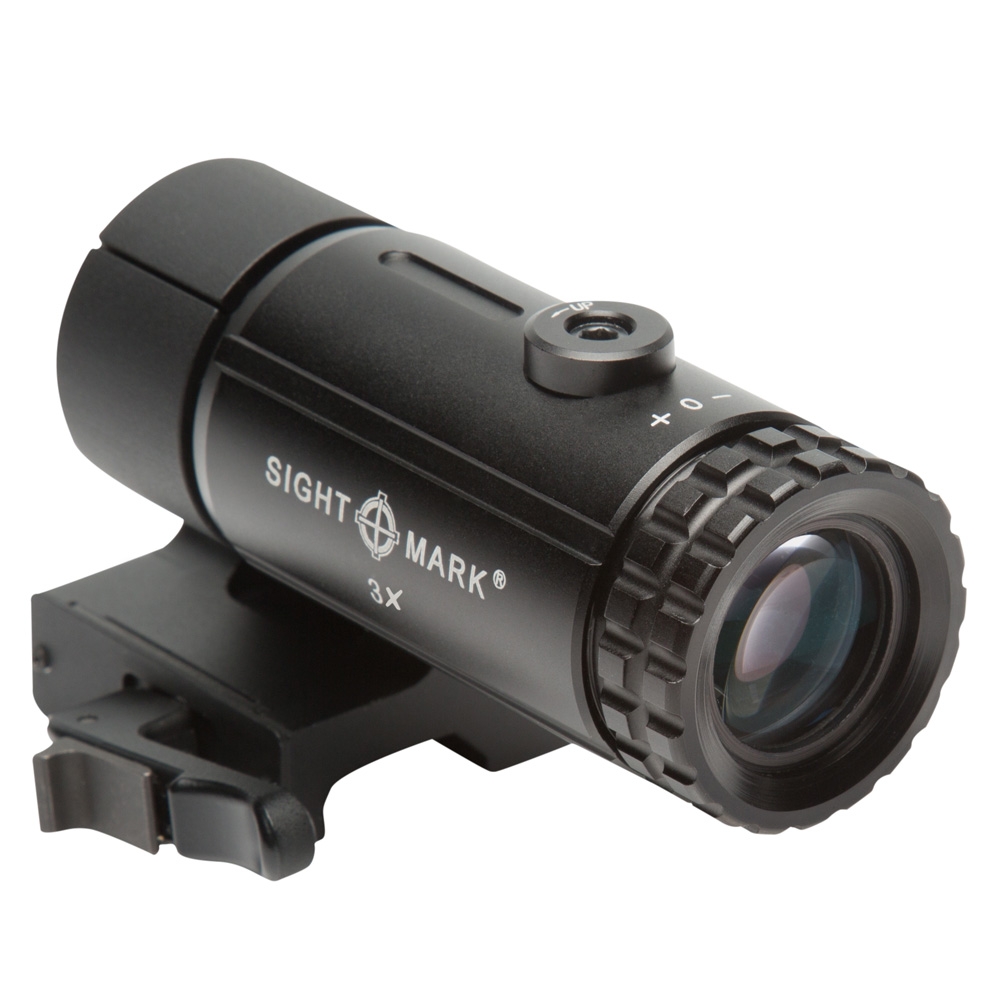
Sightmark T-3 3x Tactical Magnifier
via Livens
£119.00
Buying Advice
The key specifications to scrutinise in any budget long range scope UK buyers are considering are total elevation travel, turret click value, reticle type, focal plane, and parallax adjustment. Total elevation travel is measured in MOA or milliradians (MRAD) and determines how far you can physically dial your point of impact upward from zero. A .308 Win zeroed at 100 yards needs roughly 35–38 MOA (around 10–11 MRAD) of upward travel to reach 1,000 yards, depending on load and conditions. If the scope only offers 50 MOA total, and your mount uses some of that for initial zero, you may run out of adjustment before you reach your target distance. Always check the specification sheet for total elevation, not just 'per revolution'. A 20 MOA canted rail or base can recover valuable travel by tilting the scope's mechanical range in your favour.
At the entry tier — roughly £150 to £250 — you will find second focal plane (SFP) scopes with capped turrets and BDC reticles. These are adequate for learning fundamentals to perhaps 600 metres but often lack exposed turrets, zero stops, and sufficient elevation. The mid tier — £250 to £400 — is where things get genuinely interesting for long-range work. Here you start to see first focal plane (FFP) glass with exposed, locking turrets, MRAD or MOA matched reticle-and-turret systems, side parallax adjustment, and 20+ MRAD of total elevation. The premium-budget tier — £400 to £500 — adds better glass coatings, more consistent tracking, illuminated reticles, and build quality that survives heavier recoil over thousands of rounds. Prioritise the mid tier if your primary goal is stretching past 800 yards.
Common mistakes at this price point include buying a scope with mismatched reticle and turret units (for example, an MRAD reticle paired with MOA turrets), choosing an SFP Christmas-tree reticle that is only accurate at one magnification, ignoring parallax adjustment (fixed-parallax scopes set at 100 yards introduce significant error at 600-plus metres), and selecting a magnification range that is too narrow. A 4-16× or 5-25× is far more practical for long-range shooting than a 6-24× with a tiny field of view at the low end. Another frequent error is neglecting to verify turret tracking: even if a manufacturer claims 0.1 MRAD clicks, budget scopes can drift after repeated box tests. Run a tall-target or box test at 100 metres before trusting your turrets at distance.
UK-specific considerations are important. All centrefire rifles capable of genuine long-range shooting require a Firearms Certificate, and your FAC conditions must cover the calibre and purpose. Ranges offering 1,000-yard lanes — such as Bisley, Diggle, and several Scottish hill ranges — are the realistic venues for this discipline. Common UK long-range calibres include .308 Win, 6.5 Creedmoor, .243 Win, and increasingly 6.5 PRC. The .223 Rem, while popular on FACs, runs out of reliable supersonic flight well before 1,000 yards in UK atmospheric conditions and is better suited to 600 metres maximum. When budgeting, remember UK retail prices include VAT, and buying from established UK dealers ensures warranty support and correct import compliance. Retailers such as RUAG, Optics Warehouse, and Thomas Jacks stock a wide range at this price point.
Matching the scope to your specific use case is critical. If you shoot primarily club-level target rifle out to 600 yards, a well-tracking MOA scope with a fine crosshair and enough elevation will serve you perfectly. If you want to compete in PRS-style matches where speed matters, an FFP MRAD scope with a Christmas-tree reticle allows rapid holdover without dialling, saving precious seconds. For deer stalkers who occasionally ring steel at distance, a versatile 3-18× or 4-16× with a simpler reticle and capped turrets might be the better all-rounder. Do not buy more reticle complexity or turret exposure than your discipline demands — every feature is a potential point of failure, and simplicity often wins in the field.
The brand landscape under £500 in 2026 is competitive. Established names like Vortex (Diamondback Tactical, Strike Eagle lines), Athlon (Argos, Midas Tac), Primary Arms (GLx and SLx series), and Element Optics (Helix and Nexus) dominate conversations. Hawke and Nikko Stirling offer solid UK-supported options at the lower end. Pard, better known for thermal and night-vision devices, has entered the tactical/PRS space with competitively specified first focal plane scopes that are beginning to gain traction among UK shooters looking for value. At this price bracket, warranty and UK service matter enormously — a lifetime or transferable warranty from a brand with a UK service centre can turn a budget purchase into a long-term investment.
Frequently Asked Questions
How much bullet drop compensation do I need in a scope to shoot beyond 500 metres on a budget?
For .308 Win zeroed at 100 yards, reaching 500 metres requires approximately 12–14 MOA (roughly 3.5–4 MRAD) of upward adjustment; reaching 1,000 yards requires around 35–38 MOA (10–11 MRAD). For flatter-shooting calibres like 6.5 Creedmoor, the figures are roughly 15–20% less. Always verify with a ballistic calculator using your specific load data, muzzle velocity, and local atmospheric conditions. Crucially, check that the scope's available elevation above mechanical centre — after zeroing — delivers enough travel to reach your intended distance. A 20 MOA canted rail is almost essential for 1,000-yard work with most budget scopes.
MOA or MRAD turrets for long-range shooting under £500 — which tracks more reliably at this price point?
Neither system is inherently more accurate; what matters is consistent click detents and repeatable tracking, which come down to manufacturing quality rather than unit choice. That said, MRAD (milliradians) has become the dominant system in PRS and tactical disciplines because the maths is simpler in metric: 0.1 MRAD equals 1 cm at 100 metres. Most budget FFP scopes under £500 now default to MRAD reticle-and-turret combinations, meaning more choice and easier reticle-to-turret matching. If you already think in inches and yards, MOA (where 1 MOA ≈ 1.047 inches at 100 yards) works perfectly well — just ensure turret and reticle units always match.
Do budget scopes have enough elevation travel to dial for 1,000 yards with common UK calibres?
Many mid-priced scopes in the £250–£500 range now offer 24–30 MRAD (roughly 80–100 MOA) of total elevation travel, which is technically sufficient for 1,000 yards in 6.5 Creedmoor or .308 Win. However, total travel is not the same as usable travel above your zero. After zeroing at 100 yards, the scope may only have 55–65% of its total travel remaining for dialling up. This is why a 20 MOA (roughly 6 MRAD) canted base is strongly recommended — it shifts mechanical centre downward, freeing more upward adjustment. Always confirm usable elevation after zeroing rather than relying on headline spec alone.
Is a BDC reticle or a Christmas-tree reticle better for long-range shooting on a budget?
A BDC (Bullet Drop Compensation) reticle provides pre-set aiming points calibrated to a specific cartridge and velocity, making it simple but inflexible — if your load does not match the BDC profile, the subtensions will be inaccurate at distance. A Christmas-tree reticle, with graduated horizontal and vertical hash marks in known MRAD or MOA increments, is far more versatile because you apply your own ballistic data to the holdover marks. For genuine long-range work, a Christmas-tree reticle in an FFP scope is superior because the subtensions remain accurate at every magnification. Budget FFP scopes with tree-style reticles are now widely available under £500.
How do I match my ballistic data to scope turret clicks when zeroing for long range?
First, confirm your turret's click value — typically 0.1 MRAD (1 cm at 100 m) or 0.25 MOA (roughly 0.25 inches at 100 yards). Then run your exact load data — bullet weight, BC, muzzle velocity — through a ballistic solver such as Strelok, Applied Ballistics, or the free JBM online calculator. The solver outputs a drop table in your chosen unit (MRAD or MOA) for each distance increment. To dial for 600 metres, for example, you read the required elevation from the table and count clicks accordingly. Always verify predictions at the range by shooting known distances, and record any discrepancies to true-up your data. Consistent muzzle velocity from quality ammunition is essential for the data to remain valid.
What magnification range should I look for in a long-range scope under £500?
A minimum top-end magnification of 16× is advisable for shooting to 1,000 yards, though 20× to 25× is more comfortable for spotting trace and reading mirage. At the low end, 4× or 5× provides a wide enough field of view for target acquisition and closer-range stages in PRS matches. Popular choices in this price bracket include 4-16×44, 5-25×56, and 6-24×50 configurations. Avoid the temptation to chase very high magnification — a 10-40× scope under £500 will invariably sacrifice optical clarity, eye relief, or internal build quality. A sharp 5-25× will outperform a mediocre 8-32× every time at genuine distance.
Does focal plane — FFP versus SFP — really matter for long-range shooting on a budget?
Yes, it matters significantly if you use your reticle for holdover or wind correction. In a first focal plane (FFP) scope, the reticle scales proportionally with magnification, so the subtension values (MRAD or MOA hash marks) are correct at every power setting. In a second focal plane (SFP) scope, the reticle subtensions are only accurate at one specific magnification — usually the highest. If you dial turrets exclusively rather than holding over, SFP can work fine. But for PRS-style shooting or any scenario where you read wind holds off the reticle at variable magnifications, FFP is strongly preferred. Fortunately, quality FFP scopes are now available well under £500.
Can I use a sub-12 ft-lb air rifle scope for long-range centrefire shooting?
No. Scopes designed for sub-12 ft-lb air rifles are built for engagements at 50–75 yards maximum and typically feature fixed parallax set at 25–30 yards, limited elevation travel, and reticles without meaningful holdover capability. They are also not engineered to withstand centrefire recoil. Mounting an airgun scope on a .308 or 6.5 Creedmoor will almost certainly result in internal damage, loss of zero, and potentially dangerous aiming errors. Always use a scope rated for centrefire recoil and designed for the distances you intend to shoot. Conversely, springers impose a unique double-recoil that can damage scopes not rated for spring-piston use.
Are Pard scopes any good for budget long-range shooting in the UK?
Pard has built strong UK brand recognition through its thermal and digital night-vision devices, and in 2026 the company has expanded into conventional day optics, including FFP tactical scopes aimed at the PRS and long-range market. Early reports from UK shooters suggest competitive specifications — MRAD turrets, usable elevation travel, and side parallax — at aggressive price points. As with any newer entrant to the tactical scope market, independent tracking and repeatability tests are essential before trusting the turrets at extreme distance. If Pard can deliver the same after-sales support UK buyers have come to expect from their NV products, they represent a compelling option in the under-£500 bracket.
Related guides
Our 2026 UK buyer's guide to the best scopes for long-range shooting under £1,000. Expert picks, specs explained, and FAQs for reaching 1,000 yards on a budget.
Best Scopes for Extreme Long-Range Shooting Beyond 1,000 YardsExpert UK guide to the best scopes for long range shooting beyond 1,000 yards in 2026. Compare FFP optics, turret systems, reticles and budget tiers for precision rifle work.
Best Long-Range Benchrest Scopes: UK Buyer's Guide 2026Definitive UK guide to the best scopes for benchrest shooting at 200–1,000 yards in 2026. Expert advice on magnification, turrets, reticles, FFP vs SFP and top picks for every budget.
Best Budget Bench Rest Scopes Under £500 (UK 2026)Our expert 2026 guide to the best scope for bench rest shooting UK. Compare precision optics under £500 with the magnification, turrets and parallax features that matter for group shooting.
Best Budget PRS Scopes Under £500 (UK 2026)Find the best scope for PRS and precision rifle competition under £500 in the UK. Our 2026 guide covers FFP vs SFP, MRAD turrets, top brands and real buying advice.
Not sure which scope is right for you?
Try our AI-powered scope finder — answer a few questions and get personalised recommendations.
Find My Scope →Get a UK scope tip every day
Follow AiScopes on Facebook for daily buying guides, deals and gear advice.
Follow on Facebook