Best Night Vision Clip-Ons & Add-Ons for UK Shooters in 2026
By Peter Makulek · Senior Optics Editor · · Live prices from UK retailers
Night vision clip-on scopes have transformed pest control and foxing for UK shooters over the past few years, and the technology available in 2026 is better value than ever. Rather than investing in a separate, dedicated night vision scope — with its own zero, reticle and mounting considerations — a clip-on night vision add-on for your rifle scope lets you convert your trusted day optic into a capable nocturnal system in seconds. For shooters who already own a well-zeroed day scope, this approach saves money, avoids re-zeroing headaches, and means you only need one rifle setup for day and night work. It is no surprise that this is one of the most-searched topics among UK shooters heading into the 2026 foxing season.
The UK market for night vision has its own distinct character. The vast majority of buyers are looking for a solution for foxing at night under lamp or IR, rabbit control, or dealing with other pest species on farmland under the authority of a General Licence or specific permission. Unlike some international markets, UK shooters overwhelmingly use bolt-action centrefire rifles in calibres such as .223 Remington, .243 Winchester, or .22-250, though a significant number also use rimfire .22 LR and even sub-12 ft/lb air rifles for close-range ratting. Your choice of night vision add-on needs to suit the ranges and quarry you typically engage, and UK law places certain responsibilities on you regarding safe target identification at night.
There are several key decision factors when choosing a clip-on night vision scope in the UK. Generation of image intensifier tube (or digital sensor), compatibility with your day scope's objective diameter and eye relief, whether an IR illuminator is built in or needed separately, battery life for long sessions, image quality in very low ambient light, and of course budget all play a role. Digital night vision units — led by brands like PARD — have democratised the market, bringing usable night-time capability to shooters at a fraction of the cost of traditional Gen 2+ or Gen 3 tube-based devices. Understanding what you gain and lose at each price point is essential before you buy.
In this guide, we break down the best night vision add-ons and clip-on scopes available to UK shooters in 2026, covering everything from the most popular budget night vision scope options under £500 to premium units that rival dedicated systems. We will walk you through mounting, compatibility, IR illumination, UK legal considerations, and how to match a device to your shooting discipline — whether that is foxing at 200 yards with a centrefire or lamping rats at 30 metres with a rimfire. Our aim is to make this the most useful, honest resource on the topic anywhere online.
Top Picks — Live UK Prices
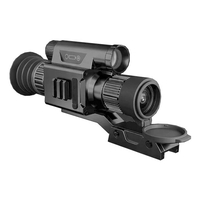
Fuego DS-X7 4K Day & Night Vision Rifle Scope
via Uttings
£299.99
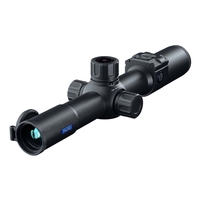
Pard Night Stalker Mini Night Vision Riflescope - 35mm
via Uttings
£339.00
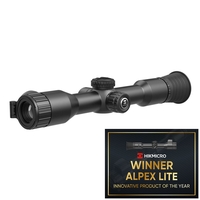
HIKMicro Alpex 4K Lite Digital Day/Night Riflescope
via Uttings
£399.00
Buying Advice
When comparing clip-on night vision devices, the specifications that matter most are sensor resolution, sensitivity, magnification contribution, objective lens diameter, detection and recognition range, and IR illuminator wavelength and power. Digital units quote sensor resolution in pixels — a 1920×1080 CMOS sensor will give a noticeably sharper image than a 720×540 unit, especially at longer ranges where you need to positively identify a fox versus a domestic animal. Detection range tells you how far you can spot a large heat source or reflective eyes; recognition range — the distance at which you can confirm species — is always shorter and is the figure that matters for safe shooting. IR illuminator wavelength is typically 850 nm (faintly visible red glow) or 940 nm (invisible to quarry but with reduced range). For foxing, 850 nm is the popular choice as the slight glow is rarely an issue, and the extra range is valuable.
Budget night vision scopes and clip-ons under £500 — such as older PARD NV007 models and various entry-level digital units — are genuinely capable for close-to-mid range work. Expect reasonable image clarity out to around 100–150 metres with adequate IR, suitable for rabbit shooting at shorter ranges or foxing over bait sites in relatively open ground. Moving into the mid-range (roughly £500–£1,000), you gain better sensor resolution, improved IR power, longer battery life, video recording, and sometimes Wi-Fi streaming to a phone. Premium clip-ons above £1,000 — including higher-end PARD models and rival brands — deliver near-daylight image quality, superior detection range beyond 250 metres, more robust build quality, and recoil ratings for larger calibres. For serious foxing at range in varied terrain, mid-range and above is where the real confidence in target identification begins.
Common mistakes buyers make include assuming any clip-on will fit any day scope without checking objective lens diameter and adapter ring size, underestimating the importance of a quality IR illuminator for pitch-black conditions, and neglecting to check the unit's recoil rating against their calibre. A device rated for .22 LR recoil will not survive long on a .243 Winchester. Another frequent error is buying purely on quoted detection range without considering recognition range — you must be able to positively identify your target before taking a shot, which is both a legal and ethical obligation. Finally, some shooters forget that adding a clip-on to the front of their day scope may shift the rifle's balance and potentially affect parallax settings, particularly on scopes with side-focus parallax adjustment. Always test your complete setup at the range before heading out at night.
UK law does not specifically restrict the ownership or use of night vision or thermal devices, but their use for shooting must comply with the Firearms Act, the Wildlife and Countryside Act 1981, and relevant General Licences. You must have lawful authority to shoot the quarry species at night — foxes can be shot at night with the landowner's permission, while rabbits and certain corvids are covered under General Licences (which vary between England, Scotland, and Wales). There is no requirement for a specific 'night shooting' endorsement on your firearms certificate, but your FAC conditions regarding where you may shoot still apply, and police may ask about your night-vision equipment during a firearms enquiry. Always ensure you have written permission and are aware of the backstop and surrounding area, which is even more critical when ambient visibility is reduced. For purchases, reputable UK dealers such as Optics Warehouse, Thomas Jacks, and County Deer Stalking stock mainstream brands with UK warranty support.
Matching the right clip-on to your use case is straightforward once you are honest about your typical shooting scenarios. For ratting and rabbit shooting with a rimfire or sub-12 ft/lb air rifle at ranges under 75 yards, a budget digital unit with built-in IR will do an excellent job — and the modest recoil of these platforms means longevity is rarely an issue. For foxing with a .223 or .22-250 at ranges out to 200 metres or more, invest in a mid-range or premium clip-on with a high-resolution sensor, powerful 850 nm IR, and a recoil rating that comfortably exceeds your calibre's energy. If you shoot from a high seat or vehicle, battery life and ease of attachment/removal become more important. If you walk long distances to permission, weight and compactness matter. Consider whether video recording or live streaming to a spotter's phone adds value to your setup — several PARD models and competitors now offer this as standard.
The brand landscape for night vision clip-ons in the UK is dominated by PARD, whose NV007 and NV008 series have earned enormous popularity thanks to aggressive pricing, competent optics, and strong word of mouth on UK shooting forums. The PARD NV007 series remains one of the most searched-for products in this category and is widely regarded as the benchmark budget night vision scope for UK foxing and pest control. Other brands making inroads include Sytong (offering similar digital technology at competitive prices), Pulsar (whose clip-on and dedicated units sit at the premium end), and various thermal clip-ons from HIKMicro and Guide Sensmart for shooters who want thermal rather than image-intensified night vision. Thermal is a different technology — detecting heat signatures rather than amplifying ambient light — and is increasingly popular for foxing, though it commands a higher price. For most shooters entering the night-vision world in 2026, a quality digital clip-on from a proven brand remains the smartest first step.
Frequently Asked Questions
What is the difference between a clip-on night vision scope and a dedicated night vision scope?
A clip-on night vision device attaches to the front of your existing day scope, allowing you to use your familiar reticle and zero for night shooting. A dedicated night vision scope replaces your day scope entirely and has its own reticle and zeroing system. Clip-ons are more versatile because they let you switch between day and night use without re-zeroing, and they are generally more cost-effective if you already own a quality day scope. Dedicated units can offer a cleaner optical path and are sometimes lighter, but they mean carrying or mounting a second optic.
Is a PARD NV007 or NV008 clip-on worth it for UK foxing?
Yes — both the PARD NV007 and NV008 series are widely used by UK shooters for foxing and are considered excellent value. The NV007 is the more affordable option and performs well at ranges up to around 100–150 metres with good IR support, making it ideal for bait-site foxing. The NV008 offers a larger objective, better sensor, and improved detection range, suiting shooters who need more capability in open ground. Both units are well-supported by UK dealers and have large user communities, so help and accessories are easy to find. Read any PARD NV007 review from a UK foxing context and you will see consistently positive feedback for the price.
Can you use a night vision clip-on with any day scope or do you need a specific mount?
Most clip-on night vision devices attach via an adapter ring that fits over your day scope's objective bell. You need to check that the adapter ring diameter matches (or can be shimmed to match) your scope's objective housing — common sizes are 42 mm, 45 mm, and 48 mm. Some units come with multiple adapter rings or universal bayonet mounts. It is also important that your day scope has sufficient eye relief and a reasonably flat rear eyepiece area if using a rear-mounted unit. Always verify compatibility before purchasing, as a poor fit will cause image vignetting or an insecure attachment.
What is the best budget clip-on night vision device under £500 for UK shooters?
The PARD NV007 series is the standout choice for a night vision scope under £500 in the UK. It offers a digital CMOS sensor, built-in IR illuminator, video recording, and simple clip-on mounting for most day scopes. Alternatives in this price bracket include entry-level Sytong models. At this budget, expect usable image quality for rabbit shooting and close-range foxing, but be realistic about detection and recognition range — you will not get the performance of a £1,000+ unit. Prioritise a model with at least 850 nm IR and check the recoil rating suits your rifle's calibre.
Do you need an IR illuminator with a clip-on night vision scope for fox shooting in the UK?
In most real-world UK foxing scenarios, yes. While digital night vision devices amplify ambient light, many UK shooting permissions are in areas with very low ambient light — overcast nights away from towns can be almost pitch black. A built-in IR illuminator is standard on most clip-ons, but its range may be limited. For longer-range foxing, an auxiliary IR illuminator torch mounted on the rifle or a separate IR flood can dramatically improve image clarity and usable range. Most experienced UK fox shooters consider a good 850 nm IR illuminator an essential part of their night-shooting kit.
Is it legal to use night vision for shooting in the UK?
Owning and using night vision equipment is legal in the UK. There are no restrictions on purchasing night vision or thermal devices. However, you must have lawful authority to shoot the target species at night — for foxes, this means landowner permission; for rabbits and certain pest birds, the relevant General Licence must apply. Your Firearms Certificate conditions regarding where and how you may shoot remain in force at night. It is your responsibility to ensure safe target identification and a safe backstop, which is more challenging in darkness. Always check the latest General Licence conditions for your country within the UK, as they differ between England, Scotland, and Wales.
Clip-on night vision vs dedicated scope: which is better for UK foxing?
For most UK shooters, a clip-on night vision add-on for your rifle scope is the better choice. It preserves your existing zero and reticle, costs less than buying a complete dedicated night vision scope of equivalent quality, and lets you use the same rifle setup in daylight. A dedicated night vision scope can be preferable if you have a second rifle permanently set up for night work, or if you want the absolute cleanest image with no additional optical elements in the path. For the typical UK foxer who uses one rifle across day and night permissions, the clip-on is the more practical and economical solution.
Can I use a night vision clip-on on a sub-12 ft/lb air rifle for ratting?
Absolutely. A sub-12 ft/lb air rifle generates negligible recoil (with the exception of spring-powered models, which produce a unique bi-directional recoil pulse), so virtually any clip-on night vision device will cope mechanically. Bear in mind that sub-12 ft/lb air rifles are only effective to around 50–75 yards at best, so you do not need a long-range night vision unit — a budget digital device with built-in IR will be more than adequate for ratting around farm buildings. Ensure your mounting adapter fits the smaller objective bells common on air rifle scopes, and test zero retention after fitting the clip-on.
What is the difference between digital night vision and thermal imaging for fox shooting?
Digital night vision uses a CMOS sensor to amplify available and infrared light, producing a recognisable greyscale or green-tinted image similar to what you see with your eyes. Thermal imaging detects heat radiation, displaying warm objects (like a fox) as bright spots against a cooler background regardless of ambient light. Thermal excels at detection — spotting a fox in cover or at long range — but can make precise shot placement harder because you see heat, not fine anatomical detail. Digital night vision with a good IR illuminator gives a more detailed, familiar image at closer ranges. Many serious UK foxers now use a thermal spotter for detection and a digital or intensified clip-on for the shot.
Related guides
Definitive UK buyer's guide to PARD digital night vision scopes for foxing, deer stalking and vermin control.
UK Night Vision & Thermal Law: What Shooters Must KnowUnderstand UK law on night vision and thermal optics for deer stalking, fox control, and lamping. Scotland vs England rules, legal kit…
HIKMICRO Alpex A50T: Is It the Best Digital Night Vision Scope for UK Shooters?Our in-depth UK guide to the HIKMICRO Alpex A50T digital night vision scope. Covers specs, performance, price bands, legal context…
TKN-1 Night Vision Periscope: Your Questions AnsweredExplore the TKN-1 night vision periscope with real pictures, technical breakdown, and UK-relevant buying advice.
Trading a PVS-14 for Thermal & LPVO: Is It Worth It?Should you swap a used PVS-14 for a thermal scope and LPVO? We break down the trade-offs, UK legalities, top picks and budget tiers for night vision…
Best .22LR Rimfire Scopes for Rabbit & Vermin Shooting in 2026Find the best scope for rabbit shooting with a .22LR in the UK. Our 2026 buyer's guide covers magnification, reticles…
Best PCP Air Rifle Scopes Under £200 in 2026Our 2026 UK buyer's guide to the best scopes for PCP air rifles under £200. Expert advice on magnification, parallax…
Not sure which scope is right for you?
Try our AI-powered scope finder — answer a few questions and get personalised recommendations.
Find My Scope →Get a UK scope tip every day
Follow AiScopes on Facebook for daily buying guides, deals and gear advice.
Follow on Facebook