Best Night Vision Scopes for UK Hunting in 2026
By Peter Makulek · Senior Optics Editor · · Live prices from UK retailers
Night-time predator control has become an essential part of countryside management across the UK, and the technology available to shooters has never been more capable or more affordable. Whether you are lamping foxes on arable land, controlling rabbits that raid winter crops, or managing corvids at roost, a dedicated night vision scope can transform your effectiveness and, critically, your shot placement in low-light conditions. With a wave of digital night vision scopes arriving from manufacturers such as Pard, Hikmicro and Yukon, the choice in 2026 is broader than ever — but that breadth can be bewildering for a first-time buyer.
The UK market for night vision optics sits in a unique position. Our firearms-licensing framework, specific quarry species and typical engagement distances all shape what constitutes the best night vision scope for hunting on these islands. A foxing setup on open downland in Wiltshire demands different detection range and magnification from a ratting rig on a Cheshire dairy farm. Understanding those distinctions before you spend is the difference between a scope that gathers dust and one that pays for itself inside a season.
In this guide we break down the core technologies — image-intensifier tubes, digital night vision sensors and thermal imaging — and explain which suits UK disciplines best. We then highlight six scopes that represent genuine value across the budget spectrum, before diving into buying advice that covers specifications, legal context for England, Scotland and Wales, and common mistakes we see UK shooters make. Our aim is straightforward: to give you the most thorough, unbiased resource on the night vision scope UK market in 2026.
Before we get to specific products, a word on the night vision vs thermal for foxing debate. Both technologies let you shoot in darkness, but they work in fundamentally different ways. Night vision amplifies or digitally captures available light (moonlight, starlight, IR illumination) to produce a recognisable image in shades of green or black and white. Thermal detects heat signatures, painting warm bodies against cooler backgrounds. Each has strengths: thermal excels at detection across open ground, while night vision often provides a more natural image that makes positive identification of quarry — and what is behind it — easier at closer ranges. Many experienced UK shooters now carry both, but if your budget allows only one dedicated scope, read on.
Top Picks — Live UK Prices
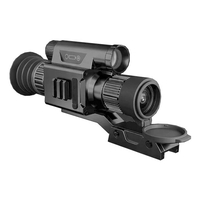
Fuego DS-X7 4K Day & Night Vision Rifle Scope
via Uttings
£299.99
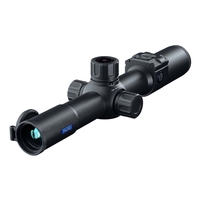
Pard Night Stalker Mini Night Vision Riflescope - 35mm
via Uttings
£339.00
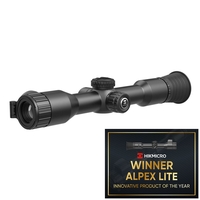
HIKMicro Alpex 4K Lite Digital Day/Night Riflescope
via Uttings
£399.00
Buying Advice
Start with the specifications that genuinely matter for UK night shooting. Sensor resolution is quoted in pixels (e.g. 1920×1080 or 1024×768); a higher-resolution CMOS sensor delivers a sharper, more detailed image, which directly affects target identification at range. Detection range — the distance at which the scope can reveal a human-sized object — is useful but overstated by some manufacturers; for foxing, recognition range (the distance at which you can positively identify a fox as a fox) is more relevant and is typically 40–60 per cent of the quoted detection figure. Magnification on digital night vision scopes is described as optical base magnification plus digital zoom; lean on the optical figure, because heavy digital zoom degrades image quality. A 4–8× window covers the vast majority of UK foxing scenarios. Refresh rate matters too — 50 Hz is the practical minimum for a smooth sight picture when tracking moving quarry.
Budget tiers in the UK night vision scope market break down roughly into three bands. Entry-level units — often from Pard and Sytong — sit below £500 and deliver surprisingly capable 1080p imagery with built-in IR illuminators and video recording, though build quality and battery life can lag behind. Mid-range scopes between £500 and £1,200 from brands such as Hikmicro and Yukon offer improved sensors, longer-range IR, better weatherproofing (IP67 ratings) and more intuitive controls that are easier to operate with gloves. Premium options above £1,200 — including top-tier Hikmicro Alpex and Pard DS35 variants — push into 2K-plus resolution sensors, LRF integration and ballistic calculators, features that start to blur the line with full thermal riflescopes.
Common mistakes we see UK buyers make include over-specifying magnification for short-range ratting (a 6–24× scope is wasted at 30 metres and its narrow field of view becomes a liability), under-estimating the importance of a quality IR illuminator (the built-in unit on cheaper scopes often falls short beyond 150 metres, so budget for an aftermarket 850 nm or 940 nm lamp), and ignoring mounting practicalities. A night vision scope must hold zero just as reliably as a day optic; check that the scope uses a 30 mm or Picatinny rail mount compatible with your rifle and that it can withstand the recoil of your calibre. Centrefire rifles in .223 Rem or .243 Win — the workhorses of UK foxing — generate moderate recoil, but magnum chamberings can shake loose poorly engineered digital internals.
UK-specific context is crucial. In England and Wales, there is no statutory prohibition on using night vision or thermal scopes for shooting pest species under General Licence (GL) conditions; however, you must still have the correct firearms certificate, landowner permission and a lawful reason to shoot. In Scotland, night shooting is similarly permitted for pest and predator control, though deer stalking at night requires specific authorisation from NatureScot, and the use of any artificial light source while shooting deer is restricted. Always check the latest General Licence conditions for your country before heading out — they are updated annually. Typical UK calibres for night foxing are .223 Remington, .22-250 Remington and .243 Winchester, all of which pair well with medium-weight night vision scopes. For sub-12 ft/lb air rifles used for ratting at realistic distances of 20–50 yards, a lighter, lower-magnification digital unit such as the Pard NV007 series is ideal; never expect an air rifle to deliver the long-range capability that centrefire night vision setups provide.
Matching the right scope to your use case is about honest self-assessment. If you shoot foxes once or twice a month on a couple of local permissions, a well-reviewed entry-level Pard night vision scope with a 940 nm IR lamp will do an excellent job out to 200 metres without straining your wallet. If you cover large tracts of arable or moorland and need rapid target acquisition at 250 metres-plus, a mid-range Hikmicro night vision scope with a high-resolution sensor and an integrated LRF will save time and improve confidence in every shot. And if you already own a high-quality day scope that you have zeroed and trust, consider a clip-on night vision scope — a unit that mounts ahead of your existing optic, converting it to a night-capable system. Clip-ons from Pard (the NV007 and SA series) and Hikmicro (the Thunder range) offer this versatility, though they add weight, length and a second battery to manage. For many UK shooters, a clip-on night vision unit represents the smartest first step into night shooting without duplicating an entire scope setup.
Finally, a brief brand landscape for 2026. Pard and Hikmicro dominate the UK digital night vision scope market by volume, offering strong specification-per-pound and wide dealer networks through outlets such as Thomas Jacks, Optics Warehouse and Best Fox Call. Yukon night vision products — the Sightline and Photon RT families — remain popular with shooters who favour a more traditional scope form factor and mature firmware, though Yukon's release cadence has slowed. At the premium end, Pulsar (a Yukon group brand) bridges night vision and thermal with dual-channel devices. Western optics houses like Zeiss, Swarovski and Vortex have focused their low-light investment on twilight-optimised day scopes and thermal clip-ons rather than dedicated digital night vision scopes, so their presence in this specific segment is limited. Burris offers some illuminated-reticle optics suited to dawn and dusk, but not true night vision. For pure night vision value in the UK in 2026, Pard and Hikmicro are the brands to benchmark every other option against.
Frequently Asked Questions
What is the difference between digital night vision and image-intensifier scopes for UK hunting?
Image-intensifier (I²) scopes use a photocathode tube to amplify ambient light, producing the classic green-phosphor image. They offer superb real-time clarity but are expensive, fragile and subject to export controls — Gen 3 tubes are restricted from the US. Digital night vision scopes use a CMOS sensor and micro-display to capture and present an electronic image, much like a high-sensitivity camera. Digital units are far cheaper, can record video, display reticle overlays and work in total darkness with an IR illuminator. For the vast majority of UK hunters, a modern digital night vision scope in 2026 delivers more than enough image quality at a fraction of the cost of an I² tube device.
Are night vision scopes legal for hunting in England, Scotland and Wales in 2026?
Yes. There is no blanket ban on using night vision or thermal optics for hunting pest species in any of the three nations, provided you hold a valid firearms certificate and operate under the relevant General Licences. In England and Wales, foxes, rabbits and certain corvids may be shot at night with night vision under GL conditions and with landowner consent. In Scotland, night shooting for pest control is similarly lawful, but shooting deer at night requires specific NatureScot authorisation, and using artificial light to shoot deer is restricted. Always verify the current year's General Licence wording before heading out, as conditions can change annually.
Pard vs Yukon vs Hikmicro: which night vision scope offers the best value for UK predator control?
All three brands produce capable digital night vision scopes, but value depends on your priorities. Pard night vision scopes — particularly the NV008S and DS35 lines — offer aggressive pricing, 1080p-plus sensors and versatile clip-on options, making them popular with UK foxers on a budget. Hikmicro night vision scopes such as the Alpex series deliver excellent build quality, intuitive menus and strong after-sales support through UK distributors. Yukon's Sightline and Photon RT models have a loyal following for their robust, traditional scope form factor and reliable firmware, though spec-for-spec they can sit slightly behind the latest Pard and Hikmicro releases. For a first night vision scope on a moderate budget, Pard and Hikmicro currently lead on value.
Can you use a clip-on night vision unit with an existing day scope, and is it worth it?
Absolutely. A clip-on night vision scope mounts ahead of your existing day optic's objective lens, turning it into a night-capable system without altering your zero. Popular models like the Pard NV007 series and Hikmicro Thunder clip-ons attach via a quick-release adapter to standard objective bell diameters. The main advantage is cost efficiency — you keep your trusted, zeroed day scope and simply add night capability when needed. The trade-offs are added weight (typically 300–500 g), increased overall length and the need to manage a second battery. For UK shooters who already own a quality day scope and want to try night vision hunting without committing to a standalone unit, a clip-on is an excellent and practical first step.
What magnification and detection range do you need for foxing and predator hunting at night?
For typical UK foxing, an optical base magnification of 3–6× with digital zoom up to 8–12× covers the majority of scenarios. Most foxes are shot between 80 and 200 metres in the UK, so a recognition range (not just detection range) of at least 200 metres is a sensible minimum. Detection range figures quoted by manufacturers refer to spotting a large, high-contrast object and can be double or triple the practical recognition distance. Prioritise recognition range in the spec sheet, as positive identification of your quarry — and confirmation of a safe backstop — is essential for responsible night shooting.
Night vision vs thermal for foxing: which should I choose?
Thermal excels at detecting warm-bodied quarry across open landscapes, even through light fog or drizzle, making it superb for scanning and locating foxes at distance. Night vision (especially digital) provides a more natural-looking image that makes species identification and background assessment easier, which matters for safe shot placement. Many experienced UK shooters use a thermal spotter to find the fox and a night vision scope to take the shot. If you can only afford one optic, a digital night vision scope with a good IR illuminator is the more versatile starting point for close-to-mid-range foxing, while thermal wins for wide-area scanning on large permissions.
Do I need an infrared illuminator, and what wavelength is best?
Most digital night vision scopes include a built-in IR illuminator, but its power is often limited. For UK foxing beyond 150 metres, an aftermarket IR lamp significantly improves image brightness and clarity. IR illuminators come in two common wavelengths: 850 nm, which is more powerful but emits a faint red glow visible to the human eye (and potentially to some quarry at close range), and 940 nm, which is virtually invisible but slightly less efficient. For foxing, 940 nm is widely preferred in the UK because foxes may react to the red glow of 850 nm lamps. Budget for a good-quality 940 nm unit if your scope's built-in illuminator is weak.
Can I use a night vision scope on a sub-12 ft/lb air rifle for ratting?
Yes, and it is an increasingly popular combination for farmyard pest control. A lightweight digital night vision scope such as the Pard NV007 or Hikmicro Cheetah clipped onto a .177 or .22 air rifle makes an effective rat-shooting setup at realistic ranges of 20–50 yards. Remember that sub-12 ft/lb springers and pre-charged pneumatics are only effective out to roughly 50–75 yards at best, so you do not need high magnification or long detection range — a 4–8× scope is ample. Ensure the scope you choose can withstand the unique bi-directional recoil of a spring-piston air rifle if you are not using a PCP.
Where can I buy night vision scopes in the UK, and do I need to show my firearms certificate?
Night vision and thermal scopes are not firearms or controlled items under UK law, so you do not legally need to present a firearms certificate to purchase one. However, many reputable UK dealers — including Thomas Jacks, Optics Warehouse, Best Fox Call, Uttings and county gun shops — may ask about your intended use. Buying from an established UK dealer ensures you receive proper warranty support, correct UK-spec firmware and access to knowledgeable staff who can advise on mounting and zeroing. Avoid grey imports where possible, as warranty claims and firmware updates can be problematic.
Related guides
Our in-depth UK guide to the HIKMICRO Alpex A50T digital night vision scope. Covers specs, performance, price bands, legal context…
TKN-1 Night Vision Periscope: Your Questions AnsweredExplore the TKN-1 night vision periscope with real pictures, technical breakdown, and UK-relevant buying advice.
Trading a PVS-14 for Thermal & LPVO: Is It Worth It?Should you swap a used PVS-14 for a thermal scope and LPVO? We break down the trade-offs, UK legalities, top picks and budget tiers for night vision…
Best PARD Night Vision Scopes for UK ShootersDefinitive UK buyer's guide to PARD digital night vision scopes for foxing, deer stalking and vermin control.
Burris vs Vortex: The UK Shooter's VerdictBurris or Vortex — which scope brand suits UK shooters best? We compare FFP/SFP reticles, MOA vs MRAD turrets, warranties and UK availability to help you…
Pard vs Hikmicro: UK Thermal Scope ShowdownPard or Hikmicro – which thermal scope suits UK shooters best in 2026? We compare image quality, features, pricing and real-world performance for night…
Read next
- best budget night vision scope UK
Best Budget Night Vision Scopes Under £500 for UK Shooters
Not sure which scope is right for you?
Try our AI-powered scope finder — answer a few questions and get personalised recommendations.
Find My Scope →Get a UK scope tip every day
Follow AiScopes on Facebook for daily buying guides, deals and gear advice.
Follow on Facebook