Best Day/Night Scopes for Air Rifles in 2026
By Peter Makulek · Senior Optics Editor · · Live prices from UK retailers
The digital day night scope has quietly become the most transformative optic in UK airgunning. Where shooters once needed a traditional day scope, a separate IR illuminator and a clip-on night vision add-on, a single dual-use unit now covers both roles. For sub-12 ft/lb pest control — ratting in barns, rabbit lamping at 40 yards, or keeping on top of grey squirrels at last light — these scopes are a genuine game-changer, and in 2026 the technology has matured to the point where image quality, battery life and recoil resilience are all genuinely fit for purpose.
This guide focuses specifically on digital day night scope options suited to air rifles in the UK market. That means we are looking at optics that cope with the modest ranges airgunners actually shoot — typically 25 to 50 yards — rather than centrefire-oriented thermals designed for 300-metre foxing. We cover the key brands with real UK mindshare, including Pard, Hikmicro and Yukon, and explain how each handles the unique demands of spring-piston recoil versus PCP platforms like the FX Impact.
Crucially, we also address the legal position. Night vision scopes are legal to own and use in England, Wales and Scotland for pest control and vermin shooting. There is no licence requirement for the optic itself, though you must of course have lawful authority to shoot on the land you are using. With that settled, let us look at what matters when choosing the best night vision scope for your air rifle.
Top Picks — Live UK Prices
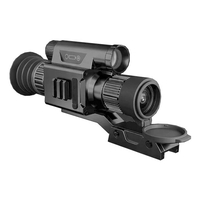
Fuego DS-X7 4K Day & Night Vision Rifle Scope
via Uttings
£299.99
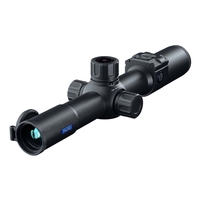
Pard Night Stalker Mini Night Vision Riflescope - 35mm
via Uttings
£339.00
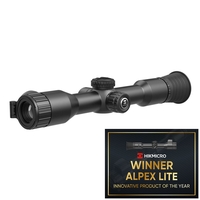
HIKMicro Alpex 4K Lite Digital Day/Night Riflescope
via Uttings
£399.00
Buying Advice
When choosing a digital day night rifle scope for an air rifle, sensor resolution and magnification range matter more than outright detection distance. You are not trying to spot a fox at 500 metres — you need clean, noise-free imagery at 25 to 50 yards in near-total darkness. A 1024×768 OLED display and a sensor of at least 1920×1080 will give you enough detail to positively identify a rat at 40 yards under IR illumination alone. Look for scopes with a built-in 850 nm or 940 nm IR illuminator; 940 nm is virtually invisible to quarry but produces a slightly darker image, so for barn work at close range 850 nm is often the better choice.
Recoil handling is the single biggest reliability concern for air rifle optics. A spring-piston air rifle generates a unique double-shuffle recoil — rearward then forward — that destroys optics not designed for it. If you shoot a springer, look specifically for models that the manufacturer rates for spring-piston use, or choose a Pard or Hikmicro unit that has a proven track record on recoiling platforms in UK forums. PCP shooters using rifles like the FX Impact have far more latitude: virtually any reputable digital day night scope will survive the negligible recoil of a regulated PCP, so your FX Impact scope choice can be driven purely by image quality and feature set rather than durability.
Finally, think about mounting and zero. Most digital day night scopes use standard 30 mm tube rings or a proprietary QD mount. Confirm the scope rail on your rifle — most modern PCPs and many springers use an 11 mm dovetail, though some (including the FX Impact) ship with a Picatinny rail. Use quality mounts with a recoil pin or arrestor block on springers. On the question of zeroing, better dual-use scopes store separate ballistic profiles for day and night modes, so you do not need to re-zero when switching — but always confirm this on the range before heading out. A scope that holds zero across modes is worth every penny of the premium.
A night vision scope for air rifles and a day/night scope are, in 2026, almost always the same product. Nearly every digital night vision scope sold in the UK now has a full-colour day mode, so an air rifle night vision scope and a dual-use day/night unit are usually one device under two names. The exception is the older tube-based image intensifier, which has no day mode and can be damaged by bright light; those still surface second-hand but make little sense for sub-12 ft/lb work at 25 to 50 yards. Budget roughly £250 to £600 for a digital unit that is genuinely usable for ratting and rabbiting, and check two things before ordering: that it is rated for spring-piston recoil if you shoot a springer, and that the built-in IR illuminator can be dimmed, because full power at 20 yards inside a barn will white out the picture.
Frequently Asked Questions
What should I look for in a night vision scope for air rifles?
For an air rifle, a night scope needs to perform at 25 to 50 yards rather than at long range, so prioritise a clean image at low magnification, a dimmable IR illuminator and modest weight over headline detection distance. If you shoot a spring-piston rifle, confirm the unit is rated for springer recoil. Most UK buyers are best served by a digital day/night model from Pard or Hikmicro, which doubles as a day scope so you never swap optics.
What is the difference between a clip-on night vision add-on and a dedicated day/night scope for air rifles?
A clip-on night vision device mounts in front of your existing day scope and projects an intensified or digital image through it, so you keep your familiar reticle and zero. A dedicated day night scope replaces your day optic entirely with a single digital unit that switches between full-colour day mode and IR-assisted night mode. For air rifles, a dedicated digital day night scope is usually the better choice because it is lighter, more compact and avoids the added weight and potential zero-shift of a clip-on arrangement — the difference between a clip on night vision vs day night scope is most pronounced on lightweight air rifles where balance matters.
Are Pard, Hikmicro and Yukon day/night scopes legal to use for shooting in the UK?
Yes. In England, Wales and Scotland there is no law prohibiting the ownership or use of night vision or thermal optics. A Pard day night scope, a Hikmicro day night scope or a Yukon night vision scope can all be legally purchased and used in the UK for lawful pest control and vermin shooting. Northern Ireland has different firearms legislation, so check local guidance there. You must always have the landowner's permission and a lawful reason to shoot.
Which day/night scope works best on recoiling spring-piston air rifles versus PCP platforms like the FX Impact?
Spring-piston air rifles produce a harsh bidirectional recoil that is more punishing to optics than many centrefire rifles. Look for digital scopes explicitly rated for spring-piston use — several Pard NV and Hikmicro Alpex models have strong user-reported track records on springers. PCP platforms like the FX Impact generate virtually no felt recoil, so any quality digital day night scope will perform reliably. The FX Impact scope choice is therefore driven by image quality, magnification and features rather than recoil survival.
Do you need separate zeroes for day mode and night mode on a dual-use scope?
On most modern digital dual use scope air rifle setups the reticle is electronically generated, which means the point of impact should not shift between day and night modes — the sensor and reticle remain in the same optical path. Higher-end models from Pard and Hikmicro allow you to save multiple zero profiles, so you can fine-tune each mode independently if needed. Always verify zero on the range in both modes before relying on the scope in the field.
How do digital day/night scopes compare to traditional IR clip-ons for foxing and pest control?
Digital day night scopes offer a simpler, lighter one-unit solution with on-screen recording, ballistic overlays and instant mode switching — ideal for air rifle pest control at typical sub-50-yard ranges. Traditional IR clip-ons paired with a quality day scope can offer superior image intensification at longer distances, which is why they remain popular for centrefire foxing. For airgunners focused on ratting and rabbiting, a night vision scope for hunting UK pest species at short range, a digital all-in-one is hard to beat on convenience and value.
What magnification and IR wavelength should I choose for air rifle night shooting?
For typical air rifle ranges of 25 to 50 yards, a base magnification of around 3–4× with a digital zoom up to 8–16× is ample — higher digital zoom introduces noise and pixelation that reduces shot confidence. For IR wavelength, 850 nm illuminators produce a brighter image and are the best general choice for barn and farmyard ratting. If you are shooting quarry that may be sensitive to visible IR glow, such as foxes at the edge of lamp range, choose a 940 nm illuminator for near-invisible output, accepting a slightly darker picture in return.
Related guides
Expert UK buyer's guide to the best scopes for the Air Arms S510 and PCP air rifles. Covers magnification, parallax, mounts, sub-12 vs FAC…
DNT Zulus V2 3-12 Day/Night Scope GuideComprehensive UK buyer's guide to the DNT Zulus V2 3-12 day/night scope. Discover key specs, budget tiers in GBP, legal context…
HIKMICRO Alpex A50T: Is It the Best Digital Night Vision Scope for UK Shooters?Our in-depth UK guide to the HIKMICRO Alpex A50T digital night vision scope. Covers specs, performance, price bands, legal context…
TKN-1 Night Vision Periscope: Your Questions AnsweredExplore the TKN-1 night vision periscope with real pictures, technical breakdown, and UK-relevant buying advice.
Trading a PVS-14 for Thermal & LPVO: Is It Worth It?Should you swap a used PVS-14 for a thermal scope and LPVO? We break down the trade-offs, UK legalities, top picks and budget tiers for night vision…
Zero Stop Turrets Explained: Do You Really Need One?What is a zero stop turret, how does it work, and do you actually need one on your rifle scope? Our UK expert guide covers the pros, cons…
How Much Magnification Do You Really Need?Cut through the hype and find the right scope magnification for your shooting discipline. Practical UK advice covering air rifles, rimfire…
Read next
- best budget night vision scope UK
Best Budget Night Vision Scopes Under £500 for UK Shooters
- best night vision rifle scope UK
Best Night Vision Scopes UK 2026
Not sure which scope is right for you?
Try our AI-powered scope finder — answer a few questions and get personalised recommendations.
Find My Scope →Get a UK scope tip every day
Follow AiScopes on Facebook for daily buying guides, deals and gear advice.
Follow on Facebook