Best Second-Hand Spotting Scopes for 900–1100m Range Work
By Peter Makulek · Senior Optics Editor · · Live prices from UK retailers
Watching trace and calling fall-of-shot at 900 to 1100 metres is one of the hardest jobs you can ask a spotting scope to do. At that distance, mirage, light conditions, and atmospheric distortion conspire against you, so the glass you sit behind matters enormously. For UK range shooters—whether you're on Bisley's Century or Stickledown, one of the MOD ranges opened through the NRA, or a private long-range facility—a quality spotting scope is the difference between productive coaching and guesswork. Buying second hand is a sensible route, because top-tier optics hold their performance for decades when looked after.
The UK second-hand market is healthy. Forums like TargetShooter.co.uk, UKVarminting, GunWatch, and the various Facebook groups regularly list scopes from Vortex, Leupold, Bushnell, and Zeiss at meaningful discounts. MOD surplus occasionally surfaces as well. Because spotting scopes aren't subject to the same legal controls as firearms or sound moderators, buying privately is straightforward—no RFD transfer required. That said, you still need to know what to look for, because a bargain with fungus-damaged coatings or a stripped focus thread is no bargain at all.
At the distances we're talking about, magnification alone won't save you. A 20–60× zoom eyepiece sounds impressive, but usable magnification above about 45× at 1000 metres depends entirely on atmospheric conditions. What matters more is objective lens diameter (60 mm minimum, 80–85 mm preferred), coating quality, and chromatic aberration control. ED (extra-low dispersion) or fluorite glass elements dramatically reduce colour fringing at high power, which is critical for reading splash and trace on a target at a kilometre.
This guide focuses on what UK shooters actually need for range spotting at 900–1100 metres: the optical specifications that matter, which second-hand models represent genuine value, and the practical checks you should run before handing over cash. We've deliberately excluded thermal and night-vision optics here—those are separate disciplines with different regulatory considerations—and concentrated on daytime range use where optical quality reigns supreme.
Top Picks — Live UK Prices
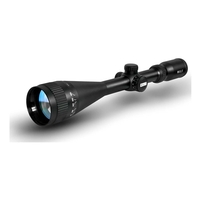
Wulf Fireball LR 4-16x50 AO IR Riflescope
via Uttings
£74.99
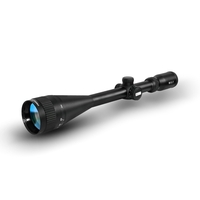
Wulf Fireball LR 6-24x50 AO IR Riflescope
via Uttings
£84.99

Wulf Fireball LR 4-16x50 Half Mil-Dot Rifle Scope
via BushWear
£89.99
Buying Advice
Start with objective diameter: at 1000 metres you need every photon you can gather. A 60 mm objective is the practical minimum; 80–85 mm is the sweet spot for UK range work, especially on overcast days or during winter afternoon shoots when light drops off fast. Larger objectives also yield a wider exit pupil at higher magnification, which reduces the blackout effect when you shift your eye slightly behind the eyepiece. Pair this with fully multi-coated optics—abbreviated FMC—which transmit around 90–95% of light versus roughly 80% for cheaper single-coated designs. On the second-hand market, always ask whether the scope has ED or HD glass elements; these reduce chromatic aberration (colour fringing at high power) and make trace far easier to read against a pale sky or target face.
Budget tiers on the UK second-hand market broadly break down as follows. Below £200 you'll find older Bushnell and lower-tier Vortex models—usable for spotting at 600 metres but often struggling in poor light at 1000. Between £200 and £500 you enter serious territory: second-hand Vortex Viper HD 80 mm, Leupold SX-4 Pro Guide, or Athlon Cronus models frequently appear in this bracket, and all are genuinely capable at 1000+ metres. Above £500 second hand, you're looking at Zeiss Victory Harpia, Leupold Mark 4, or Vortex Razor HD 85 mm units—optics that were £1,500 to £2,500 new. These represent outstanding value if the glass is clean and the mechanics are sound.
A common mistake UK buyers make is chasing maximum magnification. A 20–60× eyepiece on an 80 mm scope sounds like a good idea, but at 1000 metres in British conditions—where mirage is present far more often than most people realise, even in autumn—you'll rarely push past 40–45× and get a useful image. Buy for optical quality at 40×, not for a number stamped on the eyepiece ring. Another frequent error is ignoring the tripod. A spotting scope is only as steady as its mount; a flimsy photographic tripod that vibrates in a crosswind wastes the money you saved on good glass. Budget at least £50–80 for a solid used tripod with a fluid pan head.
UK-specific context matters here. If you're shooting on an NRA-affiliated range, you may be expected to spot for a partner, and the scope needs to sit at a comfortable height on the firing point. Angled-body spotting scopes (typically 45° eyepiece) are popular on prone firing points because they let you glance across without lifting your head excessively. Straight-body scopes are simpler for sharing between shooters of different heights but can be awkward from prone. Think about how your range is set up before committing. Also consider that British weather demands waterproofing—look for nitrogen or argon-purged models, and check the O-ring seals on any second-hand purchase.
Matching the scope to your use case is essential. If you're exclusively range spotting at 900–1100 metres—calling shots, reading trace, and coaching—an 80 mm or 85 mm ED scope in the £300–500 second-hand bracket will serve you superbly. If you also want to use the spotting scope for stalking reconnaissance—glassing hillsides for roe or fallow at distance—a lighter 65 mm model may be a better compromise, though you'll sacrifice low-light performance. For dedicated long-range target shooting, the bigger objective wins every time. Don't try to make one scope do everything; you'll end up with a mediocre compromise.
The brand landscape for second-hand spotting scopes in the UK is straightforward. Vortex dominates the mid-range thanks to their transferable lifetime VIP warranty, which is a huge advantage when buying used—if it develops a fault, Vortex will repair or replace it regardless of original owner. Leupold offers excellent glass and robust construction, particularly in the older Gold Ring series. Zeiss sits at the top tier with superb chromatic correction but commands higher second-hand prices. Bushnell's Elite series punches above its weight and often sells cheaply second hand. Athlon is less well known in the UK but their Cronus and Ares lines offer very competitive performance per pound. Nightforce don't make a dedicated spotting scope, but their TS-82 has a loyal following among F-class shooters.
Frequently Asked Questions
What is the best spotting scope for long-range shooting at 1000 metres?
For dedicated 1000-metre range work, an 80–85 mm objective scope with ED glass and at least 20–60× magnification gives you the best combination of light gathering and resolution. Models like the Vortex Razor HD 85 mm, Leupold SX-5 Santiam, or Zeiss Victory Harpia are outstanding choices. On the second-hand market, any of these can be found at a significant discount, and their optical performance doesn't degrade with age provided the coatings are undamaged.
Can I use a spotting scope for both long-range target shooting and deer stalking?
You can, but it's a compromise. An 80–85 mm scope excels on the range but is heavy and bulky for carrying on a hill stalk. A 65 mm scope is more portable for glassing roe or fallow at distance but gathers less light at high magnification. If you primarily shoot targets and only occasionally stalk, go for the larger objective; if stalking is your main activity, a compact 65 mm model and a separate lightweight binocular may serve you better.
Is a spotting scope worth buying for use with a 6.5 Creedmoor at long range?
Absolutely. The 6.5 Creedmoor is popular for UK long-range target shooting precisely because of its flat trajectory and manageable recoil, which makes it easy to spot your own trace—but at 800 metres and beyond, a spotting scope or a competent spotter is invaluable for calling wind corrections and confirming impacts. A good 80 mm scope lets your shooting partner give you real-time feedback that a rifle scope alone cannot provide.
What should I check before buying a second-hand spotting scope?
Inspect the objective and eyepiece lenses for scratches, chips, and coating wear—hold them at an angle under bright light. Look inside the tube for any haze, fungus filaments, or delamination of internal elements. Rotate the focus mechanism through its full travel; it should be smooth with no gritty spots or dead zones. Check for internal fogging by bringing the scope from a cold car into a warm room—a properly sealed scope should remain clear. Finally, confirm the eyepiece fitting type so you can source replacements if needed.
Can I use a spotting scope for long-range shooting with a .308 Winchester?
The .308 remains one of the most widely used calibres on UK target ranges, and a spotting scope is just as useful for .308 shooters as for any other calibre. At 900–1100 metres the .308 is transitioning to transonic flight, which makes bullet trace and splash harder to read—a high-quality 80 mm spotting scope with good chromatic correction becomes even more important. Your spotter's ability to read conditions through the glass can make the difference between a hit and a miss.
What magnification do I actually need for spotting at 1000 metres?
In UK conditions, 40–45× is typically the maximum usable magnification at 1000 metres before mirage and atmospheric distortion degrade the image. A 20–60× zoom eyepiece gives you the range to dial back on hazy days and push higher on the rare calm, cool mornings. Don't be seduced by scopes advertising 80× or 100×—at those powers the image will almost always be unusable at a kilometre in British weather.
How much should I budget for a decent second-hand spotting scope in the UK?
For genuine 1000-metre capability, aim for £300–500 on the second-hand market. This bracket consistently delivers 80 mm ED-glass scopes from brands like Vortex, Leupold, and Athlon that were £700–1,200 new. Below £200 you'll find serviceable optics that may struggle in poor light at extreme range. Above £500 you're into premium glass from Zeiss or top-tier Leupold and Vortex models that offer noticeably better chromatic correction and edge sharpness.
Do I need an angled or straight spotting scope for range shooting?
It depends on your shooting position. Angled (45°) scopes are generally preferred on prone firing points because you can glance into the eyepiece without raising your head far off the mat. Straight-through scopes are easier when sharing between shooters of different heights and slightly more intuitive to aim. If most of your shooting is prone on a UK target range, an angled body is usually the better choice.
Is a thermal scope or night-vision scope better for long-range range use?
Neither replaces a quality optical spotting scope for daytime target shooting. Thermal scopes like those from Pulsar and HikMicro are designed for detecting heat signatures in low-light or obscured conditions—excellent for pest control but not for reading target scoring rings or bullet trace. Night-vision scopes amplify ambient light and are subject to specific legal considerations depending on how and where they're used. For range spotting at 900–1100 metres in daylight, a conventional ED-glass spotting scope remains the right tool.
Related guides
Learn how to mount and align a rifle scope for long-range shooting in the UK. Covers base selection, ring torque specs, boresighting and common mistakes…
Pulsar Symbian DXT50 Thermal Binocular: Ex-Demo Buying GuideConsidering an ex-demo Pulsar Symbian DXT50 thermal binocular at £2,750? Our 2026 UK guide covers specs, what to check, alternatives, and how to buy smart.
Scope Mounts, Rings & Rails: 2026 UK Buyer's GuideYour 2026 UK guide to scope mounts, rings and rails for air rifles and rimfire rifles. Dovetail vs Picatinny, ring height, return to zero…
Not sure which scope is right for you?
Try our AI-powered scope finder — answer a few questions and get personalised recommendations.
Find My Scope →Get a UK scope tip every day
Follow AiScopes on Facebook for daily buying guides, deals and gear advice.
Follow on Facebook