Mounting & Aligning a Scope for Long-Range Precision: UK Beginner's Guide
By Peter Makulek · Senior Optics Editor · · Live prices from UK retailers
A rifle scope is only as good as the system that holds it to the rifle. For UK shooters stepping into long-range precision — whether FAC-rated centrefire at Bisley or an NRA-affiliated club range stretching beyond 600 yards — the difference between a well-mounted optic and a poorly mounted one can be the difference between consistent sub-MOA groups and inexplicable flyers that destroy confidence and waste expensive ammunition. This guide walks you through every stage of the mounting process, from choosing a base to final boresighting, with a UK-market focus throughout.
Long-range precision shooting has grown enormously in the UK over the past decade. Disciplines such as Precision Rifle Series (PRS) events, F-Class at ranges like Diggle and Dechmont, and increasingly popular practical rifle competitions have brought new shooters into the sport. Many arrive with a quality optic — a Vortex Viper PST, a Leupold Mark 5HD, or a Zeiss Conquest V4 — only to undermine it with a rushed or uninformed mounting job. Getting the fundamentals right costs almost nothing extra in money but pays enormous dividends in accuracy.
The UK context matters here more than you might think. Our club ranges often run to 1,000 yards or beyond, and our climate subjects equipment to damp, cold and temperature swings that stress mounts and adhesives. Many UK shooters use metric-thread actions (Tikka, Sako, Bergara) that require specific base dimensions, while others run aftermarket actions from UK-based custom builders like Dolphin or Wildcat. Understanding which base, ring height and torque specification suits your particular combination of action, scope tube diameter and objective bell size is essential before you touch a Torx key.
This guide is aimed at UK beginners who already own — or are about to buy — a scope rated for long-range work, typically a first-focal-plane (FFP) optic with an MRAD or MOA turret system and side-focus parallax adjustment. We will not cover airgun-specific mounting (a different discipline entirely, with its own dovetail rail and recoil considerations), but we will briefly note where springer and PCP shooters diverge. Our aim is to get your optic centred, level and securely torqued so that your first shots on paper are close to point of aim and your zero holds reliably thereafter.
Top Picks — Live UK Prices
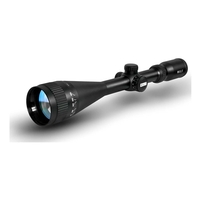
Wulf Fireball LR 4-16x50 AO IR Riflescope
via Uttings
£74.99
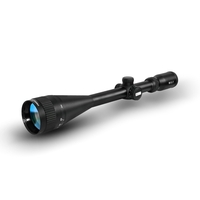
Wulf Fireball LR 6-24x50 AO IR Riflescope
via Uttings
£84.99

Wulf Fireball LR 4-16x50 Half Mil-Dot Rifle Scope
via BushWear
£89.99
Buying Advice
Start with the base. UK shooters broadly choose between one-piece Picatinny or Weaver rails and two-piece bases that bolt directly to the receiver. One-piece rails (often 20 MOA or 30 MOA canted) are the standard for long-range work because they bias the scope's internal elevation travel downward, giving you more usable 'up' clicks for distant targets. Brands like Vortex, Leupold, Area 419 and Seekins make well-regarded Picatinny rails for popular actions such as the Tikka T3x, Remington 700 footprint and Howa 1500. In the UK, expect to pay roughly £40–£80 for a quality aluminium rail and £100–£180 for a precision-machined steel unit. Always confirm your action's screw-hole spacing — Tikka and Savage, for example, are not interchangeable despite visual similarity.
Ring selection matters more than many beginners realise. Scope tube diameters are most commonly 30 mm or 34 mm in the long-range world (the old 1-inch / 25.4 mm tube is rare on modern precision optics). Ring height must clear the objective bell above the rail with a sliver of daylight — typically 2–4 mm — without being so tall that your cheek weld becomes uncomfortable. Low, medium and high designations vary between manufacturers, so always check the published inner-ring-to-base dimension in millimetres. Budget rings from Hawke or Vortex's Hunter series start around £30–£60; mid-tier options from Vortex Pro, Leupold Mark 4 or Warne Maxima sit around £70–£140; and premium units such as Spuhr mounts, Nightforce rings or ARC M10 one-piece mounts range from £200 to over £500. A quality one-piece mount (like the Spuhr ISMS) incorporates cant, integrates a bubble level and eliminates ring-alignment variables — a popular choice for PRS shooters in the UK.
Torque is not optional — it is critical. Under-torqued rings allow the scope to shift under recoil; over-torqued rings can crush the scope tube and damage the erector system, voiding your warranty. Most ring manufacturers specify between 15 and 25 inch-pounds (in-lb) for ring-cap screws and 25–65 in-lb for base screws, but always follow the specific figure printed in your ring or mount's documentation. Invest in a torque wrench calibrated in inch-pounds — the Wheeler FAT Wrench or Vortex Torque Wrench are widely available from UK retailers like Optics Warehouse, Uttings and TALON for around £30–£50 and are indispensable. Apply a thread-locking compound such as blue Loctite 243 to base screws (not ring-cap screws, where you may need to reposition later). Tighten ring-cap screws in a diagonal crossover pattern, a quarter-turn at a time, to ensure even clamping pressure around the tube.
Levelling and lapping are two often-overlooked steps. A canted scope means your turret adjustments will introduce horizontal error at distance — if your reticle is canted even two degrees, a 10-MRAD elevation dial-up at 1,000 yards will shift your point of impact sideways by roughly 35 cm. Use a quality scope-levelling kit (Wheeler, Aadland or Segway) to align the reticle to true vertical relative to the action, not the rifle's external surfaces. Some shooters also lap their rings with a lapping bar and abrasive compound before mounting, which ensures full 360-degree contact between ring and tube and prevents localised pressure points. This is more important with two-piece bases or budget rings than with precision one-piece mounts. Lapping kits are available from around £20–£35 in the UK.
Boresighting gets you on paper quickly and saves ammunition — no small thing at current UK centrefire prices. The simplest method is a collimator or laser boresighter inserted into the chamber or muzzle. Bushnell, Wheeler and Sightmark all offer affordable laser units from around £25–£50. Alternatively, with a bolt-action rifle you can remove the bolt, look through the bore at a target 50 or 100 yards away, then adjust your turrets until the reticle aligns with the same point. This costs nothing and is remarkably effective. Boresighting is not zeroing — it simply gets your first live-fire shots onto paper so you can make a proper zero adjustment. Always confirm zero with live rounds at your intended zero distance, typically 100 yards or 100 metres for UK long-range centrefire rifles.
A note on the broader brand landscape and UK availability. Vortex dominates the mid-price long-range segment in the UK thanks to aggressive pricing (their Strike Eagle and Viper PST lines are everywhere) and a transferable, no-questions warranty. Leupold remains popular with stalkers and target shooters who value lighter weight and superb glass clarity. Zeiss and Swarovski sit at the premium end, often chosen by deer stalkers who also shoot at distance. Athlon offers strong value for money and is gaining UK traction. For mounts and rings, Spuhr is the gold standard among UK PRS competitors, while Vortex Pro rings and Warne Maxima provide excellent performance at more accessible price points. Most of these products are available from UK specialists like Optics Warehouse, TALON Gear, Jackson Rifles, and established dealers such as Uttings and John Rothery.
Frequently Asked Questions
Do I need a 20 MOA canted rail for long-range shooting?
For most UK long-range centrefire disciplines — shooting from 600 to 1,200 yards — a 20 MOA rail is strongly recommended. It shifts the scope's mechanical zero so that more of the internal elevation adjustment range is available for dialling up at distance. Without it, many scopes run out of elevation travel before reaching 1,000 yards. If you only shoot to 300 yards, a flat (0 MOA) rail is fine.
What torque should I use for scope ring screws?
Always follow the manufacturer's specification, which is typically between 15 and 25 inch-pounds for ring-cap screws and 25–65 inch-pounds for base screws. Never guess — use a calibrated torque wrench. Over-torquing can crush the scope tube and damage the erector assembly, while under-torquing allows movement under recoil. The Wheeler FAT Wrench and Vortex Torque Wrench are affordable and widely stocked by UK retailers.
How do I know which ring height to choose?
Measure your scope's objective bell diameter, then check the clearance between the bottom of the ring and the top of the rail. You need roughly 2–4 mm of daylight between the objective bell and the rail or barrel. Ring-height calculators are available online from Vortex and Leupold. When in doubt, go one height up — excessively low rings that contact the barrel are far worse than rings that are slightly taller than ideal.
Is lapping scope rings really necessary?
It is not always essential, but it can be beneficial — particularly with two-piece bases or less expensive rings where manufacturing tolerances may mean the rings are not perfectly concentric. Lapping removes high spots inside the rings, ensuring even contact around the scope tube and preventing localised stress. With a precision one-piece mount like a Spuhr or ARC, lapping is generally unnecessary because the rings are machined as a single unit.
What is the difference between a collimator and a laser boresighter?
A collimator is an optical device that fits into the muzzle and projects a grid pattern visible through the scope, allowing you to align the reticle without looking down the bore. A laser boresighter inserts into the chamber (via a calibre-specific arbor) or the muzzle and projects a laser dot onto the target. Both achieve the same goal — getting your first shots on paper. Laser boresighters are generally simpler to use and cost from around £25 in the UK.
Does scope mounting differ for spring-powered air rifles?
Yes, significantly. Spring-piston air rifles produce a unique double-recoil impulse — rearward then sharply forward — that destroys scopes not rated for it. You need a scope specifically marked as springer-rated, and mounting typically uses 11 mm dovetail rails rather than Picatinny. An arrestor block or pin is often essential to prevent the scope creeping forward. Airgun-specific mounts from Sportsmatch or BKL are well-regarded in the UK. This guide focuses on centrefire long-range, but the torque and levelling principles still apply.
Should I choose MOA or MRAD turrets for long-range shooting in the UK?
Either system works perfectly well — what matters most is consistency between your turrets and reticle. MRAD (milliradian) has become the dominant choice in UK PRS and practical rifle circles because the metric-friendly maths is simpler: 0.1 MRAD equals 1 cm at 100 metres. MOA (minute of angle) is still popular in F-Class and among shooters who learned on imperial systems, where 1 MOA is approximately 1.047 inches at 100 yards. Choose one system and stick with it.
Can I mount my own scope or should I have a gunsmith do it?
With the right tools — a torque wrench, a levelling kit, and Loctite — a careful beginner can absolutely mount a scope at home. The process is methodical rather than highly skilled. That said, if you are unsure about base compatibility, ring alignment or correct eye relief, a visit to a competent UK gunsmith is money well spent (typically £30–£60 for a professional mount and level). Many UK dealers offer free mounting when you buy a scope and mount together.
How important is eye relief when mounting a scope for long-range shooting?
Critical. Eye relief is the distance between the rear ocular lens and your eye at which you see a full, clear image without vignetting (black edges). Most long-range scopes offer 85–100 mm of eye relief. When mounting, position the scope fore and aft in the rings until the full field of view appears when you are in your natural shooting position — prone, if that is your primary discipline. Too close and the scope can strike your brow under recoil; too far and you lose field of view.
Related guides
Our 2026 UK guide to the best scopes for long range shooting. Learn how to match reticle, turrets and magnification to your calibre's ballistic profile…
Long-Range Hunting Scopes: UK Buyer's Guide 2026Expert UK guide to choosing a rifle scope for long-range hunting builds. Covers magnification, reticles, turrets, budget tiers in GBP…
Run & Gun Magnification: Picking the Right Scope for Your LMTNot sure your scope has enough magnification for run-and-gun with a 20" LMT? Our 2026 UK guide covers FFP vs SFP, MRAD vs MOA…
Can Night-Vision Users See Your Thermal Scope Display?Discover whether your thermal rifle scope's display screen is visible to other night-observation device users.
Not sure which scope is right for you?
Try our AI-powered scope finder — answer a few questions and get personalised recommendations.
Find My Scope →Get a UK scope tip every day
Follow AiScopes on Facebook for daily buying guides, deals and gear advice.
Follow on Facebook