Can Night-Vision Users See Your Thermal Scope Display?
By Peter Makulek · Senior Optics Editor · · Live prices from UK retailers
If you shoot at night in the UK — whether lamping foxes under an FAC ticket or controlling rabbits with a sub-12 ft-lb air rifle fitted with a night-vision or thermal add-on — you may share ground with other operators also running night-observation devices (NODs). A question that crops up repeatedly on UK forums and in stalking circles is whether the glowing display inside your thermal scope is visible to someone else looking through their own image-intensifier or digital night-vision unit. The short answer is: it depends on the technology, and the risk is more real than many shooters appreciate.
A thermal imaging scope works by detecting infrared radiation from warm objects and rendering an image on a tiny internal micro-display — typically LCOS, AMOLED or OLED. That display emits visible and near-infrared light. Although the eyepiece housing is designed to contain most of that glow, some leakage is almost inevitable, especially around the rubber eyecup when it is not pressed firmly against your eye socket. To a nearby user wearing Gen 2+ or Gen 3 image-intensifier goggles, even a faint near-IR spill can appear as a conspicuous bright spot, potentially giving away your position at several hundred metres.
This matters in several UK contexts. Pest controllers working adjacent permissions, deer stalkers operating on shared ground, and military or police marksmen all have legitimate reasons to care about signature management. Even on a solo foxing outing, an unshielded thermal display can spook quarry that happens to be sensitive to certain wavelengths, though the primary concern remains human observers equipped with NODs rather than the fox itself.
In this guide we examine exactly how and why thermal scope screens can betray your position, which display technologies leak the most, and what practical steps — from eyecup design to digital shutoff features — the leading brands like Pulsar, HIKMICRO and others build in to mitigate the problem. We also recommend units that handle this issue well for UK night shooters in 2026.
Top Picks — Live UK Prices
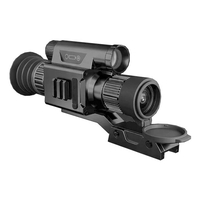
Fuego DS-X7 4K Day & Night Vision Rifle Scope
via Uttings
£299.99
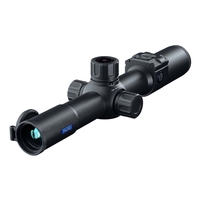
Pard Night Stalker Mini Night Vision Riflescope - 35mm
via Uttings
£339.00
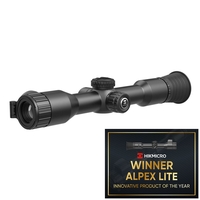
HIKMicro Alpex 4K Lite Digital Day/Night Riflescope
via Uttings
£399.00
Buying Advice
Understanding the key specifications helps you evaluate emission risk. The display type is critical: AMOLED panels used in scopes such as those from Pulsar tend to produce less near-IR spill than older LCOS panels because each pixel is self-emitting and blacks are truly off. Resolution matters too — a 1024×768 sensor paired with a high-resolution micro-display generally produces a brighter, more detailed image, but that brightness can increase leakage if the eyepiece seal is poor. Look for scopes that quote a high eye-relief figure (60 mm or more) combined with a deep, flanged rubber eyecup; this combination lets you maintain a comfortable shooting position while physically blocking stray light from escaping sideways.
Budget tiers in the UK thermal scope market are relatively well defined. Entry-level units from HIKMICRO and some Pulsar models sit in the £1,200–£2,500 bracket and offer 256×192 or 384×288 sensors with basic OLED displays. Mid-range scopes — roughly £2,500–£4,500 — step up to 640×480 sensors, better micro-displays, and more sophisticated housing that reduces light leakage. At the premium end, above £5,000, you find brands like Pulsar's Thermion 2 LRF series and certain Zeiss or Leupold-distributed units with advanced digital shutoff features, superior eyecup engineering, and ultra-low-emission display panels. For most UK foxing and pest-control work, a mid-range scope strikes the best balance between detection range, display quality and emission control.
A common mistake UK buyers make is assuming that because a thermal scope does not emit an active IR illuminator — unlike many digital night-vision scopes — it is therefore completely covert. The scope is indeed passive in terms of its sensor, but the display is an active light source pointing back at your eye. Another frequent error is removing or folding back the rubber eyecup for comfort; this dramatically increases the visible and near-IR signature. Finally, some shooters buy a premium thermal scope but mount it on a rifle using low-quality rings that allow slight movement, breaking the eyecup seal under recoil — always use appropriately rated mounts.
UK-specific considerations are important. If you are using a thermal scope on an FAC-rated rifle for fox or deer control, you will typically be shooting at ranges from 80 to 250 metres, and at those distances another NOD user on the same estate could easily pick up display spill. On sub-12 ft-lb airguns used for ratting or rabbit control at much closer ranges (under 45 yards for a humane kill), the risk is lower simply because fewer people run NODs at such short distances, but it still exists on shared permissions. In England and Wales, no licence is needed for a sub-12 ft-lb air rifle, though Scotland requires an Air Weapon Certificate for any air weapon — check with your local police firearms licensing department or BASC for current guidance. Thermal scopes themselves are legal to own and use in the UK, but always verify any night-shooting conditions on your FAC or permission letter.
Matching the right scope to your use case is essential. A dedicated fox shooter who works shared ground regularly should prioritise scopes with minimal display leakage — look for models advertising a 'closed optical pathway' or 'anti-emission eyepiece.' A stalker glassing from a high seat at dawn may prefer a spotting-scope-style thermal unit like the Pulsar Merger or a HIKMICRO monocular, which can be cupped against the eye more easily. For rimfire work on rabbits and grey squirrels at moderate ranges, a compact thermal scope with a small objective (under 35 mm) naturally has a smaller eyepiece aperture and therefore less leakage surface area. Vortex do not currently manufacture a thermal rifle scope, but their conventional optics heritage means many UK shooters pair a Vortex daylight scope with a clip-on thermal — in that configuration the clip-on's display is shielded by the day scope's optics, significantly reducing emission.
The brand landscape in the UK thermal market is dominated by Pulsar and HIKMICRO at consumer and professional pest-control level, with InfiRay and Guide Sensmart gaining ground. Leupold, Nightforce and Zeiss have strong reputations in conventional rifle scopes but are less prominent in standalone thermal; Leupold's LTO series is a monocular/spotter rather than a weapon sight. Bushnell's Forge and Equinox lines bridge night vision and thermal in entry-level packages. When evaluating any brand's claims about display emission, look for independent reviews — ideally ones where the reviewer photographs the scope's eyepiece glow through a Gen 3 NOD at 50 and 100 metres. This real-world test is far more informative than any spec-sheet figure.
Frequently Asked Questions
Can someone wearing night-vision goggles actually see my thermal scope's display?
Yes, in many cases. The micro-display inside a thermal scope emits visible and near-infrared light. Image-intensifier NODs (Gen 2+ and above) are highly sensitive to near-IR wavelengths, so even modest leakage around a loose eyecup can appear as a bright point at distances of 100 metres or more. The risk is highest when the eyecup is not firmly sealed against the shooter's face.
Does the display type (OLED, AMOLED, LCOS) affect how much light leaks out?
It does. AMOLED displays produce true blacks because unlit pixels are completely off, which reduces overall light output and therefore leakage. Older LCOS (liquid crystal on silicon) panels use a backlight that is always on, meaning even dark areas of the image contribute to spill. Most modern thermal scopes in the mid-range and above now use AMOLED, which is preferable from an emission standpoint.
Is the leakage visible to the naked eye or only through night-vision devices?
At close range — a few metres — you can sometimes see a faint glow from the eyepiece with the naked eye, especially on the white-hot colour palette at high brightness. However, at practical shooting distances the leakage is generally only detectable through a night-observation device sensitive to near-IR wavelengths. The naked-eye risk is minimal beyond about 10 metres in most conditions.
Will fitting a tighter eyecup solve the problem?
A well-designed, deep rubber eyecup that seals against your eye socket is the single most effective mitigation. Some manufacturers sell aftermarket eyecups with longer flanges or foam inserts. Combined with correct eye relief so you do not need to pull away from the cup, this can reduce detectable leakage by 80–90 per cent according to informal user tests.
Do clip-on thermal units leak less than dedicated thermal scopes?
Generally yes, because a clip-on thermal sits behind a conventional day scope. The day scope's own eyepiece and optics act as an additional barrier, containing most of the clip-on's display emission within the optical train. This makes clip-on configurations a good choice for shooters who share ground with other NOD users, though they add weight and length to the rifle.
Are digital night-vision scopes also visible to NOD users?
Yes, and often more so. Many digital night-vision scopes use an active IR illuminator — essentially an invisible torch — that is extremely conspicuous through any image-intensifier device. A thermal scope does not use an IR illuminator, so its only emission source is the display, which is comparatively dimmer. However, neither type is truly covert without deliberate mitigation measures.
Is it legal to use thermal scopes for night shooting in the UK?
Thermal scopes are legal to purchase and own in the UK. Their lawful use depends on what firearm they are mounted on, your licensing status, and the conditions of your shooting permission. Night shooting for pest species such as foxes and rabbits is widely permitted, but deer have statutory close seasons and restrictions on night shooting. Always check your FAC conditions and consult BASC or your local police firearms licensing department for guidance specific to your situation.
Does screen brightness setting affect how visible I am?
Absolutely. Running your display at maximum brightness in white-hot palette produces the most leakage. Turning brightness down to the minimum usable level and switching to a red or green colour palette significantly reduces the intensity of escaping light, particularly in the near-IR band. Some scopes offer an automatic brightness mode that adjusts to ambient conditions, which helps but is not a complete solution.
At what range can another NOD user detect my thermal scope's display?
This varies enormously depending on the scope model, eyecup fit, display brightness, the observer's NOD generation, and atmospheric conditions. Informal field tests suggest that a poorly sealed eyepiece on full brightness can be detected through Gen 3 goggles at 200–300 metres or beyond. With a tight eyecup and reduced brightness, detection range drops to under 30 metres in most cases, making it a non-issue at practical distances.
Related guides
Should you swap a used PVS-14 for a thermal scope and LPVO? We break down the trade-offs, UK legalities, top picks and budget tiers for night vision…
Goyojo GS515 Night Vision Scope: Is It Any Good for Rats?Is the Goyojo GS515 night vision scope worth it for UK ratting? Our 2026 buying guide covers specs, alternatives, legal context…
Scope Upgrade Ideas & Recommendations 2026Expert scope upgrade recommendations for UK shooters in 2026. Covers rifle, rimfire, thermal and spotting scopes, reticle choices, magnification tiers…
Not sure which scope is right for you?
Try our AI-powered scope finder — answer a few questions and get personalised recommendations.
Find My Scope →Get a UK scope tip every day
Follow AiScopes on Facebook for daily buying guides, deals and gear advice.
Follow on Facebook