Trading a PVS-14 for Thermal & LPVO: Is It Worth It?
By Peter Makulek · Senior Optics Editor · · Live prices from UK retailers
The question keeps surfacing on UK forums and trading groups: is it smarter to hold onto a well-used PVS-14 image-intensifier monocular, or trade it for a dedicated thermal scope and a low-power variable optic? It is a genuine dilemma. The PVS-14 remains the gold standard of analogue night vision — battle-proven, helmet-mountable, and endlessly adaptable — but thermal imaging technology has advanced so rapidly that a mid-tier thermal unit now offers detection capabilities the PVS-14 simply cannot match. For UK shooters managing pest species at night under the terms of a General Licence or specific lamp permissions, the calculus has shifted meaningfully since 2024.
In the UK context, the trade conversation is shaped by our specific legal framework. Night-vision and thermal devices are not restricted items under English, Welsh or Scottish law — you can buy, own and use them freely — but using them in conjunction with a firearm is subject to conditions on your Firearms Certificate or, for sub-12 ft-lb air rifles, to the terms of the land-owner permission and any relevant General Licence. Scotland's Air Weapon Certificate regime adds another layer. The point is that swapping optics does not change what you may or may not shoot; it changes how effectively and humanely you can identify quarry and place shots in low-light or total-darkness conditions.
The PVS-14 excels in ambient-light amplification: under starlight or moonlight it delivers a natural-looking green or white-phosphor image that preserves depth perception and allows positive identification of species — critical when you are distinguishing a rabbit from a hedgehog at thirty yards. Thermal scopes, by contrast, detect heat signatures through fog, light rain, and foliage, making them devastating for locating foxes or rats in cluttered farmyard environments. An LPVO — typically a 1-6× or 1-8× variable — then gives you a versatile daylight optic for driven or walked-up shooting. Combining thermal and LPVO arguably covers more use-cases than a PVS-14 alone, but each tool has trade-offs.
This guide examines whether the trade makes sense for UK night shooters in 2026, what to look for in each category, realistic UK price bands, and how brands like Pulsar, HikMicro, Vortex and Leupold fit into the picture. We also cover the critical specs — NETD, pixel pitch, refresh rate, magnification ranges — so you can evaluate any deal with confidence rather than hype.
Top Picks — Live UK Prices
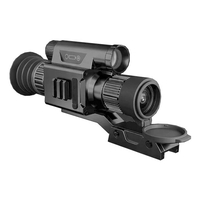
Fuego DS-X7 4K Day & Night Vision Rifle Scope
via Uttings
£299.99
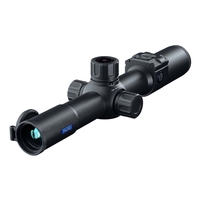
Pard Night Stalker Mini Night Vision Riflescope - 35mm
via Uttings
£339.00
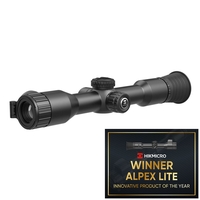
HIKMicro Alpex 4K Lite Digital Day/Night Riflescope
via Uttings
£399.00
Buying Advice
When evaluating a thermal scope, the numbers that matter most are pixel pitch (measured in micrometres), sensor resolution, NETD (Noise Equivalent Temperature Difference, in millikelvins), and refresh rate. A 12µm pixel pitch sensor delivers finer detail than a 17µm unit at equivalent resolution, which translates directly into better target identification at range. NETD below 25 mK means the scope can distinguish very small temperature differences — vital for picking out a fox lying in stubble. Refresh rate should be at least 50 Hz for a weapon-mounted scope; lower rates create visible lag when panning, which is both disorienting and potentially dangerous. Sensor resolution of 640×480 is the current sweet spot for dedicated hunting thermals; 384×288 units are cheaper but noticeably softer beyond 150 metres.
UK price bands for thermal scopes in 2026 break down roughly as follows. Entry-level clip-on or handheld units from HikMicro and Pulsar start around £800–£1,500 and suit rabbit and rat control at modest ranges. Mid-tier dedicated weapon sights — the Pulsar Thermion 2 series or HikMicro Thunder 2 — sit between £1,800 and £3,000 and offer 12µm sensors, onboard recording, and reticle options suitable for foxing out to 200-plus metres. Premium units from Pulsar's Merger or Thermion LRF lines push beyond £3,500. For an LPVO, expect £250–£500 for a solid Vortex Strike Eagle or Athlon Midas, £600–£1,200 for a Leupold VX-Freedom or Vortex Viper PST, and considerably more for March or Swarovski glass.
A common mistake UK buyers make is overvaluing the PVS-14 in trade purely because of its military provenance. A genuinely 'salty' — meaning cosmetically worn, possibly with a lower-specification image-intensifier tube — PVS-14 may realistically be worth £1,500–£2,500 on the UK second-hand market, depending on tube grade and hours. That is enough for a decent mid-range thermal monocular or a budget thermal weapon sight, but not for a top-tier thermal scope and a quality LPVO combined. Be honest about your tube's spec sheet — a Gen 3 Omni VII thin-filmed tube commands a premium, while an unfilmed or high-hour tube does not. Get the tube data sheet if you can; buyers increasingly expect it.
UK-specific considerations are important. If you are using a thermal or night-vision device on a centrefire rifle for fox control, your Firearms Certificate conditions must permit night shooting — this is not automatic, and you should confirm with your local police firearms licensing department or consult BASC for guidance. For air-rifle pest control, thermal is increasingly popular for ratting around farm buildings, but remember that sub-12 ft-lb air rifles are humane-kill tools only at realistic ranges of roughly 35–45 yards for rats and rabbits, so the extreme detection range of a thermal scope is largely academic. The scope helps you find and identify the target; the rifle's ballistic limitations remain unchanged.
Matching the right combination to your use-case is essential. If you primarily stalk deer at dawn and dusk and occasionally fox at night, an LPVO for daytime stalking paired with a clip-on thermal like a Pulsar Krypton or HikMicro Thunder TQ is arguably the most versatile setup. If you are a dedicated lamper doing high-volume fox or rabbit control across large arable farms, a standalone thermal weapon sight with built-in ballistic calculator and recording is worth the investment. The PVS-14 still has a role — particularly for navigation, observation, and situations where positive species ID under ambient light matters more than raw detection range — so do not dismiss keeping it unless the trade genuinely upgrades your capability.
The brand landscape in the UK thermal and LPVO market has consolidated around a few key players. Pulsar dominates the mid-to-premium thermal segment with wide UK dealer support and strong after-sales via Thomas Jacks. HikMicro has carved out the value end with impressive spec-per-pound units, and their UK distribution through Edgar Brothers ensures good availability. For LPVOs, Vortex offers the broadest range from budget to premium with a lifetime VIP warranty honoured in the UK, while Leupold and March cater to shooters who want top-tier glass and build quality. Athlon provides a credible budget alternative. Swarovski and Weaver are less prominent in the LPVO space specifically but remain relevant across the wider optics market.
Frequently Asked Questions
Is it legal to own and use thermal or night-vision devices in the UK?
Thermal and night-vision devices are not restricted items under UK law — you can freely buy, sell, and own them. However, using them in conjunction with a firearm for shooting is subject to the conditions on your Firearms Certificate (for FAC-rated rifles) or the terms of any General Licence or specific permission. Always check your individual certificate conditions and consult your local police firearms licensing department or BASC if you are unsure.
What is a realistic second-hand value for a used PVS-14 in the UK?
A cosmetically worn PVS-14 with a standard-specification Gen 3 tube typically sells for between £1,500 and £2,500 on the UK second-hand market, depending on tube grade, hours logged, and whether the original tube data sheet is available. Units with premium thin-filmed or high-FOM tubes command more. Without a data sheet or with visible tube blemishes, expect the lower end of that range or below.
Can a thermal scope replace a PVS-14 for all night-shooting tasks?
Not entirely. A thermal scope excels at detecting heat signatures through obscurants like fog and foliage, making it superb for locating quarry. However, it does not provide the natural-looking image of an image-intensifier device, which can make species identification easier in some scenarios. A PVS-14 also serves as a navigation and observation tool when helmet-mounted, a role thermal weapon sights cannot replicate. The best approach for many UK shooters is to pair a thermal with an image-intensifier device rather than replace one entirely.
What LPVO magnification range works best alongside a thermal scope?
For most UK applications — foxing, deer stalking, and driven shooting — a 1-6× or 1-8× LPVO covers the practical range envelope well. A true 1× at the low end allows rapid target acquisition at close range, while 6× or 8× is sufficient for precise shot placement out to 200–300 metres on foxes or deer. Higher magnification LPVOs (1-10×) exist but tend to compromise optical quality at the low end and add weight.
Is a clip-on thermal better than a dedicated thermal weapon sight?
Each has advantages. A clip-on thermal mounts ahead of your existing day scope, letting you use one rifle and optic for day and night shooting without re-zeroing. This suits stalkers who want versatility. A dedicated thermal weapon sight typically offers better image quality, more features like onboard recording and ballistic calculators, and a simpler mounting solution. However, dedicated sights mean your rifle is configured for night use only unless you swap optics. Budget and intended use should guide the decision.
What pixel pitch and sensor resolution should I look for in a thermal scope for UK foxing?
For fox control at typical UK engagement distances of 80–250 metres, a 12µm pixel pitch sensor with at least 640×480 resolution provides excellent identification capability. A 17µm sensor with 384×288 resolution is adequate for closer work — ratting around farm buildings, for example — but will feel noticeably softer when trying to confirm a fox at 200 metres. NETD below 25 mK ensures clean imagery in the cooler ambient temperatures common on British nights.
Do I need an Air Weapon Certificate to use thermal on an air rifle in Scotland?
In Scotland, you need an Air Weapon Certificate (AWC) to possess any air weapon, regardless of power level, unless a specific exemption applies. The use of thermal or night-vision devices with that air weapon is not separately restricted, but you must comply with the terms of your AWC and any land-owner permissions. Contact Police Scotland or BASC Scotland for guidance on your specific circumstances.
Which UK retailers stock both thermal scopes and LPVOs?
Several established UK dealers carry both categories. Online retailers such as Uttings, John Rothery, Sporting Saint, and Edgar Brothers stock Pulsar and HikMicro thermal alongside Vortex, Leupold, and Athlon LPVOs. Specialist night-vision dealers like Nitesite and Thomas Jacks (Pulsar's UK distributor) focus more heavily on the thermal side. Buying from an authorised UK dealer ensures proper warranty support and avoids potential issues with grey imports.
Can I use a thermal scope on a sub-12 ft-lb air rifle for pest control?
Yes, there is no legal restriction on mounting a thermal scope to a sub-12 ft-lb air rifle in England and Wales (Scotland requires an AWC for the air rifle itself). However, the rifle's effective humane-kill range remains roughly 35–45 yards on rats and rabbits regardless of the optic fitted. The thermal helps you detect and identify quarry in darkness, but it does not extend the rifle's ballistic capability. Ensure you have appropriate permission from the landowner and comply with any relevant General Licence conditions.
Related guides
Understand UK law on night vision and thermal optics for deer stalking, fox control, and lamping. Scotland vs England rules, legal kit…
HIKMICRO Alpex A50T: Is It the Best Digital Night Vision Scope for UK Shooters?Our in-depth UK guide to the HIKMICRO Alpex A50T digital night vision scope. Covers specs, performance, price bands, legal context…
Thermal & Night Vision Optics: UK Buyer's Guide 2026Expert UK guide to thermal and night vision rifle scopes for 2026. FFP vs SFP, MOA vs MRAD, legal considerations, budget tiers in GBP…
TKN-1 Night Vision Periscope: Your Questions AnsweredExplore the TKN-1 night vision periscope with real pictures, technical breakdown, and UK-relevant buying advice.
Weirdly Specific Scope Suggestions You Actually NeedStruggling to find the right scope for your exact UK shooting scenario? Our 2026 guide matches niche requirements to real optics — FFP, SFP, thermal…
DNT Zulus V2 3-12 Day/Night Scope GuideComprehensive UK buyer's guide to the DNT Zulus V2 3-12 day/night scope. Discover key specs, budget tiers in GBP, legal context…
Not sure which scope is right for you?
Try our AI-powered scope finder — answer a few questions and get personalised recommendations.
Find My Scope →Get a UK scope tip every day
Follow AiScopes on Facebook for daily buying guides, deals and gear advice.
Follow on Facebook