DNT Zulus V2 3-12 Day/Night Scope Guide
By Peter Makulek · Senior Optics Editor · · Live prices from UK retailers
The DNT Zulus V2 3-12 has generated serious buzz among UK shooters looking for a genuine dual-purpose day and night vision scope without the hassle of swapping optics in the field. Night-capable riflescopes have evolved rapidly, and the Zulus V2 sits at an interesting crossroads: it promises usable daytime clarity alongside digital night vision in a single housing. For UK pest controllers working rabbits, corvids, and grey squirrels from dusk into darkness, and for FAC-rated foxing setups, the appeal of one scope that covers both roles is obvious. We have examined what the V2 brings to the table and where it fits.
Understanding how digital day/night scopes differ from traditional night vision or dedicated thermal scopes is crucial before committing your budget. The Zulus V2 uses a digital sensor and IR illuminator rather than an image-intensifier tube, which keeps costs considerably lower than Generation 2+ or 3 analogue night vision. In daylight, the scope functions as a conventional riflescope with a 3-12x magnification range — broad enough for close-range rabbit shooting out to moderate-distance foxing. At night, switching to digital mode and activating the built-in IR illuminator reveals targets in monochrome or false-colour overlays. It is not a thermal scope — it does not detect heat signatures — so foliage and terrain look much as they would through a traditional night-vision device.
For the UK market specifically, legality and practical context matter. In England and Wales, using night vision for shooting is lawful on quarry species for which you have the appropriate permissions and, where relevant, firearms certificates. Lamping foxes with a centrefire rifle under an FAC is common, and a day/night scope simplifies the kit list. Sub-12 ft-lb air rifle users should note that effective humane range on rabbits and squirrels remains roughly 35–45 yards regardless of optic, so a 12x top end is more than sufficient. Scottish shooters must also hold an Air Weapon Certificate for any air weapon. Northern Ireland has its own firearms regime. Always check with your local police force or BASC for current guidance before purchasing.
Key decision factors when evaluating the Zulus V2 include sensor resolution, IR illuminator range, reticle options (including whether the reticle sits in the first or second focal plane in digital mode), battery life, eye relief, and overall weight. A day/night scope is heavier than a standard glass optic because of the electronics, battery, and screen, so balance on your rifle matters — particularly on lightweight rimfire or sub-12 setups. We will cover all of this below, compare alternatives from Pulsar, HikMicro, and others, and answer the real questions UK shooters are asking right now.
Top Picks — Live UK Prices
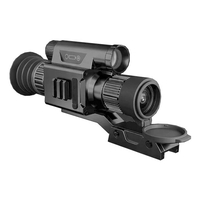
Fuego DS-X7 4K Day & Night Vision Rifle Scope
via Uttings
£299.99
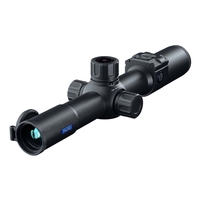
Pard Night Stalker Mini Night Vision Riflescope - 35mm
via Uttings
£339.00
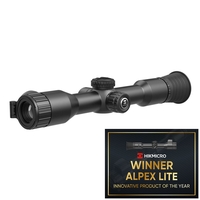
HIKMicro Alpex 4K Lite Digital Day/Night Riflescope
via Uttings
£399.00
Buying Advice
The DNT Zulus V2 offers a 3-12x magnification range, which in practical UK terms covers everything from close-range airgun pest control to centrefire foxing at moderate distances. In daytime mode, the optic functions like a second focal plane (SFP) riflescope — the reticle stays a consistent size as you zoom, which many UK hunters prefer because the crosshair remains visible and uncluttered at lower magnifications. In digital night mode, the reticle is electronically generated, so holdover marks scale with the image. Parallax adjustment is worth checking: airgun users need close-focus parallax down to roughly 10 yards, while centrefire shooters typically need 50 yards and beyond. The V2's parallax spec should be confirmed before purchase if you intend to use it on a sub-12 ft-lb springer — and remember, spring-piston air rifles generate fierce double-recoil that destroys scopes not rated for it.
Budget tiers in the UK day/night scope market currently break down roughly as follows. Entry-level digital night-vision clip-on or standalone units start around £300–£500, but image quality and IR range are limited. Mid-range integrated day/night scopes, where the Zulus V2 sits, typically fall between £500 and £900, offering decent sensor resolution and usable IR range out to perhaps 150–200 metres in total darkness. At £1,000 and above, you enter Pulsar Digex territory or dedicated thermal riflescopes from HikMicro and Pulsar, where sensor quality, recording features, and detection range jump significantly. For pure daytime glass quality at these price points, a Vortex Viper PST II or an Athlon Ares ETR will outperform any digital hybrid — so it is a question of whether the night capability justifies the optical trade-off.
Common mistakes UK buyers make with day/night scopes include overestimating IR illuminator range, ignoring battery life in cold conditions, and assuming that digital night vision equals thermal detection. An IR illuminator lights up a scene in near-infrared wavelengths invisible to the naked eye, but it does not see through fog, dense cover, or rain the way a thermal scope can. Battery life drops sharply in winter — always carry spares and opt for common cell formats (CR123A or 18650) rather than proprietary packs. Another frequent error is mounting a heavy digital scope on a lightweight rimfire or airgun without checking that the rail and mounts can handle the extra mass and length. Balance matters for snap shots on rabbits bolting from a hedgerow.
UK-specific context is important. If you are using this scope on a sub-12 ft-lb air rifle for rabbits, grey squirrels, or corvids, remember that your humane-kill range is roughly 35–45 yards — the night-vision capability extends your shooting window into dusk and darkness but does not extend lethal range. For FAC-rated centrefire rifles used for foxing, a 3-12x digital scope is a practical choice for shots inside 250 metres in open farmland. Deer stalkers should be aware that close seasons apply to all UK deer species, and night shooting of deer is illegal in most circumstances — a day/night scope does not change that. Purchase from reputable UK retailers who can support warranty claims domestically; buying grey-import optics from overseas can leave you without recourse if the unit fails.
Matching the scope to your use case is the single most important step. If you shoot primarily in daylight and only occasionally at night, a high-quality conventional riflescope paired with a clip-on night-vision or thermal unit may deliver better daytime performance. Brands like Swarovski and March offer superb glass that no digital hybrid can match optically. Conversely, if most of your shooting is nocturnal pest control and you want simplicity, the Zulus V2 or a Pulsar Digex gives you one scope, one zero, and no fumbling with clip-ons in the dark. For budget-conscious shooters, consider whether a spotting scope with night-vision capability for observation paired with a standard rimfire scope might serve you better than a compromise hybrid on the rifle itself.
The brand landscape for day/night and digital optics in the UK is evolving fast. Pulsar dominates the premium digital night-vision riflescope segment with the Digex series. HikMicro has gained serious ground in thermal scopes and is expanding into digital night vision at competitive prices. Vortex and Leupold remain focused on conventional glass, though both brands have hinted at digital integration in future product lines. DNT, the maker of the Zulus V2, is a newer entrant — build quality and after-sales support are the unknowns that UK buyers should research before committing. Weaver and Athlon offer strong value in conventional optics but have not entered the digital night-vision space yet. As always, try before you buy if possible — many UK shooting shows and dealer open days allow hands-on testing.
Frequently Asked Questions
Is the DNT Zulus V2 a first focal plane (FFP) or second focal plane (SFP) scope?
In its daytime optical mode, the Zulus V2 behaves as a second focal plane (SFP) scope, meaning the reticle stays the same apparent size across the 3-12x zoom range. In digital night mode the reticle is electronically generated on the display, so it scales with the image in a manner more analogous to FFP behaviour. For most UK hunting applications — rabbits, foxing, corvids — SFP is the more popular choice because the reticle remains clear and readable at low magnification.
Can I use the Zulus V2 on a sub-12 ft-lb spring-piston air rifle?
You need to confirm that DNT rates the Zulus V2 for springer double-recoil, which is the violent forward-and-backward jolt unique to spring-piston air rifles. Many digital and night-vision scopes are not built to withstand this and will fail quickly. If it is not springer-rated, consider using it on a PCP air rifle instead. Also check the parallax adjustment range — airgun use requires close-focus parallax down to approximately 10 yards for accurate shooting at typical pest-control distances.
How does the Zulus V2 compare to the Pulsar Digex C50 for night shooting?
The Pulsar Digex C50 is a more established and generally more expensive digital night-vision riflescope with superior sensor resolution, longer IR detection range, and built-in video recording. The Zulus V2 competes on price and the convenience of integrated daytime optics. If most of your shooting is nocturnal and budget allows, the Digex is the safer choice. If you want a single scope for day and night without breaking the bank, the Zulus V2 is worth considering — but daytime glass clarity will not match a dedicated conventional riflescope from Vortex or Leupold at the same price.
Is there a new Arken 2-12 SFP scope, and how does it compare?
Arken has released updated SFP models in the 2-12x magnification range aimed at hunters who want a versatile mid-range optic. These are conventional glass riflescopes without night-vision capability, so they compete with the Zulus V2 only in daytime use. In pure optical clarity and mechanical turret feel, a quality conventional SFP scope like the Arken will typically outperform a digital hybrid. However, it cannot function at night, so the comparison depends entirely on whether you need after-dark capability.
What is the best scope for nocturnal pest control in the UK?
For UK nocturnal pest control — primarily foxing, rabbit, and corvid management — the best scope depends on your platform and budget. A dedicated digital night-vision riflescope such as the Pulsar Digex or DNT Zulus V2 is simplest. A thermal riflescope from HikMicro or Pulsar offers detection through light cover and fog but costs significantly more. A clip-on night-vision or thermal unit ahead of a conventional scope preserves your daytime zero. All are legal on appropriate quarry with the correct permissions and, where necessary, a Firearms Certificate.
Does the Zulus V2 work as a thermal scope?
No. The Zulus V2 is a digital night-vision scope that relies on an IR (infrared) illuminator and a CMOS sensor to produce an image in low light or darkness. It does not detect thermal radiation, so it cannot see heat signatures through vegetation or in conditions where a thermal scope excels. If thermal detection is important — for example, locating foxes in dense hedgerows — you would need a dedicated thermal scope or a thermal clip-on unit from brands like Pulsar or HikMicro.
How far can I realistically see with the Zulus V2 at night?
Effective night-vision range depends on IR illuminator power, sensor sensitivity, and ambient conditions. Mid-range digital scopes in this class typically offer usable identification of fox-sized targets out to 150–200 metres in complete darkness, and further on moonlit nights. Range drops in rain, fog, or heavy mist. Do not confuse detection range with ethical shooting range — you still need to positively identify your target and place an accurate, humane shot, which may limit practical engagement distance well inside the scope's maximum detection capability.
What magnification and reticle system should I choose for UK night shooting?
A 3-12x range covers the vast majority of UK night-shooting scenarios, from close rabbit shooting at 30 yards to foxing at 200 metres. For reticle type, MRAD (milliradian) reticles are increasingly popular because the metric maths is straightforward — 0.1 mil equals 1 cm at 100 metres. MOA reticles remain common and work well; 1 MOA subtends approximately 1.047 inches at 100 yards. Choose whichever system matches your turrets and any other optics you own to avoid confusion when making adjustments in the field.
Is it legal to use a night-vision scope for deer stalking in the UK?
Night shooting of deer is illegal in England, Wales, and Scotland except under very specific authorisations, regardless of what optic you use. A night-vision scope does not grant any additional legal permissions. The Zulus V2 and similar scopes are primarily intended for nocturnal pest control (foxes, rabbits) and are perfectly lawful for those purposes with landowner permission and, where required, a Firearms Certificate. Always verify current legislation with your local police firearms licensing department or BASC before using any night-vision equipment while shooting.
Related guides
Best night vision scopes for air rifles UK 2026: day/night digital optics from Pard, Hikmicro and Yukon for ratting and rabbiting on PCP and springers.
HIKMICRO Alpex A50T: Is It the Best Digital Night Vision Scope for UK Shooters?Our in-depth UK guide to the HIKMICRO Alpex A50T digital night vision scope. Covers specs, performance, price bands, legal context…
TKN-1 Night Vision Periscope: Your Questions AnsweredExplore the TKN-1 night vision periscope with real pictures, technical breakdown, and UK-relevant buying advice.
Trading a PVS-14 for Thermal & LPVO: Is It Worth It?Should you swap a used PVS-14 for a thermal scope and LPVO? We break down the trade-offs, UK legalities, top picks and budget tiers for night vision…
Element Helix 6-24×50 FFP — Is It Worth It?Element Helix 6-24×50 FFP rifle scope reviewed for UK shooters. We cover FFP reticle benefits, MRAD turrets, parallax setup…
Nocpix D70R & NIR Series IR Illuminators ReviewedDiscover the Nocpix Nite D70R and NIR series infrared illuminators for UK night-vision shooting. We cover specs, range, wavelengths…
Not sure which scope is right for you?
Try our AI-powered scope finder — answer a few questions and get personalised recommendations.
Find My Scope →Get a UK scope tip every day
Follow AiScopes on Facebook for daily buying guides, deals and gear advice.
Follow on Facebook