TKN-1 Night Vision Periscope: Your Questions Answered
By Peter Makulek · Senior Optics Editor · · Live prices from UK retailers
The TKN-1 is a Cold War–era night vision periscope originally designed for Soviet armoured fighting vehicles, and it continues to fascinate collectors, surplus enthusiasts, and anyone curious about how early image-intensifier technology actually worked. Searching for TKN-1 pictures online returns a patchwork of grainy forum posts, museum shots, and militaria auction listings, but very little structured information for UK-based buyers who want to understand what they are looking at. This guide pulls together the facts, explains the technology, and places the TKN-1 in context alongside the modern night vision scopes that have rendered it obsolete for practical fieldwork.
For UK shooters interested in night vision, the TKN-1 raises an important broader question: what separates a historical curiosity from a genuinely useful night-shooting optic? The TKN-1 used Generation 0 or early Gen 1 image intensification with an active infrared illuminator — technology that produced a recognisable but noisy, short-range image. Today's best night vision scopes, whether dedicated digital units from Pulsar or clip-on devices paired with a conventional Vortex or Leupold daytime scope, offer resolution, range, and ergonomics that the designers of the TKN-1 could scarcely have imagined.
In the UK market, night vision use for shooting is lawful in England and Wales for pest control — principally rabbits, rats, and foxes — but the legal picture differs in Scotland and Northern Ireland. Any night-shooting equipment must be used in conjunction with a lawfully held firearm or FAC-rated air rifle appropriate to the quarry. Before purchasing any night vision device for live quarry control, check the conditions on your firearms certificate and contact your local police force or BASC for current guidance. The TKN-1 itself is typically sold as a collectible rather than a field-ready tool.
This guide begins with an honest look at the TKN-1 — what the pictures actually show, how the optic functions, and why collectors value it — before moving on to the decision factors that matter if you are choosing a modern night vision scope for UK fieldwork. We cover key specifications, budget tiers in pounds sterling, common mistakes, and how to match a night vision optic to your quarry, range, and rifle platform.
Top Picks — Live UK Prices
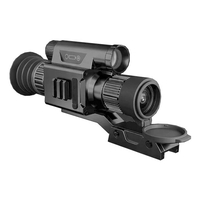
Fuego DS-X7 4K Day & Night Vision Rifle Scope
via Uttings
£299.99
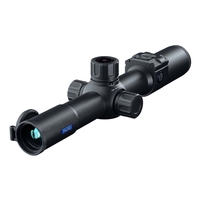
Pard Night Stalker Mini Night Vision Riflescope - 35mm
via Uttings
£339.00
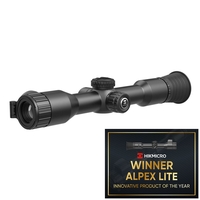
HIKMicro Alpex 4K Lite Digital Day/Night Riflescope
via Uttings
£399.00
Buying Advice
When evaluating any night vision scope, the specifications that matter most are image-intensifier generation (or sensor resolution for digital units), field of view, detection and recognition range, battery life, and recoil rating. The TKN-1's Gen 0/early Gen 1 tube offered perhaps 30–50 lp/mm resolution, whereas a modern Gen 2+ or digital-equivalent unit from Pulsar may exceed 60 lp/mm with far less image noise. For digital night vision scopes, look at sensor pixel pitch (the smaller the better for detail), display type, and onboard recording capability. Detection range tells you how far you can spot a target; recognition range — always shorter — tells you how far you can identify it positively, which is the figure that matters for safe, humane shooting in the UK.
Budget tiers for night vision scopes in the UK run roughly as follows. Entry-level digital units start from around £250–£500 and suit short-range pest control on rabbits and rats at distances under 100 metres. Mid-range devices from brands such as Pulsar and occasionally Bushnell sit between £600 and £1,500 and offer better sensor performance, longer battery life, and onboard video. Premium dedicated night vision riflescopes and clip-on systems — including high-end Pulsar Digex models and thermal-fusion units — range from £1,500 to well over £4,000. Clip-on night vision or thermal devices that mount ahead of a quality Nightforce or Leupold daytime scope can push total system cost higher still, but they let you keep your proven daytime zero.
A common mistake UK buyers make is purchasing a night vision scope without checking its recoil rating against their rifle. Centrefire rifles in .243 Win or .308 Win generate substantially more recoil than a sub-12 ft-lb air rifle, and a unit rated only for rimfire or airgun use will fail quickly on a deer-legal calibre. Equally, some buyers underestimate the importance of an integrated or external infrared illuminator: in conditions with minimal ambient light — overcast rural UK nights with no moon — even a Gen 2 tube benefits from supplementary IR. Finally, do not assume that a surplus military optic like the TKN-1 is automatically superior; most military-surplus night vision is Gen 1 or early Gen 2, often with tired, low-output tubes that perform worse than a new-production digital scope costing half as much.
UK-specific context matters enormously. In England and Wales, using night vision for fox or rabbit control on land you have permission to shoot is generally lawful, but lamp and night-vision conditions may be annotated on your FAC. Scotland has distinct legislation: always check with Police Scotland. For airgunners, remember that sub-12 ft-lb rifles are humane-kill effective only to roughly 35–45 yards on rabbits and squirrels, so an ultra-long-range night vision scope is wasted; a compact digital unit with close-focus parallax adjustment down to 10 yards or so is far more practical. FAC-rated air rifles and rimfire .22 LR extend effective range, but the night vision optic must still be rated for the recoil profile of your rifle.
Matching the right night vision scope to your use case saves money and frustration. If you are lamping foxes at 150–250 metres with a .223 Rem or .243 Win, you need a mid-to-high-tier dedicated night vision riflescope or a clip-on ahead of a quality long-range daytime optic from Vortex, March, or Athlon. For ratting or rabbiting at close quarters with an air rifle, a budget digital unit with Wi-Fi streaming to a phone can be ideal, especially for vermin control around farm buildings. Thermal imaging is a separate technology that detects heat signatures rather than amplifying light; many UK pest controllers now prefer thermal for initial detection and then switch to a night vision scope for the shot, as thermal reticle resolution can be coarser at distance.
The brand landscape for night vision in the UK is dominated by Pulsar, whose Digex and Forward series cover most price points, and by Pard, Sytong, and HikMicro at the entry and mid-range. Traditional optics houses such as Leupold, Nightforce, and Vortex do not manufacture their own night vision riflescopes but offer daytime platforms ideally suited to clip-on night vision or thermal front-end devices. Bushnell and Weaver have largely stepped back from dedicated NV in the UK. When buying surplus curiosities like the TKN-1, reputable UK militaria dealers and auction houses are the safest route; avoid unverified overseas sellers, and be aware that exporting or importing image-intensifier tubes may be subject to ITAR or EU dual-use export controls depending on generation and origin.
Frequently Asked Questions
What exactly is the TKN-1 night vision periscope?
The TKN-1 is a vehicle-mounted night vision periscope developed in the Soviet Union, primarily for use by tank commanders in armoured fighting vehicles such as the T-55 and T-62. It uses an early-generation image-intensifier tube paired with an active infrared illuminator to produce a visible image in darkness. Today it is encountered mainly as a military-surplus collectible rather than a practical shooting optic.
Where can I find genuine TKN-1 pictures and technical data?
Reliable sources include military-vehicle museums (such as the Tank Museum at Bovington), specialist militaria auction catalogues, and verified surplus dealers in the UK and Europe. Online forums dedicated to Soviet optics and AFV restoration also host detailed teardown photographs. Be cautious of stock images on general auction sites, as misidentified or composite listings are common.
Is the TKN-1 usable as a night vision scope for shooting in the UK?
In practical terms, no. The TKN-1 was designed for vehicle mounting, not rifle use; it is heavy, bulky, and its early-generation tube offers poor resolution by modern standards. A current-production digital night vision riflescope from Pulsar or a comparable brand will outperform it dramatically in image quality, weight, and usability. The TKN-1 is best regarded as a historical artefact.
What is the best scope for pest control at night in the UK?
For UK pest control — foxes, rabbits, and rats — a dedicated digital night vision riflescope such as the Pulsar Digex series is widely regarded as one of the strongest options in 2026. The best choice depends on your quarry, range, and rifle platform. Sub-12 ft-lb airgunners should look for compact units with close parallax adjustment, while centrefire rifle users benefit from higher-magnification models with robust recoil ratings.
What is the best night vision scope for foxing at longer range?
For longer-range fox control — typically 100 to 250 metres with a centrefire rifle — a mid-to-premium night vision riflescope with strong detection range and a crisp reticle is essential. Clip-on night vision or thermal devices mounted ahead of a proven long-range daytime scope from Vortex, Nightforce, or March allow you to retain your existing ballistic data and zero. Budget around £1,000 to £3,000 or more for a capable long-range night vision system in the UK market.
Do I need a licence to own night vision equipment in the UK?
Owning a night vision or thermal optic does not itself require a licence in the UK. However, using one on a firearm for live quarry control means the firearm must be lawfully held, and any relevant conditions on your firearms certificate must be observed. Scottish and Northern Irish legislation differs, so always verify with your local police force or BASC before using night vision in the field.
Night vision versus thermal for UK shooting — which should I choose?
Night vision amplifies available light to produce a recognisable image, while thermal detects heat signatures regardless of ambient light. Many UK pest controllers use thermal for scanning and detecting quarry, then switch to a night vision scope for shot placement because NV typically offers finer reticle detail at distance. If budget allows only one device, a digital night vision riflescope is the more versatile choice for most UK shooters.
Can I mount a night vision scope on a sub-12 ft-lb air rifle?
Yes, many digital night vision scopes are light enough and recoil-rated for air rifle use. However, ensure the unit offers parallax adjustment down to approximately 10 yards, as sub-12 ft-lb air rifles are effective on rabbits and squirrels only to around 35–45 yards. Also check that your scope rings or rail are compatible, and remember that spring-piston air rifles produce a unique double-recoil that can damage optics not specifically rated for it.
What does image-intensifier generation mean and why does it matter?
Generation (Gen 0 through Gen 3+) describes the technology inside the image-intensifier tube. Higher generations offer better resolution, lower noise, and longer detection range. The TKN-1 used Gen 0 or early Gen 1 technology. Modern digital night vision bypasses traditional tubes entirely, using CMOS sensors and electronic processing to achieve performance comparable to Gen 2 analogue tubes at a fraction of the cost, which is why digital units dominate the UK civilian market.
Related guides
Our in-depth UK guide to the HIKMICRO Alpex A50T digital night vision scope. Covers specs, performance, price bands, legal context…
Trading a PVS-14 for Thermal & LPVO: Is It Worth It?Should you swap a used PVS-14 for a thermal scope and LPVO? We break down the trade-offs, UK legalities, top picks and budget tiers for night vision…
Best PARD Night Vision Scopes for UK ShootersDefinitive UK buyer's guide to PARD digital night vision scopes for foxing, deer stalking and vermin control.
Best Night Vision Clip-Ons & Add-Ons for UK Shooters in 2026Our 2026 buyer's guide to the best night vision clip-on scopes for UK foxing and pest control. Covers budget to premium add-ons, PARD models…
What Are the 3rd and 4th Dials on a Rifle Scope?Confused by the extra turrets on your rifle scope? Our 2026 UK guide explains the 3rd and 4th dials — parallax, illumination, zero stop…
Kahles K540i DLR vs Refined vs ZCO & ATACRComparing the Kahles K540i DLR, K540i Refined, Zero Compromise ZC527 and Nightforce ATACR for UK precision rifle shooters.
Not sure which scope is right for you?
Try our AI-powered scope finder — answer a few questions and get personalised recommendations.
Find My Scope →Get a UK scope tip every day
Follow AiScopes on Facebook for daily buying guides, deals and gear advice.
Follow on Facebook