Nocpix D70R & NIR Series IR Illuminators Reviewed
By Peter Makulek · Senior Optics Editor · · Live prices from UK retailers
Infrared illuminators are the unsung workhorses of any digital night-vision setup. Whether you are lamping rabbits across a Cambridgeshire stubble field or keeping on top of corvid numbers in a Scottish woodland, a dedicated IR torch dramatically extends the useful range and image clarity of your night-vision scope or clip-on. The Nocpix Nite D70R and the broader NIR series have gained serious traction among UK shooters looking for powerful, well-focused IR light without spending four figures. In this guide we break down what the D70R and NIR models actually deliver, how they compare to rival illuminators from Pulsar and Hikmicro, and which configuration suits your particular quarry and terrain.
Understanding infrared wavelength is the single most important decision factor. The Nocpix NIR series spans the near-infrared spectrum, typically offering 850 nm and 940 nm options. An 850 nm LED produces a faint red glow visible to the naked eye but delivers stronger illumination at range — ideal for open-field rabbit and pigeon control where the quarry is unlikely to notice. A 940 nm unit is truly covert with no visible signature, making it the go-to choice for foxing at closer ranges where a wary dog fox might otherwise spook at even a dim red dot. The D70R, with its larger 70 mm head, concentrates the beam tightly for longer throw distances.
Range performance matters hugely in the UK context. Most sub-12 ft-lb air-rifle shooting takes place inside 45 yards, so an illuminator with modest power but a wide, even flood is often more practical than a pencil-thin throw lamp. Conversely, FAC-rated rimfire or centrefire foxing can involve shots well beyond 150 yards, demanding a tightly focused beam and higher output. Nocpix addresses both ends: the compact NIR models suit close-to-mid-range airgun work, while the D70R's larger reflector pushes usable illumination further out, pairing well with digital night-vision scopes from Pulsar, Hikmicro, and others.
Legal context is worth a brief mention. Night shooting of certain pest species — rabbit, rat, and, under the terms of individual or general licences, some corvids and pigeons — is perfectly lawful in England and Wales provided you have landowner permission. Fox control at night with a rifle typically requires adherence to your Firearms Certificate conditions and, in some counties, police notification. Scotland's regime differs, particularly for air weapons, which require an Air Weapon Certificate regardless of power. Northern Ireland has its own framework. Always confirm your responsibilities with your local police firearms licensing department or an organisation such as BASC before heading out.
Top Picks — Live UK Prices
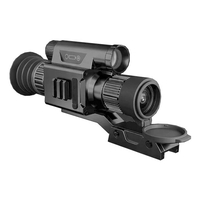
Fuego DS-X7 4K Day & Night Vision Rifle Scope
via Uttings
£299.99
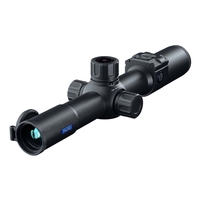
Pard Night Stalker Mini Night Vision Riflescope - 35mm
via Uttings
£339.00
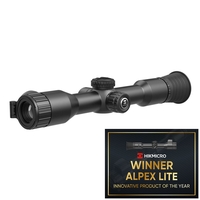
HIKMicro Alpex 4K Lite Digital Day/Night Riflescope
via Uttings
£399.00
Buying Advice
The key specifications to compare across any IR illuminator are wavelength (850 nm vs 940 nm), LED power (measured in milliwatts of radiant flux), beam angle or adjustability, and head diameter. The D70R's 70 mm head gives it a tighter hotspot and longer effective throw compared to a 50 mm unit at the same power output, because the larger reflector focuses more energy into a narrower cone. Adjustable-focus models let you widen the beam for scanning hedgerows or tighten it for identifying quarry at distance. Battery life is another critical number — look for quoted run-times at full power, not just capacity in milliamp-hours, because driver efficiency varies between brands.
Budget tiers in the UK IR illuminator market break down roughly as follows. Entry-level units — often unbranded or from newer manufacturers — sit below £50 and can work for short-range airgun lamping but tend to have uneven beam profiles and poor battery life. Mid-range models between £80 and £150 include the Nocpix NIR compacts and comparable Pulsar and Hikmicro accessories; these offer reliable output, decent build quality, and Picatinny or barrel-clamp mounts. The D70R and similar premium illuminators typically fall in the £150–£250 bracket, delivering longer throw, better weatherproofing, and more refined focus mechanisms. Above £250 you enter the territory of military-grade laser illuminators.
A common mistake UK buyers make is mismatching their illuminator to their night-vision device's sensor sensitivity. Not all digital night-vision scopes respond equally well to 940 nm light; some budget sensors lose significant performance at that wavelength and really need 850 nm to produce a clear image. Check your scope manufacturer's recommendations before defaulting to 940 nm just because it is covert. Another frequent error is over-powering the illuminator for airgun ranges — a massively powerful IR torch at 30 yards can wash out the image on your scope, creating a bright centre with no contrast. Dial-down or flood settings are essential for close work.
For UK-specific use cases, consider what you are shooting and where. Rabbit and grey squirrel control with a sub-12 ft-lb air rifle inside 35–45 yards needs a modest, wide-beam illuminator — a compact NIR unit at 850 nm is ideal. Foxing with a FAC-rated .22 LR, .17 HMR, or centrefire at 100–200 yards demands the D70R's focused throw or a laser IR unit. If you stalk deer, remember that night shooting of deer is illegal across the UK save in very limited, licensed circumstances — your illuminator setup is for pest and predator control, not stalking. Purchase from established UK retailers who can advise on compatibility and offer warranty support; online specialists such as Optics Warehouse, Uttings, and John Rothery are reliable starting points.
Matching the illuminator to your broader setup is where many shooters find the best value. If you run a Pulsar Digex or a Hikmicro Alpex, those brands sell own-brand IR accessories optimised for their sensors — but the Nocpix D70R often outperforms them on sheer throw distance at a comparable or lower price, and it mounts via standard Picatinny or Weaver rail. Ensure your mount aligns the beam axis with your scope's field of view; offset mounts work for closer ranges, but at 150 yards-plus even a small angular error puts the hotspot off-centre. A simple bore-alignment check at your intended zero range saves frustration in the field.
The brand landscape for IR illuminators in the UK is evolving rapidly. Pulsar and Hikmicro dominate the digital night-vision scope market and naturally push their own illuminators, which benefit from seamless integration and sometimes wireless control. Nocpix has carved out a niche by focusing purely on illumination quality and raw performance per pound, making the D70R a favourite among experienced night shooters who want the best possible beam without paying a brand premium. Other names worth watching include Nitesite and Wicked Lights, though availability and after-sales support vary. Whichever brand you choose, prioritise build quality and waterproofing — British conditions are unforgiving on anything less than IP67-rated kit.
Frequently Asked Questions
What is the difference between the Nocpix D70R and the NIR compact models?
The D70R features a larger 70 mm reflector head, which focuses the infrared beam into a tighter hotspot and achieves significantly longer throw distances. The NIR compact units use smaller heads (typically 38–50 mm) suited to shorter-range work such as airgun pest control inside 50 yards. Both share similar LED technology, but the D70R is the better choice for foxing at 100 yards and beyond.
Should I choose 850 nm or 940 nm for UK night shooting?
It depends on quarry and range. An 850 nm illuminator produces a faint red glow but delivers stronger illumination and better sensor response on most digital night-vision scopes, making it ideal for rabbiting and general pest control. A 940 nm unit is completely covert — no visible emission — which can matter when foxing wary animals. Check your night-vision scope's sensor specifications, as some budget devices lose considerable sensitivity at 940 nm.
Can I use the D70R with any night-vision scope?
Yes, the D70R is generally compatible with any digital night-vision scope or clip-on that is sensitive in the near-infrared spectrum. It mounts via standard Picatinny or Weaver rail sections, and aftermarket barrel clamps are available for rifles without a rail. Ensure you align the IR beam with your scope's field of view, particularly at longer ranges where even slight misalignment moves the hotspot off-target.
Is it legal to use an IR illuminator for night shooting in the UK?
Using an IR illuminator is not itself restricted, but the legality of night shooting depends on the species, the firearm, your permissions, and the jurisdiction. In England and Wales, pest species such as rabbits may be shot at night with landowner consent. Fox control at night typically requires adherence to Firearms Certificate conditions. Scotland and Northern Ireland have distinct legal frameworks. Contact your local police firearms licensing department or BASC for authoritative guidance.
What battery life can I expect from the D70R?
Battery life varies with power setting and battery capacity, but most users report three to five hours of continuous use at full power using quality 18650 rechargeable cells. Using a lower power or pulsed mode extends this considerably. Carrying a spare charged cell is strongly recommended for extended sessions, especially in cold weather when lithium-ion capacity drops.
Will an IR illuminator spook rabbits or foxes?
At 940 nm, the emission is invisible to the human eye and almost certainly undetectable by UK quarry species. At 850 nm, there is a very faint red glow at the emitter which is visible if you look directly at it, but rabbits and foxes are unlikely to notice it at normal engagement distances. Most UK shooters use 850 nm for rabbits without issues and reserve 940 nm for particularly lamp-shy foxes.
Do I need a powerful IR illuminator for sub-12 ft-lb airgun shooting?
Not usually. Sub-12 ft-lb air rifles are effective on rabbits and squirrels to roughly 35–45 yards, which is well within the range of even compact, low-power IR units. In fact, an overly powerful illuminator at close range can wash out the image on your night-vision scope, reducing contrast and making it harder to place an accurate shot. A mid-range NIR compact with adjustable focus is typically the best match.
How does the Nocpix D70R compare to Pulsar and Hikmicro own-brand illuminators?
Pulsar and Hikmicro illuminators integrate neatly with their respective scope ecosystems and sometimes offer wireless on/off control. However, the D70R generally delivers a longer, more tightly focused throw at a comparable or lower price point. For shooters running third-party or mixed-brand setups, the D70R's universal mounting and strong beam performance make it a versatile, brand-agnostic option.
Is the D70R weatherproof enough for British conditions?
The D70R is built to withstand rain and damp conditions typical of UK field use. Look for a stated IP rating of at least IP65 or IP67 to confirm resistance to sustained rainfall. Regardless of rating, it is good practice to dry and inspect any illuminator after wet outings, check O-ring seals periodically, and store the unit with batteries removed to prevent corrosion.
Related guides
Our in-depth UK guide to the HIKMICRO Alpex A50T digital night vision scope. Covers specs, performance, price bands, legal context…
TKN-1 Night Vision Periscope: Your Questions AnsweredExplore the TKN-1 night vision periscope with real pictures, technical breakdown, and UK-relevant buying advice.
Trading a PVS-14 for Thermal & LPVO: Is It Worth It?Should you swap a used PVS-14 for a thermal scope and LPVO? We break down the trade-offs, UK legalities, top picks and budget tiers for night vision…
DNT Zulus V2 3-12 Day/Night Scope GuideComprehensive UK buyer's guide to the DNT Zulus V2 3-12 day/night scope. Discover key specs, budget tiers in GBP, legal context…
NocPix ACE Thermal Scope Series – Price Drops ExplainedNocPix ACE thermal scopes have seen major UK price drops in 2026. Our guide covers every model, what you get at each tier…
Smart Scopes with Ballistic Computers: SIG BDX & RivalsExplore SIG Bravo6T-BDX and similar rifle scopes with built-in ballistic computers. UK-focused buying guide covering specs, legality, budget tiers…
Tract Tekoa HD & Top Hunting Scope Recommendations for UK StalkersReal-world feedback on the Tract Tekoa HD plus expert hunting scope recommendations for UK deer stalking.
Not sure which scope is right for you?
Try our AI-powered scope finder — answer a few questions and get personalised recommendations.
Find My Scope →Get a UK scope tip every day
Follow AiScopes on Facebook for daily buying guides, deals and gear advice.
Follow on Facebook