Buying a Second-Hand Thermal Scope in the UK: What to Check
By Peter Makulek · Senior Optics Editor · · Live prices from UK retailers
Quick answer: a second-hand thermal scope can be a sound buy, but only if you see it working and get the paperwork. Before you pay, look at the image against a plain background for dead pixels and lines, run the battery for long enough to see how it holds up, test every button and the rangefinder, check the firmware and the serial number in the menu, and ask for the original receipt. Then find out whether any warranty will be honoured for you as the second owner. Do not assume that it will.
The used market is busy for a simple reason. Thermal scopes improve quickly, so owners trade up and good scopes that are two or three years old come up for sale at a real saving. On UK stalking and foxing forums the usual question is whether to buy a used higher-end scope or a new mid-range one for the same money. Both can be the right answer. The used scope gives you more sensor and lens for the price. The new one gives you a full warranty and a fresh battery.
This guide is a checklist for the used route. It covers what fails, where problems hide, and what to ask the seller. The scopes shown on this page are new models with live UK prices, which gives you a yardstick: if a used asking price is close to the price of a current new scope with a full warranty, the saving may not be worth the risk.
Top Picks — Live UK Prices
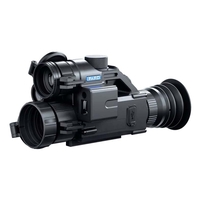
Pard Landsat 256 Mini Mulit-Spectral LRF Thermal/Night Vision Scope
via Uttings
£599.00
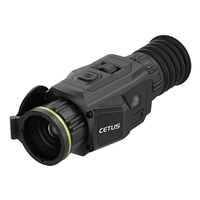
Pixfra Cetus C225 Thermal (256x192) Rifle Scope
via Uttings
£679.95
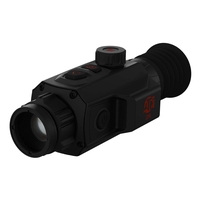
ATN Thor 6 Mini 215 (2-16x) Compact Thermal (256x192) Rifle Scope
via Uttings
£699.00
Buying Advice
Start with the paperwork, because it decides how much risk you are taking. Ask for the original receipt or invoice from a UK dealer, the box and the serial number, and check that the serial number on the body matches the box and the device information screen in the menu. Warranty is the awkward part. Pulsar's own support pages say that the transferability of the warranty may vary depending on national regulations, and tell you to contact your local distributor or seller for the position in your country. They also say that all returns and repairs must be processed through your local distributor or dealer. That page does not say yes or no for a second owner in the UK, and we make no claim either way for any brand. So before you agree a price, ask the seller for the original proof of purchase, then contact the UK distributor with the serial number and ask two questions: is this a UK-market unit, and will you support it for a second owner? Get the answer in writing if you can.
Be careful with scopes bought abroad. Because repairs are handled by the local distributor or dealer, ask the UK distributor whether they will support a unit that was first sold in another country before you buy one, and do not assume the answer. A missing receipt, a box with a different serial number, or a seller who cannot say where the scope came from are all reasons to walk away. They are also the warning signs of stolen kit.
Check the sensor for dead pixels and lines. Point the scope at something plain and evenly warm, such as a wall indoors or a clear sky, and look for dots that stay white or black, small clusters, or a full line across the image. Switch between the colour palettes, because a fault that hides in white hot can stand out in black hot. Pulsar's support pages describe a pixel repair option in the menu, and HIKMICRO's manuals include a correct defective pixel function, so on those brands one or two are not a disaster. A cluster, a line, or pixels that return after repair point to a tired or damaged sensor. Ask whether the scope has ever been pointed at the sun, which can mark a thermal sensor permanently.
Watch the calibration. A thermal scope refreshes its image every so often, usually with a soft click from an internal shutter. Leave the scope running for ten minutes and watch what happens. The picture should clean up after each calibration and stay clean. If the image turns grainy quickly, shows a ghost of the previous scene, or the shutter sticks, expect a repair bill.
Test the battery properly. Battery wear is the most common hidden cost on a used scope. Ask the seller to charge it fully before you arrive, then leave it running with the display on while you check everything else. Compare how fast the gauge falls with the run time the maker quotes for that model. If the scope uses removable packs, a tired pack is cheap to replace. If it has a built-in cell, replacement means sending the scope away, so a weak internal battery should come off the price. Check that the charging port is not loose and that the scope runs from a USB power bank if the model supports it.
Look at the lens and the body. The objective lens on a thermal scope is made from germanium with a special coating, and it is expensive to replace. Look for scratches, chips and worn coating, and be wary of a lens that has clearly been wiped with whatever was to hand. Check the eyepiece display for dead dots or uneven brightness, which is a separate fault from sensor pixels. Turn the focus ring through its full travel and work the dioptre adjustment. Inspect the mount or rail for stripped screws and signs that the scope has been dropped.
Check the firmware and the app. Open the device information screen and note the firmware version, then check the maker's app or website for the current one. Pulsar's support pages describe updating firmware through its Stream Vision 2 app, and HIKMICRO's manuals describe connecting to and upgrading through its HIKMICRO Sight app. Ask the seller to remove the scope from their own app account and to reset it, so you can register it to yours. A scope that will not connect to the app, or that sits several versions behind and refuses to update, needs explaining before you buy.
Test the laser rangefinder if it has one. Range a few objects at distances you know, such as a gatepost you have measured on a map or checked with a handheld rangefinder. The readings should agree closely and repeat every time. Try a far target as well as a near one, since a weak rangefinder often fails at distance first. Then check that the ranging point matches the reticle: the scope should range the thing the cross-hair is on, not something beside it.
Finally, think about zero. You cannot shoot the scope in a car park, but you can ask how many zero profiles are saved and for which rifles, and whether it has held zero. Check that the reticle moves correctly when you step through the zeroing menu and that the settings save after a restart. If you can meet at a range or on the seller's permission and fire a group, do it. Owning a thermal scope needs no certificate in the UK, but what you may shoot with it, and when, is a separate matter. Our guide to night vision and thermal law for UK shooters covers that.
Frequently Asked Questions
Is it worth buying a second-hand thermal scope?
It can be. A used scope often gives you a better sensor and lens than a new one at the same price. The trade-off is battery wear and uncertain warranty cover. It is worth it when you can test the scope in person, the seller has the original UK receipt, and the price is well below a comparable new model.
Does the warranty transfer when I buy a used thermal scope?
Do not assume so. Pulsar's support pages say transferability may vary depending on national regulations and direct you to your local distributor or seller. Ask the seller for the original proof of purchase, and confirm the position with the UK distributor, quoting the serial number, before you pay.
How many dead pixels are acceptable on a used thermal scope?
One or two isolated pixels that the scope's own pixel repair function can remove are not a reason to walk away. Clusters, a full line across the image, or pixels that come back after repair suggest a sensor fault and are a reason not to buy.
How do I check the battery on a used thermal scope?
Ask for it to be fully charged, then leave it running while you inspect the rest of the scope and watch how fast the gauge drops against the maker's quoted run time. Removable packs are cheap to replace. A worn built-in battery means a workshop repair.
Where do problems hide on a used thermal scope?
In the battery, in the sensor after the scope has warmed up, in the rangefinder at longer distances, in a missing receipt, and in where the unit was first sold, if the UK distributor will not support it. A quick look at a cold scope in daylight will not show any of these, so allow time for a proper test.
Do I need a licence to buy a thermal scope in the UK?
No certificate is needed to own a thermal scope. The rules on what quarry you may shoot with one, and at what times, are separate and differ across the UK, so check current guidance before you use it.
Related guides
Pulsar or Hikmicro thermal scope for UK shooting in 2026? Our in-depth comparison covers specs, budget tiers, deer stalking…
UK Night Vision & Thermal Law: What Shooters Must KnowUnderstand UK law on night vision and thermal optics for deer stalking, fox control, and lamping. Scotland vs England rules, legal kit…
Pulsar Thermion 2 vs Talion: Which Thermal Scope for UK Shooters?Choosing between Pulsar's Thermion 2 and Talion thermal riflescopes? Compare real 2026 UK prices, sensors and magnification ranges.
Best Budget Thermal Scopes Under £1,000 (UK 2026)Our expert guide to the best budget thermal scopes under £1,000 for UK fox and vermin shooting in 2026.
Not sure which scope is right for you?
Try our AI-powered scope finder — answer a few questions and get personalised recommendations.
Find My Scope →Get a UK scope tip every day
Follow AiScopes on Facebook for daily buying guides, deals and gear advice.
Follow on Facebook