Pulsar vs Hikmicro: Which Thermal Scope Suits UK Shooters?
By Peter Makulek · Senior Optics Editor · · Live prices from UK retailers
The thermal scope market for UK shooters has matured dramatically, and in 2026 the buying decision overwhelmingly comes down to two brands: Pulsar and Hikmicro. Both manufacture dedicated thermal rifle scopes with detector resolutions, refresh rates and feature sets that would have been unthinkable at their price points just three years ago. For anyone involved in deer stalking, fox control or rabbit management across the UK, choosing between them is now the single most common question we field — and it deserves a thorough, unbiased answer grounded in real-world UK use rather than spec-sheet one-upmanship.
Why does the choice matter so much? A thermal scope is typically the most expensive single optic a UK shooter will own, often exceeding the cost of the rifle beneath it. Getting it wrong means compromised detection range on dark January nights, poor shot placement on foxes at 200 metres, or unnecessary weight on a stalking rifle you carry for miles across Scottish hill ground. Both Pulsar and Hikmicro offer compelling line-ups, but their engineering philosophies, software ecosystems and UK support structures differ in ways that genuinely affect field performance.
In this guide we cut through the marketing noise and compare the two brands across the criteria that matter most to UK shooters: detector quality and NETD, magnification range and reticle options, recoil rating for centrefire calibres, battery life for long lamping sessions, recording capability, and — critically — after-sales support within the UK. We also address the growing role of PARD as a credible third option for shooters on tighter budgets or those wanting clip-on thermal units for existing day scopes.
Below you will find our curated product picks from both brands, followed by detailed buying advice covering budget tiers, common mistakes, legal context and use-case matching. Whether you are choosing the best thermal scope for nocturnal fox shooting with a .223 Remington, upgrading your rabbit-shooting rig on a .17 HMR, or fitting out a stalking rifle in .308 Winchester, this page aims to be the most complete resource available to UK buyers in 2026.
Top Picks — Live UK Prices
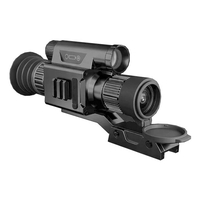
Fuego DS-X7 4K Day & Night Vision Rifle Scope
via Uttings
£299.99
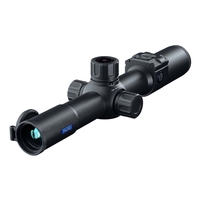
Pard Night Stalker Mini Night Vision Riflescope - 35mm
via Uttings
£339.00
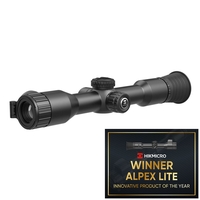
HIKMicro Alpex 4K Lite Digital Day/Night Riflescope
via Uttings
£399.00
Buying Advice
Understanding key thermal scope specifications is essential before comparing Pulsar and Hikmicro models. Detector resolution (e.g., 640×480 vs 384×288 pixels) determines how much detail you resolve at range — a 640-core sensor paired with a 12-micron pixel pitch will identify a fox-sized target meaningfully farther than a 384-core, 17-micron unit. NETD (Noise Equivalent Temperature Difference), measured in millikelvins (mK), indicates sensitivity: anything below 25 mK is excellent and will pick up a rabbit in cool grass at impressive distances. Refresh rate matters for tracking moving quarry — 50 Hz delivers smooth imagery, while 25 Hz can appear slightly choppy when panning. Magnification is expressed as base optical times digital zoom; be aware that heavy digital zoom degrades image clarity, so prioritise a higher base magnification if you regularly shoot beyond 150 metres.
Budget tiers in the UK thermal scope market break down roughly as follows. Entry-level units — typically 384-core sensors with 2× base magnification — offer genuine thermal capability for rabbit and close-range fox work and represent a sensible starting point, especially when brands like PARD compete aggressively in this space. Mid-range models step up to 640-core detectors, improved NETD, onboard recording, and recoil ratings suitable for calibres like .243 Winchester and .308 Winchester, making them the sweet spot for most UK foxing and stalking applications. Premium flagship scopes from both Pulsar (Thermion 2 LRF XP50 Pro and successors) and Hikmicro (Stellar and Thunder Pro 2.0 lines) add laser rangefinding, ultra-low NETD, advanced ballistic software and build quality rated for heavy magnum recoil — features that justify their higher outlay for professional deer managers and serious pest controllers.
Common mistakes UK buyers make include over-prioritising detection range figures quoted by manufacturers, which are calculated using NATO-standard 1.7 m × 0.5 m targets and do not translate directly to spotting a rabbit or even a roe deer in real UK terrain. Another frequent error is ignoring recoil rating: mounting a scope rated only for rimfire or air-rifle recoil onto a .308 stalking rifle will void the warranty and likely damage the detector. Buyers also underestimate the importance of mounting solutions — both Pulsar and Hikmicro use 30 mm tube diameters on most models, but always confirm ring compatibility and eye relief. Finally, do not overlook battery life: a scope that lasts only three hours on a single charge is impractical for a full night's foxing session in winter without spare batteries.
UK-specific context shapes the thermal scope decision in several important ways. Under the Wildlife Act and the Deer Act, thermal scopes are legal for use on firearms and air rifles across England, Wales and Scotland for pest control, but night shooting of deer requires specific authorisation from Natural England or NatureScot depending on jurisdiction. Most UK foxing is conducted with .223 Remington or .22-250 Remington, while deer stalking involves .243 Winchester, 6.5 Creedmoor or .308 Winchester — all producing moderate recoil well within the rating of mid-range and premium thermal rifle scopes. For rabbit shooting with an air rifle, remember that a sub-12 ft/lb springer or PCP is only effective to around 50 to 75 yards, so an ultra-long detection range is unnecessary and a lighter, lower-magnification thermal scope or clip-on is more practical. UK retailers such as Optics Warehouse, Thomas Jacks (the official Pulsar UK distributor), and various Hikmicro-authorised dealers offer warranty-backed purchases — buying grey imports to save money risks losing UK after-sales support entirely.
Matching the scope to your use case is the most reliable way to avoid buyer's remorse. If your primary discipline is rabbit control with a rimfire or air rifle at modest ranges, a compact 384-core Hikmicro or PARD unit with a low base magnification and light weight is ideal — you do not need a 640-core flagship. For dedicated fox shooting across open farmland where engagement distances regularly exceed 150 metres, a 640-core scope with at least 3× base magnification, sub-20 mK NETD and onboard recording for evidence of humane dispatch becomes a worthwhile investment. Deer stalkers who also need a daytime optic may prefer a clip-on thermal unit that mounts ahead of their existing rifle scope, preserving their preferred reticle and zero — both Pulsar and Hikmicro offer clip-on models, as does PARD. If you shoot multiple calibres, ensure the scope's recoil rating covers the heaviest you intend to use.
The brand landscape in 2026 is more competitive than ever. Pulsar, manufactured by Yukon Advanced Optics (Lithuania), has long been regarded as the benchmark for thermal rifle scopes in the UK, with a mature software ecosystem, reliable firmware updates via Stream Vision 2, and an established network of service centres. Hikmicro, the outdoor-imaging division of Hikvision, has closed the gap rapidly, offering comparable or superior detector specifications at each price point and increasingly polished software, though some users report that their app ecosystem still trails Pulsar's in refinement. PARD occupies a value-oriented niche, particularly popular for night vision scopes and entry-level thermal clip-ons, and is worth considering if outright cost is the primary concern. Ultimately, both Pulsar and Hikmicro deliver excellent thermal imaging for UK shooting disciplines — the best thermal scope is the one whose specification, ergonomics and price align with the shooting you actually do, not the one with the most impressive headline figures.
Frequently Asked Questions
What is the best thermal scope for deer stalking in the UK?
For UK deer stalking, a 640-core thermal scope rated for centrefire recoil (.243 Win, .308 Win or 6.5 Creedmoor) with sub-25 mK NETD and onboard recording is ideal. Both the Pulsar Thermion 2 line and Hikmicro Stellar series meet these criteria. Remember that shooting deer at night requires specific authorisation from Natural England or NatureScot, so a thermal scope alone does not grant legal permission for nocturnal culling.
Which is the best scope for fox shooting in the UK in 2025–2026?
Most UK fox shooters favour a 640×480 thermal rifle scope with at least 3× base magnification and a 50 Hz refresh rate for smooth target tracking. Pulsar's Thermion 2 XP50 and Hikmicro's Thunder Pro 2.0 are both excellent choices, offering detection ranges well beyond typical engagement distances of 100–250 metres. Look for models with video recording so you can review shot placement and provide evidence to landowners.
What is the best scope for rabbit shooting in the UK with a rifle?
For rabbit work with a .17 HMR or .22 LR rimfire, a compact 384-core thermal scope with moderate magnification is perfectly adequate and keeps weight and cost down. If you are using a sub-12 ft/lb air rifle, remember effective range is limited to roughly 50–75 yards, so ultra-long detection ranges are unnecessary. PARD and Hikmicro both offer lightweight entry-level thermal units well suited to this role, while Pulsar's smaller Thermion models also work well on rimfires.
Are thermal scopes legal for use on air rifles in the UK?
Yes, thermal and night vision scopes are legal to fit and use on air rifles in England, Wales and Scotland. There is no licensing requirement for the optic itself. However, you must still have the landowner's permission to shoot, and any quarry must be a legal pest species in season or under a general licence. For sub-12 ft/lb air rifles, engagement distances should be kept within 50–75 yards for humane dispatch.
How does Pulsar compare to Hikmicro on after-sales support in the UK?
Pulsar benefits from Thomas Jacks as its established UK distributor, with a well-regarded repair and warranty service and a large network of authorised dealers. Hikmicro has invested heavily in UK support since 2023 and now has dedicated service centres and responsive dealer channels, though some users still consider Pulsar's infrastructure more mature. Buying from an authorised UK retailer is essential with either brand to ensure warranty validity.
Is PARD a viable alternative to Pulsar and Hikmicro for UK shooters?
PARD has earned a solid reputation in the UK, particularly for night vision scopes and affordable thermal clip-on units that mount ahead of an existing day scope. Their thermal rifle scopes are improving with each generation and offer genuine value at the entry and mid-range price points. If your budget is tight or you want to add thermal capability to a rifle that already has a zeroed day scope, PARD clip-ons are well worth considering alongside Pulsar and Hikmicro equivalents.
What recoil rating should I look for in a thermal scope for centrefire rifles?
Always check the manufacturer's stated recoil rating before mounting any thermal scope on a centrefire rifle. Most mid-range and premium Pulsar and Hikmicro models are rated for calibres up to .375 H&H or equivalent, which comfortably covers common UK deer and fox calibres like .223 Rem, .243 Win, .308 Win and 6.5 Creedmoor. Fitting a scope rated only for rimfire or air-rifle recoil to a centrefire will almost certainly damage the detector and void your warranty.
Clip-on thermal or dedicated thermal rifle scope — which is better for UK use?
A dedicated thermal rifle scope offers a fully integrated experience with purpose-designed reticles and ballistic features, making it the best choice if the rifle is used primarily at night. A clip-on thermal mounts ahead of your existing day scope, letting you retain your preferred reticle, zero and daylight capability — ideal if you stalk during the day and switch to thermal for evening fox control. Clip-ons add length and weight but avoid the need to re-zero when swapping optics. Both Pulsar and Hikmicro offer competitive clip-on models.
How important is NETD when choosing the best thermal scope?
NETD measures how small a temperature difference the detector can resolve, expressed in millikelvins. Lower is better: a scope with 18 mK NETD will produce a cleaner, more detailed image than one at 40 mK, especially in challenging conditions like mild summer nights when the temperature contrast between quarry and background is minimal. For UK fox and deer work, aim for sub-25 mK; for rabbit shooting at shorter ranges, up to 35 mK is usually acceptable.
Related guides
Pard or Hikmicro – which thermal scope suits UK shooters best in 2026? We compare image quality, features, pricing and real-world performance for night…
Best Budget Thermal Scopes Under £1,000 (UK 2026)Our expert guide to the best budget thermal scopes under £1,000 for UK fox and vermin shooting in 2026.
UK Night Vision & Thermal Law: What Shooters Must KnowUnderstand UK law on night vision and thermal optics for deer stalking, fox control, and lamping. Scotland vs England rules, legal kit…
HIKMICRO Stellar 3.0 Price Reductions ExplainedHIKMICRO Stellar 3.0 thermal scope prices have dropped across UK dealers. Our 2026 guide covers what you get, how it compares…
HIKMICRO Alpex A50T: Is It the Best Digital Night Vision Scope for UK Shooters?Our in-depth UK guide to the HIKMICRO Alpex A50T digital night vision scope. Covers specs, performance, price bands, legal context…
Ballistics Basics: Bullet Drop, Wind Drift & Your Scope SetupMaster bullet drop, wind drift and velocity for your UK rifle scope setup in 2026. Learn BDC vs MOA vs MRAD, elevation turrets…
Best Scopes for Ballistics-Matched Long-Range Shooting in 2026Our 2026 UK buyer's guide to the best long-range scopes with BDC reticles, ballistic turrets and calibre pairing for accurate shooting from 300 to 1,000…
Not sure which scope is right for you?
Try our AI-powered scope finder — answer a few questions and get personalised recommendations.
Find My Scope →Get a UK scope tip every day
Follow AiScopes on Facebook for daily buying guides, deals and gear advice.
Follow on Facebook