1-Piece Scope Mounts for PRS & Long-Range: What Actually Matters
By Peter Makulek · Senior Optics Editor · · Live prices from UK retailers
This guide is written specifically for PRS competitors and serious long-range shooters in the US market who are choosing a premium 1 piece scope mount for PRS competition or precision rifle work. If you shoot a bolt-action chassis rifle in 6.5 Creedmoor, 6 GT, .308 Win, or similar cartridges and need a mount that holds zero across multiple stages, barricades, and positional transitions, you are in the right place. If you are looking for advice on one-piece versus two-piece mounts for air rifles or rimfire platforms, our separate scope-ring-and-mount-height-guide covers that topic in detail and is the better starting point for those platforms.
In PRS-style matches across the US, stages are designed to punish any equipment weakness that introduces variance. Shooters engage steel targets from 200 yards out to 1,200 yards or beyond, often from unstable positions on barricades, rooftops, and natural terrain features, all under strict par times that leave no room for second-guessing your zero. Your scope mount is the mechanical link between your optic and your rifle's action, and any flex, shift, or inconsistency in that interface translates directly into missed impacts downrange. At 1,000 yards, even a fraction of an MOA of shift — roughly half an inch at 100 yards — can mean a complete miss on a small plate.
The US PRS and NRL competition circuit has increasingly standardized around premium one-piece cantilever mounts from manufacturers like Area 419, Spuhr, and Reptilia. These mounts are CNC-machined from solid aluminum or steel billets, designed to clamp to a Picatinny rail along a single rigid footprint, and engineered to survive thousands of rounds of centerfire recoil without walking, loosening, or shifting point of impact. Understanding why these mounts cost what they do — and what distinguishes a genuine precision mount from a cosmetic look-alike — is the purpose of this guide.
Below we cover the key decision factors in order: why a quality one-piece mount outperforms two-piece rings in this discipline, what return-to-zero and cant consistency actually mean in competition, why torque specifications are not universal, how to match your mount to your scope's tube diameter and your rifle's rail, and which brand tiers US shooters rely on. Every recommendation reflects real-world PRS use on common US platforms like the MPA Matrix, Bergara HMR Pro, Tikka T3x in a KRG Bravo chassis, or custom actions from Bighorn, Defiance, and Impact Precision.
Top Picks — Live UK Prices

Nikko Stirling Diamond Long Range 30mm Tactical 4-16x50 IR Rifle Scope
via Uttings
£199.00
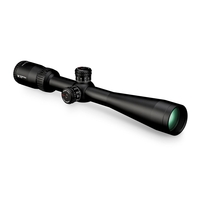
Vortex Diamondback Tactical 4-12x40 Riflescope - VMR-1 Reticle (MOA)
via Uttings
£299.00

Vortex Diamondback Tactical 4-12x40 VMR-1 Riflescope
via BushWear
£315.00
Buying Advice
A quality 1-piece mount beats 2-piece rings for PRS and long-range work because it clamps the scope tube along a single rigid body rather than relying on two independently torqued ring pairs separated by several inches of rail. With two-piece rings, even a tiny misalignment between the front and rear ring — caused by rail-slot tolerances, uneven torque, or imperceptible burrs — can introduce lateral or vertical stress on the scope's main tube. That stress can manifest as erratic tracking, a zero that drifts under recoil, or internal mechanical strain on the erector assembly. A well-machined one-piece mount eliminates ring-to-ring alignment as a variable entirely: the bore of both ring halves is machined in a single setup, guaranteeing coaxial alignment within extremely tight tolerances. For a PRS competitor who removes and reinstalls optics between seasons or swaps between rifles, this mechanical consistency is not a luxury — it is a baseline requirement.
Return-to-zero and cant consistency are two of the most competition-relevant properties a 1 piece scope mount PRS shooter should evaluate. Return-to-zero means that if you remove the mount from the rail and reinstall it, the point of impact returns to exactly where it was before — no re-zeroing needed. Premium mounts with QD lever systems or precision cross-bolt clamps are specifically engineered for this, with some manufacturers guaranteeing sub-0.1 mil return-to-zero. Cant consistency refers to the mount holding the scope at the same rotational orientation relative to the rifle's bore axis, shot after shot and stage after stage. If the scope cants even slightly between positions — because the mount shifted under recoil or was never properly torqued — the shooter's wind and elevation corrections become geometrically incorrect. At extended range, even one or two degrees of undetected cant can push impacts several inches off target. A rigid one-piece mount that locks firmly to the rail and does not flex under the repeated stress of barricade transitions is the primary defense against both problems.
Torque is one of the most misunderstood topics in scope mounting, and the critical point is this: there is no single universal torque number that applies to all mounts. Every reputable manufacturer — Area 419, Spuhr, Reptilia, and others — publishes its own torque specification for each type of fastener on its mount, and these values vary by design, materials, thread size, and whether the fastener is a ring-cap screw, a cross-bolt, or a rail-clamp lever. Some mounts call for 15 inch-pounds on ring-cap screws and 65 inch-pounds on cross-bolts; others specify entirely different figures. The two most common failure modes are overtightening, which can crush or oval a scope tube and strip threads in the mount body, and undertightening, which allows the scope to walk forward under recoil or rotate in the rings. Both are completely avoidable: use a quality inch-pound torque wrench (such as a FAT Wrench or Wheeler), look up the specific torque spec for your specific mount (most brands publish this on their website, in the included documentation, or printed on the mount itself), and follow it exactly. Guessing or applying a generic internet number is how expensive optics get damaged.
Matching your mount to your scope's tube diameter is a non-negotiable compatibility requirement, not a preference. The three tube diameters you will encounter in the PRS world are 30mm, 34mm, and 35mm. A 30mm tube remains the most common across the broader riflescope market and is found on many mid-tier to upper-mid-tier precision optics. However, 34mm tubes have become the dominant standard among premium PRS scopes because the larger tube allows manufacturers to build in more internal elevation travel — critical for dialing from a 100-yard zero out to 1,000+ yards without running out of adjustment. Some European and specialty optics use a 35mm tube. The mount's ring bore must exactly match the scope tube: a 34mm scope will not clamp safely or concentrically in a 30mm mount, and forcing a mismatch will damage both the scope and the mount. Always verify your scope's tube diameter in its spec sheet before ordering a mount.
Matching the mount to your rifle means confirming two things: rail specification and physical clearance. The vast majority of PRS chassis rifles and aftermarket rails use the Picatinny standard (MIL-STD-1913), which features slots spaced at 0.394-inch intervals with a specific cross-section profile. Most premium one-piece mounts are built exclusively for Picatinny rails, but you should still confirm your rifle's rail spec before buying — some older or budget rifles may use Weaver-style rails, which have a similar but not identical slot profile and width, and can cause fitment issues with Picatinny-specific cross-bolts or recoil lugs. Beyond rail spec, consider physical clearance: the mount's ring spacing and overall length must allow the scope's objective bell to clear the barrel or rail at the front, and the ocular housing must not overhang the rear edge of the rail in a way that prevents proper eye-relief adjustment. If you run a large-objective scope (56mm or larger) on a relatively low mount, the bell can physically contact the barrel or the top of the rail — measure before you buy, and consider a mount with built-in MOA cant (typically 20 MOA) if your setup benefits from it, as this tilts the scope forward and can actually improve both objective clearance and available elevation travel.
The reputable brand tiers for 1-piece PRS mounts form a well-defined landscape that US competitors largely agree on. Area 419 has become one of the most widely used mounts on the PRS circuit, known for precision CNC machining from billet aluminum, excellent return-to-zero, and a clean design that works well across common scope and chassis combinations. Spuhr, a Swedish manufacturer, is considered by many to be the benchmark for absolute rigidity and modularity, with integrated bubble levels, adjustable cantilever options, and a reputation for overbuilt durability — their mounts are widely used in both competition and military applications. Reptilia has gained significant traction in the US tactical and PRS market with lightweight but extremely rigid designs machined from 7075 aluminum. At the broader premium tier, sometimes referred to as Impact-class options, you will find mounts from brands like Badger Ordnance (the Condition One series), Nightforce, and others that share the same core attributes: tight machining tolerances, consistent return-to-zero, hardcoat anodized finishes, and proven track records under sustained centerfire recoil. Price bands in this tier generally range from roughly $250 to $500 or more depending on features like QD levers, integrated levels, or titanium hardware. These mounts are available from US retailers like OpticsPlanet and are often listed on Amazon — though for mount and ring hardware specifically, always check the listing's own compliance and availability details before purchasing, as accessory categories can vary by seller.
Frequently Asked Questions
Is a 1-piece mount actually better than 2-piece rings for precision rifle?
For PRS and precision rifle use, yes — a quality 1-piece mount is meaningfully better than two separate rings. The single-body construction guarantees that both ring halves are perfectly coaxial because they are machined in one setup, eliminating the ring-to-ring alignment errors that can stress a scope tube and cause tracking inconsistencies. A one-piece mount also distributes recoil forces across a wider rail footprint, reducing the chance of the mount shifting under repeated centerfire recoil. This does not mean all one-piece mounts are good — a cheap one-piece cast mount can be worse than quality two-piece rings — but at the premium tier (Area 419, Spuhr, Reptilia, Badger Ordnance), the one-piece design is the standard for a reason.
What torque should I use on my scope mount screws?
There is no single correct answer because torque specifications vary by manufacturer, mount model, and even by which specific screw you are tightening. Ring-cap screws, cross-bolts, and rail-clamp fasteners on the same mount may each have different torque values. Always consult the documentation that came with your specific mount, or check the manufacturer's website — brands like Area 419 and Spuhr publish detailed torque specs for every fastener. Use a calibrated inch-pound torque wrench, not a guess, and never substitute a generic internet recommendation for the manufacturer's own spec.
How do I know if I need a 30mm, 34mm, or 35mm mount?
The answer is determined entirely by your scope's main tube diameter, which is listed in the optic's specifications — not the objective lens diameter or the eyepiece diameter. Most mid-tier precision scopes use a 30mm tube. Many premium PRS-oriented scopes from brands like Vortex (Razor HD Gen III), Nightforce (ATACR), and Kahles use a 34mm tube because the larger diameter allows for more internal elevation adjustment range. A small number of scopes, primarily from certain European manufacturers, use a 35mm tube. Your mount's ring bore must exactly match your scope's tube diameter — there is no adapter or universal fit.
Will a 1-piece mount fit any Picatinny rail?
A mount designed for Picatinny (MIL-STD-1913) rails will fit any rail built to that standard, which includes the vast majority of modern PRS chassis systems and aftermarket scope rails. However, Weaver-style rails look similar but have slightly different slot spacing and cross-section dimensions, which can cause fitment problems with Picatinny-specific cross-bolts or recoil lugs. Additionally, you need to verify that the rail is long enough to accommodate the mount's overall length and that the mounting position allows proper eye relief. Always confirm your rifle's rail specification before purchasing.
Can a 1-piece mount cause objective bell clearance problems?
Yes, this is a real concern, especially with large-objective scopes (50mm or 56mm) mounted in low-height rings. If the mount sits too low, the front of the scope's objective bell can physically contact the barrel, barrel nut, or the top surface of the Picatinny rail. Before buying, measure the distance from the top of your rail to the barrel and compare it to half your scope's objective lens diameter plus a few millimeters of clearance. Mounts with built-in 20 MOA cant can help because they tilt the front of the scope slightly upward, increasing bell-to-barrel clearance while also giving you more usable elevation travel for long-range shooting.
Does mount height matter as much as mount rigidity for PRS?
Both matter, but they serve different purposes. Mount rigidity directly affects return-to-zero, cant consistency, and long-term reliability under recoil — it is the more critical structural concern. Mount height affects cheek weld, head position, and comfort behind the scope, which influence consistency across positional stages. Ideally, you want the lowest mount height that still provides adequate objective bell clearance, because a lower optical axis reduces the effect of cant errors on point of impact. Most PRS chassis rifles have adjustable cheek risers that let you dial in head position to match whatever mount height you choose, so rigidity should be your first priority and height should be optimized second.
Do I need a mount with a built-in 20 MOA cant for PRS?
A 20 MOA canted mount or rail is standard practice for PRS and long-range shooting because it biases the scope's internal elevation adjustment range toward the 'up' direction, giving you more usable travel for dialing at distance. Without it, a scope zeroed at 100 yards may run out of elevation adjustment before reaching 1,000 yards or beyond, depending on the cartridge and the scope's total available travel. Many premium one-piece mounts are available in both 0 MOA and 20 MOA versions. If your rifle's Picatinny rail already has 20 MOA of cant built in, you generally want a 0 MOA mount to avoid doubling the cant — check your rail's specification first.
How much should I expect to spend on a quality 1-piece PRS mount?
Premium one-piece mounts from established PRS brands generally fall in the $250 to $500+ range depending on features, materials, and design complexity. Mounts with QD lever systems, integrated bubble levels, or titanium hardware tend to be at the higher end. This is not an area where cutting budget makes sense — a $50 mount on a $2,500 scope creates a weak link that can negate everything the optic is designed to do. Think of the mount as a permanent part of your rifle system's precision, not a disposable accessory. Mounts from Area 419, Spuhr, Reptilia, and Badger Ordnance are available through US retailers and are often listed on Amazon and OpticsPlanet.
Can I swap a 1-piece mount between different rifles without losing zero?
If both rifles have identically spec'd Picatinny rails and the mount uses a repeatable clamping system (such as precision cross-bolts or QD levers), many premium mounts can return to zero on the same rifle they were originally mounted on. However, swapping a mount from one rifle to a completely different rifle means the scope-to-bore relationship has changed entirely, so you will always need to re-zero on the new rifle regardless of mount quality. The 'return-to-zero' spec refers to removing and reinstalling on the same rail and same position, not transferring between platforms.
Related guides
Our 2026 UK buyer's guide to the best long-range scopes with BDC reticles, ballistic turrets and calibre pairing for accurate shooting from 300 to 1,000 yards.
Best Long-Range Scopes UK 2026: Mid-Budget Buyer's GuideDiscover the best scopes for long-range shooting in the UK for 2026. Our expert guide covers FFP vs SFP, MOA vs MRAD, glass quality and turret tracking for 600–1,000 yards on a £500–£1,000 budget.
Best Long-Range Rifle Scopes 2026: Match Your Optic to Your CalibreOur 2026 UK guide to the best scopes for long range shooting. Learn how to match reticle, turrets and magnification to your calibre's ballistic profile for precision results.
Best Long-Range Scopes Under £1,000 for UK ShootersOur 2026 UK buyer's guide to the best scopes for long-range shooting under £1,000. Expert picks, specs explained, and FAQs for reaching 1,000 yards on a budget.
Best Long-Range Hunting Scopes for UK Stalkers in 2026Our expert UK guide to the best scopes for long range hunting in 2026. We cover magnification, reticles, FFP vs SFP, budget tiers and what actually matters beyond 500 metres.
Kahles vs ZCO vs Nightforce ATACR: Premium PRS Optics ComparedKahles K540i, ZCO 5-27x56, or Nightforce ATACR for PRS? We compare glass, turrets, reticles, and service at the $2,500+ tier so you buy the right premium scope.
Why Isn't My Scope Hitting Where I Aim? A Troubleshooting ChecklistScope not hitting where you aim? Work through this proven troubleshooting checklist — mounts, zero, parallax, ammo — cheapest and most likely causes first. US shooters, all platforms.
Not sure which scope is right for you?
Try our AI-powered scope finder — answer a few questions and get personalised recommendations.
Find My Scope →Get a UK scope tip every day
Follow AiScopes on Facebook for daily buying guides, deals and gear advice.
Follow on Facebook