Kahles vs ZCO vs Nightforce ATACR: Premium PRS Optics Compared
By Peter Makulek · Senior Optics Editor · · Live prices from UK retailers
Let's be upfront: a guide comparing Kahles, ZCO, and Nightforce ATACR is not for every shooter. These three optics occupy the top shelf of precision rifle competition glass, and all three generally fall in the $2,500 to $4,500-plus range depending on model variant and reticle choice. If you're shopping for your first PRS scope or working within a tighter budget, we have dedicated mid-tier and budget PRS guides elsewhere on AIScopes that will serve you far better. This comparison exists for the competitor or dedicated long-range marksman who has already decided that premium-tier glass is justified and needs help choosing between the three names most frequently debated in that space.
In the US PRS community, the conversation at the top end almost always circles back to these three brands. They show up on the firing lines at major matches from the Proving Grounds series to the PRS Finale, mounted on custom and semi-custom rifle platforms chambered in 6mm GT, 6 Dasher, 6.5 Creedmoor, and other popular competition cartridges. The shooters running them are typically engaging steel from 200 yards out to a mile-plus in varied wind conditions, reading mirage through the glass, and dialing rapid corrections between stages — a use case that ruthlessly exposes any weakness in optical clarity, turret repeatability, or reticle design.
What actually makes these three worth discussing together is that they represent slightly different design philosophies within the same premium tier. Kahles brings decades of Austrian optical heritage and a reputation for exceptionally clean glass. ZCO — Zero Compromise Optic — is the relative newcomer, engineered in Austria but purpose-built for the competition-dialing shooter who prioritizes turret feel above almost everything else. Nightforce ATACR is the established American-market benchmark, widely distributed across US dealers and backed by a service infrastructure that competition shooters have relied on for years. Each philosophy produces a meaningfully different shooting experience.
This guide is structured around the real-world reputation and characteristics that the PRS community broadly agrees on, not fabricated lab numbers. We will not invent specific turret click counts, exact weights to the tenth of an ounce, or precise elevation-travel figures for any of these models — those specs evolve across production runs and should be confirmed on each manufacturer's current spec sheet or a trusted US dealer listing. What we will do is give you an honest, experience-informed comparison of what genuinely separates these three scopes and help you decide which one deserves a spot on your competition rig.
Top Picks — Live UK Prices

Nikko Stirling Diamond Long Range 30mm Tactical 4-16x50 IR Rifle Scope
via Uttings
£199.00
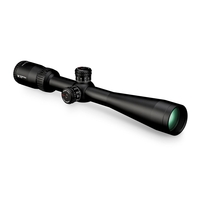
Vortex Diamondback Tactical 4-12x40 Riflescope - VMR-1 Reticle (MOA)
via Uttings
£299.00

Vortex Diamondback Tactical 4-12x40 VMR-1 Riflescope
via BushWear
£315.00
Buying Advice
This is a narrow-reach comparison for a very specific buyer. If you are reading this page, you have almost certainly already owned at least one mid-tier PRS optic — something in the Vortex Razor Gen III, Leupold Mark 5HD, or Nightforce NX8 class — and you are now evaluating whether the jump to the $2,500-plus tier is justified. That is the right buyer for this guide. The three scopes discussed here are not casual purchases; they represent a deliberate investment by shooters who compete regularly, who have identified a specific limitation in their current glass or turrets, or who are building a no-compromise rifle system for sponsored or semi-professional competition. If that does not describe you, our other PRS guides on AIScopes cover outstanding mid-tier options that deliver tremendous value.
The Kahles K540i has built its reputation on optical purity. Kahles, as an Austrian manufacturer with a heritage stretching back over a century, is widely regarded in the PRS community for producing glass that delivers exceptional resolution, contrast, and color fidelity — qualities that translate directly into the ability to read mirage, pick up splash on dirt berms, and identify small steel targets against complex backgrounds at extended range. The K540i's magnification range is well-suited to PRS stage distances, and its ergonomics tend to earn praise for a relatively compact and balanced package on a bolt-action rifle. Kahles reticle options in competition models typically include grid-style holdover designs that allow wind and elevation holds without dialing, though specific reticle availability should always be confirmed against the current Kahles catalog.
The ZCO (Zero Compromise Optic) 5-27x56 is arguably the scope most purpose-built for the act of competitive dialing. ZCO entered the premium optics market with an uncompromising focus on mechanical precision, and its turrets are frequently described by PRS shooters as among the best-feeling and most precisely tracking dials available at any price. The 56mm objective lens feeds a generous image to the shooter, and ZCO's glass quality is broadly considered to be in the same elite conversation as Kahles and Nightforce ATACR, with excellent edge-to-edge sharpness across the field of view. ZCO is a smaller, more specialized manufacturer, which means availability can sometimes lag behind demand in the US market — prospective buyers should check with authorized US dealers or trusted online retailers for current stock and lead times.
The Nightforce ATACR occupies a unique position as the most widely distributed and field-proven premium PRS optic in the US market. Nightforce has deep roots in American long-range shooting, military contracts, and competition sponsorship, and the ATACR line specifically is engineered for the demands of repeated high-volume dialing under competition and field conditions. ATACR turrets are consistently praised for their tactile, positive click feel and reliable return to zero over thousands of adjustment cycles. Nightforce also benefits from an established US-based service and repair infrastructure that can matter enormously when a scope issue arises mid-season. The ATACR is available in multiple magnification ranges and reticle configurations suited to PRS, and its track record of durability under hard use is one of its most frequently cited strengths.
What actually differentiates these scopes at this price point comes down to four areas that matter in practice: glass, turret feel, reticle options, and service. On glass quality, all three deliver noticeably better resolution, contrast, and low-light performance than mid-tier optics — the differences between them are subtle and often come down to personal preference in color rendering or edge sharpness rather than a clear winner. Turret feel is where the most passionate debates occur: ZCO turrets are frequently cited as the gold standard for tactile precision, Nightforce ATACR turrets are praised for their consistency and proven reliability over extreme round counts, and Kahles turrets are well-regarded but sometimes described as slightly less distinctive in feel compared to the other two. Reticle options across all three brands typically include Christmas-tree or grid-style holdover designs that let a shooter hold for both elevation and wind without dialing — critical for PRS stages with tight time limits. On warranty and service, all three manufacturers have strong reputations in the PRS community, but Nightforce's US-based service network is often noted as the most accessible for American shooters needing fast turnaround.
Who should — and should not — spend this much on a scope deserves a direct, honest answer. These scopes are best justified for shooters who compete frequently at the regional or national level, who have already identified that their current mid-tier optic's turret tracking, glass clarity, or mechanical reliability is limiting their performance in actual match conditions. They are also appropriate for dedicated long-range enthusiasts building a flagship rifle system who simply want the best available and have the budget to support it. They are not a smart first PRS purchase. A shooter new to competition will gain far more from investing in a quality mid-tier scope, quality ammunition, a solid tripod, and — above all — match fees and practice time. The marginal optical and mechanical advantages at this tier are real, but they matter most to the shooter who already has the fundamentals dialed in and is looking for every remaining edge. If that describes you, any of these three scopes will serve you exceptionally well, and the choice between them comes down to which combination of glass character, turret feel, reticle preference, and brand ecosystem fits your personal shooting style.
Frequently Asked Questions
What actually separates a $3,000+ scope from a $1,500 scope for PRS?
The differences are real but incremental, not transformative. Premium-tier glass generally delivers noticeably better resolution, contrast, and chromatic aberration correction, which helps you read mirage and spot trace or splash at distance. Turret mechanisms at this level are typically built to tighter tolerances with more consistent, repeatable click values over thousands of adjustment cycles — a genuine advantage for a high-volume competition shooter. Build quality, coatings, and internal component durability are also typically superior, but a quality mid-tier scope from Vortex, Leupold, or Nightforce's own NX8 line will still get most shooters through a match season without issue.
Is Kahles or ZCO better for PRS competition?
Neither is objectively better — they emphasize different strengths. Kahles is widely praised for exceptionally clean, high-contrast glass that excels at reading mirage and identifying small targets against busy backgrounds. ZCO is most often chosen by shooters who prioritize turret feel and mechanical precision above all else, as its dials are frequently described as the best-feeling in the industry. Both are excellent PRS optics, and the choice typically comes down to whether you value optical purity or turret tactility more in your personal shooting workflow.
How does Nightforce ATACR compare to Kahles and ZCO on turret feel?
Nightforce ATACR turrets are widely regarded as excellent — tactile, positive, and highly reliable over extreme round counts and thousands of dial cycles. In direct comparison, many PRS shooters describe ZCO turrets as having a slightly crisper, more defined click feel, while Kahles turrets are considered very good but perhaps less distinctive in tactile character. However, the ATACR's turret consistency and proven durability under hard field and competition use give it a strong reputation that many shooters find more reassuring than a marginally different click feel.
Do these premium scopes have better warranty and service than mid-tier options?
All three brands — Kahles, ZCO, and Nightforce — have strong reputations for standing behind their products and providing responsive service in the PRS community. Nightforce benefits from an established US-based service infrastructure that often provides the fastest turnaround for American shooters. Kahles and ZCO, as Austrian-engineered brands, may route some service through European facilities, though both have US dealer networks and support channels. At this investment level, warranty responsiveness and repair turnaround matter more than at the mid-tier, and all three brands are generally well-regarded on this front.
Is a scope this expensive worth it for a beginner to PRS?
Honestly, no — not as a first purchase. A new PRS shooter will benefit far more from a quality mid-tier scope in the $1,000 to $1,800 range paired with investment in match fees, practice ammunition, a good tripod, and positional shooting training. The marginal advantages of premium glass and turrets are most meaningful to experienced competitors who have already developed strong fundamentals and can actually perceive and exploit the differences. Our other PRS guides on AIScopes cover excellent mid-tier options that will serve a new competitor well through their first several seasons.
What reticle options do Kahles, ZCO, and Nightforce ATACR typically offer for PRS?
All three brands offer first-focal-plane reticle options designed for PRS-style shooting, typically including Christmas-tree or grid-style holdover designs. These reticles feature hash marks or dots arranged in a grid pattern below the crosshair center, allowing the shooter to hold over for elevation and hold off for wind without physically dialing the turret — critical for stages with multiple targets at varying distances under tight time limits. Specific reticle names and designs vary across models and production years, so prospective buyers should check the manufacturer's current catalog or an authorized US dealer for the exact reticle options available on the specific model they are considering.
Are Kahles, ZCO, and Nightforce ATACR all available in MRAD (mil) configurations?
Yes, all three brands offer MRAD-based models, which is the dominant adjustment system in PRS competition in the US. MRAD (milliradians) turrets typically adjust in 0.1 mil clicks, where each click equals 1 centimeter of adjustment at 100 meters or approximately 0.36 inches at 100 yards. Some models may also be available in MOA configurations, but for PRS competition, MRAD is the standard and is what most competitors will want. Confirm the specific adjustment system when ordering, as it is typically not changeable after purchase.
How important is zero-stop functionality at this price tier?
Zero-stop is essentially a standard feature at this price level and is critically important for PRS competition. A zero-stop prevents the turret from dialing below your established zero, allowing you to quickly return to your baseline elevation setting by feel alone — without looking at the turret markings. All three of these brands incorporate zero-stop mechanisms in their PRS-oriented models. The implementation details vary slightly between brands, but the core function is the same and is considered a non-negotiable feature for any serious competition optic.
Where can I buy Kahles, ZCO, and Nightforce ATACR scopes in the US?
All three brands are available through authorized US dealers, and some models can be found on Amazon and OpticsPlanet. Nightforce tends to have the widest US retail distribution due to its established dealer network. Kahles is available through a growing number of US dealers and online retailers. ZCO, as a smaller manufacturer, can sometimes be harder to find in stock — checking with specialized precision rifle dealers or the manufacturer directly may be necessary. Regardless of where you purchase, buying from an authorized dealer ensures full warranty coverage and access to manufacturer service support.
Related guides
End the no-budget PRS scope debate. We compare the best scope for PRS competition across every price tier, covering FFP reticles, turret tracking, and glass clarity for US shooters.
Premium PRS Scopes Compared: ATACR vs Razor Gen 3 vs Mark 5HD vs NX6Nightforce ATACR, Vortex Razor HD Gen III, Leupold Mark 5HD and NX6 compared for UK PRS shooters — real trade-offs and honest opinions at the £1,800+ premium scope tier.
1-Piece Scope Mounts for PRS & Long-Range: What Actually MattersChoosing a 1-piece scope mount for PRS or long-range competition? Our 2026 guide covers return-to-zero, torque specs, tube diameter matching, and the top-tier brands US shooters trust.
Christmas Tree vs Simple Reticles: Which PRS Reticle Is Right for You?Christmas tree reticle or clean holdover design for PRS? Our 2026 UK guide compares Tremor3, EBR-7C, PR2 and more to help you pick the right precision rifle reticle.
Best PRS & NRL22 Scopes for 2026The 2026 US buyer's guide to PRS and NRL22 scopes: FFP MRAD reticles, magnification ranges, and real product picks by budget, from $349 entry rigs to $3K premium glass.
Why Isn't My Scope Hitting Where I Aim? A Troubleshooting ChecklistScope not hitting where you aim? Work through this proven troubleshooting checklist — mounts, zero, parallax, ammo — cheapest and most likely causes first. US shooters, all platforms.
Best Clip-On Thermal Imagers 2026Find the best clip-on thermal imager for your day scope in 2026. We cover mounting, detection range, realistic price tiers, and top picks for US hunters and shooters.
Not sure which scope is right for you?
Try our AI-powered scope finder — answer a few questions and get personalised recommendations.
Find My Scope →Get a UK scope tip every day
Follow AiScopes on Facebook for daily buying guides, deals and gear advice.
Follow on Facebook