The No-Budget PRS Scope Debate Settled
By Peter Makulek · Senior Optics Editor · · Live prices from UK retailers
The no-budget PRS scope debate is one of the most passionate and polarizing discussions in the precision rifle community. When money is no object, shooters face a paradox of choice: do you chase the absolute pinnacle of optical clarity, the most bulletproof turret system, or the reticle design that shaves tenths of a second off your stage times? Forums, match parking lots, and social media threads are filled with strong opinions, but the truth is that the best scope for PRS shooting depends on a matrix of factors that rarely get discussed with the nuance they deserve. This guide is our attempt to bring genuine clarity to that debate for US competitors heading into the 2026 season.
Precision Rifle Series competition in the United States has exploded over the past decade. The centerfire PRS circuit now spans every region of the country, from the wind-swept plains of the Midwest to the mountainous terrain of the West, with stages that routinely push shooters from point-blank to 1,200 yards and beyond. PRS rimfire has grown just as fast, giving 22LR shooters a demanding competitive outlet at distances up to 400 yards. In both disciplines, your rifle scope is arguably the single most important piece of equipment on the gun — it dictates how quickly you can acquire targets, how precisely you can dial or hold for elevation and wind, and how much fatigue you accumulate across a two-day match.
The key decision factors in a no-budget PRS scope purchase center on five pillars: optical quality and resolution, turret precision and repeatability, reticle design and subtension utility, the magnification range and its usability across typical US match distances, and the mechanical reliability that ensures zero shift never costs you points. First focal plane (FFP) is essentially mandatory for PRS, because your reticle subtensions remain valid at every magnification — critical when you are holding wind on a stage where you cannot afford to dial. Beyond that, MRAD (mil-radian) has become the dominant unit in US PRS, though a small but vocal minority still prefers MOA.
From a US-market standpoint, the scopes dominating PRS firing lines are manufactured by a handful of brands with deep competitive pedigrees. Vortex, with its American-designed Razor HD Gen III line, has captured enormous market share among sponsored and unsponsored shooters alike. Leupold's Mark 5HD remains a lightweight favorite for competitors who prioritize speed and reduced fatigue. Premium European and Japanese glass from makers like Kahles, Nightforce, Tangent Theta, and ZCO round out the top tier. This guide will break down what separates a $2,000 scope from a $4,000 scope — and whether the difference actually translates to points on the board.
Top Picks — Live UK Prices

Nikko Stirling Diamond Long Range 30mm Tactical 4-16x50 IR Rifle Scope
via Uttings
£199.00
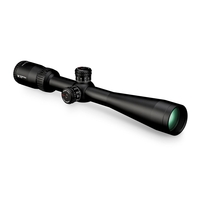
Vortex Diamondback Tactical 4-12x40 Riflescope - VMR-1 Reticle (MOA)
via Uttings
£299.00

Vortex Diamondback Tactical 4-12x40 VMR-1 Riflescope
via BushWear
£315.00
Buying Advice
Start with the specs that genuinely matter on the PRS firing line. Magnification range is critical: most competitive PRS scopes sit in the 5-25x or 5-34x window, giving enough low-end field of view for close barricade stages and enough top-end resolution to positively identify and engage small steel at 1,000-plus yards. FFP is non-negotiable for PRS because you need your reticle subtensions — the hash marks you use for wind holds and elevation holdovers — to be accurate regardless of your current zoom setting. Turret travel should offer at least 25 mils of elevation to cover the ballistic arc of common PRS cartridges like 6mm GT, 6 Dasher, or 6.5 Creedmoor out to 1,200 yards. Zero-stop functionality prevents you from accidentally dialing below your 100-yard zero, which is a catastrophic mistake under match pressure. Parallax adjustment down to 25 or even 10 yards is a bonus for barricade stages where targets can appear surprisingly close.
Budget tiers in the PRS scope world break down roughly as follows. Entry-level competitive scopes in the $1,000 to $1,800 range — think the Vortex Viper PST Gen II or Bushnell XRS3 — offer solid FFP reticles, reliable tracking, and acceptable glass clarity. They are genuinely competitive and represent the sweet spot for PRS production class, where there is a scope price cap. Mid-tier scopes from $2,000 to $3,000, such as the Vortex Razor HD Gen III 6-36x56 or the Leupold Mark 5HD 5-25x56, step up optical resolution, color fidelity, turret feel, and edge-to-edge sharpness noticeably. Premium scopes above $3,000 — Kahles K525i, Nightforce ATACR 7-35x56, Tangent Theta TT525P, and Zero Compromise ZC527 — deliver the absolute pinnacle of mechanical repeatability, glass transmission, and build quality. The law of diminishing returns is real, but at the highest levels of PRS competition, those marginal gains can separate a podium finish from a top-twenty.
Common mistakes buyers make in the no-budget PRS scope debate include chasing maximum magnification at the expense of optical quality. A 7-35x scope with mediocre glass will show you less detail at 35x than a superb 5-25x scope at 25x, because resolution is a function of glass quality, coating technology, and optical design — not just raw power. Another frequent error is ignoring reticle selection: a busy, overly complex reticle can slow target acquisition, while a reticle with too few features forces unnecessary turret dialing. The best PRS reticles — such as the Tremor3 or MIL-XT — offer a tree of holdover and windage marks that let you engage multiple targets without touching your turrets. Finally, do not underestimate the importance of the eyepiece: generous eye relief (3.5 inches or more) and a forgiving eye box reduce fatigue dramatically over a 12- or 15-stage match day.
For US shooters, context matters. If you are competing in centerfire PRS with a 6mm GT or 6.5 Creedmoor bolt gun on a chassis like the MDT ACC or MPA BA, your scope needs to handle stages from 100 to 1,200 yards in terrain that can range from flat Texas prairie to the steep angles of Appalachian ridgelines. PRS rimfire competitors shooting 22LR — often on CZ 457 or Vudoo platforms — need a rimfire scope with fine-enough reticle subtensions to hold precisely at 50 to 300 yards, where the tiny bullet's trajectory drops dramatically. Both Amazon.com and OpticsPlanet stock the major PRS-relevant brands and frequently offer installment payment plans, making even premium glass more accessible. Note that PRS production class enforces a scope price cap, so verify the current PRS rule book before investing if you plan to compete in that division.
Matching the scope to your specific use case is the ultimate decision framework. A dedicated PRS competitor who shoots 15-plus matches a year and chases national standings should invest in premium glass and turrets — the reliability and optical advantage pay dividends over thousands of rounds and dozens of stages. A newer shooter entering local or regional PRS matches will be far better served spending $1,500 on a proven mid-tier scope and allocating the rest of their budget to ammunition, training, and match fees, which accelerate skill development far faster than boutique glass. If you also use your rifle for other disciplines — long range steel challenges, scope-equipped coyote hunting in the off-season, or even the occasional scope hog hunt from a Texas blind — versatility in magnification range and turret usability becomes more important than pure competition optimization.
The brand landscape in 2026 is healthier than ever for US PRS shooters. Vortex continues to dominate market share with aggressive pricing, a no-questions-asked warranty, and the Razor HD Gen III that has become the default recommendation in countless online debates. Leupold earns loyalty from shooters who value American manufacturing, lighter weight, and the distinctive CustomDial system. Bushnell has re-emerged as a serious contender in the entry and mid tiers, offering remarkable value. At the premium end, Nightforce, Kahles, Tangent Theta, and Zero Compromise compete for the wallets of shooters who demand the absolute best turret repeatability and optical resolution available. Pulsar, best known for thermal scope and night vision scope technology, sits outside the PRS lane but is worth mentioning for shooters who also pursue predator or hog hunting after dark. Ultimately, the no-budget debate is less about which brand is objectively supreme and more about which combination of features, ergonomics, and optical character best fits the way you shoot.
Frequently Asked Questions
What is the best scope for PRS competition in 2026?
There is no single best scope for PRS competition because the answer depends on your division, budget, and personal priorities. For open-class centerfire PRS, the Nightforce ATACR 7-35x56, Kahles K525i, Vortex Razor HD Gen III, and Zero Compromise ZC527 are the most common choices on podiums. Each excels in different areas — the ATACR in turret feel, the Kahles in reticle speed, the Razor in value-to-performance ratio, and the ZCO in raw optical resolution. Test as many as possible at a match or demo day before committing.
What is the best scope for PRS shooting on a budget?
For shooters who want to enter PRS without spending over $2,000, the Vortex Viper PST Gen II 5-25x50 and the Bushnell XRS3 are the two most commonly recommended rifle scopes. Both offer FFP MRAD reticles, reliable turret tracking, and acceptable glass clarity for competitive use. They are also legal for PRS production class. Spending in the $1,000 to $1,500 range and investing the savings in match fees and quality ammunition is a proven path to faster improvement.
What is the best scope for PRS rimfire and 22LR competition?
PRS rimfire demands a scope with fine reticle subtensions, excellent resolution at moderate magnifications, and reliable tracking in small increments — because 22LR ballistics require frequent and precise adjustments. The Vortex Razor HD Gen III, Athlon Cronus BTR, and Nightforce NX8 are all popular choices scaled appropriately for rimfire distances of 25 to 400 yards. A scope with a 10-yard parallax minimum is beneficial because some PRS rimfire stages feature targets inside 50 yards, where parallax error can cost you hits.
What is the best scope for PRS production class?
PRS production class restricts scope cost, which makes the Vortex Viper PST Gen II, Bushnell XRS3, and Athlon Ares ETR strong contenders. All fall within the production class price cap, offer FFP MRAD reticles, and have proven mechanical reliability across thousands of competitive rounds. Check the current PRS website for the exact price limit, as it can be adjusted between seasons. Within that ceiling, prioritize turret repeatability and glass clarity over maximum magnification.
Does FFP vs SFP matter for PRS?
Yes, first focal plane (FFP) is essentially mandatory for PRS competition. In an FFP scope, the reticle scales with magnification, so your holdover and windage marks remain accurate regardless of zoom level. This is critical during timed PRS stages where you may not have time to dial your turret and instead hold using your reticle. SFP scopes are only reticle-accurate at one specific magnification, which introduces risk of errors under match pressure. Nearly every competitive PRS shooter in the US uses an FFP scope.
MRAD or MOA — which is better for PRS?
MRAD (milliradians) has become the dominant angular unit in US PRS competition. Most PRS-oriented reticles, ballistic solvers, and training resources default to mils. One click of 0.1 mil equals 1 centimeter at 100 meters (or roughly 0.36 inches at 100 yards), which gives a fine enough adjustment for precision work. MOA (1 MOA equals approximately 1.047 inches at 100 yards) is slightly finer per click, but the PRS community overwhelmingly favors MRAD. Choose MRAD unless you have deep experience and preference for MOA.
How much magnification do I need for PRS?
Most competitive PRS scopes offer 5-25x or 5-34x magnification ranges. For centerfire PRS, where targets may appear at 100 to 1,200-plus yards, 25x is sufficient for most stages, and 34x provides a margin for positively identifying small or distant steel. For PRS rimfire, maximum magnification of 18x to 25x is typically adequate given the shorter engagement distances. Avoid prioritizing magnification over glass quality — a sharper image at 25x beats a dim, soft image at 34x every time.
Can I use my PRS scope for hunting coyotes or hogs?
Absolutely. A quality PRS rifle scope with a versatile magnification range like 5-25x transitions well to predator hunting and scope hog applications. The low-end magnification gives you enough field of view for closer shots, while the high end lets you reach out on a long range coyote setup. For night hunting where legal, you would need a dedicated thermal scope or night vision scope — brands like Pulsar specialize in that technology. Your PRS scope can handle any daylight hunting scenario that falls within its magnification and turret travel range.
Where should US buyers purchase a PRS scope?
Amazon.com carries most major PRS scope brands including Vortex, Leupold, and Bushnell, and offers the convenience of fast shipping and straightforward returns. OpticsPlanet is another excellent US retailer with a deep inventory of tactical and PRS optics, frequent sales, and installment payment plans. Local dealers — searchable through brand websites or our own 50-state dealer locator — let you handle the scope before buying, which is valuable for evaluating eye box, turret feel, and reticle preference in person.
Related guides
Find the best scope for PRS competition under £1,000 in the UK. Expert guide to FFP, MRAD turrets, magnification, zero-stop and top budget precision rifle optics for 2026.
Kahles vs ZCO vs Nightforce ATACR: Premium PRS Optics ComparedKahles K540i, ZCO 5-27x56, or Nightforce ATACR for PRS? We compare glass, turrets, reticles, and service at the $2,500+ tier so you buy the right premium scope.
1-Piece Scope Mounts for PRS & Long-Range: What Actually MattersChoosing a 1-piece scope mount for PRS or long-range competition? Our 2026 guide covers return-to-zero, torque specs, tube diameter matching, and the top-tier brands US shooters trust.
Christmas Tree vs Simple Reticles: Which PRS Reticle Is Right for You?Christmas tree reticle or clean holdover design for PRS? Our 2026 UK guide compares Tremor3, EBR-7C, PR2 and more to help you pick the right precision rifle reticle.
Best PRS & NRL22 Scopes for 2026The 2026 US buyer's guide to PRS and NRL22 scopes: FFP MRAD reticles, magnification ranges, and real product picks by budget, from $349 entry rigs to $3K premium glass.
Why Your Scope Rings Won't Close Evenly — And How to Fix ItScope rings won't close evenly? Learn exactly why it happens, how to fix it, and which rings and mounts eliminate the problem for good. 2026 US buyer's guide.
3-15x Scopes: Versatile Enough or a Compromise?Is a 3-15x rifle scope truly versatile for hunting and long range shooting in 2026? We break down magnification, FFP vs SFP, and real-world US use cases to help you decide.
Not sure which scope is right for you?
Try our AI-powered scope finder — answer a few questions and get personalised recommendations.
Find My Scope →Get a UK scope tip every day
Follow AiScopes on Facebook for daily buying guides, deals and gear advice.
Follow on Facebook