NocPix ACE Thermal Scope Series – Price Drops Explained
By Peter Makulek · Senior Optics Editor · · Live prices from UK retailers
The NocPix ACE series has quietly become one of the most talked-about thermal rifle scope lines among UK shooters in 2026, largely because significant price reductions have brought capable thermal imaging into a bracket that was previously dominated by clip-on units and handheld monoculars. For anyone who has been watching the thermal market and waiting for the right moment to invest, these price drops deserve serious scrutiny. Thermal optics remain one of the fastest-evolving categories in shooting, and the ACE range sits at a fascinating intersection of affordability and genuine field performance.
Understanding why these price drops matter requires context. The UK thermal scope market has long been shaped by established players such as Pulsar and HikMicro, with premium options from the likes of the Pulsar Thermion 2 series commanding prices well north of £3,000. The NocPix ACE range was already positioned below those flagships, but the 2026 reductions place certain ACE models in the sub-£2,000 and even sub-£1,500 brackets, which is remarkable for a dedicated thermal rifle scope with onboard recording and reasonable detector resolution.
For UK hunters managing foxes, rabbits, and corvids under the cover of darkness — where thermal's advantage is most pronounced — the decision factors go beyond simple price. Detector resolution (typically measured in pixels, such as 384×288 or 640×512), NETD sensitivity (lower is better, measured in millikelvins), refresh rate, and reticle options all influence how well a thermal scope performs in real British conditions: damp autumn evenings, low ambient temperature differentials, and the cluttered hedgerow backgrounds typical of English and Welsh farmland.
In this guide we break down what the NocPix ACE series offers after its 2026 price adjustments, how each model compares to the broader UK thermal market including Pulsar, HikMicro, and others, and what you should prioritise when choosing a thermal scope for your specific discipline — whether that is lamping-replacement fox control on an FAC rifle, or fitting a thermal to a moderated rimfire for close-range pest work.
Top Picks — Live UK Prices

Richter Optik Crystal 4x20 Riflescope with Mounts
via BushWear
£9.99

Caldwell Orange Peel Silhouette Target 12x18 5pk
via BushWear
£10.39
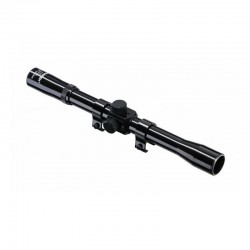
Umarex 4x20 Scope
via DAI Leisure
£19.95
Buying Advice
When evaluating any thermal scope — NocPix ACE included — the headline spec is detector resolution. A 384×288 sensor will produce a perfectly usable image for identifying foxes and rabbits at ranges inside 200 metres, but a 640×512 sensor delivers noticeably more detail at longer ranges and in low-contrast conditions. NETD (Noise Equivalent Temperature Difference) is equally important: a figure below 35 mK means the scope can distinguish smaller temperature differentials, which matters on mild UK evenings when quarry and background are closer in temperature. Refresh rate should be 50 Hz for a rifle scope; lower rates produce distracting lag when panning.
In GBP terms, the 2026 UK thermal market broadly breaks into tiers. Below £1,500 you will find entry-level dedicated thermal scopes and clip-on modules — the NocPix ACE price drops have pushed certain 384-resolution models into this territory. Between £1,500 and £2,500 sits the mid-range sweet spot where 640-resolution detectors, better NETD, and more polished software appear; several ACE variants now land here. Above £2,500 you enter premium Pulsar Thermion 2 XP50 and Pulsar Merger LRF territory, along with high-end HikMicro Thunder Zoom models. Each tier jump brings tangible field improvements, but the mid tier arguably offers the best value for dedicated UK pest controllers.
A common mistake UK buyers make is over-specifying magnification at the expense of field of view. Thermal scopes already narrow your situational awareness compared to a conventional day scope, and high base magnification compounds this. For typical UK fox-control distances of 80–250 metres, a thermal scope with a 2–3× base magnification and 4–8× digital zoom is far more practical than one starting at 4×. Another pitfall is assuming all thermal scopes are weatherproof to the same standard — check the IP rating carefully, as British fieldwork involves sustained exposure to rain, not just the occasional splash.
UK-specific legal context is essential. Thermal scopes are not restricted items in England and Wales and can be purchased without any licence, but the firearm they are mounted on obviously must be held on a valid Firearms Certificate if it is FAC-rated. There is no close season for foxes, rabbits, or grey squirrels, and thermal scopes are widely used by pest controllers operating under General Licences. For deer, thermal can be useful for observation and carcass recovery, but always check current guidance from BASC or the Deer Initiative regarding use during lawful stalking hours. Scottish shooters should note that Air Weapon Certificate requirements apply to any air weapon, and any queries about legality should be directed to Police Scotland or BASC.
Matching the NocPix ACE to your use case is straightforward. If your primary role is fox control on arable farmland with an FAC-rated centrefire — typically .223 Rem or .243 Win in the UK — prioritise the 640-detector ACE model with the best NETD you can afford, and ensure the scope's rail mount is compatible with your rifle's Picatinny or Weaver setup. For rimfire users running a .22 LR or .17 HMR on closer-range rabbit and rat work, a 384-resolution ACE at the lower price point will do the job admirably, and the weight saving is welcome on a lighter rifle. If you already own a quality day scope — a Vortex Viper PST, a Leupold VX-Freedom, or similar — a clip-on thermal module might still make more sense than swapping to a dedicated unit, though the ACE price drops have narrowed that value gap considerably.
The brand landscape in UK thermal optics is evolving rapidly. Pulsar remains the market leader with the broadest dealer network and the most proven track record, while HikMicro has aggressively expanded its UK presence with competitive pricing and solid build quality. NocPix is a newer entrant and buyers should verify UK warranty support and servicing arrangements before committing — reputable UK dealers such as Thomas Jacks, Sporting Saint, or specialist thermal retailers will typically offer their own backup. Vortex, Nightforce, and Zeiss do not currently compete in the thermal rifle scope space in the UK, though Vortex's VIP warranty on their conventional optics sets a standard that thermal buyers increasingly expect from any brand at this price level.
Frequently Asked Questions
How much have NocPix ACE thermal scopes dropped in price in 2026?
Exact reductions vary by model and retailer, but UK dealers have reported price drops of roughly 15–25% across the ACE range during 2026. This has moved several 384-detector models below the £1,500 mark and brought 640-detector variants closer to the £2,000 bracket. It is worth checking multiple UK stockists, as pricing can differ between dealers.
Are NocPix ACE thermal scopes legal to own in the UK?
Thermal imaging scopes are not restricted items in England, Wales, Scotland, or Northern Ireland, and no licence is required to purchase or own one. However, the firearm it is mounted on may require a Firearms Certificate if it is above the relevant power thresholds for air weapons. Always consult your local police force or BASC for guidance specific to your situation.
How does the NocPix ACE compare to Pulsar and HikMicro thermal scopes?
Pulsar's Thermion 2 series remains the benchmark for image quality and software polish, but commands significantly higher prices. HikMicro's Thunder and Falcon ranges offer strong mid-range competition. The NocPix ACE's 2026 price drops position it as a value alternative with competitive detector specs, though Pulsar and HikMicro currently have deeper UK dealer networks and longer warranty track records.
Can I use a NocPix ACE thermal scope on a sub-12 ft-lb air rifle?
Technically yes, but thermal scopes are rarely practical on sub-12 ft-lb air rifles. The effective humane-kill range on rabbits and squirrels is roughly 35–45 yards, and a thermal scope's strengths — long-range target detection in darkness — are largely wasted at those distances. The scope's weight may also unbalance a lightweight air rifle. A conventional scope with a good lamp or NV unit is usually more appropriate.
What detector resolution should I choose for UK fox control?
For fox control at typical UK engagement distances of 80–250 metres, a 640×512 detector will provide the clearest target identification and is the better investment if your budget allows. A 384×288 detector is perfectly usable inside 150 metres but may struggle to deliver confident identification at longer ranges, especially in low-contrast conditions on milder evenings.
Do NocPix ACE thermal scopes hold zero well enough for centrefire rifles?
Reports from UK users suggest the ACE series holds zero adequately on standard centrefire calibres such as .223 Rem and .243 Win. As with any thermal scope, it is important to use the correct mounting hardware and to re-confirm zero periodically. Recoil from magnum calibres may present more of a challenge, and you should verify the manufacturer's stated recoil rating before mounting on anything above .308 Win.
What is the best thermal scope under £1,500 in the UK in 2026?
The sub-£1,500 bracket has become genuinely competitive in 2026. NocPix ACE 384-resolution models now fall into this range following price drops, and HikMicro's Thunder series also offers options here. At this price you should expect a 384×288 detector, sub-40 mK NETD, 50 Hz refresh rate, and onboard recording. Compare warranty terms and UK dealer support carefully, as these can vary.
Can I use a thermal scope for deer stalking in the UK?
Thermal scopes can be valuable for observation, surveying, and carcass recovery during deer management. Whether they can legally be used as a sighting device during the act of shooting deer depends on current legislation and any conditions on your Firearms Certificate. Deer have statutory close seasons that must be respected. Contact BASC or the British Deer Society for up-to-date guidance on thermal use during lawful stalking.
Are there any ongoing costs with owning a thermal scope?
The main ongoing cost is battery replacement or recharging — most thermal scopes use rechargeable lithium-ion packs that degrade over several hundred charge cycles. Spare batteries typically cost £30–£80 depending on the model. Firmware updates are usually free. Unlike conventional scopes, thermal units contain electronics that can fail, so a robust warranty and accessible UK service centre are important considerations.
Related guides
HIKMICRO Stellar 3.0 thermal scope prices have dropped across UK dealers. Our 2026 guide covers what you get, how it compares…
UK Night Vision & Thermal Law: What Shooters Must KnowUnderstand UK law on night vision and thermal optics for deer stalking, fox control, and lamping. Scotland vs England rules, legal kit…
Best Thermal Monoculars Under £1,000 for UK Stalking & FoxingOur expert-tested guide to the best thermal spotter monoculars under £1,000 for UK deer stalking and foxing.
GOYOJO GRL335 Thermal Scope – Initial UK ThoughtsFirst impressions of the GOYOJO GRL335 thermal scope for UK shooters. We cover specs, image quality, build, value for money…
Onboard Ballistic Solvers vs Phone Apps: Which Approach Suits You?Should you choose optics with built-in applied ballistics or pair a standard scope with a phone app? Our 2026 UK guide breaks down cost…
Goyojo GRL635 640 Thermal Scope – First LookFirst look at the Goyojo GRL635 640 thermal scope for UK shooters. We explore its 640-resolution sensor, key specs…
Not sure which scope is right for you?
Try our AI-powered scope finder — answer a few questions and get personalised recommendations.
Find My Scope →Get a UK scope tip every day
Follow AiScopes on Facebook for daily buying guides, deals and gear advice.
Follow on Facebook