Onboard Ballistic Solvers vs Phone Apps: Which Approach Suits You?
By Peter Makulek · Senior Optics Editor · · Live prices from UK retailers
The question of whether to invest in a rifle scope with an integrated applied-ballistics (AB) engine or to piece together the same capability through a phone or tablet app paired with a conventional optic has become one of the most debated topics in UK shooting circles. At its core the dilemma is about where the ballistic solver lives — embedded in the scope's electronics, displayed on a heads-up reticle, or running on a separate device you glance at between shots. For UK stalkers stretching beyond 200 yards on roe or fallow, and for long-range target shooters working at 600 yards and beyond, the answer shapes your entire kit list, workflow and budget.
Applied ballistics inside an optic is no longer confined to five-figure military hardware. Brands such as Nightforce, Leupold and Pulsar now offer scopes and clip-on modules with onboard solvers that accept environmental inputs — temperature, pressure, wind — and output a corrected firing solution directly to the reticle or turret indicator. The advantage is immediacy: you never look away from the target. The disadvantage is cost, battery dependency, and the fact that if the electronics fail you are left with a standard reticle and your own knowledge of the drop chart.
The alternative — running a ballistic app such as Strelok Pro, Applied Ballistics Mobile or the Hornady 4DOF solver on a smartphone or tablet — costs very little and can be extraordinarily accurate when fed good data. Many UK shooters already carry a phone in the field for mapping, deer-stalking notifications and shot-recording apps required by some estates. The trade-off is workflow friction: you must break your cheek weld, consult the screen, memorise or dial the correction, and re-engage. In cold, wet British conditions with gloved hands, that process can be slower and clumsier than an integrated solution.
This guide examines both approaches through a UK lens — covering sub-12 ft-lb air-rifle shooting where ballistic solvers are largely unnecessary, FAC-rated centrefire stalking where they begin to earn their keep, and long-range target disciplines where they are almost essential. We will look at compatible scope types (FFP versus SFP, MOA versus MRAD), thermal and night-vision considerations, realistic UK engagement distances, and how to match the right solution to your shooting discipline and budget.
Top Picks — Live UK Prices
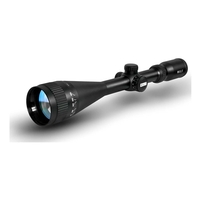
Wulf Fireball LR 4-16x50 AO IR Riflescope
via Uttings
£74.99
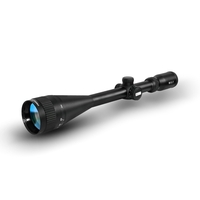
Wulf Fireball LR 6-24x50 AO IR Riflescope
via Uttings
£84.99

Wulf Fireball LR 4-16x50 Half Mil-Dot Rifle Scope
via BushWear
£89.99
Buying Advice
Understanding the key specifications matters before you spend a penny. A first-focal-plane (FFP) reticle scales with magnification, meaning your MRAD or MOA subtensions remain correct at every power — critical if you are using holdovers generated by a ballistic solver rather than dialling turrets. A second-focal-plane (SFP) reticle is only dimensionally accurate at one magnification, typically the highest. If you plan to use phone-app holdovers in the field, FFP is strongly preferable because you can engage at any zoom without recalculating. MRAD-based systems (where 0.1 mil equals 1 cm at 100 metres) tend to pair more cleanly with metric app outputs, but MOA (roughly 1.047 inches at 100 yards) works perfectly well if you are consistent. Parallax adjustment is essential at closer ranges — air-rifle scopes need settings down to around 10 yards, whereas centrefire long-range glass typically bottoms out at 25 or 50 yards.
Budget tiers in the UK market break down roughly as follows. Below £300, you are looking at solid conventional scopes from Vortex, Athlon or Bushnell with no onboard electronics — pair these with a free or low-cost phone app and a Kestrel wind meter for a capable budget solution. Between £300 and £800, you enter territory where some scopes include Bluetooth connectivity or basic rangefinding, and premium phone-app ecosystems like Applied Ballistics with a paid Kestrel link start to shine. From £800 to £2,000, scopes from Leupold, Zeiss and Nightforce offer superlative glass quality and, in some models, integrated ballistic turret systems or digital overlays. Above £2,000, fully integrated smart scopes with onboard AB solvers, environmental sensors and laser rangefinders appear — these consolidate everything into one unit but command a serious premium.
Common mistakes UK buyers make include over-investing in ballistic technology for disciplines that do not need it. A sub-12 ft-lb air rifle used for rabbits and grey squirrels at 30 to 40 yards does not require a ballistic solver — the pellet's trajectory is well understood and the engagement window is short enough that a simple mil-dot or duplex reticle and a properly zeroed scope suffice. Equally, fitting an expensive smart scope to a spring-powered air rifle is unwise: the brutal double-recoil cycle of a springer will destroy electronics not specifically rated for that stress pattern. Save integrated AB for FAC-rated centrefire rifles where the engagement distances and ballistic variables genuinely warrant it. Another pitfall is trusting a phone app's output without verifying it against real-world impacts — always confirm your data at the range before relying on it in the field.
UK-specific context shapes this decision heavily. Our weather — cold, damp, changeable — punishes touchscreen devices; a phone in a waterproof case with thick gloves is slow to operate. Conversely, onboard scope electronics must contend with condensation, battery drain in low temperatures and limited serviceability if something goes wrong. For deer stalking, engagement distances in British woodland and hill country rarely exceed 200 to 250 yards for most recreational stalkers, meaning a well-zeroed scope with a printed drop chart may be all you need. Long-range target shooting at Bisley, Diggle or club ranges beyond 600 yards is where electronic solvers — integrated or phone-based — truly justify themselves. For night-vision and thermal optics from Pulsar or HikMicro used for fox control or permitted night shooting, some units now include basic ballistic profiles, but most UK users still rely on a separate app or pre-calculated reticle holds. Remember that in England and Wales, air rifles up to 12 ft-lb require no licence, but anything above is FAC-rated and needs a Firearms Certificate. In Scotland, an Air Weapon Certificate is required for any air weapon. Always check your obligations with your local police force or BASC.
Matching the approach to your use case is the most important step. If you shoot one rifle at known distances on a square range, a phone app with a quality conventional FFP scope is cost-effective and extremely accurate — Strelok Pro or Applied Ballistics Mobile costs under £30, and you can invest the savings into better glass from Vortex, Zeiss or Leupold. If you shoot multiple rifles across varied terrain and need rapid first-round solutions — a hill stalker taking roe at uncertain distances, for instance — an integrated system saves valuable seconds. For thermal and night-vision users conducting pest control, the solver is less critical than target detection; invest in sensor quality and resolution first, ballistic integration second.
The brand landscape in 2026 reflects a market in transition. Nightforce and Leupold lead on integrated AB in traditional rifle scopes aimed at long-range precision. Pulsar and HikMicro dominate UK thermal and night-vision sales and are steadily adding ballistic features to their flagship models. Vortex offers exceptional value across its Diamondback and Viper lines and has begun integrating Bluetooth connectivity for app pairing. Athlon punches above its weight in the sub-£500 bracket with clean glass and reliable turrets ideal for phone-app workflows. Bushnell provides accessible entry points. Zeiss remains the benchmark for optical clarity in traditional stalking scopes, though its ballistic-integration offerings are more conservative. Whichever route you choose, ensure the scope's reticle system — MRAD or MOA — matches the units your solver outputs, and that the turret tracking is verified before you trust it in the field.
Frequently Asked Questions
What does 'applied ballistics inside the scope' actually mean?
It means the scope contains an onboard computer that calculates bullet drop, wind drift and other corrections based on your cartridge data, muzzle velocity and environmental conditions. The corrected firing solution is displayed directly in the reticle or on turret indicators, so you never need to look away from the target. Some systems also include integrated laser rangefinders and atmospheric sensors to feed the solver automatically.
Is a phone ballistic app accurate enough for long-range shooting?
Yes — modern apps like Applied Ballistics Mobile, Strelok Pro and Hornady 4DOF are highly accurate when fed correct input data including muzzle velocity, bullet BC, temperature, pressure and wind. The limitation is not computational accuracy but the time it takes to consult a separate device and the risk of transcription errors when dialling corrections. Always verify app outputs against actual impacts at the range before relying on them in the field.
Do I need a ballistic solver for sub-12 ft-lb air rifle shooting?
Almost certainly not. Sub-12 ft-lb air rifles are effective on quarry such as rabbits and grey squirrels at roughly 35 to 45 yards, and pellet trajectories at these distances are simple enough to manage with a properly zeroed scope and a basic mil-dot or duplex reticle. The money is far better spent on a quality scope with parallax adjustment down to 10 yards and robust construction rated for springer recoil if applicable.
Why does FFP vs SFP matter when using holdover corrections from a solver?
A first-focal-plane reticle scales proportionally with magnification, so your MRAD or MOA subtension marks remain accurate at every zoom level. This is important when using holdover values from a ballistic solver because you can engage at any magnification without recalculating. An SFP reticle is only dimensionally correct at one magnification — typically the highest — so holdovers derived from a solver are only valid at that specific setting.
Will an integrated smart scope survive springer recoil?
Most integrated smart scopes are designed for centrefire rifles, which produce a single rearward recoil impulse. Spring-powered air rifles generate a unique double-recoil cycle — rearward then sharply forward — that is far more destructive to internal electronics and lens assemblies. Unless a smart scope is explicitly rated for springer use, fitting one is likely to result in damage. Gas-ram and PCP air rifles are gentler, but always check the manufacturer's recoil rating.
Can I use a ballistic app with thermal or night-vision scopes?
Yes. Most thermal and night-vision scopes from brands like Pulsar and HikMicro use fixed or variable magnification with known reticle subtensions, so you can calculate holdovers via a phone app just as you would with a day scope. Some higher-end thermal units now include basic onboard ballistic profiles, but the majority of UK users conducting fox or pest control at moderate ranges find a pre-calculated drop chart or simple app reference sufficient.
What are the running costs of each approach?
A phone app typically costs nothing to around £30 for a premium licence, plus the cost of a device you likely already own. An optional Kestrel weather meter with ballistic link adds £300 to £500. Integrated smart scopes carry a premium of several hundred to several thousand pounds over equivalent conventional optics, plus ongoing battery costs and potential firmware-update requirements. Factor in that phone batteries also drain faster in cold UK conditions and may need an external power bank.
Should I choose MOA or MRAD for use with a ballistic solver?
Either system works, but consistency is key — your scope turrets, reticle and solver output should all use the same unit. MRAD is increasingly popular in the UK because it pairs neatly with the metric system: 0.1 mil equals 1 cm at 100 metres. MOA (roughly 1.047 inches at 100 yards) remains common and perfectly functional. Most modern phone apps and onboard solvers let you choose your preferred unit, so pick whichever your scope uses and stick with it.
Is there a middle ground between a fully integrated scope and a basic phone app?
Yes. Several manufacturers now offer scopes with Bluetooth or Wi-Fi modules that pair with a companion app on your phone. The app runs the ballistic solver and transmits the correction to an LED indicator or reticle overlay inside the scope, reducing the need to break your cheek weld. This hybrid approach costs less than a fully self-contained smart scope while offering faster target engagement than consulting a separate screen. Check compatibility carefully, as not all systems work across both Android and iOS.
Related guides
In-depth UK guide to the Discovery Optics XED 6-36×56 FFP rifle scope. We cover reticle, turrets, parallax, build quality, and how it compares to Vortex…
Best Second-Hand Spotting Scopes for 900–1100m Range WorkBuying a used spotting scope for 1000-yard range sessions? Our 2026 UK guide covers magnification, objective size…
Goyojo GRL635 640 Thermal Scope – First LookFirst look at the Goyojo GRL635 640 thermal scope for UK shooters. We explore its 640-resolution sensor, key specs…
Not sure which scope is right for you?
Try our AI-powered scope finder — answer a few questions and get personalised recommendations.
Find My Scope →Get a UK scope tip every day
Follow AiScopes on Facebook for daily buying guides, deals and gear advice.
Follow on Facebook