Vortex vs Leupold vs Nightforce 2026
By Peter Makulek · Senior Optics Editor · · Live prices from UK retailers
Ask ten shooters "Vortex, Leupold, or Nightforce?" and you'll get ten confident, contradictory answers — because the honest answer isn't "which brand is best," it's "which brand fits your budget and your discipline." All three make genuinely good glass. All three also make products you'd be wrong to buy for the wrong job. This guide breaks the decision down using current US retail pricing rather than brand loyalty or forum folklore, so you can see roughly where each brand's lineup starts, where it tops out, and where the three actually compete head-to-head.
The short version, if you want it up front: Vortex is the value play at every budget, backed by a warranty that removes almost all buying risk. Leupold is the US hunting-heritage brand, strongest in the $400–$1,500 range where most deer and elk hunters actually shop. Nightforce is a tactical/PRS specialist that essentially has no entry-level tier — you're paying for extreme turret-tracking reliability and durability under recoil, not for a first scope. None of that means Vortex "isn't good enough" for competition or Nightforce "isn't good enough" for hunting — all three brands sell across multiple tiers, and the overlap matters as much as the differences.
We compiled the current US retail pricing below from live listings across major US optics retailers rather than relying on brand marketing pages or MSRP alone, so the numbers reflect what's actually being sold right now, not just manufacturer list price. Prices and specific SKUs shift — always confirm current pricing and stock before buying — but the pattern each brand shows (where their range starts and stops) has held consistently.
One more framing note before the breakdown: this isn't a "best scope" list. It's a brand-positioning guide. If you already know your budget and use case, use the AIScopes Scope Finder tool at aiscopes.co.uk to filter by budget, discipline, and brand for specific model picks — several of which include Vortex and Leupold options directly.
Top Picks — Live UK Prices
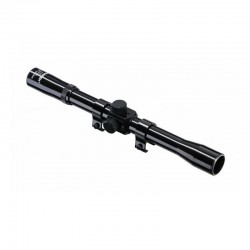
Umarex 4x20 Scope
via DAI Leisure
£19.95

Richter Optik Crystal 4x32 Air Rifle Scope
via BushWear
£29.99

Richter Optik Crystal 4x40 Riflescope
via BushWear
£34.99
Buying Advice
Vortex's defining feature isn't any single scope — it's the VIP warranty: an unconditional, transferable, lifetime guarantee that covers accidental damage, no receipt, no questions asked, at every single price point in the lineup. That last part matters. A lot of brands offer a strong warranty on their flagship line and a thinner one lower down; Vortex backs the cheapest scope in its catalog the same way it backs the priciest.
The lineup itself runs the full spectrum. At the entry end, the Triumph HD and Crossfire II/HD series (roughly $99–$260, mostly 3-9x40 and similar hunting configurations) are genuinely usable first scopes — basic fully multi-coated glass, MOA turrets, no illumination on most models, but honest performance for the price. Step up to Diamondback (roughly $230–$500, including the OPMOD Diamondback Tactical FFP variant) and you get better coatings and more robust construction. The Viper line (roughly $500–$900, spanning the Viper HD hunting scopes and the FFP Viper PST Gen II tactical line) is where Vortex starts overlapping seriously with Leupold's mid-tier and even nudging into Nightforce's territory on tracking quality. At the top, Razor HD Gen II/III (roughly $2,500–$2,800) and the AMG 1-10x24 LPVO (around $4,000) are legitimately premium optics that compete with Leupold's Mark 5HD and Nightforce's ATACR line on glass quality and mechanical precision.
The honest caveat: at the very bottom of the range, "good value" doesn't mean "long-range capable." A sub-$100 3-9x40 is a fine woods or 100-yard-zero deer scope; it isn't the scope to pair with a 6.5 Creedmoor build you're planning to push past 600 yards.
Leupold's story is different — built in Beaverton, Oregon since 1907, with a Full Lifetime Guarantee (transferable, covering mechanical and optical defects) that's been the industry benchmark for decades. Leupold's lineup skews hunting-first even at the tactical end, and it simply doesn't have a sub-$300 tier the way Vortex does. The cheapest real Leupold rifle scope currently on the market is the VX-Freedom 3-9x40 at roughly $400 — a genuinely solid all-purpose hunting scope, but not a budget option in the way a Crossfire II is.
Above that, the Mark 3HD 3-9x40 (around $470) and the VX-3HD line (roughly $500–$600 for 2.5-8x36 through 4.5-14x40 configurations) form Leupold's hunting-scope core — the range most whitetail and general big-game hunters actually buy into. Move up to VX-5HD (roughly $1,100–$1,500, 2-10x42 through 3-15x56) and VX-6HD Gen 2 (roughly $1,600–$2,100, including 1-6x24 LPVO configurations) and you're paying for CDS-ZL2 elevation systems, better low-light glass, and — on the VX-6HD — genuine crossover appeal for hunters who also want a fast close-range LPVO. At the top, the Mark 5HD line (roughly $2,800–$3,300, 5-25x56 and 7-35x56) is Leupold's direct answer to precision-rifle and long-range shooters, squarely competing with Nightforce's ATACR and Vortex's Razor HD.
If your mental image of Leupold is "expensive heirloom hunting scope," that's still broadly accurate for the entry point — but the range above VX-Freedom is genuinely deep, and the Mark 5HD isn't a hunting scope wearing a tactical label, it's a real PRS-capable optic.
Nightforce is the brand where "which tier should I buy" mostly answers itself, because there effectively isn't a low tier. The cheapest real rifle scopes in Nightforce's current US lineup sit in the roughly $1,800–$2,100 range — the NX6 2-12x42 and the NXS series (3.5-15x50 through 5.5-22x50 tactical configurations). The NX8 1-8x24 FFP LPVO — a genuinely popular AR-platform and 3-gun optic — runs roughly $2,000–$2,200. At the top, the ATACR line (roughly $3,200–$4,050+ for 4-20x50 through 7-35x56 configurations) is Nightforce's flagship, built to the same durability and tracking standard that got Nightforce optics selected for US military and law-enforcement sniper-system programs. Nightforce has also historically sold more affordable tactical scopes positioned below the NXS/ATACR price band; stock and pricing on those move around more than the core lineup, so treat any specific lower-cost Nightforce model as worth searching current listings for rather than assuming a fixed price.
That heritage is the honest answer to "why is Nightforce so expensive": in those environments, a scope that drifts under recoil, fails a box test, or loses zero after rough handling isn't a minor annoyance — it's disqualifying. Nightforce's manufacturing tolerances and turret-tracking repeatability are built to that standard across the whole current lineup, which is also why there's no $200 Nightforce to point to.
It's tempting to draw three clean boxes — Vortex for budget, Leupold for hunting, Nightforce for tactical — but that oversimplifies all three lineups. Vortex's Razor HD Gen III and AMG genuinely compete with Nightforce's ATACR and Leupold's Mark 5HD on tracking precision and glass quality at similar prices. Leupold's Mark 5HD isn't a hunting scope with a different sticker — it's a legitimate PRS/long-range optic that plenty of competitive shooters run instead of a Nightforce. And Nightforce's NX8 LPVO sits in exactly the same "fast, low-power AR-platform optic" category Vortex's Strike Eagle and Viper PST Gen II 1-6x compete in, even though Nightforce's price tag runs meaningfully higher for that configuration.
The more useful mental model is: Vortex has the widest span (roughly $99–$4,000) and the strongest warranty at every point in it; Leupold has the strongest US hunting heritage and a deep mid-to-premium range (roughly $400–$3,300) but no true budget tier; Nightforce has the narrowest span (from around $1,800 up to $4,050+) and the strongest reputation specifically for mechanical reliability under hard use, which is exactly why it doesn't bother competing at the bottom of the market.
Under $300, this is effectively Vortex-only territory among these three brands — Crossfire II/HD and entry Diamondback models. If your budget caps here, don't cross-shop Leupold or Nightforce; neither has a real product in this range. From $300–$800, Leupold's VX-Freedom, Mark 3HD, and VX-3HD compete directly with Vortex's Diamondback and Viper here. This is the most genuinely competitive price band between the two brands, and the honest tiebreaker is usually reticle/feature preference and which retailer has your exact configuration in stock, not a meaningful build-quality gap. From $800–$2,000, Leupold's VX-5HD and VX-6HD Gen 2 dominate this range for hunting-leaning buyers; Vortex's upper Viper PST Gen II models and entry Razor HD sit here too for tactical/precision use, and Nightforce's cheapest offerings (NX6, NXS) start appearing at the top of this band. Above $2,000, all three brands are legitimately competing — Vortex Razor HD Gen III/AMG, Leupold Mark 5HD, and Nightforce ATACR/NX8. At this level the decision genuinely comes down to reticle preference, turret feel, glass character, and — for many buyers — which brand your shooting community already standardizes on, since matching gear with training partners simplifies communicating corrections.
The most common mistake is treating brand name as a proxy for "good enough for my use case" without checking whether the specific model fits the discipline — a $2,000 Nightforce NX8 LPVO is a poor choice for a stand-hunting whitetail rifle that will be shot once a season at 80 yards, just as a sub-$100 Vortex Crossfire is a poor choice for a 6.5 Creedmoor build meant to reach 800+ yards. The second most common mistake is ignoring warranty terms when comparing price — Vortex's unconditional VIP warranty at a budget price point is arguably a better "deal" than a similarly priced scope from a brand with a standard mechanical-defects-only warranty, even before comparing glass. Third: assuming Nightforce's price reflects better glass than Leupold's Mark 5HD or Vortex's Razor HD at a similar dollar figure — at the premium end, the three brands are closer in optical performance than the price gaps between their overall lineups suggest; you're often paying for mechanical robustness and brand-specific reticle/turret ergonomics rather than a large jump in glass clarity.
This guide is deliberately brand-focused rather than model-specific. For actual product picks and model-by-model comparisons, use the AIScopes Scope Finder tool (aiscopes.co.uk) to filter by budget, discipline, and brand, or browse the AIScopes guides hub (aiscopes.co.uk/guides) for model-specific buying guides as they're published.
Frequently Asked Questions
Is Vortex as good as Leupold?
For most hunting and general-purpose use, yes — a Vortex Viper HD or Diamondback genuinely competes with a comparably priced Leupold VX-3HD on glass clarity and mechanical reliability, and Vortex's unconditional VIP warranty is arguably stronger than Leupold's. Leupold's edge is at the flagship end and in decades of US hunting-market heritage; Vortex's edge is warranty terms and a lower true entry price. Neither brand is "better" across the board — it depends on the specific models being compared and your budget.
Why is Nightforce so expensive?
Nightforce built its reputation supplying optics for demanding tactical, law-enforcement, and military sniper-system use, where a scope that loses zero under recoil or fails to track true isn't a minor issue — it's disqualifying. That standard is baked into the manufacturing tolerances and turret mechanisms across the current lineup, which is also why there's no low-cost Nightforce tier the way there is with Vortex or even Leupold. You're paying for mechanical reliability and tracking repeatability more than a proportional jump in glass clarity.
Which brand should I choose for a first hunting rifle?
If your budget is under $300, Vortex is your only realistic option among these three (Crossfire II/HD or entry Diamondback). If you can stretch to $400–$700, Leupold's VX-Freedom or VX-3HD gives you genuine US hunting heritage and a best-in-class lifetime warranty. Nightforce generally isn't the right call for a first hunting rifle — its lineup is priced and built for tactical/PRS use, and even its cheapest current option is well past first-scope budget territory.
Does Vortex or Leupold have the better warranty?
Both are strong, but they work differently. Vortex's VIP warranty is unconditional — it covers accidental damage (dropped, knocked, run over) with no receipt required, and it's transferable to a used buyer, which also helps resale value. Leupold's Full Lifetime Guarantee covers mechanical and optical defects and is also transferable, but it's not explicitly "no-fault" the way Vortex's is. For buyers worried about accidental damage specifically, Vortex's terms are generally considered the stronger protection.
Do Vortex, Leupold, and Nightforce all offer MOA and MRAD versions?
Yes — all three brands sell both MOA and MRAD (mil) configurations across most of their serious lineups (Vortex Viper PST Gen II, Leupold Mark 5HD, and Nightforce's entire tactical range all come in both). Don't assume a brand "uses" one system by default; check the specific SKU. What matters is that the reticle and turret units match on the exact model you buy — an MOA reticle paired with MRAD turrets (or vice versa) forces error-prone conversion in the field.
Which brand do competitive PRS shooters actually use?
All three appear regularly on PRS firing lines, but Nightforce and the upper tiers of Vortex (Razor HD Gen III, AMG) and Leupold (Mark 5HD) are the most common. Nightforce built much of its reputation on exactly this kind of use — repeatable tracking through hundreds of rounds and elevation dials under time pressure — so it remains disproportionately popular at the competitive end despite Vortex and Leupold both having genuinely capable flagship options now.
Is a budget Vortex scope actually usable, or should I save up?
For a 100-yard-zero deer rifle or a plinking .22, yes — a sub-$100 Vortex is a real, functional optic, not a toy. Where it falls short is anything requiring long-range dialing, illuminated low-light hunting, or heavy recoil from a magnum cartridge, where the simpler turret and lighter build show their limits faster. If your use case matches the scope's design intent, it's genuine value; if you're trying to stretch it past 300–400 yards on a hard-recoiling rifle, save up into the Diamondback or Viper tier instead.
Do these brands hold their resale value?
Vortex tends to hold value unusually well specifically because the VIP warranty transfers to the used buyer — a used Vortex scope carries the same no-fault lifetime coverage as new, which keeps demand (and resale prices) relatively strong. Leupold's transferable Full Lifetime Guarantee has a similar, slightly smaller effect. Nightforce holds value well simply because demand consistently outpaces the used supply in the tactical/PRS market it serves, and buyers know exactly what they're getting in terms of mechanical durability even secondhand.
Related guides
Nightforce ATACR, Vortex Razor HD Gen III, Leupold Mark 5HD and NX6 compared for UK PRS shooters — real trade-offs and honest opinions at the £1,800+ premium scope tier.
Kahles vs ZCO vs Nightforce ATACR: Premium PRS Optics ComparedKahles K540i, ZCO 5-27x56, or Nightforce ATACR for PRS? We compare glass, turrets, reticles, and service at the $2,500+ tier so you buy the right premium scope.
VMR-4 vs EBR-7C: Which Vortex Reticle Is Right for You?Discover the real differences between Vortex VMR-4 and EBR-7C reticles, which scopes use them, and how to pick the right one for hunting or long range shooting in 2026.
Can You Use a 20 MOA Rail with a Vortex Venom at 100 Yards?Find out if a 20 MOA rail works with the Vortex Venom at 100 yards. We cover zero offset, turret range, and when a canted base actually helps or hurts your setup.
Burris vs Vortex: The UK Shooter's VerdictBurris or Vortex — which scope brand suits UK shooters best? We compare FFP/SFP reticles, MOA vs MRAD turrets, warranties and UK availability to help you decide.
Best Scopes for the Ruger 10/22 in 2026Find the best scope for a Ruger 10/22 in 2026. Rimfire-specific picks for hunting, plinking, Takedown models, and NRL22 competition — all for US buyers.
Best 6.5 Creedmoor Scopes Under $500 in 2026Find the best scope for 6.5 Creedmoor under $500 in 2026. We cover FFP vs SFP, MOA vs MRAD, long-range picks, and ideal pairings for Tikka, Savage, and Bergara rifles.
Not sure which scope is right for you?
Try our AI-powered scope finder — answer a few questions and get personalised recommendations.
Find My Scope →Get a UK scope tip every day
Follow AiScopes on Facebook for daily buying guides, deals and gear advice.
Follow on Facebook