Locking Elevation Turrets Explained
By Peter Makulek · Senior Optics Editor · · Live prices from US retailers
If you have ever hiked into the backcountry for mule deer, settled into your treestand for whitetail, or driven out to a long range steel match only to discover your elevation turret has drifted two clicks off zero during transport, you already know the problem. Unintentional turret rotation is one of the most common—and most costly—gear failures in modern rifle shooting. The explosion of exposed, tool-less turrets on the best scope models of the last decade has been a boon for fast field adjustments, but it introduced a reliability gap that manufacturers are only now closing with genuinely effective locking mechanisms. For US hunters who may cover miles of rough terrain before taking a single shot, a turret that holds zero without babysitting is not a luxury—it is a baseline requirement.
The classic answer was a capped turret: screw the cap down and the turret physically cannot rotate. Leupold's VX-series and many Weaver models still use this approach, and it works perfectly for the thousands of whitetail hunters who zero at 100 yards and never touch the dial again. But capped turrets are slow to adjust in the field, which is a real limitation for Western hunters engaging mule deer, pronghorn, or elk at variable distances across open terrain. The industry responded with zero-stop turrets—pioneered by Nightforce and refined by Vortex, Kahles, and March—that let you dial freely but physically prevent the turret from rotating below your chosen zero. A zero-stop is excellent, yet it does not prevent the turret from walking upward during a rough pack-out or a bouncy ATV ride.
That gap has spawned a wave of newer locking-turret designs that go beyond the zero-stop concept. These include push-to-turn friction locks (seen on several 2025–2026 Kahles and Swarovski models), spring-loaded plunger locks that require a deliberate pull or press before the turret will rotate, and aftermarket collar-lock systems that retrofit onto existing scopes. Each approach balances speed of adjustment against security differently, and the right choice depends on your discipline—whether that is a PRS gas-gun match, a 308 deer hunt from a blind, or a dedicated coyote hunting rig that lives in a truck and bounces down gravel roads every weekend.
In this guide we break down every current turret-locking methodology, explain how each interacts with FFP and SFP reticle designs, and match solutions to real US shooting scenarios. We also address related questions about the best scope for deer hunting, long range precision, and even how turret security matters on air rifle optics and night vision or thermal scope setups used for hog hunting and coyote control. Whether you are spending $250 or $2,500, a locked turret means your first-round hit probability stays where it should—at 100 percent of your rifle's mechanical capability.
Top Picks — Live US Prices
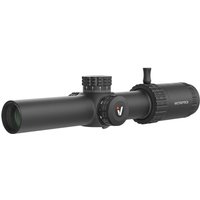
Vector Optics Victoptics S6 1-6x24 30mm Tube LPVO Rifle Scope, Second Focal Plane, VIS-F1 Reticle, Black, OPSL33
via OpticsPlanet
$99.99
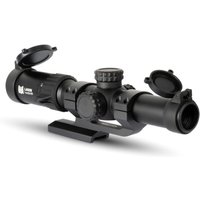
Monstrum Ladon 1-6x24mm LPVO 30mm Tube Rifle Scope, First Focal Plane, CM7 Reticle, Black, FFL16X-CM7
via OpticsPlanet
$134.99
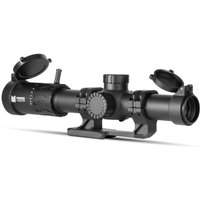
Monstrum Panzer ED 1-6x24mm LPVO 30mm Rifle Scope, First Focal Plane, CM3 Reticle, Black, FFZ16X-B
via OpticsPlanet
$149.99
Buying Advice
Start by understanding what each locking system actually does mechanically. A zero-stop (sometimes called a revolution stop) uses a hardened steel ring clamped to the erector housing so the turret bottoms out at your chosen zero—it prevents dialing below zero but not above it. A friction lock adds a detent, O-ring clutch, or spring-loaded button that resists any rotation until the shooter deliberately overcomes it. A cap lock is the traditional screw-on or flip-up cap that physically encases the turret. And a CRS (Custom Rotation Stop) or locking-ring system, available as an aftermarket add-on from companies like Kenton Industries, clamps around the turret housing and prevents any movement at all until loosened. When evaluating a rifle scope, check whether its locking mechanism can be engaged with one hand, whether it adds any height to the turret stack (important for cheek-weld consistency), and whether it is compatible with throw-lever accessories if you also want a magnification lever.
Budget tiers in 2026 break down clearly. Entry-level scopes in the $200–$450 range—think Vortex Diamondback Tactical or Hawke Frontier—typically rely on capped turrets or basic zero-stops without a true locking function. This is perfectly adequate for the best scope for whitetail hunting scenarios where you zero at 100 yards and leave the turret alone; most whitetail deer in the eastern US are taken inside 150 yards from a stand. Mid-tier scopes from $500–$1,200, including the Vortex Viper PST Gen II and Leupold Mark 5HD, offer robust zero-stop mechanisms and, on newer 2025–2026 SKUs, optional locking turret upgrades. Premium glass above $1,500—Nightforce ATACR, Kahles K525i, Swarovski dS, March Genesis—increasingly ships with integrated push-to-turn or plunger-lock turrets as a standard feature, reflecting the demands of competitive PRS shooters and professional guides.
The most common mistake buyers make is conflating a zero-stop with a locking turret. A zero-stop tells you where zero is; it does not prevent the turret from walking off zero in the upward direction. If your scope rides in a drag bag, a scabbard on horseback, or a hard case in a truck bed, vibration-induced upward drift is a documented issue across multiple brands. Another frequent error is overtightening aftermarket locking collars, which can crack the anodizing on aluminum turret housings or distort the turret's click detents. Always follow the manufacturer's torque spec—typically 8–12 inch-pounds for collar-style locks. Finally, some shooters assume that a locking turret eliminates the need for a pre-shot zero check. It does not. Best practice is still to confirm your turret reads zero before any critical shot, especially after extended travel.
For US-specific context, consider how your turret-lock choice aligns with your primary discipline and caliber. A 308 Winchester deer hunter in the Midwest, shooting from a box blind at known distances under 200 yards, gains almost nothing from an exposed locking turret—a capped turret or even a simple SFP duplex-reticle scope is the best scope for deer hunting with 308 in that scenario, and you can find excellent options on Amazon.com or OpticsPlanet. A Western hunter pursuing mule deer or elk across variable terrain at 200–500 yards benefits enormously from a locking exposed turret on an FFP MRAD scope, because dialing is faster than holdover at those distances and the lock protects zero during the stalk. Predator hunters running a dedicated scope coyote rig—or a thermal scope for hog hunting at night—should note that many thermal and best night vision scope platforms use digital turrets or electronic reticle offsets rather than mechanical turrets, so locking mechanisms are less relevant; however, a clip-on night vision scope mounted ahead of a conventional rifle scope still relies on that scope's mechanical turret, making a lock just as important.
Matching the solution to your use case is ultimately about honesty regarding how you shoot. If you set a zero and never dial, buy a capped-turret scope and save your money for better glass or a nicer trigger. If you dial regularly but shoot from a fixed position (bench, hide, or prairie-dog town), a zero-stop without a full lock is usually sufficient. If you hike, ride, or drive to your shooting position—as most Western big-game hunters, backcountry predator callers, and long range competitors do—invest in a scope with an integrated locking turret or add an aftermarket locking collar. For air rifle shooters, the lighter recoil impulse of a spring-piston or PCP gun means turret walk is less common, but the short engagement distances (50–75 yards for sub-12 ft-lb springers) mean even a single click of unnoticed drift can push you off a squirrel-head-sized kill zone, so a locking turret or capped turret is wise there too.
The brand landscape in 2026 reflects a clear trend. Nightforce was among the first to integrate a robust zero-stop into every tactical model and now offers optional locking turrets on the ATACR and NX8 lines. Kahles has moved aggressively with its push-to-turn MSR turret on the K525i and K318i. Swarovski's dS and X5i lines feature a ballistic-turret lock integrated into the elevation cap. Vortex offers the RevStop zero-stop across Razor HD Gen III and Viper PST Gen II platforms, with aftermarket locking collars readily available. Leupold's CDS-ZL (Zero Lock) system on the VX-6HD and Mark 5HD lines is one of the most intuitive: push down to lock, pull up to dial. March and Hawke round out the field with friction-detent turrets on their high-end and mid-range FFP models, respectively. Across all these brands, the common thread is that a locking turret is no longer a niche feature—it is becoming the expected standard for any serious rifle scope purchase.
Frequently Asked Questions
What is the difference between a zero-stop and a locking elevation turret?
A zero-stop prevents the turret from rotating below your set zero point, so you can always return to zero by dialing down until the turret physically stops. A locking turret adds a mechanism—such as a push-to-turn ring, spring-loaded plunger, or friction collar—that prevents any rotation in either direction until you deliberately unlock it. Many premium scopes now combine both features, giving you the security of a lock and the convenience of a tactile zero reference. If your scope travels in a truck, scabbard, or drag bag, the locking function is the one that prevents unnoticed upward drift.
What actually makes an elevation turret move by accident in the field?
Three things account for most unnoticed turret drift: contact with gear, contact with the shooter, and vibration. A rifle carried muzzle-down in a scabbard or slid into a truck cab presses the turret against fabric or a seat back, and an exposed tactical turret needs very little force to index a click. Slinging a rifle across a pack frame does the same thing over a long walk in. Vibration from a rough vehicle track can also creep a turret that has a light detent. None of these announce themselves, which is the whole problem: you find out at the target, not at the moment it happened.
Does a locking turret slow you down when you need to dial quickly?
It costs you something, but far less than most shooters expect. A push-to-turn design is unlocked by pressing the turret cap down with the same hand that dials, so the lock is released and the dial begun in one motion; most shooters lose well under a second once it is familiar. A pull-up collar or a separate thumbscrew is slower and genuinely does cost time under a par clock, which is why they appear more often on hunting scopes than on match scopes. If you shoot timed stages, handle the specific mechanism before you buy, because the difference between designs is much larger than the difference between brands.
Are capped turrets just as good as a locking turret?
For a rifle that is zeroed once and shot on holdover, yes. A screw-on cap is a complete answer, and it is why hunting scopes have used them for decades: a cap physically prevents contact with the dial, cannot be bumped, and costs nothing. What it cannot do is let you dial a firing solution, because you have to remove and stow the cap first, then find it again in the dark or the snow. The lock exists for the shooter who wants exposed, dial-every-shot turrets and protection from accidental movement at the same time. If you never dial, capped turrets are the simpler tool.
How do I check whether my elevation turret has drifted, without firing a shot?
Set a hard zero reference you can verify by feel and by eye. If your scope has a zero stop, dial down until it stops: that position is your zero, and if the turret was moved, dialling back to the stop restores it. Without a zero stop, mark the turret and the scope body with a fine paint pen or a witness line, so any rotation shows as a broken line at a glance. Make checking that line part of the same routine as checking that your mount screws are still torqued. It takes two seconds, and it converts a silent failure into an obvious one.
Do thermal scopes and night vision scopes use locking turrets?
Most dedicated thermal scope and best night vision scope units—such as those used for hog hunting or scope coyote work at night—use digital reticle adjustment rather than mechanical turrets, so physical turret locking is not applicable. However, clip-on night vision devices mounted ahead of a conventional day scope still depend on that scope's mechanical turret for elevation and windage settings. In that configuration, a locking turret on your day scope is critical because the added weight and handling of the clip-on unit increases the risk of accidental turret rotation. Brands like Nightforce and Leupold make excellent host scopes for clip-on setups.
Are locking turrets important on air rifle scopes?
Yes, though for different reasons than centerfire rifles. Sub-12 ft-lb spring-piston air rifles generate a unique bidirectional recoil that can walk turrets over time, and since effective range is only about 50–75 yards, even a single click of unintended drift (1/4 MOA ≈ 0.26 inches at 100 yards, or roughly 0.13 inches at 50 yards) can move your impact off a small kill zone. Capped turrets are the most common solution on dedicated air rifle scopes from Hawke and Vortex. If you use an exposed-turret scope on a PCP air rifle for field target competition, an aftermarket locking collar is a worthwhile investment.
Can I add a locking mechanism to my existing scope?
In many cases, yes. Aftermarket turret locking collars from companies like Kenton Industries and Rokslide-community machinists are available for popular scope models including Nightforce NX8/ATACR, Vortex Razor HD Gen III, and some Leupold Mark 5HD variants. These collars clamp around the turret housing and use a thumbscrew or friction ring to prevent rotation. Installation is usually tool-free and reversible. However, always confirm compatibility with your exact scope model and turret diameter before purchasing, and avoid overtightening—8 to 12 inch-pounds is the typical recommended range to avoid damaging the turret anodizing.
FFP or SFP—does turret-lock choice depend on reticle type?
The turret-lock mechanism itself is independent of whether your scope is FFP (first focal plane) or SFP (second focal plane), but the broader system matters. FFP scopes are preferred for dialing and holding over at varied magnifications because the reticle scales with the target—these are the scopes most likely to have exposed turrets that benefit from a locking mechanism. SFP scopes are more common with capped turrets because they are typically used in set-and-forget hunting scenarios. If you buy an SFP scope with an exposed turret for best scope whitetail hunting use, a locking turret or aftermarket collar is especially important because SFP reticle subtensions are only accurate at one magnification, making turret accuracy critical.
Related guides
How zero-stop turrets work, which US-market systems (Leupold CDS-ZL, Vortex CRS, Nightforce ZeroStop, Bushnell RevLimiter) to buy, and how to choose by budget and discipline in 2026.
Best Scopes for .22-250 Remington in 2026Find the best scopes for .22-250 Remington in 2026. We cover magnification, reticle subtension, fast-twist barrel considerations, and top picks for US coyote and varmint hunters.
30mm vs 34mm Tubes: Does Bigger Actually Buy You Elevation?Does a 34mm scope tube really give you more elevation travel than 30mm? We break down what tube diameter controls, when a 20 MOA rail is smarter, and how to choose for US long-range shooting.
Best Scopes for .30-06 Springfield (2026)Find the best scope for your .30-06 Springfield in 2026. Recoil-proof construction, ideal magnification for 400-yard shots, and zero advice for 150–180 gr loads.
Best Optics for PRS Gas Guns in 2026Find the best scopes for PRS gas guns in 2026. We cover eye relief, mount clearance, recoil demands, and top picks for 6.5 Grendel, 6 ARC, and .223 semi-auto precision rifles.
Not sure which scope is right for you?
Try our AI-powered scope finder — answer a few questions and get personalised recommendations.
Find My Scope →Get a UK scope tip every day
Follow AiScopes on Facebook for daily buying guides, deals and gear advice.
Follow on Facebook