Best Optics for PRS Gas Guns in 2026
By Peter Makulek · Senior Optics Editor · · Live prices from US retailers
PRS Gas Gun division has exploded in the US over the past two seasons, and 2026 is shaping up to be the year semi-auto precision shooting fully matures. Competitors are fielding AR-15-pattern rifles in 6 ARC and 6.5 Grendel alongside AR-10-class guns in 6.5 Creedmoor, and the optics market has responded with features that specifically address the unique demands of a gas-operated action. The scope that sits perfectly on your bolt gun may actually be a poor choice on a semi-auto, and understanding why is the first step toward making a smart investment in glass.
Gas guns produce a different recoil impulse than bolt rifles. Instead of a single rearward push, the cycling bolt carrier group creates a sharp double pulse — the initial recoil plus the BCG slamming home on the return stroke. This secondary impact is more damaging to optics internals over time because it reverses the inertial load on the erector system. Any scope you put on a gas gun must have an erector assembly that is robust enough to survive tens of thousands of these dual-impulse cycles without shifting zero or developing tracking errors. Not every scope marketed as "tactical" meets that threshold.
Ejection-port clearance is the second gas-gun-specific factor that bolt-gun shooters never think about. On an AR-15 or AR-10, spent brass ejects from the right side of the upper receiver, and an oversized objective bell or a low-mounted scope body can physically block ejection, causing malfunctions. This is why cantilever mounts with built-in forward offset exist: they push the scope forward so the eyepiece clears the charging handle and the objective sits well ahead of the ejection port, giving brass a clean flight path and the shooter adequate eye relief.
For US shooters competing in PRS Gas Gun, NRL22, or regional two-gun matches — or simply building a precision semi-auto for prairie dog towns and western coyote fields — the right optic-and-mount combination is every bit as important as barrel quality. Engagement distances at major Gas Gun matches typically run from 100 to 800 yards, with occasional targets beyond that in certain stage designs. This guide breaks down what to look for, which scopes and brands have proven track records in the semi-auto world, and how to avoid the most common mistakes US gas-gun builders make when choosing glass.
Top Picks — Live US Prices
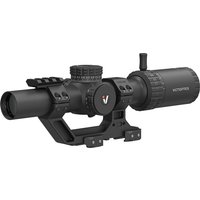
Vector Optics VictOptics S10 1-10x24 30mm Tube LPVO Rifle Scope w/ 1-Piece Extreme High Picatinny AR Mount Kit, Second Focal Plane, VS 10-1 MIL Reticle, Black, OPSL137
via OpticsPlanet
$132.30
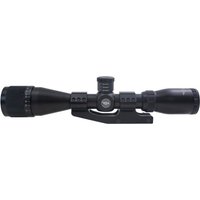
BSA Optics Tactical Weapon Rifle Scope, 3-12x40mm, One Piece Weaver Mount, Mil-Dot Reticle, Black, TW-312X40W1PMTB
via OpticsPlanet
$139.99
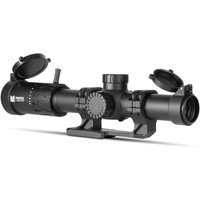
Monstrum Panzer ED 1-10x24mm LPVO 30mm Rifle Scope, First Focal Plane, CM3 Reticle, Black, FFZ110X-B-V2
via OpticsPlanet
$169.99
Buying Advice
Start with the specs that matter most on a gas gun. Eye relief should be at least 3.5 inches, ideally 3.7 to 4.0 inches, because the sharper reciprocating action of a semi-auto makes it easier to catch the rear of the scope with your brow during rapid strings. A forgiving eye box — the three-dimensional zone behind the eyepiece where you get a full, clear image — is just as important. FFP (first focal plane) reticles are the standard for PRS because holdovers remain accurate at every magnification, but confirm the reticle is usable at the low end of the zoom range; a reticle that disappears at 5x is a liability on a stage that starts with a close-range array. MRAD (milliradian) turrets with 0.1 mil clicks dominate US PRS, though MOA-based scopes are perfectly valid if that is your preferred system. Zero-stop turrets are essential so you can return to a known reference quickly between stages.
Budget tiers in the PRS gas-gun optics space break down roughly into three bands. Entry-level options in the $400–$800 range — such as select Bushnell and Burris models — deliver usable glass and adequate turrets for local matches and learning the discipline, though they may lack the mechanical durability for high-round-count semi-auto use over multiple seasons. Mid-tier scopes from $900–$1,600, including popular Vortex and certain Steiner lines, typically offer true zero-stop turrets, better glass coatings, and erector systems tested against semi-auto recoil profiles. Premium glass from Nightforce, Zeiss, and top-tier Leupold models occupies the $1,800–$3,500 band, delivering the finest optical clarity, the most precise and repeatable tracking, and the proven mechanical robustness to survive a lifetime of gas-gun abuse without complaint.
The most common mistake gas-gun buyers make is choosing a scope based solely on bolt-gun reviews and then pairing it with the wrong mount. A standard set of scope rings that works beautifully on a Remington 700 will almost certainly position the scope too far rearward on an AR-platform flat-top rail, resulting in ejection interference and uncomfortably short eye relief. Purpose-built cantilever mounts — with 1.5 to 2 inches of forward offset — are the correct solution for virtually all AR-15 and AR-10 gas guns. The second major error is ignoring tube diameter implications: a 34mm tube generally allows more internal elevation travel, which matters when you are dialing from 100 to 800 yards on a cartridge like 6 ARC that drops significantly past 500. A 30mm tube may run out of usable elevation before you reach your longest target, forcing you to rely on holdovers instead of precise dialing.
For US-specific context, the three dominant gas-gun PRS cartridges are .223 Remington/5.56 NATO (for the lighter-recoil AR-15 platform), 6 ARC (which has rapidly become the ballistic darling of the AR-15 gas-gun world thanks to its high-BC bullet options), and 6.5 Grendel (the original AR-15 long-range option, still widely supported). AR-10-platform shooters lean toward 6.5 Creedmoor and occasionally .308 Winchester. Ammo availability across all fifty states is generally excellent for these cartridges through major retailers, and match-grade factory loads from Hornady, Federal, and others are readily stocked at most well-supplied gun shops and online at retailers like Amazon.com for non-restricted components. OpticsPlanet is another strong US source for scopes, mounts, and accessories, often carrying the full catalog from brands like Vortex, Nightforce, and Leupold with detailed filter tools for mount compatibility.
Matching the optic to your specific use case requires honest self-assessment. If you are shooting monthly club-level PRS Gas Gun matches at ranges out to 600 yards and want a capable setup without breaking the bank, a quality mid-tier 4-16x or 5-25x FFP scope in a 30mm tube with a solid cantilever mount will serve you well and leave budget for ammo and practice. If you are chasing national-level finishes at matches with stages stretching to 1,000 yards, invest in a 34mm-tube premium optic with at least 28 mils of elevation travel, a locking turret to prevent accidental bumps during rapid transitions, and the finest glass coatings you can afford — edge clarity and light transmission directly affect your ability to spot steel at distance under mirage. Varmint and predator hunters using gas guns in open western terrain should prioritize a wide zoom range and excellent low-light performance over maximum magnification, since dawn and dusk are prime calling hours.
The brand landscape for PRS gas-gun optics in 2026 is competitive and deep. Nightforce remains the benchmark for mechanical durability and tracking precision, with models purpose-built for PRS competition. Vortex offers arguably the best value-to-performance ratio across its lineup and backs everything with an unconditional lifetime warranty, which resonates strongly with US shooters who put serious round counts through their gas guns. Leupold, an American-made brand based in Oregon, has a loyal following among shooters who prize lightweight optics with outstanding glass clarity. Steiner and Zeiss bring European optical engineering to the table, excelling in light transmission and color fidelity. Bushnell and Burris round out the entry and mid tiers with increasingly capable offerings that make precision gas-gun shooting accessible to newer competitors without requiring a four-figure optics budget.
Frequently Asked Questions
Why can't I just use my bolt-gun scope on a PRS gas gun?
You can in some cases, but the gas gun's reciprocating bolt carrier group creates a harsher, double-impulse recoil cycle that stresses an optic's erector system differently than the single rearward push of a bolt action. Over thousands of rounds, scopes not designed for this can develop tracking errors or lose zero. Additionally, the scope's physical position on a flat-top AR rail is different from a bolt-gun receiver, often requiring a cantilever mount to achieve correct eye relief and ejection-port clearance.
What is a cantilever mount and why do gas guns need one?
A cantilever mount is a one-piece scope mount where the rings are offset forward of the base clamp. On an AR-platform rifle, this pushes the entire scope forward so the eyepiece clears the charging handle, the objective bell does not interfere with brass ejection, and the shooter gets proper eye relief behind the buttstock. Standard two-piece rings designed for bolt guns typically cannot achieve this forward positioning on a Picatinny flat-top rail.
Should I choose a 30mm or 34mm tube for a gas-gun PRS scope?
A 34mm tube generally provides more internal elevation adjustment range, which is valuable when dialing from close targets to 800+ yards with cartridges like 6 ARC or 6.5 Grendel that exhibit significant drop at distance. However, 34mm scopes and mounts are heavier, and a quality 30mm scope may have enough travel for matches that cap at 600 yards. Evaluate the typical stage distances at your matches before deciding; if you frequently need more than 20 mils of elevation, a 34mm tube is the safer choice.
Is FFP or SFP better for PRS Gas Gun competition?
First focal plane (FFP) is the strong consensus for PRS competition because the reticle subtensions remain accurate at every magnification level, letting you hold over or hold off without mentally rescaling. SFP scopes are only dimensionally correct at one magnification (usually the highest), which adds a step under time pressure. For a dedicated PRS gas gun, FFP is the right call. SFP can still be a viable choice for casual plinking or hunting if you always dial your corrections through the turret.
How much eye relief do I need on a semi-auto precision rifle?
Look for at least 3.5 inches of eye relief, with 3.7 to 4.0 inches being ideal. Gas guns have a snappier, more abrupt recoil impulse than most bolt rifles, and during rapid fire strings the shooter's head can shift slightly forward. Insufficient eye relief leads to scope bite — the rear of the eyepiece striking the brow — and it also makes acquiring a full sight picture slower during position transitions, which costs time on PRS stages.
What magnification range works best for PRS gas-gun matches?
A 5-25x or 4-16x range covers the vast majority of PRS Gas Gun stage designs, which typically run targets from 100 to 800 yards. The lower end of the zoom range matters more than many shooters expect; close-range arrays and movers at 100–200 yards are common, and a scope that starts at 5x or lower with a usable reticle gives a significant advantage on those stages. Maximum magnification beyond 25x is rarely beneficial and adds weight.
Do I need a locking turret on a gas-gun scope?
Locking turrets are highly recommended for gas guns used in competition. The physical manipulation involved in rapid position changes — slinging the rifle, going prone, transitioning between barricades — can accidentally bump an exposed turret and shift your elevation or windage setting without you noticing. A locking mechanism prevents this. Most premium PRS-oriented scopes from Nightforce, Vortex, and Leupold now offer some form of turret locking, and it is a feature worth prioritizing.
What cartridge is best for AR-15-platform PRS Gas Gun in 2026?
6 ARC has become the dominant AR-15-platform cartridge for PRS Gas Gun due to its excellent ballistic coefficient options with 108-grain and heavier bullets, manageable recoil, and strong factory ammo support from Hornady. 6.5 Grendel remains a solid and slightly cheaper-to-feed alternative. Standard .223 Remington/5.56 NATO is viable and the most affordable to practice with, but it runs out of energy and bucks wind significantly more past 500 yards compared to the 6mm and 6.5mm options.
Where can I buy PRS gas-gun scopes in the US?
Amazon.com carries a wide selection of optics from major brands like Vortex, Bushnell, Leupold, and others, often with Prime shipping. OpticsPlanet is another excellent US retailer with deep inventory across all price tiers and detailed compatibility information. Local dealers can be found through brand websites, and our own 50-state dealer locator at aiscopes.co.uk can help you find nearby stockists. Always buy from authorized dealers to ensure full warranty coverage.
Related guides
Choosing a 1-piece scope mount for PRS or long-range competition? Our 2026 guide covers return-to-zero, torque specs, tube diameter matching, and the top-tier brands US shooters trust.
Kahles vs ZCO vs Nightforce ATACR: Premium PRS Optics ComparedKahles K540i, ZCO 5-27x56, or Nightforce ATACR for PRS? We compare glass, turrets, reticles, and service at the $2,500+ tier so you buy the right premium scope.
The No-Budget PRS Scope Debate SettledEnd the no-budget PRS scope debate. We compare the best scope for PRS competition across every price tier, covering FFP reticles, turret tracking, and glass clarity for US shooters.
Beating the 1 MOA at 1000 Yards ChallengeGear guide for Texas Plinking's 1 MOA at 1000 yards challenge. Best rifle scope picks, reticle breakdowns, and buying advice for US long-range shooters in 2026.
Anti-Cant Levels & Cant Error Explained (2026)Learn how 2° of rifle cant walks groups sideways at distance. See real cant error in inches at 300–1000 yards and find the best anti-cant levels for US precision shooters in 2026.
Not sure which scope is right for you?
Try our AI-powered scope finder — answer a few questions and get personalised recommendations.
Find My Scope →Get a UK scope tip every day
Follow AiScopes on Facebook for daily buying guides, deals and gear advice.
Follow on Facebook