Anti-Cant Levels & Cant Error Explained (2026)
By Peter Makulek · Senior Optics Editor · · Live prices from US retailers
If you have ever printed a perfect vertical string at 100 yards only to watch your groups open into a mysterious diagonal smear at 600 or 1000, cant error is the most likely culprit nobody warned you about. Cant is the angular tilt of your rifle around its bore axis — even two degrees off true vertical is invisible to the naked eye behind the scope, yet it redirects your bullet's arc from a purely vertical plane into a combined vertical-and-horizontal curve. For a typical 6.5 Creedmoor load zeroed at 100 yards, two degrees of cant produces roughly half an inch of lateral miss at 300 yards, around 2.7 inches at 600 yards, and about 10 inches of horizontal displacement at 1000 yards — a whole minute of angle of pure hold error, and enough to walk you off the edge of a 10-inch plate on its own. That is minute-of-man error generated entirely by how you hold the rifle, not by the wind or your ammunition.
The physics are straightforward once you visualize them. Your scope's elevation turret dials in compensation along the reticle's vertical axis. If the rifle is canted, that axis no longer points straight up — it angles sideways. The further the bullet must drop (and therefore the more elevation you have dialed), the larger the sideways component of that correction becomes. At short range the drop is small and the lateral error is negligible, which is why the problem only reveals itself past 300 yards. This is why PRS competitors, F-Class shooters, and serious long-range hunters treat an anti-cant indicator as essential — not optional — equipment in 2026.
An anti-cant level is a small spirit-bubble or digital inclinometer mounted to your rifle or scope that gives you a real-time visual reference for true vertical. The best units are visible in your peripheral vision as you settle behind the scope, letting you correct cant before breaking each shot. They range from simple tube-mounted bubble levels costing under $20 to precision-machined units integrated into scope rings or bases, and up to electronic systems with LED indicators. The choice depends on your discipline, your scope's mounting system, and how much weight and clutter you are willing to add to your setup.
This guide is written specifically for US shooters — whether you are running a Vortex Razor on a Ruger Precision Rifle for weekend PRS matches, a Nightforce ATACR on a custom 6.5 PRC build for Western elk at 700 yards, or a Leupold Mark 5HD on a .308 tactical rig. We will explain the math behind cant error, show you exactly how many inches it costs at common US engagement distances, walk you through fitting and verifying a level, and then recommend the best anti-cant solutions available on Amazon.com and through US dealers in 2026.
Top Picks — Live US Prices
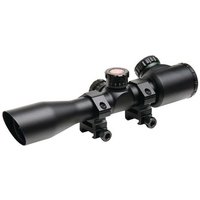
TruGlo Tru-Brite Xtreme Tactical Compact 4x32mm Rifle Scope, Red/Green Illuminated Mil-Dot Reticle, TG-TG8504TL
via OpticsPlanet
$89.39
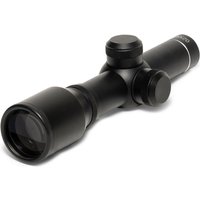
Osprey Global Standard 2.5x20mm LPVO 1in Tube Rifle Scope, Second Focal Plane, Duplex Reticle, Black, SD2.5X20DP
via OpticsPlanet
$89.99
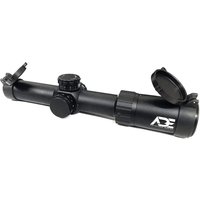
ADE Advanced Optics Gen2 1-6x24mm LPVO Rifle Scope, 30mm, Illuminated Mil Dash Reticle, Black, Gen2 1-6x24
via OpticsPlanet
$94.99
Buying Advice
The single most important specification for any anti-cant level is sensitivity — how many degrees of tilt the bubble or indicator can resolve. A level with a large, sluggish bubble may only alert you to five degrees or more of cant, which is already obvious to most shooters. The best precision-grade spirit levels resolve approximately half a degree, and electronic units can be even finer. Look for manufacturers who publish a sensitivity spec in degrees per division. Mounting method matters almost as much: a level that clamps to your scope tube via a ring-top or saddle-style mount sits higher in your peripheral vision, which is easier to see, while a rail-mounted level sits lower but may be blocked by your scope's eyepiece bell. Some premium scope rings from brands like Spuhr and Badger Ordnance integrate a level directly into the ring cap, eliminating a separate accessory entirely.
Budget tiers for anti-cant devices in 2026 break down roughly as follows. Entry-level options — simple adhesive or clamp-on bubble levels — typically fall in the $15 to $40 range. They work, but the bubbles can be small, hard to see in low light, and the mounting hardware may shift over time. Mid-tier units in the $40 to $100 range include machined aluminum bodies, positive-lock clamping systems, and larger or illuminated bubbles. Premium solutions above $100 include integrated ring-cap levels from Spuhr, Badger Ordnance, and similar manufacturers, as well as electronic cant indicators with LED alerts. For most PRS and long-range hunting applications, the mid-tier sweet spot delivers the best balance of precision, durability, and value.
The most common mistake buyers make is mounting a level perfectly but never verifying that it is actually aligned to the rifle's true vertical — not the scope tube's cosmetic seam, not the rail's top surface, but the bore axis relative to gravity. A level that is itself canted by three degrees eliminates nothing; it just gives you a false sense of security. The correct procedure is to use a plumb line or a digital inclinometer on a trued surface (the flat bottom of your action or a precision-leveled rail), then adjust the level's position until the bubble centers when the rifle is genuinely plumb. A second common error is positioning the level where it is invisible from your natural shooting position — always dry-fire from your actual prone, bench, or barricade position to confirm you can see the bubble without breaking cheek weld.
US-specific context matters for this purchase. If you compete in PRS or NRL matches, an anti-cant level is essentially mandatory — most top-100 competitors use one. If you hunt in the mountainous West — think Colorado elk, Wyoming antelope, or long-range coyote work across open plains — cant error becomes significant beyond 400 yards and a level is a wise investment. Eastern whitetail hunters shooting from treestands at 50 to 150 yards will see negligible cant error and may not need one, though it does no harm. Anti-cant levels are widely available on Amazon.com and through US retailers like OpticsPlanet. There are no state-level restrictions on these accessories — they are simple mechanical or electronic tools with no regulatory considerations anywhere in the US.
Matching the right level to your setup is straightforward. If you run a 30mm or 34mm scope tube with aftermarket rings, a ring-cap-integrated level from Spuhr, Badger Ordnance, or Hawkins is the cleanest solution — no extra hardware, no added weight, and the bubble sits at eye level. If you use a one-piece mount like an American Defense, Scalarworks, or Nightforce Unimount, a rail-mounted or scope-tube-clamped level is your best option. For bolt-action rifles where you want maximum flexibility, a clamp-on tube level works universally. Electronic levels are niche — they are excellent for extreme low-light scenarios but add battery dependency and complexity most shooters do not need.
The brand landscape in 2026 is healthy. Vortex includes a basic bubble level with some of their Precision Matched Ring sets. Nightforce, Leupold, and Steiner do not manufacture standalone levels but their mounting ecosystems are fully compatible with aftermarket options. Dedicated accessories from Flatline Ops (Sniper Level), Wheeler Engineering, and Arisaka Defense are well-regarded in the PRS community. At the premium end, Spuhr ring systems with integrated levels are considered the gold standard. Bushnell and Burris users can retrofit any tube-clamp or rail-mount level without issue. Zeiss shooters using proprietary mounts should verify clamp compatibility before buying. Regardless of brand, the principle is the same: verify alignment, confirm visibility from your shooting position, and use it on every shot past 300 yards.
Frequently Asked Questions
How much does 2 degrees of cant actually move my point of impact at 300, 600, and 1000 yards?
For a typical 6.5 Creedmoor load (140-grain bullet, roughly 2700 fps muzzle velocity, 100-yard zero), 2 degrees of cant produces approximately half an inch of lateral error at 300 yards, 2.5 to 3 inches at 600 yards, and roughly 10 inches at 1000 yards. Work it out for your own load with the rule below: at 1000 yards that load needs about 27.5 MOA of come-up, which is roughly 288 inches of drop, and 3.5 percent of 288 is about 10 inches. The exact numbers depend on your bullet's ballistic coefficient, muzzle velocity, and how much total drop (and therefore dialed elevation) is involved. The lateral error scales almost linearly with the sine of the cant angle multiplied by the total bullet drop at that range.
Why does cant error get worse at longer range but barely matters at 100 yards?
Cant error is a function of how much elevation correction you have dialed in. At 100 yards with a 100-yard zero, you have zero elevation dialed, so there is no correction to be misdirected. At 1000 yards you may have 30-plus MOA or 8-plus mils dialed, and tilting that correction vector even slightly off vertical produces a large sideways component. The formula is lateral error equals total drop multiplied by the sine of the cant angle — small drop means small error, large drop means devastating error.
Can I just use my phone as a level instead of buying a dedicated anti-cant device?
You can use a phone's inclinometer app to initially level your scope and verify your anti-cant bubble during setup, and it works well for that purpose. However, you cannot practically hold a phone against your rifle while shooting each shot. A dedicated anti-cant level remains visible in your peripheral vision as you settle behind the scope, giving you a real-time cant reference for every shot without breaking your position.
Where should I mount an anti-cant level on my rifle for best visibility?
The ideal position is on top of or immediately adjacent to your scope tube, roughly above or just forward of the turret housing, so it falls in your peripheral vision as you look through the eyepiece. Ring-cap-integrated levels are best for this because they sit at scope-tube height. Rail-mounted levels sit lower and can be harder to see. Always confirm visibility from your actual shooting position — prone, bench, barricade, or tripod — before locking the level in place.
Do I need an anti-cant level for hunting, or is this only for competition?
If your hunting shots are consistently under 300 yards — which covers the vast majority of Eastern whitetail, Southern hog, and Midwestern deer hunting — cant error is minimal and a level is optional. If you hunt in Western states where 400-to-700-yard shots on elk, antelope, or mule deer are realistic possibilities, a level is a worthwhile addition. The device weighs almost nothing and costs little, so there is no real downside to adding one even if most of your shots are closer.
How do I verify my anti-cant level is correctly aligned to my rifle's true vertical?
Start by placing your rifle in a stable rest or vise. Use a plumb line hung at 25 yards and align your scope's vertical reticle wire to the plumb line by rotating the scope in its rings until they match perfectly. Then adjust your anti-cant level until the bubble centers in that position. Alternatively, place a precision digital inclinometer on a trued flat surface of your action or rail, level the rifle to zero degrees, and then adjust the bubble level to center. Recheck after tightening all hardware.
What is the difference between a spirit-bubble level and an electronic anti-cant indicator?
A spirit-bubble level is a simple glass vial with a fluid and an air bubble — it is lightweight, has no batteries, and is extremely reliable. An electronic anti-cant indicator uses an accelerometer or MEMS sensor to detect tilt and signals cant via LEDs or a digital readout. Electronic units can be more precise and easier to see in darkness, but they add battery dependency, weight, and cost. For the vast majority of US shooters, a quality spirit-bubble level is the better and more practical choice.
Does cant error affect MOA and MRAD scopes differently?
No. Cant error is a physical phenomenon that depends on bullet drop and the tilt angle of the rifle — it has nothing to do with the angular measurement system your scope uses. Whether you dial 24 MOA or 7 mils of elevation to reach 800 yards, the same 2 degrees of cant will produce the same lateral displacement in inches. The choice between MOA and MRAD is irrelevant to cant error and does not change your need for a level.
Can canting my rifle also cause vertical point-of-impact shift, or is it purely horizontal?
Cant causes both horizontal and vertical error, though the horizontal component is far more noticeable and significant. The vertical shift manifests as a very slight reduction in effective elevation — because the cosine of a small angle is very close to 1, the vertical loss from 2 degrees of cant is only about 0.06 percent of total drop, which is completely negligible. The sine component (lateral error) is what matters in practice, producing roughly 3.5 percent of total drop as sideways displacement at 2 degrees of cant.
Related guides
Find the best scopes for PRS gas guns in 2026. We cover eye relief, mount clearance, recoil demands, and top picks for 6.5 Grendel, 6 ARC, and .223 semi-auto precision rifles.
Beating the 1 MOA at 1000 Yards ChallengeGear guide for Texas Plinking's 1 MOA at 1000 yards challenge. Best rifle scope picks, reticle breakdowns, and buying advice for US long-range shooters in 2026.
30mm vs 34mm Tubes: Does Bigger Actually Buy You Elevation?Does a 34mm scope tube really give you more elevation travel than 30mm? We break down what tube diameter controls, when a 20 MOA rail is smarter, and how to choose for US long-range shooting.
Best Prairie Dog Hunting Scopes for 2026Find the best high-magnification FFP scopes for prairie dog hunting at 200-600+ yards. Expert US buying guide covers turrets, reticles, MOA vs MRAD, and top picks.
Best Varmint Scopes for 2026Find the best varmint hunting scopes for 2026. We cover magnification, parallax, reticle subtension, and mirage management so you can hammer prairie dogs and groundhogs all summer.
Best Scopes for 6mm ARC in 2026Find the best scope for 6mm ARC in 2026. Expert picks across budget, mid-tier, and premium price bands for PRS, NRL, and precision AR-15 shooting in the US.
Not sure which scope is right for you?
Try our AI-powered scope finder — answer a few questions and get personalised recommendations.
Find My Scope →Get a UK scope tip every day
Follow AiScopes on Facebook for daily buying guides, deals and gear advice.
Follow on Facebook