Best Scopes for 6mm ARC in 2026
By Peter Makulek · Senior Optics Editor · · Live prices from UK retailers
If you are building or upgrading a 6mm ARC rifle in 2026, the scope you pair with it will determine whether you actually exploit the cartridge's impressive ballistic potential or leave performance on the table. Hornady's Advanced Rifle Cartridge has gone from niche curiosity to genuine mainstream contender in the precision and PRS worlds, and the optics market has kept pace — there are more genuinely excellent mid-magnification precision scopes available to US buyers right now than at any point in the last decade. This guide cuts through the noise and matches the best scope for 6mm ARC to your actual shooting goals, distances, and budget.
What makes scoping a 6mm ARC rifle distinctive is the cartridge's unusual combination of traits: it delivers legitimately flat trajectories and manageable wind drift out to 600–800 yards, yet it does so from an AR-15-sized platform with mild recoil. That means you are not looking for the same heavyweight, high-magnification glass you would bolt onto a .338 Lapua or even a 6.5 Creedmoor AR-10 build. You need a scope that balances magnification range, tracking precision, and weight in a package that complements a lighter, faster-handling rifle — and ideally one with a reticle that supports both dialing and holding at extended ranges.
US shooters have access to the strongest selection of precision optics globally, with major brands like Vortex, Athlon, Nightforce, Primary Arms, and Leupold all manufacturing or distributing scopes that are well-suited to the 6mm ARC's envelope. Availability through Amazon.com, OpticsPlanet, and a dense nationwide dealer network means pricing is competitive and stock is generally reliable. Throughout this guide, we reference realistic US street-price bands rather than specific MSRPs, because actual transaction prices shift seasonally and between retailers.
Below, we walk through the factors that actually matter when choosing a scope for this cartridge — realistic engagement distances, the magnification range that covers them, the FFP-versus-SFP question, and specific model recommendations at three price tiers. Whether you are setting up a PRS gas gun, an NRL22-adjacent trainer, or a precision varmint and predator rig, this guide is designed to be the most thorough, US-focused resource available on the topic.
Top Picks — Live UK Prices

Nikko Stirling Diamond Long Range 30mm Tactical 4-16x50 IR Rifle Scope
via Uttings
£199.00
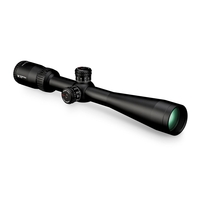
Vortex Diamondback Tactical 4-12x40 Riflescope - VMR-1 Reticle (MOA)
via Uttings
£299.00

Vortex Diamondback Tactical 4-12x40 VMR-1 Riflescope
via BushWear
£315.00
Buying Advice
Why 6mm ARC is rising fast comes down to three converging advantages that no other single cartridge quite matches in the AR-15 form factor. First, it is genuinely flat-shooting: a 108-grain ELD-M load at roughly 2,750 fps produces trajectories and wind deflection numbers competitive with 6.5 Creedmoor at moderate ranges, yet it does so with dramatically less recoil — light enough that you can spot your own impacts through the scope without losing the target. Second, and critically, 6mm ARC feeds from a standard AR-15 bolt face and magazine, meaning it drops into the same lightweight, modular platform millions of US shooters already own and understand. You do not need an AR-10 lower, a proprietary bolt, or a special magazine. This combination of genuine ballistic merit and platform convenience is why PRS gas-gun divisions, predator hunters, and precision hobbyists have adopted it so rapidly across the US.
Typical engagement distances for 6mm ARC cluster in a well-defined band that directly shapes your scope choice. The vast majority of shooting — whether zeroing, load development, positional practice, or hunting — happens between 100 and 500 yards. Competitive PRS and NRL-style stages commonly push targets out to 600–800 yards, and a well-tuned rifle with quality match ammunition can absolutely deliver consistent hits at those distances under reasonable conditions. Some experienced shooters stretch the cartridge past 800 yards, but that pushes into a zone where the 6mm ARC's relatively modest case capacity means velocity is dropping off meaningfully and wind calls become the dominant challenge. Frame your scope purchase around reliable, repeatable performance in the 100-to-800-yard window, with the bulk of your shooting time spent inside 500 yards.
Magnification range is one of the most practical decisions you will make, and for 6mm ARC the sweet spot is clear. A scope in the 4–16x, 5–25x, or 6–24x range covers the cartridge's realistic envelope comprehensively. At the low end, 4x or 5x gives you enough field of view for fast target acquisition inside 200 yards, transitions between barricade positions, or scanning for predators at moderate range. At the top end, 16x is adequate for precise holds at 500 yards, but if you plan to regularly shoot beyond that — especially in PRS-style stages at 600–800 yards — 20x to 25x gives you noticeably better target resolution and more precise reticle placement. A 5–25x scope is the single most versatile choice for most US 6mm ARC shooters, offering enough range at both ends without excessive weight or cost.
FFP versus SFP is a question with a clear best answer for precision 6mm ARC shooting, though SFP still has its place. A first focal plane reticle scales proportionally with magnification, which means your holdover and windage subtensions — whether measured in MRAD or MOA — are mathematically correct at every power setting. This matters enormously if you hold for elevation or wind at any magnification other than one specific reference point, which is exactly what happens in PRS stages, fast positional shooting, or field hunting where you may not be at max magnification when a shot presents itself. SFP scopes are only subtension-correct at one designated magnification (usually the maximum), so they work well for shooters who methodically dial to max power before every shot. For the majority of US precision shooters buying a scope for 6mm ARC, FFP is the stronger recommendation — but a quality SFP scope at a lower price point can still serve you well if your shooting style is methodical and predominantly at known distances.
For the best overall pick, the Vortex Viper PST Gen II 5-25x50 FFP remains one of the most compelling scopes for 6mm ARC in 2026. It typically sits in the $700–$1,000 price band depending on reticle choice and retailer, putting it squarely in the mid-tier where most serious shooters are comfortable spending. It offers a genuine first focal plane EBR-7C MRAD or MOA reticle with clean subtension markings, exposed turrets with a reliable zero-stop mechanism, a side-focus parallax adjustment that goes down to roughly 25 yards, and optical quality that punches above its price class. The 5–25x magnification range is ideal for the 6mm ARC's working envelope. Tracking is consistent and repeatable, which matters when you are dialing elevation for 600-plus-yard shots. It is widely available on Amazon.com and through OpticsPlanet, with strong US warranty support from Vortex's Wisconsin headquarters.
For the best value pick under $500, the Athlon Ares ETR 4.5-30x56 FFP or the Primary Arms GLx 4-16x50 FFP deserve serious consideration. The Athlon Ares ETR, often found in the $350–$500 range, offers a surprisingly wide magnification range, first focal plane reticle, and exposed zero-stop turrets — an unusual feature set at this price. The Primary Arms GLx 4-16x50 FFP, typically in a similar band, pairs excellent ACSS-based reticle designs with solid glass and reliable tracking. Both scopes make real compromises versus mid-tier and premium options — edge-to-edge sharpness, color fidelity in low light, and turret feel will all be a step behind — but for a shooter building a first 6mm ARC precision rifle or working within a defined budget, either represents genuinely good value. Both brands have strong US distribution and customer support networks.
For the best premium and long-range pick, the Nightforce NX8 4-32x50 F1 or the Vortex Razor HD Gen III 6-36x56 represent the top of what most 6mm ARC shooters will ever need. The Nightforce NX8, typically in the $1,700–$2,100 range, is compact and lightweight for its magnification, making it an outstanding match for the lighter-weight AR-15 platform — and its Mil-XT or MOAR-CF2 reticles are purpose-built for precision holds at extended range. The Vortex Razor HD Gen III, usually in the $1,900–$2,400 band, offers class-leading glass clarity, an extremely refined turret system, and a wide zoom range that flatters the 6mm ARC at any distance. At this tier, you get elite optical coatings, bombproof tracking consistency, and low-light performance that genuinely extends your effective shooting window. These scopes are available through major US retailers including Amazon.com and OpticsPlanet, and both carry robust lifetime or limited warranties honored domestically.
When matching your scope to your specific use case, keep a few practical points in mind. Weight matters more on a 6mm ARC AR-15 than on an AR-10 or bolt gun — a 30-ounce scope on a seven-pound rifle creates balance problems, so factor in scope weight alongside magnification and objective lens size. Choose MRAD if you are already comfortable thinking in mils and your shooting community uses mils (most US PRS shooters do), or MOA if you prefer the inch-based reference and your turrets already click in quarter-MOA increments. For tube diameter, 34mm tubes are standard at mid-tier and above, offering more internal adjustment range for dialing — useful when your 6mm ARC drop chart demands 10+ mils of elevation at 800 yards. A 30mm tube is perfectly adequate if your shooting stays inside 500 yards or if you prefer a lighter setup. Finally, do not overlook parallax adjustment: any scope you mount on a 6mm ARC precision rifle should have a side-focus parallax knob adjustable down to at least 50 yards, and ideally lower, to eliminate parallax error at the distances where you actually train most.
Frequently Asked Questions
What magnification do I need for a 6mm ARC rifle?
A scope in the 4–16x to 5–25x range covers the 6mm ARC's practical shooting envelope from close-range zeroing out to 600–800 yards. If most of your shooting is inside 500 yards, 4–16x is plenty and keeps weight down. If you regularly engage targets beyond 500 yards or shoot PRS-style competitions, 5–25x or 6–24x gives you noticeably better target resolution and more precise reticle placement at distance. Avoid going below 4x on the low end if you want usable field of view for transitions or scanning.
Is 6mm ARC a long-range caliber?
6mm ARC is a genuine mid-to-long-range cartridge for its platform class. With quality match ammunition — such as a 108-grain ELD-M — it delivers competitive trajectories and wind performance out to roughly 600–800 yards, which is where the vast majority of PRS gas-gun shooting occurs. Some skilled shooters push it past 800 yards under ideal conditions, but energy and velocity begin to fall off noticeably beyond that point. It is not a true 1,000-plus-yard cartridge in the way 6.5 Creedmoor or .308 can be, but within its AR-15-compatible envelope it punches well above expectations.
Do I need FFP for 6mm ARC or is SFP fine?
For precision shooting and PRS-style use, FFP is the stronger choice because your reticle subtensions remain mathematically correct at every magnification — critical when you hold for wind or elevation at anything other than max power. SFP scopes are subtension-accurate only at one designated magnification, usually the maximum, so they work fine for disciplined shooters who always dial to max before taking a shot. If you shoot positional stages, hunt in dynamic field conditions, or frequently vary your magnification, FFP eliminates a significant source of error.
Can 6mm ARC use the same scope mount as a standard AR-15?
Yes. A 6mm ARC upper receiver uses the same Picatinny rail spec as any other AR-15 upper, so your existing scope mount, cantilever mount, or ring setup will work without modification. The cartridge itself imposes no special mounting requirements. Just match the mount's ring diameter to your scope's tube size — typically 30mm or 34mm for precision optics — and ensure you have adequate eye relief for your stock length of pull. When purchasing mounts or rings separately online, check individual listing compliance notes, as some retailers treat certain firearm accessories differently.
How does 6mm ARC compare to 6.5 Grendel or .224 Valkyrie for scope needs?
All three cartridges are AR-15-compatible, but their ballistic profiles shape scope choices slightly differently. 6mm ARC generally shoots flatter and faster than 6.5 Grendel, meaning you may use slightly less elevation adjustment per given distance — but the scope magnification and feature set you need are broadly similar for both. Compared to .224 Valkyrie, 6mm ARC retains more downrange energy and bucks wind better at extended ranges, so shooters pushing past 600 yards may benefit more from a higher-magnification FFP scope. In practice, a quality 5–25x FFP scope serves all three cartridges well; 6mm ARC simply makes the most of that glass across the widest usable range.
Should I choose MRAD or MOA for a 6mm ARC scope?
Either system works perfectly well — the choice is personal preference and community alignment. Most US PRS and NRL competitors use MRAD (mil-radian) because the metric-based system simplifies communication of corrections and most competition-oriented reticles are mil-based. MOA (minute of angle) clicks in familiar inch-based increments — 1 MOA equals approximately 1.047 inches at 100 yards — which some shooters find more intuitive for zeroing and load development. Whichever you choose, make sure your turret clicks and your reticle subtensions use the same unit to avoid conversion errors in the field.
How much elevation adjustment range do I need in a scope for 6mm ARC?
A typical 6mm ARC load requires roughly 8–12 mils (or 28–42 MOA) of elevation adjustment from a 100-yard zero to reach 800 yards, depending on the specific load, barrel length, and atmospheric conditions. Most quality precision scopes in the 5–25x class offer 25–30 mils (or 80–100-plus MOA) of total internal adjustment, which is more than sufficient. To maximize usable adjustment range, mount your scope with a 20-MOA canted base or use a one-piece cantilever mount with built-in cant — this shifts your mechanical range upward and gives you more room for dialing at distance.
What objective lens size is best for a 6mm ARC precision scope?
A 50mm objective lens is the most common and practical choice for 6mm ARC precision scopes, offering a strong balance of light transmission, exit pupil diameter, and overall weight. A 56mm objective gathers slightly more light for low-light shooting but adds weight and may require taller rings, which raises your cheek weld — potentially an issue on AR-15 platforms with adjustable stocks. Unless you specifically need maximum low-light performance for dawn and dusk hunting, a 50mm objective paired with quality multicoated glass will serve the vast majority of US 6mm ARC shooters very well.
Is a 6mm ARC rifle suitable for PRS gas-gun competitions?
Absolutely — 6mm ARC has become one of the most popular cartridges in PRS and NRL gas-gun divisions specifically because it combines flat trajectories, low recoil for fast follow-up shots, and reliable feeding in a standard AR-15 platform. The cartridge's recoil impulse is mild enough to let most shooters spot their own impacts through the scope, which is a significant competitive advantage. Pair it with a 5–25x FFP scope with a competition-oriented reticle like the Vortex EBR-7C, Nightforce Mil-XT, or a Primary Arms ACSS variant, and you have a highly competitive setup from club-level matches through national-level events.
Related guides
Find the best high-magnification FFP scopes for prairie dog hunting at 200-600+ yards. Expert US buying guide covers turrets, reticles, MOA vs MRAD, and top picks.
1-Piece Scope Mounts for PRS & Long-Range: What Actually MattersChoosing a 1-piece scope mount for PRS or long-range competition? Our 2026 guide covers return-to-zero, torque specs, tube diameter matching, and the top-tier brands US shooters trust.
Kahles vs ZCO vs Nightforce ATACR: Premium PRS Optics ComparedKahles K540i, ZCO 5-27x56, or Nightforce ATACR for PRS? We compare glass, turrets, reticles, and service at the $2,500+ tier so you buy the right premium scope.
Best Scopes for AR-10 & .308 Win Under $2,000Expert-picked best scopes for AR-10 and .308 Win under $2,000 in 2026. FFP vs SFP, magnification, mounts, and 5 real picks from $700 to $1,900 for US precision shooters.
Scoping Your Barrett MRAD — The Definitive 2026 GuidePair your Barrett MRAD with the perfect rifle scope. We cover top optics, caliber choices, reticle systems, and long range setup tips for US shooters in 2026.
The No-Budget PRS Scope Debate SettledEnd the no-budget PRS scope debate. We compare the best scope for PRS competition across every price tier, covering FFP reticles, turret tracking, and glass clarity for US shooters.
Fixing Windage Problems on the Hawke Airmax ScopeStruggling with windage drift or maxed-out adjustments on your Hawke Airmax? Our 2026 guide diagnoses common causes and recommends proven rifle scope upgrades for US shooters.
Not sure which scope is right for you?
Try our AI-powered scope finder — answer a few questions and get personalised recommendations.
Find My Scope →Get a UK scope tip every day
Follow AiScopes on Facebook for daily buying guides, deals and gear advice.
Follow on Facebook