Beating the 1 MOA at 1000 Yards Challenge
By Peter Makulek · Senior Optics Editor · · Live prices from US retailers
Texas Plinking's 1 MOA at 1000 yards challenge has become one of the most talked-about benchmarks in the US long-range shooting community. The premise is deceptively simple: put every round inside a circle that measures roughly 10.47 inches at 1000 yards. That is 1 MOA — one minute of angle — a standard that separates competent marksmen from those still dialing in their fundamentals. The challenge has exploded across YouTube and Instagram, pushing shooters of every experience level to evaluate whether their glass, their loads, and their skills are genuinely up to the task. If you are gearing up for it, the scope on top of your rifle is the single most consequential equipment decision you will make.
Why does this challenge resonate so strongly right now? Because it sits at the intersection of accessible and aspirational. A 6.5 Creedmoor Ruger Precision Rifle or a Bergara B-14 HMR — both available for well under $1500 — can mechanically shoot sub-MOA groups. Factory match ammunition from Hornady and Federal has never been better. The bottleneck for most shooters is not the rifle or the cartridge; it is the optic's tracking accuracy, its reticle design, and the shooter's ability to read wind. This guide exists to help you choose the best scope for the job, whether your budget is $500 or $5000.
At 1000 yards, every weakness in your equipment chain is magnified — literally. A scope with poor tracking will print groups that wander unpredictably as you dial elevation. Parallax error that is invisible at 300 yards becomes a consistent point-of-impact shift at 1000. Reticle subtensions that seem academic on a spec sheet become the difference between a confident hold and a wild guess when you are correcting for an 8 mph crosswind. Understanding these factors before you buy will save you frustration and money, and this guide breaks each one down in practical, US-market terms.
We have structured this resource around the real questions US long-range shooters are asking online — from the best scope for long range under $1000 to suppressor-versus-brake trade-offs, bipod choices, reticle selection, and more. Below, you will find curated product picks pulled live from our database filtered for tactical and PRS optics with at least 16x magnification, followed by deep buying advice and a FAQ section that addresses the exact queries we see in forums, comment sections, and social media threads. Whether you are chasing the challenge on public BLM land in Utah or at a private range in central Texas, this is your playbook.
Top Picks — Live US Prices

Vortex OPMOD Diamondback Tactical 4-16x44mm FFP 30mm Tube Riflescope, FDE
via OpticsPlanet
$267.89
OPMOD Vortex OPMOD Diamondback Tactical 4-16x44mm FFP 30mm Tube Riflescope, Tan, DBK-10026-OP
via OpticsPlanet
$267.89
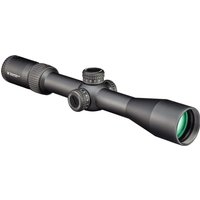
OPMOD Vortex OPMOD Diamondback Tactical 4-16x44mm FFP 30mm Tube Riflescope, Gray, DBK-10026-OP-GRY
via OpticsPlanet
$267.89
Buying Advice
Start with the specs that actually matter at 1000 yards. Total elevation travel is paramount: a 6.5 Creedmoor with a 140-grain bullet at 2700 fps needs roughly 35 MOA (about 10.2 mils) of come-up from a 100-yard zero to reach 1000 yards. Your scope must have enough internal adjustment — after zeroing — to get there without a canted rail or running out of travel. Look for scopes advertising 80 MOA or more of total elevation, or 25+ mils. Tracking accuracy is equally critical: a scope that advertises 0.1 mil clicks but actually moves 0.095 mils per click will put you nearly a full MOA off at 1000 yards after 100 clicks. Brands like Nightforce, Kahles, and March have built reputations on verified tracking. Zero-stop mechanisms let you return to your confirmed zero instantly, and parallax adjustment (ideally a side-focus knob calibrated past 1000 yards) eliminates apparent reticle shift against the target. First focal plane (FFP) reticles maintain accurate subtensions at every magnification, which is why the vast majority of PRS and long-range competition shooters prefer them over second focal plane (SFP) designs.
Budget tiers in the long-range rifle scope market break down clearly. In the entry tier — roughly $300 to $600 — scopes like the Vortex Diamondback Tactical and certain Hawke Frontier models offer FFP mil reticles, exposed turrets, and adequate glass clarity for the money. They will get you on steel at 1000 yards, but you may notice softer edge clarity, less precise tracking repeatability over many rotations, and turrets that feel less positive. The mid tier, from about $600 to $1500, is where the best scope for long range under $1000 truly lives: the Vortex Viper PST Gen II, Leupold Mark 5HD 3.6-18x44, and Hawke Frontier 34 FFP are all proven performers with excellent tracking, good glass, and robust turret systems. The premium tier — $1500 and above — includes Nightforce ATACR and NX8, Kahles K525i, March FX, and Swarovski dS or X5i models. At this level, you get demonstrably superior optical clarity in low light, near-perfect tracking verified by independent tests, and build quality that survives thousands of rounds of .338 Lapua recoil without losing zero.
Common buying mistakes cost long-range shooters time and money. First, over-prioritizing magnification: a 6-24x scope sounds impressive, but if the optical quality at 24x is mediocre, you are better off with a sharper 5-20x. Clarity at high power is more important than raw magnification numbers. Second, ignoring the reticle: a simple duplex reticle is fine for hunting whitetail at 100 yards from a stand but nearly useless for holding wind at 1000. You need a Christmas-tree-style reticle with hash marks at known subtension intervals — Vortex's EBR-7C, Nightforce's Mil-XT, or Kahles SKMR4 are strong choices. Third, choosing MOA turrets with a mil reticle (or vice versa) creates a unit-conversion nightmare in the field. Match your turret and reticle units. Fourth, buying a scope with insufficient parallax adjustment range: if the side-focus knob tops out at 500 yards, you will fight parallax error at 1000. Finally, neglecting the mount: a quality 20-MOA Picatinny rail paired with proper-height rings or a one-piece mount (like those from Badger Ordnance, Spuhr, or American Defense Manufacturing) is not optional — it is part of the system.
US-specific context matters more than most guides acknowledge. Caliber selection affects scope choice directly: if you are shooting 6.5 Creedmoor or 6.5 PRC — the two most popular US long-range cartridges right now — you need less total elevation adjustment than a .308 Winchester shooter does at 1000 yards, because the higher-BC bullets drop less. If you reload, you can tune velocities to land on convenient round-number corrections. Terrain varies enormously: shooting across flat Texas ranch land versus angled terrain in Colorado's high country presents different wind-reading and angle-compensation challenges. For purchasing, Amazon.com carries a wide selection of Vortex, Leupold, and Hawke optics with Prime shipping; OpticsPlanet often stocks harder-to-find Nightforce and Kahles models and occasionally offers mil/LEO discounts. There are no state-level restrictions on optics purchases themselves, though if you are pairing your scope with a suppressor for reduced recoil (a legitimate accuracy advantage), remember that NFA items require a Form 4 and tax stamp regardless of state.
Matching the scope to your specific use case is the final step. If the 1 MOA challenge is your primary goal and budget is tight, a mid-tier FFP mil/mil scope in the 5-25x range on a Ruger Precision Rifle in 6.5 Creedmoor is the most cost-effective path. If you also plan to use the rifle for coyote hunting at dawn and dusk, prioritize objective lens diameter (50mm or 56mm) and high-quality lens coatings for light transmission — Leupold and Swarovski excel here. Dedicated night vision scope or thermal scope setups for coyote hunting at night are a separate investment entirely; clip-on night vision devices from brands like FLIR or Pulsar mount ahead of your day optic and preserve your existing zero, while standalone thermal scopes like those from Pulsar or ATN are best suited to dedicated predator rifles rather than your precision rig. For air rifle shooters inspired by the challenge, understand that even high-powered PCP air rifles are realistically limited to 100–200 yards for accuracy work — sub-12 ft-lb springers top out around 50–75 yards — so the 1000-yard benchmark is strictly centerfire territory.
A brief brand landscape helps frame your decision. Vortex dominates the US mid-tier market with an unconditional lifetime warranty and a huge dealer network — their Razor HD Gen III 6-36x56 is a genuine premium contender. Nightforce is the go-to for US military and PRS competitors; the ATACR 7-35x56 is arguably the benchmark for tracking accuracy. Leupold, manufactured in Beaverton, Oregon, carries strong American-made cachet and the Mark 5HD line punches well above its weight. Kahles (Austrian, owned by Swarovski) and March (Japanese) are boutique favorites among top-tier competitors who prioritize glass quality and turret feel. Hawke offers genuine value in the entry-to-mid range and is increasingly available through US dealers. Swarovski's riflescope line is less common in PRS circles but optically peerless for hunters who cross over into long-range work. Weaver, once a staple of American shooting, now occupies a budget niche but remains relevant for shooters entering the sport.
Frequently Asked Questions
What is the best scope for long range shooting under $1000?
The Vortex Viper PST Gen II 5-25x50 is the most frequently recommended scope in this price band for good reason: it offers FFP mil reticle, verified tracking, a solid zero-stop, and Vortex's lifetime warranty. The Leupold VX-3HD or Mark 4HD lines also fall near this price point and deliver excellent glass clarity. If you can stretch slightly above $1000, the Nightforce SHV 4-14x or the Kahles K318i open up, but strictly under that ceiling, the Viper PST Gen II is the benchmark for US long-range shooters tackling a 1000-yard challenge.
What scope reticle should I use for a 1000-yard challenge?
Choose a Christmas-tree or grid-style mil reticle in a first focal plane (FFP) scope. These reticles feature horizontal wind-hold hash marks that grow finer toward the bottom of the reticle, giving you precise holdover and wind references at long range without dialing. Popular proven designs include the Vortex EBR-7C (MRAD), Nightforce Mil-XT, and Kahles SKMR4. Make sure your turret units match the reticle — mil turrets with a mil reticle, or MOA turrets with an MOA reticle — so corrections are intuitive under time pressure.
Suppressor vs brake: which is better for long-range precision?
Both reduce felt recoil, which helps you spot your own impacts at 1000 yards. A muzzle brake is cheaper, requires no NFA paperwork, and typically provides more raw recoil reduction — but it redirects blast sideways, making you unpopular on a crowded firing line. A suppressor reduces recoil somewhat less aggressively but also eliminates the concussive blast and reduces report by 25–35 dB, which is a major advantage for hearing protection and situational awareness. Many PRS competitors now run suppressors; the point-of-impact shift when removing one is a valid concern, so zero with it on and leave it on.
Are Hawke bipods any good for long-range shooting?
Hawke has expanded its accessory line to include bipods that offer solid value for the price. They are well-machined, reasonably lightweight, and feature adjustable cant and leg length. For casual long-range practice and challenges like Texas Plinking's 1 MOA drill, a Hawke bipod is perfectly adequate. However, for serious PRS competition or hard field use, most US shooters gravitate toward Atlas (B&T Industries) or MDT bipods, which offer more refined leg-lock mechanisms and broader aftermarket support.
Does scope tracking matter more than glass quality for a 1,000-yard challenge?
For this specific task tracking is the property that decides whether you can hit at all, and glass quality decides how repeatable and how pleasant the process is, so they are not really in competition. Reaching 1,000 yards means dialling a large elevation correction and trusting that the amount you dialled is the amount the reticle actually moved; a scope that tracks a few percent short puts your come-up out by most of a foot at that distance, and no amount of clarity fixes it. Glass matters for a different reason: at 1,000 yards in mirage you are reading conditions and spotting your own impacts through that objective. Buy tracking first, then buy the best glass the remaining budget allows.
How do I verify my scope tracks accurately before attempting 1,000 yards?
Run a tall-target test, and do it before you spend a day driving to a long range. Level the rifle, put up a plumb target with a measured vertical scale at a known distance, fire a group at the bottom reference, dial a large known elevation correction such as 10 mils or 30 MOA, and fire again. Measure the actual vertical separation and compare it with what that correction should have produced at your measured distance. A scope that comes back within about 1 percent is fine; one that is off by several percent needs either a correction factor applied to every solution you shoot, or replacing. The same test also reveals whether your reticle is canted relative to the turret travel.
Can I use a thermal scope or night vision scope for the 1000-yard challenge?
Technically yes, but practically it is not ideal. Most thermal scopes — even premium models from Pulsar and ATN — have sensor resolutions and refresh rates that make precise shot placement at 1000 yards extremely difficult compared to a quality day optic. Best thermal and best night vision scopes are purpose-built for detection and engagement at moderate ranges, typically under 300–500 yards, which is why they dominate scope coyote hunting setups rather than precision rifle competitions. For the 1 MOA challenge, stick with a conventional high-magnification day scope and save the thermal scope for predator control after dark.
Is this challenge realistic for an air rifle shooter?
No. Even the most powerful PCP air rifles legal for civilian use in the US generate far less energy than centerfire cartridges and are realistically accurate to 100–200 yards in ideal conditions. Sub-12 ft-lb spring-piston air rifles — the kind many shooters start with — are effective only to about 50–75 yards. The 1 MOA at 1000 yards challenge requires a centerfire rifle in a flat-shooting, high-BC caliber like 6.5 Creedmoor, 6.5 PRC, or .300 PRC. Air rifle precision shooting is a rewarding discipline on its own, but it operates at a completely different scale.
Do I need a 20-MOA canted rail to reach 1000 yards?
In most cases, yes. A 20-MOA rail tilts the scope's bore axis downward relative to the barrel, effectively giving you 20 extra MOA of elevation adjustment before the erector tube reaches its mechanical limit. With a .308 Winchester, you need roughly 40–45 MOA of come-up from a 100-yard zero to reach 1000 yards; without a canted rail, many scopes will run out of internal adjustment. With a 6.5 Creedmoor the requirement is lower (around 35 MOA), but a canted rail still provides a safety margin and keeps the erector tube closer to its optical center, which generally improves image quality and tracking consistency.
Related guides
Find out if a 20 MOA rail works with the Vortex Venom at 100 yards. We cover zero offset, turret range, and when a canted base actually helps or hurts your setup.
Best Optics for PRS Gas Guns in 2026Find the best scopes for PRS gas guns in 2026. We cover eye relief, mount clearance, recoil demands, and top picks for 6.5 Grendel, 6 ARC, and .223 semi-auto precision rifles.
Anti-Cant Levels & Cant Error Explained (2026)Learn how 2° of rifle cant walks groups sideways at distance. See real cant error in inches at 300–1000 yards and find the best anti-cant levels for US precision shooters in 2026.
Best Varmint Scopes for 2026Find the best varmint hunting scopes for 2026. We cover magnification, parallax, reticle subtension, and mirage management so you can hammer prairie dogs and groundhogs all summer.
30mm vs 34mm Tubes: Does Bigger Actually Buy You Elevation?Does a 34mm scope tube really give you more elevation travel than 30mm? We break down what tube diameter controls, when a 20 MOA rail is smarter, and how to choose for US long-range shooting.
Not sure which scope is right for you?
Try our AI-powered scope finder — answer a few questions and get personalised recommendations.
Find My Scope →Get a UK scope tip every day
Follow AiScopes on Facebook for daily buying guides, deals and gear advice.
Follow on Facebook