30mm vs 34mm Tubes: Does Bigger Actually Buy You Elevation?
By Peter Makulek · Senior Optics Editor · · Live prices from US retailers
Walk into any PRS match staging area in 2026 and you will see a near-even split between 30mm and 34mm scope tubes on the firing line. The internet insists the fatter tube gives you more elevation travel, which sounds logical—until you realize that tube diameter is only one variable in the equation and often not even the most important one. Shooters chasing 6.5 Creedmoor or 6 GT drops past 1,200 yards are rightly asking whether a 34mm tube is worth the extra ring cost and ounces, or whether a canted base solves the same problem for a fraction of the investment. This guide exists because the real answer requires understanding internal erector geometry, not just outer tube measurements.
Tube diameter sets an outer boundary on how far the erector assembly can physically tilt before it contacts the inner wall of the main tube. A wider tube allows more theoretical tilt range, which translates to more potential elevation and windage adjustment. But 'potential' is the operative word. The actual travel your scope delivers depends on the erector tube's own diameter, the length of the erector, the position of the pivot point, and the manufacturer's deliberate design choices about how to allocate that internal space between elevation, windage, and optical quality. Two 34mm scopes from different makers can offer wildly different total elevation—sometimes by 15 MOA or more—because they made different engineering trade-offs inside the same outer shell.
For US shooters, the practical question usually boils down to how much usable elevation you need above your chosen zero. If you zero a .308 Win at 100 yards and want to dial to 1,000 yards, you need roughly 35–38 MOA of upward adjustment depending on altitude, barrel length, and load. A 6.5 Creedmoor with a 140-grain bullet at 2,700 fps needs around 28–30 MOA for the same distance. These numbers matter because they tell you whether a well-designed 30mm scope with a 20 MOA canted rail can reach your target—or whether you genuinely need the extra internal real estate of a 34mm tube to get there without running out of clicks.
This guide covers what tube diameter actually controls inside a riflescope, how to calculate the usable elevation above zero for your specific platform, when a 20 MOA canted Picatinny rail is the smarter and cheaper solution than upsizing your tube, and how brands like Nightforce, Vortex, Kahles, March, and Leupold handle the 30mm versus 34mm question across their 2026 lineups. Whether you are building a PRS gas gun, setting up a bolt-action hunting rig for western mule deer at extended range, or simply trying to understand the spec sheets before spending $1,500 or more on glass, this is the page that gives you a straight answer.
Top Picks — Live US Prices
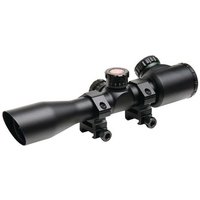
TruGlo Tru-Brite Xtreme Tactical Compact 4x32mm Rifle Scope, Red/Green Illuminated Mil-Dot Reticle, TG-TG8504TL
via OpticsPlanet
$89.39
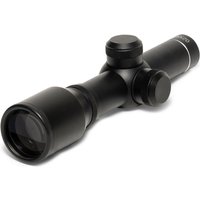
Osprey Global Standard 2.5x20mm LPVO 1in Tube Rifle Scope, Second Focal Plane, Duplex Reticle, Black, SD2.5X20DP
via OpticsPlanet
$89.99
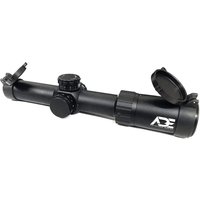
ADE Advanced Optics Gen2 1-6x24mm LPVO Rifle Scope, 30mm, Illuminated Mil Dash Reticle, Black, Gen2 1-6x24
via OpticsPlanet
$94.99
Buying Advice
The single most important spec is not tube diameter—it is total elevation adjustment, expressed in MOA or MRAD (mils). Manufacturers publish this number, and it tells you how much the erector can tilt from stop to stop. But total travel is misleading on its own; what matters is usable travel above zero. If a scope has 100 MOA of total elevation and you zero it mechanically centered, you have roughly 50 MOA of upward adjustment. Mount that same scope in a 20 MOA canted rail and you shift about 20 MOA of downward travel into upward travel, giving you close to 70 MOA above zero without touching the scope's design. Always check whether the manufacturer's spec includes the full mechanical range or only the optically usable range, as some brands like Nightforce and March are transparent about this distinction while others are not.
Budget tiers sort cleanly in 2026. Entry-level 30mm scopes in the $300–$600 range—think Vortex Diamondback Tactical or certain Hawke Frontier models—offer adequate elevation for moderate long-range work, typically 60–70 MOA total, and pair well with a 20 MOA rail for calibers like 6.5 Creedmoor out to 1,000 yards. Mid-tier 34mm scopes from $800–$1,500 (Vortex Viper PST Gen II, Leupold Mark 5HD in some configs) add more elevation headroom—often 90–120 MOA total—plus better glass, more precise tracking, and zero-stop mechanisms. Premium 34mm options from Nightforce ATACR, Kahles K525i, March High Master, and Swarovski dS lines run $2,000–$3,800 and deliver extreme elevation travel (sometimes 130+ MOA), verified tracking accuracy under torture-test conditions, and optical coatings that justify the investment for serious competition or professional use.
The most common mistake buyers make is assuming that every 34mm scope automatically has more elevation travel than every 30mm scope. That is flatly wrong. The Nightforce NX8 in 30mm has roughly 100 MOA of total elevation, which is more than several budget 34mm tubes on the market. Conversely, some premium 34mm scopes deliberately trade maximum elevation travel for a larger erector lens, giving you a brighter image and wider field of view at the cost of a few MOA of range. The second common mistake is ignoring ring height and compatibility. Moving from 30mm to 34mm rings means checking clearance with your objective bell and handguard, and 34mm ring options are fewer and more expensive—often $80–$200 more for quality sets from Spuhr, Badger Ordnance, or Seekins Precision.
US-specific context matters here. PRS and NRL competitions dominate the American precision-rifle scene, and course designers in 2026 routinely set targets from 200 to 1,200+ yards with significant elevation changes in western states like Utah, Colorado, and New Mexico. For those disciplines, a 34mm tube with 28+ MRAD (roughly 96+ MOA) of total elevation paired with a 20 MOA rail is the consensus setup because it guarantees you will never run out of clicks on any stage. Hunters in the east taking whitetail from a stand at 50–150 yards have zero need for a 34mm tube; a quality 30mm scope with good glass weight and a standard flat base is the correct choice. Amazon.com and OpticsPlanet both stock the major brands discussed here, and ring availability for 34mm tubes has improved dramatically since 2024, though you should still verify torque specs and compatibility with your specific receiver and rail before ordering.
Matching the choice to your use case is straightforward once you do the math. Calculate your bullet's required elevation adjustment from zero to your maximum intended distance using a ballistic solver like Applied Ballistics or Hornady 4DOF. Add 5–10 MOA of margin for altitude, temperature swings, and the ability to confirm zero-stop function. If that total is under 50 MOA, virtually any quality 30mm scope on a flat rail will work. If it is 50–70 MOA, a 30mm scope on a 20 MOA canted rail is the cost-effective solution. If you need 70+ MOA above zero—common for .308 Win past 1,000 yards, or 6.5 PRC and .300 PRC shooters pushing past 1,500 yards—a 34mm tube with a 20 MOA rail is the right investment. Do not pay the weight and cost penalty of 34mm unless the arithmetic demands it.
The brand landscape in 2026 reflects this nuance. Nightforce remains the benchmark for verified elevation travel in both 30mm (NX8, SHV) and 34mm (ATACR, NXS) lines, with published internal-travel data that competitive shooters trust. Vortex offers the widest spread from budget 30mm (Diamondback Tactical) to premium 34mm (Razor HD Gen III), making them the default recommendation when a shooter wants to stay in one ecosystem across price points. Kahles and Swarovski bring European optical engineering with generous elevation in 34mm tubes, favored by F-class and ELR competitors. March scopes, particularly the High Master series, push the boundary of total travel in 34mm with some models exceeding 140 MOA, targeting the extreme long-range community. Leupold's Mark 5HD balances American manufacturing, moderate weight for a 35mm tube, and strong dealer support across all 50 states. Hawke and Weaver fill important roles in the entry and mid-tier 30mm space, giving newer shooters solid tracking and glass quality without the sticker shock of premium 34mm options.
Frequently Asked Questions
Does a 34mm scope tube always give more elevation travel than a 30mm tube?
No. Tube diameter sets an upper physical limit on erector tilt, but the actual elevation travel depends on erector tube diameter, pivot location, and the manufacturer's design priorities. A well-designed 30mm scope like the Nightforce NX8 can deliver more total elevation than a budget 34mm tube. Always check the published total elevation spec rather than assuming tube size tells the whole story.
How much elevation above zero do I actually need for 1,000-yard shooting?
It depends on your cartridge. A 6.5 Creedmoor with a 140-grain bullet at 2,700 fps typically needs about 28–30 MOA (roughly 8.5 MRAD) above a 100-yard zero to reach 1,000 yards at moderate altitude. A .308 Win with a 175-grain SMK needs 35–38 MOA. Always run your specific load through a ballistic calculator and add a 5–10 MOA buffer for environmental variables and zero-stop clearance.
Can a 20 MOA canted rail replace the need for a 34mm scope tube?
In many cases, yes. A 20 MOA rail shifts roughly 20 MOA of your scope's downward travel into upward travel, effectively giving you 20 MOA more elevation above zero without changing the scope. For shooters using efficient cartridges like 6.5 Creedmoor or 6 GT out to 1,200 yards, a quality 30mm scope on a 20 MOA rail often provides enough adjustment. The rail costs $40–$100, far less than upgrading to a 34mm scope and rings.
Are 34mm scope rings harder to find and more expensive than 30mm rings?
Generally, yes. The 30mm ring market is the most competitive in the US, with dozens of options from $30 to $300+. The 34mm ring selection is smaller and typically starts higher in price, with quality options from Spuhr, Badger Ordnance, Seekins, and Vortex running $80–$250+ more than comparable 30mm sets. Availability has improved significantly by 2026, but you should still confirm compatibility with your rail and objective bell diameter before ordering.
Does a 34mm tube make the scope heavier, and by how much?
Yes, though the weight difference varies by model. On average, a 34mm scope weighs 2–6 ounces more than a comparable 30mm model from the same manufacturer, depending on tube wall thickness and overall length. Add another 1–3 ounces for heavier 34mm rings. For a PRS competition rifle where total weight is regulated or for a backcountry hunting build where every ounce counts, this difference is meaningful and should factor into your decision.
What does tube diameter actually control inside a riflescope?
The main tube's inner diameter determines how much room the internal erector assembly has to tilt before contacting the tube wall. More room means more potential adjustment range (elevation and windage). A wider tube can also allow a larger erector lens, which can improve light transmission and image brightness. However, manufacturers may use the extra space for either more travel, better optics, or both—there is no universal rule for how a given brand allocates that internal volume.
Is there any advantage to 34mm tubes for short-range hunting in the eastern US?
For typical eastern whitetail hunting at 50–200 yards from a stand or blind, a 34mm tube offers no practical advantage. You will never need more than 15–20 MOA of elevation adjustment above zero at those distances, which any quality 30mm scope provides easily. The extra weight and ring cost of a 34mm setup is wasted money in that context. A lighter 30mm scope with excellent glass, like a Leupold VX-5HD or Vortex Razor LHT, is a far better choice.
Do any scope manufacturers make tubes between 30mm and 34mm?
Yes. Leupold's Mark 5HD uses a 35mm main tube, which is a proprietary size requiring specific 35mm rings. This adds a slight compatibility inconvenience, but Leupold designed it to optimize the balance between elevation travel, weight, and optical performance. It is the most prominent example of a non-standard tube diameter, and 35mm rings are available from Leupold, Badger Ordnance, and a few other manufacturers.
How do I calculate usable elevation above zero for my specific setup?
Start with the scope's published total elevation travel and divide by two—that is your approximate elevation above mechanical center. Then add the value of any canted rail (e.g., 20 MOA). So a scope with 90 MOA total on a 20 MOA rail gives you roughly 65 MOA above zero (45 + 20). Compare that number to your ballistic solver's predicted drop at maximum intended distance, plus a 5–10 MOA buffer. If your requirement exceeds the available travel, you need more rail cant, a scope with more total travel, or both.
Related guides
Find the best high-magnification FFP scopes for prairie dog hunting at 200-600+ yards. Expert US buying guide covers turrets, reticles, MOA vs MRAD, and top picks.
Best Scopes for 6mm ARC in 2026Find the best scope for 6mm ARC in 2026. Expert picks across budget, mid-tier, and premium price bands for PRS, NRL, and precision AR-15 shooting in the US.
1-Piece Scope Mounts for PRS & Long-Range: What Actually MattersChoosing a 1-piece scope mount for PRS or long-range competition? Our 2026 guide covers return-to-zero, torque specs, tube diameter matching, and the top-tier brands US shooters trust.
Kahles vs ZCO vs Nightforce ATACR: Premium PRS Optics ComparedKahles K540i, ZCO 5-27x56, or Nightforce ATACR for PRS? We compare glass, turrets, reticles, and service at the $2,500+ tier so you buy the right premium scope.
Thermal vs Night Vision: Which Should You Buy First?Thermal vs night vision — which to buy first in 2026? Our US-focused decision guide breaks down detection vs identification, real price tiers, and the best pick for your use case.
Not sure which scope is right for you?
Try our AI-powered scope finder — answer a few questions and get personalised recommendations.
Find My Scope →Get a UK scope tip every day
Follow AiScopes on Facebook for daily buying guides, deals and gear advice.
Follow on Facebook