Best Scopes for .30-06 Springfield (2026)
By Peter Makulek · Senior Optics Editor · · Live prices from US retailers
The .30-06 Springfield has been putting meat in American freezers since 1906, and it remains one of the most popular centerfire hunting cartridges sold in the United States. It is chambered in virtually every bolt-action platform on the market — Remington 700, Winchester Model 70, Tikka T3x, Savage 110, Ruger Hawkeye, and Browning X-Bolt, to name just a handful — and it shoulders double duty on whitetail in a Georgia hardwood stand and on elk in a Colorado basin at 350 yards. Choosing the right optic starts with understanding this cartridge's real-world shooting envelope and the recoil forces it generates, both of which differ meaningfully from a .223 or even a .308.
A .30-06 loaded with a 180-grain Nosler Partition or a 150-grain Hornady SST generates between 17 and 21 foot-pounds of free recoil in a typical 8-pound rifle. That is well within the tolerance of any modern hunting scope from a reputable brand, but it is enough over thousands of rounds to loosen turret internals or shift reticle alignment in cheap glass. Recoil tolerance is not just about surviving the shot — it is about holding zero season after season while the rifle rides in a truck rack, a saddle scabbard, or a hard case on a bush plane to a remote Alaska strip.
Magnification range is the next critical decision. The .30-06 is realistically a 400-yard cartridge on game-sized targets when zeroed at 200 yards with standard 150–180 grain hunting loads. At that distance a 150-grain bullet at roughly 2,900 fps muzzle velocity drops about 18–20 inches below a 200-yard zero and retains roughly 1,500 ft-lbs of energy — more than enough for whitetail or mule deer. A scope in the 3-15x or 4-16x range covers the full spectrum from a 30-yard shot in a Pennsylvania thicket to a 400-yard poke across a Wyoming wheat field, with enough top-end power for positive shot placement but not so much that low-end magnification becomes unusable at close range.
This guide is written for US hunters buying in 2026. We reference scopes available through Amazon.com, OpticsPlanet, and authorized US dealers. We cover construction benchmarks that matter for .30-06 recoil, explain zero-distance strategy for common bullet weights, and walk through budget tiers from entry-level glass under $300 to premium European optics above $2,000. Whether you are mounting glass on a hand-me-down Model 700 for your first deer season or upgrading the optic on a custom elk rifle, this page is intended to be the most complete resource you will find.
Top Picks — Live US Prices

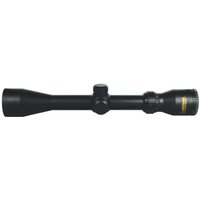
Bushnell Simmons Pro Hunter 3-9x40mm Riflescope
via Bushnell
$89.95
Traditions Muzzleloader Hunter Black Powder 3-9x40mm Circle Reticle A1143 Scope
via OpticsPlanet
$95.99
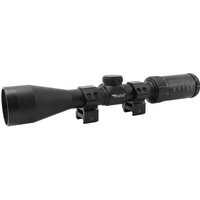
BSA Optics Optix Hunting Rifle Scope, 4-12x40mm, BDC-8 Reticle, Black, HS4-12X40TB
via OpticsPlanet
$99.39
Buying Advice
Start with the numbers that actually matter on a spec sheet. Objective lens diameter determines light-gathering ability: a 44mm or 50mm objective paired with a 3-15x or 4-16x power range will deliver an exit pupil between 3mm and 5mm at higher magnifications, which is adequate for legal shooting-light conditions in every US state. Tube diameter — usually 1 inch or 30mm — affects internal adjustment range and light transmission. A 30mm tube typically offers about 20 percent more internal travel, which is useful if you plan to dial elevation rather than use a BDC reticle. Eye relief of at least 3.5 inches is non-negotiable on a .30-06 to prevent scope bite; 4 inches is better, particularly for younger or smaller-framed shooters. Finally, confirm whether the reticle is in the first focal plane (FFP) or second focal plane (SFP). SFP is overwhelmingly more popular in hunting scopes because the reticle stays the same apparent size at all magnifications, making it cleaner for quick shots at game. FFP scopes are preferred if you use the reticle's subtensions (hash marks or holdover dots) for ranging or wind holds at varying power settings.
Budget tiers in 2026 break down roughly as follows. Entry-level scopes in the $150–$350 range from brands like Vortex (Crossfire II, Diamondback), Hawke (Vantage, Frontier), and Weaver deliver fully multi-coated glass, capped turrets, and lifetime warranties. They are entirely adequate for a once-a-year deer hunter shooting inside 250 yards. Mid-range optics from $400 to $900 — think Vortex Viper HD, Leupold VX-5HD, or Hawke Sidewinder — step up to ED glass, locking turrets, side-focus parallax, and noticeably better edge-to-edge clarity, which matters at dawn and dusk when most whitetail movement occurs. Premium tier above $1,000 includes Nightforce NX8, Kahles Helia, Swarovski Z8i, and March Hunting lines. Here you get fluoride-element glass with 90-plus percent light transmission, zero-stop turret systems, and mechanical precision measured in fractions of an MOA. These scopes justify their cost for hunters who regularly shoot past 300 yards, hunt in extreme low-light conditions, or simply want optics that will outlast them.
The most common mistake .30-06 buyers make is over-scoping the rifle. A 6-24x50 FFP tactical scope with exposed turrets and an illuminated MRAD Christmas-tree reticle is superb for a long-range precision rifle, but it is heavy, bulky, and slower to acquire a target at 60 yards from a tree stand than a simple 3-9x40 with a duplex reticle. Match the scope to how you actually hunt, not to the cartridge's theoretical maximum range. A second frequent error is ignoring mounting hardware: cheap aluminum rings on a hard-recoiling .30-06 are a recipe for a shifting zero. Invest in quality steel or aircraft-grade aluminum rings from Leupold, Vortex, Nightforce, or Warne, torqued to manufacturer specs with a proper inch-pound wrench.
For the US market specifically, the .30-06 is legal for big game in all 50 states and remains the most versatile single cartridge for a hunter who pursues whitetail in the East, mule deer in the West, and elk or moose in the Rockies or Alaska. Amazon.com stocks virtually every scope discussed in this guide under the standard sporting optics category, and OpticsPlanet often carries harder-to-find SKUs like specific Kahles or March models. Note that scopes themselves are not restricted items — they are optics, not firearm parts — so purchasing and shipping is straightforward to all US addresses. If you hunt multiple states with different terrain, consider a scope with a versatile magnification range (3-15x or 4-16x) rather than buying a second optic for each environment.
Matching the scope to your specific use case is ultimately about three variables: engagement distance, light conditions, and weight tolerance. A southeastern whitetail hunter shooting from an enclosed box blind at ranges under 150 yards will be perfectly served by a lightweight 2-7x33 or 3-9x40 SFP scope with a simple duplex reticle. A western hunter glassing coulees for mule deer and shooting across canyons to 400 yards benefits from a 4-16x44 or 5-25x50 with a BDC or open-turret system matched to the ballistic curve of the specific load. And the all-around hunter who wants one scope for everything should target the 3-15x44 or 4-16x44 sweet spot — enough magnification for precise shot placement at distance, but light enough (typically 18–24 ounces) to carry all day in mountain terrain without punishing the shoulder.
A brief brand landscape for 2026: Vortex continues to dominate the value-to-performance conversation in the US, with an unconditional lifetime warranty and broad dealer support. Leupold, still manufactured in Beaverton, Oregon, carries strong loyalty among American hunters who value lightweight construction and the company's custom shop turret service. Nightforce, based in Lavallette, New Jersey, builds some of the most mechanically precise scopes available and is a favorite among serious long-range hunters. Swarovski and Kahles represent the Austrian premium tier, delivering glass clarity that is difficult to match at any price. Hawke offers aggressive value in the entry and mid tiers, and March — a Japanese manufacturer — has gained a dedicated following among precision shooters who demand exceptional optical resolution. Weaver, while quieter in recent years, still offers honest, affordable hunting scopes that have proven themselves on .30-06 rifles for decades.
Frequently Asked Questions
What magnification range is best for a .30-06 deer rifle?
For whitetail hunting, a 3-9x40 is the time-tested standard and handles 90 percent of realistic shooting scenarios inside 300 yards. If you also hunt open country out to 400 yards, stepping up to a 3-15x44 or 4-16x44 gives more precision at distance without making close-range shots awkward. Avoid going above 18x on a dedicated hunting rifle — the extra magnification adds weight and narrows the field of view with almost no practical benefit on game.
What is the best zero distance for a .30-06 with 150- or 180-grain loads?
A 200-yard zero is the most versatile choice for .30-06 hunting loads. With a 150-grain bullet at approximately 2,900 fps, a 200-yard zero puts the bullet roughly 1.5 inches high at 100 yards and about 8 inches low at 300 yards — well within the vital zone of a deer-sized animal with no holdover needed inside 250 yards. A 180-grain load at around 2,700 fps drops slightly more, roughly 10 inches at 300 yards, but the 200-yard zero still provides the flattest usable trajectory for both bullet weights.
Can a .30-06 damage a scope that isn't built for magnum recoil?
The .30-06 generates roughly 17–21 ft-lbs of free recoil depending on rifle weight and load, which is moderate by centerfire standards but enough to damage poorly constructed optics over time. Common failure points include loosened turret mechanisms, shifting reticles, and cracked lens elements in budget scopes with inadequate internal bracing. Any scope from a reputable manufacturer — Vortex, Leupold, Nightforce, Kahles, Swarovski, Hawke, Weaver, or March — rated for centerfire use will handle .30-06 recoil without issue.
Should I choose an SFP or FFP reticle for .30-06 hunting?
For the vast majority of .30-06 hunting applications, a second focal plane (SFP) scope is the better choice. The reticle maintains a consistent apparent size across all magnifications, making it faster to acquire game at any power setting. FFP scopes are advantageous if you frequently use reticle subtensions to hold for wind or elevation at varying magnification, but this is more of a long-range precision shooting technique than a typical hunting scenario. SFP scopes are also generally less expensive at equivalent quality levels.
Is a BDC reticle or dial-up turret system better for .30-06 hunting?
A BDC (bullet drop compensator) reticle is faster for hunting because it requires no turret adjustment — you simply place the appropriate hash mark on the target and shoot. However, BDC reticles are calibrated for a specific velocity and bullet weight, so accuracy depends on how closely your load matches the reticle's design assumptions. Dial-up turrets with a custom or matched elevation dial allow precise correction for any load but require you to remember to dial back to zero after the shot. For most whitetail hunters shooting inside 300 yards, a simple duplex reticle with a 200-yard zero is all that is needed.
How much should I spend on a scope for a .30-06 hunting rifle?
A common rule of thumb is to spend at least as much on the optic as you did on the rifle, but this is flexible. A scope in the $250–$400 range from Vortex, Hawke, or Leupold will serve a once-a-year whitetail hunter extremely well and last for decades. Hunters who regularly pursue game in low-light conditions or at extended distances will appreciate the glass clarity and mechanical precision of mid-tier scopes in the $500–$900 range. Premium optics above $1,000 from Nightforce, Swarovski, Kahles, or March offer measurable advantages in resolution, light transmission, and durability, but the law of diminishing returns applies.
What scope tube diameter should I choose for a .30-06?
A 1-inch tube is perfectly adequate for any .30-06 hunting scope where you plan to use capped turrets and shoot inside 400 yards. It is also lighter and compatible with the widest selection of affordable ring sets. A 30mm tube provides more internal adjustment range (typically 60–80 MOA of elevation) and marginally better light transmission, making it the better choice if you want exposed target turrets or plan to shoot longer distances. A 34mm tube is overkill for a hunting rifle and adds unnecessary weight and mounting complexity.
Do I need an illuminated reticle for deer hunting with a .30-06?
An illuminated reticle is genuinely useful for whitetail hunting during the first and last 20 minutes of legal shooting light, when a black reticle can disappear against dark timber or a shaded animal. It is not a substitute for good glass clarity, however — an illuminated reticle in a mediocre scope will not help you identify your target any better. If your budget forces a choice between illumination and better glass quality, choose the glass. Most illuminated hunting reticles offer a simple center dot or crosshair that avoids cluttering the field of view.
Where can I buy .30-06 rifle scopes in the US?
Amazon.com carries the full lines from Vortex, Leupold, Hawke, Weaver, and most Nightforce models, with free shipping on Prime-eligible items. OpticsPlanet is a strong alternative with a broader selection of premium and specialty brands, including Kahles, March, and Swarovski models that may not always be listed on Amazon. Local sporting goods retailers like Bass Pro Shops, Cabela's, and Sportsman's Warehouse also stock popular models and allow hands-on evaluation before purchase. All optics ship without restriction to every US state.
Related guides
Find the best varmint hunting scopes for 2026. We cover magnification, parallax, reticle subtension, and mirage management so you can hammer prairie dogs and groundhogs all summer.
Best Scopes for .450 Bushmaster in 2026Find the best scope for 450 Bushmaster in 2026. Our US buyer's guide covers recoil-rated optics, eye relief essentials, and picks for AR-15 and bolt-action platforms.
Best Scope for the Ruger American Gen 2 in 2026Find the best scope for the Ruger American Gen 2 in 2026. Budget-matched US picks for deer, predator, and big-game chamberings with mounting tips and FAQs.
Best Scopes for .350 Legend: 2026 US Buyer's GuideFind the best scope for 350 Legend in 2026. Expert picks for straight-wall deer hunting at realistic ranges, covering budget to premium options for bolt-action and AR-15 platforms.
Best Optics for PRS Gas Guns in 2026Find the best scopes for PRS gas guns in 2026. We cover eye relief, mount clearance, recoil demands, and top picks for 6.5 Grendel, 6 ARC, and .223 semi-auto precision rifles.
Beating the 1 MOA at 1000 Yards ChallengeGear guide for Texas Plinking's 1 MOA at 1000 yards challenge. Best rifle scope picks, reticle breakdowns, and buying advice for US long-range shooters in 2026.
Not sure which scope is right for you?
Try our AI-powered scope finder — answer a few questions and get personalised recommendations.
Find My Scope →Get a UK scope tip every day
Follow AiScopes on Facebook for daily buying guides, deals and gear advice.
Follow on Facebook