Best Budget Night Vision Scopes for Foxing Under £300
By Peter Makulek · Senior Optics Editor · · Live prices from UK retailers
Night vision foxing has exploded in popularity across the UK, and for good reason. Farmers and land managers need effective fox and vermin control year-round, and much of that work happens after dark. Until recently, a capable digital night vision scope would set you back well over £500, putting it out of reach for many part-time pest controllers and sporting shooters. In 2026, however, the landscape has shifted dramatically. Chinese optical manufacturers have driven component costs down, and a genuine best budget night vision scope for foxing can now be had for under £300 — a price point that was unthinkable just a few years ago.
This guide is aimed squarely at UK shooters who need a reliable, legal, and effective night vision scope for fox shooting without breaking the bank. We are not talking about military-grade image-intensifier tubes here; at this price, digital night vision is the technology you will be using. Digital NV scopes use a CMOS or CCD sensor to capture ambient and infrared light, process it electronically, and display the image on a small internal screen. The result is a usable picture in near-total darkness, especially when paired with an infrared illuminator — and it is more than adequate for identifying and shooting foxes at the ranges most UK lamping scenarios demand.
Choosing the right scope at this budget requires understanding a few key trade-offs. Sensor resolution, IR illuminator power, battery life, recoil rating, and whether the unit works as a dedicated scope or a clip-on add-on for your existing day optic are all critical factors. A night vision scope for fox shooting in the UK also needs to withstand the recoil of common centrefire calibres like .223 Remington and .243 Winchester — the two workhorses of British foxing — so build quality matters even at the entry level. We will walk you through every consideration before and after our product picks.
Whether you are a keeper looking for a second NV unit, a farmer wanting affordable digital night vision scope capability for rabbit shooting and fox control, or a newcomer exploring the night vision foxing world for the first time, this guide is designed to be the most thorough and honest resource available. Every recommendation and piece of advice reflects real-world UK use, current UK law, and the practical realities of shooting foxes and vermin in British conditions — mud, rain, and all.
Top Picks — Live UK Prices
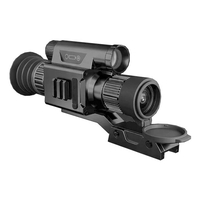
Fuego DS-X7 4K Day & Night Vision Rifle Scope
via Uttings
£299.99
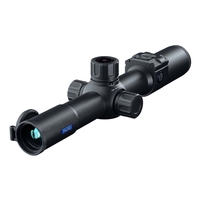
Pard Night Stalker Mini Night Vision Riflescope - 35mm
via Uttings
£339.00
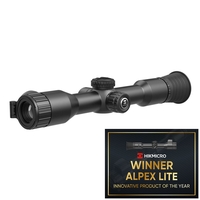
HIKMicro Alpex 4K Lite Digital Day/Night Riflescope
via Uttings
£399.00
Buying Advice
The most important specifications to scrutinise on any budget night vision scope are sensor resolution, magnification range, IR illuminator wavelength and power, detection and recognition range, and recoil rating. Sensor resolution is usually quoted in pixels (e.g., 1024×768 or 1920×1080); higher resolution means a clearer image, but at this price bracket most units sit around 1024×768, which is perfectly serviceable for identifying a fox at 150–200 metres. Magnification on digital units is typically listed as optical and digital combined — be aware that heavy digital zoom degrades image quality significantly. IR illuminator wavelength is usually 850 nm (faintly visible red glow) or 940 nm (invisible to both human and animal eyes but produces a dimmer image). For foxing, 850 nm is generally preferred for its stronger illumination, as foxes are not particularly spooked by the faint glow. Recoil rating should be checked against your calibre: .223 Rem generates roughly 4–5 joules of recoil energy, while .243 Win sits around 8–11 joules. Ensure the scope is rated accordingly.
At the sub-£300 tier, you are firmly in the entry-level bracket of digital night vision. Expect a functional but not cinematic image, adequate IR range out to around 200–250 metres in good conditions, basic video recording via micro-SD, and a plastic or lightweight alloy housing. Moving up to the £300–£500 mid-tier bracket brings noticeably sharper sensors, longer-range IR illuminators, more robust recoil resistance, better battery life, and often a stadiametric rangefinder reticle. Above £500, you enter semi-professional territory with HD sensors, laser rangefinders, Wi-Fi streaming, and ballistic calculators. For straightforward night vision foxing on a budget, however, a well-chosen sub-£300 unit will do the job — just manage your expectations regarding image clarity at extreme range and in very low-contrast scenes.
Common mistakes buyers make in this category include confusing digital night vision with thermal imaging, underestimating the importance of a good IR illuminator, and buying a scope not rated for centrefire recoil. Digital NV needs some ambient or infrared light to work — in a pitch-black barn with no IR, you will see nothing. Thermal scopes detect heat signatures and work in total darkness, fog, and light cover, but they cost significantly more (typically £800+). Another frequent error is assuming any night vision device can simply clip onto a day scope; true clip-on add-ons are specifically designed for this with a through-view optical path and tend to be more expensive. A standard digital NV scope replaces your day optic for the night session. Finally, always zero your NV scope separately — do not assume your day-scope zero transfers, even with a clip-on.
UK law does not restrict the purchase or ownership of digital night vision or thermal optics — they are freely available to buy. However, using them while shooting obviously requires appropriate firearms certificates and landowner permissions, and you must comply with all relevant legislation including the Wildlife and Countryside Act 1981 and any General Licence conditions for pest species. For foxing, most UK shooters use .223 Remington or .243 Winchester on an FAC rifle; .22 LR and .17 HMR are popular for rabbits and rats at closer range. If you are using a sub-12 ft/lb air rifle for ratting, a night vision scope adds useful capability, but remember the effective range of a spring-powered air rifle is realistically 50–75 yards at most — do not expect to shoot vermin at 150 metres with a springer regardless of how good your optic is. Purchase from reputable UK dealers such as Best Fox Call, Night Master, Thomas Jacks, or Optical Warehouse for proper warranty support and returns.
Matching the scope to your specific use case is essential. If you only fox on open farmland at 100–200 metres, sensor resolution and IR range are your priorities — look for the best sensor you can afford and a powerful 850 nm illuminator, or plan to add an aftermarket IR torch. If you shoot in woodland or around farm buildings at closer quarters (50–100 metres), a wider field of view and faster target acquisition matter more than raw detection range. For rabbit and rat shooting at shorter distances with rimfire or air rifles, a lower-magnification unit with a clear image is ideal. Consider weight too: a heavy scope on a light rimfire rifle creates a poor balance. And if you want to use the same rifle for day and night work, investigate whether a clip-on adaptor at slightly above this budget might save you the hassle of re-zeroing between sessions.
In the sub-£300 digital NV market, Pard dominates UK mindshare and dealer shelves. Their NV007 and NV008 series established the brand as the go-to for affordable night vision foxing, and successive generations have improved sensor quality and reliability. Pard night vision scope models are widely stocked by UK specialists, meaning spare parts, accessories, and community knowledge are readily available. Hikmicro has entered the market aggressively, though their strongest offerings tend to sit just above this budget. Other brands appearing at this price include Sytong and Bestguarder. When evaluating lesser-known brands, check for UK warranty support and confirmed recoil ratings — a scope that fails after fifty rounds of .243 is no bargain at any price. Community forums such as The Hunting Life and Pigeon Watch are invaluable for real-world feedback from UK shooters using these products in British conditions.
Frequently Asked Questions
What is the best budget night vision scope for foxing in the UK under £300?
In 2026, the Pard NV007 series remains one of the most popular and widely recommended options for night vision foxing under £300 in the UK. It offers a usable 1024×768 sensor, integrated IR illuminator, and proven recoil resistance for .223 and .243 calibres. Alternatives from Sytong also perform well at this price. The best choice depends on whether you need a rear add-on style or a standalone scope, so check compatibility with your rifle and shooting style.
Are Pard digital night vision scopes any good for fox shooting compared to Hikmicro at this price?
Pard night vision scope models have a strong track record in the UK foxing community, with years of proven field use and excellent dealer support. Hikmicro produces excellent digital and thermal optics, but their most competitive NV units tend to start above £300, making Pard the more accessible option at this budget. Where Hikmicro edges ahead is in sensor quality and software refinement on their mid-range models. At the strict sub-£300 bracket, Pard generally offers better value and wider availability for UK fox shooters.
Can you use a budget night vision scope as a clip-on add-on for an existing day scope?
Some budget digital NV devices, like certain Pard NV007 variants, are designed as rear-mounting add-ons that attach to the eyepiece of your existing day scope, effectively turning it into a night vision setup. This is not the same as a true front-mounted clip-on, which sits ahead of the day scope's objective lens and tends to cost significantly more. Rear add-ons work well but may require re-zeroing and can alter eye relief. A standard standalone digital NV scope replaces your day optic entirely and cannot simply clip onto another scope.
What is the difference between a digital night vision scope and a thermal scope for foxing?
A digital night vision scope uses a CMOS or CCD sensor to amplify available light and infrared illumination, producing a green, black-and-white, or colour image on an internal display. It needs at least some light — typically from a built-in or external IR illuminator — to function. A thermal scope detects heat radiation emitted by objects and animals, creating a heat map image that works in total darkness, through light fog, and in cluttered backgrounds. Thermal is superior for detection but costs considerably more, typically £800 and upward for a usable foxing unit. At the sub-£300 level, digital NV is your only realistic option.
Do you need an IR illuminator with a budget night vision scope for fox and rabbit shooting?
Most budget digital night vision scopes include a built-in IR illuminator, but its range and power are often limited — typically effective to around 100–200 metres. For night vision foxing at longer ranges or in very dark conditions with no moonlight, an external IR illuminator torch significantly improves image brightness and detection range. An 850 nm illuminator gives a stronger image but emits a faint red glow; a 940 nm unit is fully covert but dimmer. For rabbit shooting at closer ranges, the built-in IR is usually sufficient.
Is a digital night vision scope legal to buy and use for foxing in the UK?
Yes, there are no UK legal restrictions on purchasing, owning, or using digital night vision or thermal optics. You do not need any special licence for the optic itself. However, using any scope while shooting obviously requires a valid Firearms Certificate for the rifle, appropriate landowner permission, and compliance with all relevant wildlife legislation. Fox control is legal on land where you have permission, but always check the latest General Licence conditions for other pest species you may be targeting.
What calibre rifles work best with budget digital night vision scopes for UK foxing?
The .223 Remington is the most popular UK foxing calibre and generates moderate recoil that virtually all budget NV scopes can handle. The .243 Winchester is also widely used but produces more recoil, so always verify the scope's recoil rating before mounting it on a .243 or anything larger. For rabbit and rat shooting, .22 LR and .17 HMR are excellent choices and produce minimal recoil. Sub-12 ft/lb air rifles can also be used with NV scopes for ratting at close range, but their effective range is limited to approximately 50–75 yards.
How far can you realistically shoot foxes with a budget night vision scope under £300?
Most sub-£300 digital night vision scopes will allow you to detect a fox-sized animal at 200–250 metres and positively identify it for a shot at around 100–150 metres, depending on conditions, IR power, and ambient light. This aligns well with typical UK foxing ranges — the majority of shots on lamp or caller-drawn foxes are taken within 150 metres. In very dark, moonless conditions without a supplementary IR torch, effective identification range may drop significantly. Adding an external IR illuminator can extend usable range by 50–100 metres.
Can I record video through a budget night vision scope for foxing?
Most modern digital night vision scopes at this price level include built-in video recording to a micro-SD card, allowing you to capture footage of your sessions. Video quality is typically 720p or 1080p depending on the model. Some units also offer Wi-Fi connectivity to stream a live image to your phone, which is useful for showing companions what you see or reviewing shot placement. Recording can be valuable for land management records, social media content, and reviewing your shooting technique after a session.
Related guides
Our 2026 buyer's guide to the best budget night vision scopes under £500 for UK hunters. Covers digital vs Gen 1, clip-ons, fox and rabbit shooting, plus PARD picks.
Best Night Vision Clip-Ons & Add-Ons for UK Shooters in 2026Our 2026 buyer's guide to the best night vision clip-on scopes for UK foxing and pest control. Covers budget to premium add-ons, PARD models, IR illuminators, law and mounting tips.
Best Night Vision Scopes for Fox Shooting at Night (2026)Definitive UK buyer's guide to the best night vision scopes for foxing in 2026. Digital vs intensifier, legal requirements, budget picks under £1,000 and expert buying advice.
Best Night Vision Scopes for UK Hunting in 2026Our expert UK guide to the best night vision scopes for hunting in 2026. Covers digital vs intensifier, legality in England, Scotland and Wales, top picks, and clip-on options.
Best Night Vision Scopes UK 2026Compare the best night vision scopes in the UK for foxing, rabbit control and pest management. Digital NV vs image intensifier vs thermal — live UK prices.
Not sure which scope is right for you?
Try our AI-powered scope finder — answer a few questions and get personalised recommendations.
Find My Scope →Get a UK scope tip every day
Follow AiScopes on Facebook for daily buying guides, deals and gear advice.
Follow on Facebook