Best LPVO Scopes for Driven Shooting in 2026
By Peter Makulek · Senior Optics Editor · · Live prices from UK retailers
Driven shooting in the UK—whether you are standing at a peg waiting for pheasants to curl overhead or posted on a woodland ride during an organised wild boar stalk on the Continent—demands a scope that can acquire fast-moving game in a fraction of a second and still deliver a precise shot. Traditional low-magnification fixed-power scopes and red dots have served this role for decades, but the latest generation of low power variable optics (LPVOs) in 1-6x and 1-8x configurations offer a compelling blend of both-eyes-open speed at 1x and enough magnification to positively identify quarry and place shots ethically at moderate range. In this guide we break down the best LPVO scope options for UK shooters heading into the 2026 season.
The rise of the LPVO in competitive PRS and tactical circles has driven extraordinary improvements in glass quality, reticle illumination, and mechanical robustness—benefits that translate directly to the driven shooting field. A well-chosen 1-6x scope UK shooters mount on a .243 or .308 stalking rifle can double as a highly effective driven shooting optic, giving genuine versatility without swapping glass between outings. The key is understanding which optical and mechanical features actually matter when birds are streaming overhead or a boar breaks cover at forty metres, and which are marketing noise.
Choosing the best scope for driven shooting is not simply about buying the most expensive optic on the market. Eye relief, field of view at 1x, the quality and brightness of the illuminated reticle dot, and the speed of the magnification ring all play critical roles. Weight matters too: a heavy scope on a lightweight driven-game rifle ruins the balance and slows your swing. UK buyers also face practical considerations around availability, warranty support, and compatibility with popular calibres such as .243 Win, 6.5 Creedmoor, .308 Win, and various shotgun-calibre slug guns used on the Continent.
In this 2026 buying guide we shortlist the best LPVO scopes currently available in the UK market, explain the technical specifications that separate a competent driven shooting scope from an outstanding one, and answer the real questions UK shooters are asking—from budget picks under £500 to flagship glass that will last a lifetime. Whether you are new to using a scope for fast-moving game or upgrading from a red dot, read on for our in-depth, editorially independent advice.
Top Picks — Live UK Prices

Nikko Stirling Diamond Long Range 30mm Tactical 4-16x50 IR Rifle Scope
via Uttings
£199.00
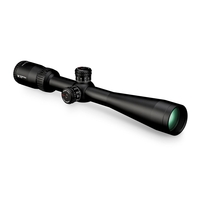
Vortex Diamondback Tactical 4-12x40 Riflescope - VMR-1 Reticle (MOA)
via Uttings
£299.00

Vortex Diamondback Tactical 4-12x40 VMR-1 Riflescope
via BushWear
£315.00
Buying Advice
The single most important specification for a driven shooting optic is true 1x magnification with a wide, forgiving eye box and generous field of view. At 1x, a good LPVO should feel almost like shooting with both eyes open and no optic at all—there should be minimal tunnel effect, no visible vignetting, and the illuminated centre dot or crosshair should appear to float over the target much like a reflex sight. Look for models advertising a field of view of at least 33 metres at 100 metres (approximately 100 feet at 100 yards) on the lowest setting. Eye relief of 90–100 mm is comfortable for most rifle stocks and helps prevent scope-bite under recoil. On the magnification ring, a throw lever is almost essential: you need to be able to snap from 1x to 4x or 6x in a single, instinctive wrist movement.
Budget tiers in the UK LPVO market break down roughly as follows. Entry-level models from brands like Vortex (Crossfire II or Strike Eagle lines), Primary Arms, and some Bushnell offerings sit under £350 and deliver surprisingly good optical performance for the money—adequate for occasional driven days and range work. Mid-range options between £400 and £900, including scopes from Leupold, Burris, and Meopta, offer noticeably better glass coatings, more precise turrets, and brighter daylight-visible illumination. Premium and flagship LPVOs from Swarovski, Kahles, Zeiss, Schmidt & Bender, and Nightforce sit above £1,000—often well above—and provide the best edge-to-edge clarity, colour fidelity, and bombproof mechanical reliability. For a dedicated driven shooting scope under £500, focus your search on the upper end of entry-level and lower mid-range, prioritising illumination brightness and true 1x feel over turret features you will rarely use in the field.
Common mistakes UK buyers make when choosing a scope for driven shooting include over-specifying magnification, ignoring weight, and neglecting illumination quality. A 1-8x or 1-10x LPVO sounds appealing on paper, but the additional glass elements required for higher top-end magnification often mean a heavier scope with a slightly less forgiving eye box at 1x—exactly the trade-off you do not want when swinging onto a fast-crossing pheasant. Similarly, many cheaper LPVOs have illuminated reticles that wash out in bright daylight; if the dot is not clearly visible against a winter sky at maximum brightness, it defeats the purpose. Always test illumination in realistic lighting before committing, and check that the scope balances well on your specific rifle.
UK-specific context matters. Under current firearms legislation, LPVOs are unrestricted accessories and can be fitted to any rifle or shotgun for which you hold the appropriate certificate. For driven pheasant and partridge shooting with a rifle (where permitted by the land and conditions of your FAC), popular calibre choices include .223 Rem, .243 Win, and increasingly 6.5 Creedmoor—all mild-recoiling rounds that pair beautifully with a lightweight 1-6x scope. For wild boar, which is a niche but growing discipline in the UK and a common Continental pursuit, .308 Win and .30-06 are standard, and a 1-6x or 1-8x LPVO is arguably the ideal optic for close-to-mid-range shots in thick cover. Purchase from established UK retailers such as RUAG, Optics Warehouse, or Jackson Rifles for proper warranty support and correct import documentation.
Matching the LPVO to your use case requires honest self-assessment. If ninety per cent of your shooting is driven game at ranges inside 80 metres, prioritise true 1x performance, daylight-bright illumination, and a simple, bold reticle—a centre dot or crosshair with a dot is ideal. If you also stalk or shoot foxes at longer range with the same rifle, a 1-8x with a subtension-marked reticle (calibrated in MRAD or MOA) gives you holdover references out to 300 metres or more without adjusting turrets. Second focal plane (SFP) reticles keep the dot or crosshair the same apparent size across the zoom range, which most driven shooters prefer for consistency; first focal plane (FFP) reticles are more useful if you rely on ranging or holdover marks at varying magnifications, but the reticle can appear very fine at 1x, which slows acquisition.
The brand landscape for LPVOs in the UK is broad. European optics houses—Kahles (the K18i is a benchmark), Swarovski (Z8i 1-8x), Zeiss (V8), and Schmidt & Bender (Exos)—dominate the premium tier and offer outstanding glass suited to low-light European shooting conditions. American brands like Vortex (Razor Gen III, PST Gen II), Nightforce (NX8, ATACR), and Leupold (VX-6HD) have strong UK followings, especially among PRS competitors who double-use their optics for driven game. Japanese-made optics from the likes of March and Minox also deserve consideration. Newer entrants like Pard, known primarily for digital night-vision devices, have begun expanding their optics range—worth watching, though their traditional LPVO offerings are still maturing. Whatever brand you choose, ensure it has a UK-based service centre or authorised dealer network for hassle-free warranty claims.
Frequently Asked Questions
What magnification range do I need for driven pheasant and wild boar shooting in the UK?
For driven pheasant and partridge, the vast majority of shots are taken inside 50 metres—often much closer—so a 1-6x LPVO is more than sufficient. For wild boar in woodland, shots rarely exceed 80–100 metres, making 1-6x ideal and 1-8x a comfortable maximum. Higher magnification is unnecessary and adds weight and complexity; the critical factor is a true, distortion-free 1x setting with a bright illuminated reticle for rapid target acquisition on fast-moving game.
Is a 1-6x LPVO better than a red dot for driven shooting?
A quality 1-6x LPVO at 1x behaves very similarly to a red dot sight—both eyes open, illuminated aiming point, wide field of view—but with the added versatility of variable magnification for target identification and longer shots. The trade-off is slightly more weight and a marginally less forgiving eye box compared to the best reflex sights. For a rifle that serves double duty (driven game and stalking), the LPVO is almost always the better choice. For a dedicated driven-game-only setup where ultimate speed matters, a premium red dot remains hard to beat.
What is the best LPVO scope for driven shooting under £500 in the UK?
At this price point, the Vortex Strike Eagle 1-6x24 and the Primary Arms SLx 1-6x24 with ACSS reticle are strong contenders, offering daylight-visible illumination and genuine 1x performance. The Burris RT-6 and Bushnell AR Optics 1-6x are also worth considering. Focus your evaluation on illumination brightness in daylight, the quality of the 1x image, and overall weight. A driven shooting scope under £500 will not match premium European glass, but modern manufacturing means you can get a very capable optic without breaking the bank.
Do I need a first or second focal plane reticle for driven shooting?
For driven shooting, a second focal plane (SFP) reticle is generally preferred. In an SFP scope the reticle stays the same apparent size regardless of magnification, meaning your illuminated dot or crosshair is bold and easy to pick up at 1x—exactly what you need for fast-moving game. First focal plane (FFP) reticles shrink at lower magnifications, which can make the aiming point too fine for rapid acquisition. FFP is better suited to precision rifle disciplines where you use reticle subtensions for ranging and holdover at varying zoom levels.
Which UK-legal calibres and rifles pair best with a low-power variable optic for driven game?
In the UK, calibre choice depends on your quarry and FAC conditions. For driven pheasant and partridge where rifle use is permitted, .223 Rem and .243 Win are popular, offering low recoil and flat trajectories suited to lightweight LPVO-equipped rifles. For wild boar (primarily on the Continent, though UK opportunities exist), .308 Win and .30-06 are standard. Rifles like the Blaser R8, Sauer 404, Tikka T3x, and Browning BAR in semi-auto configuration are all commonly paired with 1-6x or 1-8x LPVOs. Ensure your rifle's rail or ring setup allows correct eye relief for your chosen scope.
What reticle style is best for fast-moving game with an LPVO?
A simple illuminated centre dot, or a fine crosshair with a bold illuminated dot at the intersection, is ideal for driven shooting. Complex Christmas-tree or hash-marked reticles designed for long-range precision work add visual clutter that slows acquisition when a bird or boar appears for only a second or two. The illuminated dot should be daylight-visible at maximum brightness—look for specifications quoting output equivalent to or above a quality red dot sight. Some shooters prefer a small circle-dot reticle, which frames the target and speeds up alignment.
How important is eye relief and eye box for a driven shooting LPVO?
Extremely important. Driven shooting demands an instinctive, heads-up gun mount followed by immediate target acquisition through the scope. If the eye box (the three-dimensional zone behind the eyepiece where you see a full image) is narrow or finicky, you will waste precious fractions of a second finding the correct head position. Aim for at least 90 mm of eye relief and look for scopes marketed as having a forgiving or generous eye box. Premium LPVOs from Kahles, Swarovski, and Zeiss excel here, but several mid-range options also perform well.
Can I use my PRS competition LPVO for driven shooting as well?
Yes, many PRS shooters in the UK successfully repurpose their 1-6x or 1-8x competition LPVOs for driven game. Models like the Vortex Razor Gen III 1-10x, Nightforce NX8 1-8x, and Kahles K18i are popular crossover choices. The main consideration is weight: PRS scopes often sit on heavy chassis rifles and the scope itself may be 600–700 g, which can unbalance a lighter sporting rifle. Also check that the reticle is not overly complex for fast snap shooting—a BDC or MRAD grid is useful at range but can clutter the sight picture at 1x on a driven day.
Are Pard optics suitable for driven shooting in the UK?
Pard has built a strong reputation in the UK market for digital night-vision and thermal devices, and the brand is increasingly expanding into conventional and smart optics. While their core strength remains in digital sighting systems, it is worth watching their product line as it develops. For a traditional LPVO for driven shooting in 2026, established optical brands with proven daylight glass quality are the safer choice, but Pard's integration of digital features could appeal to shooters who want recording capability or enhanced low-light performance from a single device.
Related guides
Choosing a scope for urban precision rifle shooting in the UK? Our 2026 guide covers magnification, reticle, turret specs…
.22 Long Range Scope Recommendations for UK ShootersExpert UK guide to choosing the best scope for .22 long range shooting. Covers magnification, turrets, reticles, budget tiers in GBP…
Best Long-Range Scopes 2026: BDC Reticles vs Exposed TurretsDefinitive UK buyer's guide to the best scopes for long-range shooting in 2026. Compare BDC reticles vs exposed turrets for 300–1,000 yard shots…
Best Long-Range Scopes UK 2026: Mid-Budget Buyer's GuideDiscover the best scopes for long-range shooting in the UK for 2026. Our expert guide covers FFP vs SFP, MOA vs MRAD…
Driven hunt rifle scopes: the best optics for UK driven shooting in 2026Driven hunt rifle scopes compared for 2026. UK buyer's guide to magnification, reticles, red dots and budget picks for fast shots on driven deer and boar.
Long Range Optics UK: Best Hunting Scopes for 2026The best long range optics UK hunters can buy in 2026: magnification that is actually useful past 500m, FFP vs SFP, reticles…
Not sure which scope is right for you?
Try our AI-powered scope finder — answer a few questions and get personalised recommendations.
Find My Scope →Get a UK scope tip every day
Follow AiScopes on Facebook for daily buying guides, deals and gear advice.
Follow on Facebook