Vortex Viper PST Gen I 6–24×50 FFP EBR-1 MOA — Is It Worth £440?
By Peter Makulek · Senior Optics Editor · · Live prices from UK retailers
The Vortex Viper PST Gen I 6–24×50 FFP has been circulating on UK forums and selling platforms for several years now, and listings around the £440 mark — often bundled with a scope mount, sunshade, and throw lever — continue to attract serious attention from ballistic-minded shooters. It occupies an interesting position: a first-focal-plane optic with an MOA-based EBR-1 reticle, sitting at a price point well below premium European glass but above budget imports. For UK shooters who zero at 100 yards and dial or hold over for longer engagements, this combination remains genuinely relevant, even as the Gen II has taken the spotlight.
Why does this scope keep generating questions? Partly because the UK long-range and practical rifle community has grown enormously, with disciplines like PRS-style competition and NRL-influenced club shoots becoming mainstream at ranges from Bisley to Diggle. An FFP reticle that reads true at every magnification is a significant tactical advantage when engaging targets at varied distances, and the EBR-1 MOA subtensions let you range, hold wind, and call corrections without converting between systems — assuming you think in MOA rather than MRAD. At this price, bundled with quality accessories, it represents a compelling package.
Choosing the right rifle scope for ballistic work in the UK demands more thought than simply picking high magnification. Factors such as reticle plane (FFP vs SFP), adjustment granularity (¼ MOA clicks in this case), optical clarity in the grey British light, turret reliability over hundreds of dial revolutions, and the quality of the scope mount all matter enormously. A poorly matched mount or ring set can introduce cant, shift zero, and waste the precision your scope was designed to deliver. This guide examines every angle so you can decide whether the Viper PST Gen I at this price is the right investment for your shooting.
We also place this scope in the broader UK market context. Whether you are stepping up from an entry-level Vortex Crossfire on a .223 varmint rifle, considering a move from SFP to FFP for practical rifle comps, or evaluating whether to spend a little more on a Vortex Viper PST Gen II, Athlon Ares ETR, or even a Leupold Mark 5HD, this guide covers the ground. We will not shy away from discussing the scope's age, what the Gen I gives up compared to newer designs, and where it still punches above its weight in the UK shooting landscape.
Top Picks — Live UK Prices
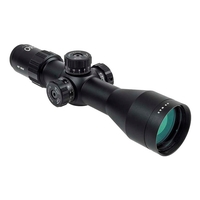
PAO HD MAX 4-16x44 SF FFP Ultra Compact Riflescope
via Uttings
£219.00
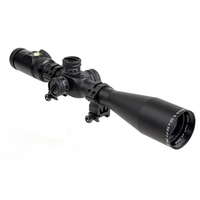
PAO F1 5-20x50 IR SF FFP Rifle Scope
via Uttings
£239.00

Wulf Tornado FFP 6-24x50 W-MIL3 Side Focus Rifle Scope
via BushWear
£249.99
Buying Advice
Understanding the key specifications of the Viper PST Gen I 6–24×50 is essential before committing. The 6–24× magnification range is versatile for UK ballistic work — 6× is comfortable for rapid target acquisition on practical rifle stages, while 24× provides the resolution needed to read mirage and spot splash at 600 yards and beyond. The 50mm objective gathers enough light for dawn and dusk stalking sessions or late-season range days. FFP means the EBR-1 reticle subtensions remain accurate at every power setting: each hash mark represents a fixed MOA value whether you are dialled to 6× or 24×. Turret clicks are ¼ MOA (approximately 0.7 cm at 100 metres), and the exposed elevation turret with a capped windage turret reflects a design philosophy biased towards dialling elevation and holding wind — a sound approach for most UK long-range disciplines.
In terms of budget tiers in the UK, sub-£300 buys capable FFP scopes from brands like Athlon (Argos BTR or Midas TAC) and some Bushnell models, though optical clarity and turret feel may lag behind. The £400–£550 bracket — where this Viper PST Gen I sits — delivers noticeably better glass coatings, more precise turret mechanics, and typically sturdier construction. Stepping up to £650–£900 brings you into Gen II Viper PST or Athlon Ares ETR territory with improved optical coatings, zero-stop turrets as standard, and refined reticle designs. Above £1,000, Leupold Mark 5HD, Zeiss Conquest V4, and March optics offer elite-tier glass and build quality. At £440 bundled with mount, shade, and throw lever, the Gen I package sits at the top end of its tier and represents genuine value if the accessories are of decent quality.
Common mistakes UK buyers make when purchasing a scope like this include overlooking the scope mount. A bundled mount can be anything from a solid Warne or Sportsmatch to a generic import that introduces flex and zero-shift. Always verify the mount brand, ring height, and base type (Picatinny/Weaver versus dovetail). Another frequent error is assuming FFP is universally superior — at low magnification, an FFP reticle can appear very fine and hard to see in poor light, which matters greatly during a British winter dusk. Additionally, some shooters buy MOA-turreted scopes when their ballistic software, drop charts, and shooting buddies all work in MRAD; consistency across your system is more important than which angular unit you choose.
For UK-specific context, this scope is most at home on FAC-rated centrefire rifles — bolt-action .308 Win, 6.5 Creedmoor, or .223 Rem platforms used for target shooting, practical rifle, and medium- to long-range vermin control. It is not an air rifle scope: the close-parallax adjustment typically bottoms out around 15–20 yards, and the weight and size are excessive for a sub-12 ft-lb airgun. For deer stalking, particularly roe and muntjac where shots may be taken at dawn or dusk, the 50mm objective helps, but dedicated stalking scopes with wider fields of view and lower magnification floors (such as 2.5–10× or 3–18×) are often preferred. Remember that in England and Wales, centrefire rifles require a Firearms Certificate; Scotland and Northern Ireland have their own licensing regimes. Always consult your local police force or BASC for current guidance.
Matching this scope to your use case is the critical final step. If you shoot PRS-style or NRL-influenced club competitions in the UK, the 6–24× range and FFP MOA reticle are well suited, though check whether your club scores in MOA or MRAD — many UK PRS clubs lean MRAD. For pure benchrest or F-Class, you may prefer a higher-magnification dedicated target scope. For general long-range plinking and varminting with a .223 or .22-250, it is an excellent match. If you are a stalker who also enjoys range days, consider whether a second dedicated stalking optic might serve you better than trying to make one scope do everything.
The brand landscape in the UK for FFP rifle scopes has expanded dramatically. Vortex remains dominant in the mid-price segment thanks to their unconditional lifetime warranty, excellent UK distribution through Highland Outdoors and other dealers, and a broad product range. Leupold and Bushnell have strong followings among traditionalists and competition shooters respectively. Athlon has disrupted the market with aggressive pricing on capable glass. For thermal and night-vision scopes — increasingly popular for fox and pest control — Pulsar and HikMicro lead the UK market, though these sit in a completely different category from the Viper PST. Zeiss and March occupy the premium end where UK stalkers and benchrest shooters expect the finest optical clarity. Within this landscape, the Viper PST Gen I at £440 bundled remains a respected and well-proven choice — not cutting-edge, but dependable and backed by one of the best warranties in the business.
Frequently Asked Questions
Is the Vortex Viper PST Gen I still worth buying in 2026?
Yes, for the right buyer. The Gen I offers solid optical quality, reliable ¼ MOA turrets, and a proven FFP EBR-1 reticle at a price well below the Gen II. It lacks features like a zero-stop turret and the improved lens coatings of the Gen II, but at £440 bundled with mount, sunshade, and throw lever it remains competitive. If your budget cannot stretch to Gen II pricing (typically £650+), the Gen I is a smart choice for UK ballistic shooting.
What is the difference between FFP and SFP, and why does it matter?
In a first-focal-plane (FFP) scope like this one, the reticle scales with magnification, so the subtension values marked on the EBR-1 are accurate at every power setting. In a second-focal-plane (SFP) scope, the reticle stays the same size and the subtensions are only accurate at one magnification (usually the highest). FFP is generally preferred for practical rifle and PRS-style shooting where you engage targets at varying distances and magnifications. The trade-off is that at low magnification the FFP reticle can appear very thin.
Can I use this scope on a sub-12 ft-lb air rifle?
It is not ideal. The Viper PST Gen I's parallax adjustment typically only goes down to around 15–20 yards, whereas air rifle scopes need parallax settings as low as 10 yards. The scope is also heavy and large relative to most air rifle platforms. Additionally, spring-piston air rifles produce a unique double-recoil impulse that can damage scopes not specifically rated for it. For sub-12 ft-lb airguns, purpose-built air rifle scopes with close parallax adjustment and springer-rated construction are a far better choice.
Should I choose MOA or MRAD for UK ballistic shooting?
Neither system is inherently superior — what matters is consistency. If your ballistic solver, drop chart, spotting partner, and turret all work in the same unit, you will make faster and more accurate corrections. Many UK PRS and practical rifle clubs have shifted towards MRAD because metric measurements align neatly (0.1 mil = 1 cm at 100 m). However, MOA remains popular and the finer ¼ MOA click (roughly 0.7 cm at 100 m versus 1 cm for 0.1 mil) can feel more precise for some shooters. Choose the system your shooting community uses.
How important is the scope mount, and should I trust a bundled one?
The mount is critically important — it is the mechanical link between your rifle and your scope. A poor mount introduces zero-shift, cant, and potential damage to the scope tube. Bundled mounts vary hugely in quality; some sellers include reputable brands like Warne or Sportsmatch, while others use unbranded imports. Always check the brand, material, and clamping mechanism before relying on a bundled mount. If in doubt, budget an extra £40–£80 for a quality ring set or one-piece mount matched to your rifle's rail type.
What rifles suit the 6–24×50 magnification range in the UK?
This magnification range is best suited to FAC-rated centrefire rifles used for target shooting, practical rifle competition, and longer-range vermin control — calibres such as .223 Rem, 6.5 Creedmoor, and .308 Win. It also works well on rimfire target rifles for disciplines like NRL22 where the higher magnification helps resolve small targets. For deer stalking, 24× is more than most shooters need, and the relatively narrow field of view at 6× can make fast target acquisition harder than a lower-range optic would provide.
Does the Vortex lifetime warranty apply in the UK?
Vortex offers their VIP (Very Important Promise) unconditional lifetime warranty, which covers repair or replacement of the scope regardless of fault — even if you did not buy it first-hand. UK customers can process warranty claims through authorised UK distributors such as Highland Outdoors or Thomas Jacks. Turn-around times vary, but the policy is widely regarded as one of the most generous in the optics industry and adds genuine long-term value to any Vortex scope purchase.
Is £440 a fair price for a used Vortex Viper PST Gen I with accessories?
At the time of writing, used Gen I Viper PSTs in good condition typically sell for £300–£450 on UK platforms depending on condition and included accessories. A boxed example with a quality scope mount, sunshade, and throw lever at £440 including postage is towards the upper end but reasonable if everything is in excellent condition. Always verify the scope's serial number, check for turret tracking issues, and confirm the mount is a reputable brand rather than a generic inclusion to justify the price.
What alternatives should I consider in the same price bracket?
At £400–£550, strong alternatives include the Athlon Midas TAC 6–24×50 FFP (MRAD or MOA), the Bushnell Match Pro 6–24×50 FFP, and occasionally a discounted Vortex Diamondback Tactical 6–24×50 FFP. If you can stretch your budget to £600–£700, the Vortex Viper PST Gen II offers improved glass, a zero-stop turret, and a more refined reticle. Each has trade-offs in optical quality, turret mechanics, and warranty support, so handle them in person at a UK dealer if possible before committing.
Related guides
Comprehensive UK guide to the Vortex Razor HD LHT FFP range. We cover reticle subtension, weight savings, MOA vs MRAD choices…
Element Helix 6-24×50 FFP — Is It Worth It?Element Helix 6-24×50 FFP rifle scope reviewed for UK shooters. We cover FFP reticle benefits, MRAD turrets, parallax setup…
Premium PRS Scopes Compared: ATACR vs Razor Gen 3 vs Mark 5HD vs NX6Nightforce ATACR, Vortex Razor HD Gen III, Leupold Mark 5HD and NX6 compared for UK PRS shooters — real trade-offs and honest opinions at the £1,800+…
Optic Risers: The Beginner's GuideWondering what an optic riser does and whether you need one? Our UK-focused 2026 guide explains heights, compatibility…
Hawke Airmax 3-12×44 SR6 – Is This the Best All-Round Airgun Scope?Hawke Airmax 3-12×44 with SR6 BDC reticle reviewed for UK shooters. Covers parallax, springer suitability, sub-12 ft-lb ballistics and how it compares…
Read next
- Vortex Optics UK
Vortex Optics UK: The Complete Vortex Scopes Guide for 2026
Not sure which scope is right for you?
Try our AI-powered scope finder — answer a few questions and get personalised recommendations.
Find My Scope →Get a UK scope tip every day
Follow AiScopes on Facebook for daily buying guides, deals and gear advice.
Follow on Facebook