Best Budget Fox Shooting Scopes Under £300 (2026)
By Peter Makulek · Senior Optics Editor · · Live prices from UK retailers
Choosing the best scope for fox shooting in the UK without breaking the bank has never been easier — or more confusing. The sub-£300 bracket in 2026 is packed with genuinely capable optics from brands like Hawke, MTC, and Nikko Stirling, all competing fiercely for the attention of foxers, pest controllers, and farmers who need reliable glass on a centrefire or rimfire setup. Whether you are lamping from a high seat, calling foxes across open pasture at 200 yards, or pairing a scope with a digital night vision clip-on from PARD, there is a strong option at every price point if you know what to look for.
Fox shooting in the UK demands a particular set of optical qualities. You are typically shooting in low light — at dawn, dusk, or after dark with artificial illumination or a night vision device. Targets are relatively small, often partially obscured by cover, and shot distances can range from 60 yards on a farm track to 250 yards across a stubble field. A fox shooting scope therefore needs excellent light transmission, a sensible magnification range, a reticle that aids range estimation or holdover, and robust construction that holds zero through recoil and harsh weather. Getting all of that for under £300 is the challenge this guide addresses.
This guide is written specifically for UK shooters. That means we consider the calibres most commonly used for foxing here — .223 Remington, .22-250, .243 Winchester, and occasionally .204 Ruger or .17 HMR for closer work — and the legal framework under which pest control operates. We focus on scopes available from UK retailers, priced in sterling, and suitable for the conditions you will actually encounter on British farmland. We do not cover air-rifle scopes here; sub-12 ft/lb air rifles lack the energy for fox-sized quarry and are effective only to around 50–75 yards, making them unsuitable for foxing.
Below, you will find our curated product picks drawn from current UK stock, followed by in-depth buying advice covering specifications, budget tiers, common mistakes, and how to match a scope to your exact foxing setup. We also answer the most frequently asked questions from UK shooters looking for the best budget scope for foxing in 2026. Whether this is your first dedicated fox shooting scope or an upgrade from a worn-out hand-me-down, this page aims to be the most complete resource you will find on fox shooting optics in the UK.
Top Picks — Live UK Prices

Vector Continental X6 1.5-9x42 German No4 Hunting Reticle Rifle Scope
via Optics Warehouse
£269.99
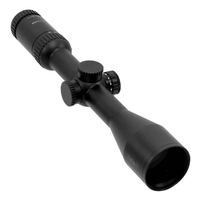
OptiMate Hunter 2-12x50 WA IR Rifle Scope
via Uttings
£279.99
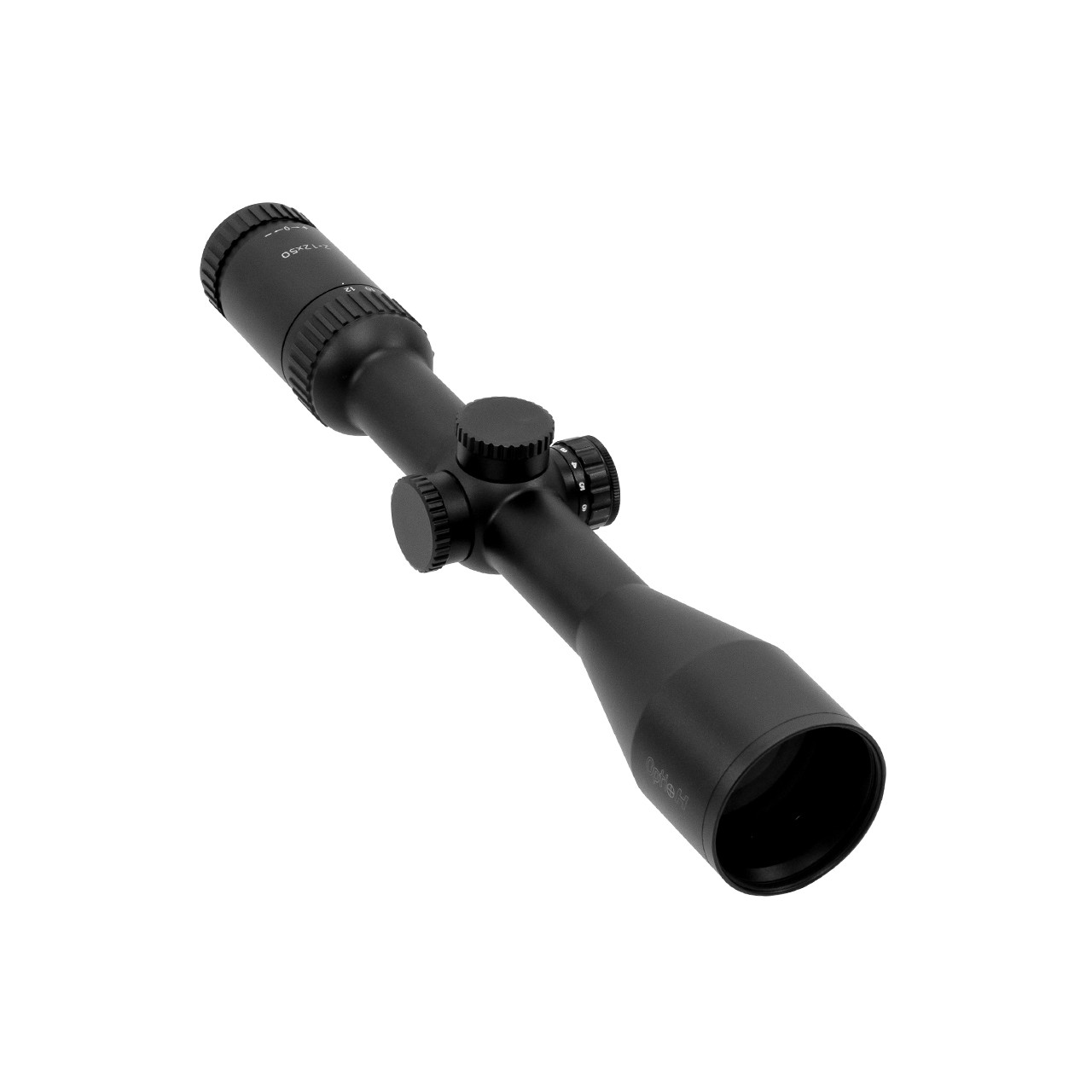
OptiMate Hunter 2-12x50 WA IR BT Rifle Scope
via Livens
£280.00
Buying Advice
Understanding the key specifications is essential before you spend a penny. Magnification range determines your versatility: a 4-16× or 6-24× scope covers everything from close-range ratting to 250-yard foxing across open ground. Objective lens diameter — typically 44 mm or 50 mm in this bracket — governs how much light the scope gathers, which directly affects dusk and dawn performance. Look for fully multi-coated lenses as standard; anything less will cost you brightness when you need it most. Tube diameter matters too: a 30 mm tube allows more internal adjustment range than a 1-inch (25.4 mm) tube, useful if you dial elevation for longer shots. Parallax adjustment, ideally a side-focus turret, lets you eliminate parallax error at the specific range you are shooting — critical for precise shot placement on a fox-sized target. If a scope quotes 'parallax-free at 100 yards' with no adjustment, be aware that at 200+ yards you may see target shift when you move your head behind the eyepiece.
In the sub-£300 market, there are broadly three tiers. Under £100 you can find entry-level scopes — often fixed-parallax models with simpler coatings — that will work for casual foxing at moderate ranges but may struggle in very low light and lack the turret precision for dialling at distance. Between £100 and £200 you enter a sweet spot where brands like Hawke and Nikko Stirling offer side-focus parallax, illuminated reticles, and multi-coated glass that genuinely performs in poor light. From £200 to £300 you get premium budget optics — models from MTC's Viper Connect range or Hawke's Sidewinder series — with features like locking turrets, first focal plane (FFP) reticle options, and glass quality that approaches mid-range scopes costing twice the price. Know your tier and do not expect £300 performance from a scope under £100.
The most common mistake buyers make is chasing maximum magnification. A 10-40× scope sounds impressive but at 40× the exit pupil shrinks dramatically, the field of view narrows to a sliver, and mirage becomes a real problem on warmer evenings. For foxing at typical UK distances, you will rarely need more than 16× or 20×. Another frequent error is ignoring eye relief: foxing calibres like .223 and .243 produce moderate recoil, but a scope with less than 80 mm of eye relief can still deliver a painful reminder if you mount it too close. Finally, many shooters buy a scope without considering whether it is compatible with a clip-on night vision unit. If you plan to add a PARD or similar digital device later, you need a scope with an objective bell diameter that accepts the clip-on adapter, and an eyepiece design that provides a clean image through the NV unit.
UK shooters must be aware of the legal context. Foxing is lawful pest control carried out with the landowner's permission, and there is no close season for foxes in England, Wales, or Scotland. You do not need a specific licence to shoot foxes, but you must hold the appropriate firearm certificate for your calibre. Night shooting is legal but some police forces require a specific condition on your FAC — always check your certificate conditions. When buying scopes, reputable UK dealers such as Uttings, The Sportsman Gun Centre, and online specialists stock all the brands discussed here and can advise on compatibility with your rifle and any clip-on devices. Buying from a UK dealer also ensures proper warranty support and avoids potential import complications.
Matching the scope to your specific use case is where the real value lies. If you shoot exclusively from a high seat over a known distance — say a bait point at 120 yards — a simpler scope with a duplex reticle and fixed parallax set near your shooting distance will serve you perfectly, and you can save money for ammunition and fieldcraft. If you roam farms calling foxes at unpredictable ranges from 80 to 250 yards, invest in side-focus parallax and a reticle with holdover marks — a BDC or mil-dot design calibrated in MRAD (where 0.1 mil equals 1 cm at 100 metres) lets you hold over quickly without touching the turrets. If lamping or pairing with a clip-on night vision device is central to your foxing, prioritise a scope with excellent light gathering, a large objective, and confirmed compatibility with devices like the PARD NV007 series. Think about how you actually shoot, not how the internet tells you to shoot.
The brand landscape in the UK's budget foxing segment is dominated by a handful of manufacturers who consistently deliver value. Hawke is arguably the market leader at this price point, with extensive UK-based support and a broad range covering every foxing need. MTC Optics, a British brand designed in the UK, has built a strong following among foxers with its Viper and Mamba lines offering genuinely impressive glass for the money. Nikko Stirling remains a solid choice at the lower end, particularly for shooters who want a capable scope without spending more than £150. PARD, while primarily known for digital night vision clip-ons and thermal devices, is increasingly relevant to foxers building a day-and-night system on a budget. When choosing a brand, consider warranty terms, UK parts availability, and the ease of getting a replacement or repair — all areas where established UK-stocked brands excel.
Frequently Asked Questions
What magnification range do you need for foxing at 100–250 yards on a budget?
For foxing across that range of distances, a variable scope in the 4-16× or 6-24× bracket is ideal. At the lower end you get a wide field of view for acquiring targets at closer ranges or in dense cover, while the upper end gives you enough detail to place a precise shot at 250 yards. Avoid going above 24× in a budget scope — image quality and brightness deteriorate at extreme magnifications, and the narrow field of view makes target acquisition slower in low light.
Can a scope under £300 handle both daytime foxing and pair with a night vision clip-on for lamping?
Yes, many scopes in the £150–£300 range are fully compatible with digital clip-on night vision units such as those from PARD. The key requirements are a suitable objective bell diameter for the clip-on adapter, good optical clarity so the NV device receives a clean image, and robust construction to handle the extra weight on the front of the scope. Check the clip-on manufacturer's compatibility list before buying, and ensure the scope's eyepiece design does not cause vignetting when the NV device is attached.
Are illuminated reticles worth paying extra for in a budget foxing scope?
For dedicated foxing, an illuminated reticle is a genuinely useful feature rather than a gimmick. At dusk and dawn — prime foxing times — a subtly lit centre dot or crosshair helps you pick up the aiming point against a dark background where a black reticle would disappear. Look for models with adjustable brightness and an off position between each setting so you can quickly toggle illumination without cycling through every level. The premium for illumination is typically modest in the sub-£300 bracket, often only £20–£40 more than a non-illuminated equivalent.
What is the best reticle type (BDC, mil-dot, or duplex) for fox shooting at varying ranges?
It depends on your shooting style. A BDC (bullet drop compensator) reticle with calibre-specific holdover marks is excellent if you shoot one calibre at known distances and want fast holdover without dialling turrets. A mil-dot or MRAD-based reticle (where 0.1 mil subtends 1 cm at 100 metres) is more versatile and allows you to estimate range and holdover regardless of calibre, though it requires some practice. A simple duplex reticle is perfectly adequate if you shoot at a single known distance, such as from a high seat over a bait point. For most roving foxers, a mil-dot or BDC reticle offers the best balance of speed and precision.
Which budget brands offer the best value fox shooting scopes in the UK?
Hawke, MTC Optics, and Nikko Stirling consistently lead the sub-£300 segment for UK foxers. Hawke offers the broadest range and strong UK dealer support, with models like the Vantage and Sidewinder lines well suited to foxing. MTC Optics, designed in the UK, punches above its weight on glass quality and features in the Viper and Mamba Pro series. Nikko Stirling is the go-to for shooters on a tighter budget who still want reliable glass with illuminated reticles and side-focus parallax. All three brands are widely stocked by UK retailers.
Do I need a first focal plane (FFP) or second focal plane (SFP) scope for foxing?
Most budget foxing scopes are SFP, meaning the reticle stays the same apparent size as you change magnification — holdover marks are only accurate at one specific power setting (usually the maximum). FFP scopes, where the reticle scales with magnification, keep holdover and ranging marks accurate at every power level, which is an advantage if you frequently change magnification in the field. FFP models are becoming more common under £300, particularly from MTC, but SFP remains perfectly adequate for most foxers provided you remember to set the correct magnification before using holdover marks.
How important is objective lens size for a foxing scope?
Objective lens size directly affects light gathering and, consequently, low-light performance — a critical factor for foxing at dawn and dusk. A 50 mm objective gathers more light than a 44 mm, producing a brighter image in dim conditions. However, a larger objective also means a taller scope, requiring higher mounts that raise your head position on the stock. For most foxing setups on a .223 or .243 bolt-action, a 50 mm objective with medium-high mounts is the standard choice. If you use a clip-on night vision device, the larger objective also provides a better image for the NV unit to work with.
What mounts and rings should I use with a budget foxing scope?
Do not undermine a decent scope with cheap mounts. For a 30 mm tube, use quality two-piece mounts or rings from brands like Sportsmatch, Hawke, or Warne — these are widely available from UK retailers for £20–£50. Ensure the mount height places the scope high enough to clear the objective bell and any iron sights, but low enough that your cheek weld on the stock is natural and repeatable. If you plan to attach a PARD or similar clip-on, check that the front ring does not obstruct the adapter. Torque ring screws evenly and to the manufacturer's specification to avoid damaging the tube or losing zero.
Is it worth buying a scope under £100 for fox shooting in the UK?
A scope under £100 can work for occasional foxing at moderate distances — say up to 150 yards in reasonable light — but you should set realistic expectations. At this price point, coatings are simpler, parallax is often fixed at 100 yards, turret adjustments may lack precision, and low-light performance will be noticeably weaker than a £200 scope. If budget is extremely tight, brands like Nikko Stirling offer capable entry-level models in this range. However, if foxing is a regular activity, saving for a scope in the £150–£250 bracket will pay dividends in image clarity, durability, and features like side-focus and illumination.
Related guides
Our 2026 UK buyer's guide to the best scopes for deer stalking under £300. Expert advice on magnification, low-light performance, reticles, and top budget picks for woodland and hill.
Best Driven Shooting Scopes Under £500 in 2026Discover the best scope for driven shooting in the UK under £500 for 2026. Expert advice on low-power variable optics, reticles, and budget brands like Vortex and Burris.
Best Scopes for Fox Shooting in 2026Our expert UK guide to the best scopes for fox shooting in 2026, covering thermal, night vision and day optics. Budget picks, brand comparisons and legal advice for foxing.
Best Air Rifle Scopes for Rabbit Shooting in 2026Discover the best scope for rabbit shooting in the UK for 2026. Expert advice on magnification, parallax, reticles and budget picks for airgun pest control.
Best Budget Bench Rest Scopes Under £500 (UK 2026)Our expert 2026 guide to the best scope for bench rest shooting UK. Compare precision optics under £500 with the magnification, turrets and parallax features that matter for group shooting.
Not sure which scope is right for you?
Try our AI-powered scope finder — answer a few questions and get personalised recommendations.
Find My Scope →Get a UK scope tip every day
Follow AiScopes on Facebook for daily buying guides, deals and gear advice.
Follow on Facebook