Best Scopes for Fox Shooting in 2026
By Peter Makulek · Senior Optics Editor · · Live prices from UK retailers
Fox shooting in the UK has undergone a quiet revolution in the past few years. Where once a lamping rig with a halogen spotlight and a standard day scope was the norm, the majority of serious fox controllers now rely on thermal or digital night vision optics. That shift has made choosing the best scope for fox shooting a far more complex decision than it used to be. Whether you are a farmer protecting lambing ewes, a gamekeeper managing a pheasant shoot, or a sporting shooter called in for pest control, your optic is now the single most important piece of kit after the rifle itself.
The UK foxing scene in 2026 is shaped by two key factors: the widespread availability of affordable thermal and night vision devices from brands like Pard and Hikmicro, and the enduring popularity of centrefire calibres such as .223 Remington, .22-250, and .243 Winchester for the job. Engagement distances typically range from around 80 yards out to 250 yards or more, though most ethical shots are taken inside 200 yards. That range envelope means your scope needs excellent low-light or no-light performance, reliable tracking, and enough magnification to positively identify your target – a legal and moral imperative under all circumstances.
Choosing the right scope for foxing means weighing up several competing priorities. A larger objective lens gathers more light for dawn and dusk work, but adds weight and height, potentially requiring taller mounts. A thermal clip-on adds huge versatility to a trusted day scope, but the combined cost can exceed a dedicated thermal unit. A standalone digital night vision scope is the budget-friendly entry point, yet image quality and detection range vary enormously between sub-£500 units and mid-range options. Understanding these trade-offs is the purpose of this guide.
Below, we break down the optics landscape for UK fox control in 2026. We cover dedicated thermal scopes, clip-on thermal imagers, digital night vision scopes, and high-quality day scopes suited to use with IR illuminators or as host optics for clip-ons. Every recommendation is made with the UK shooter in mind – considering our legal framework, our typical shooting distances and calibres, and the retailers and service networks available on these islands. Whether your budget is under £500 or well above £2,000, this guide will help you make a confident, informed choice.
Top Picks — Live UK Prices

Bsa Genesys Hunter 2.5-10x50 Ir Scope
via Sportsman Gun Centre
£253.99

Vector Continental X6 1.5-9x42 German No4 Hunting Reticle Rifle Scope
via Optics Warehouse
£269.99
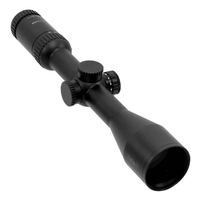
OptiMate Hunter 2-12x50 WA IR Rifle Scope
via Uttings
£279.99
Buying Advice
When evaluating any scope for fox shooting, start with the numbers that actually matter. For day and day/night scopes, objective lens diameter (measured in millimetres) determines light-gathering ability – 50 mm is a practical standard for foxing, offering a strong balance between brightness and bulk. Magnification range is equally important: a 4-16× or 3-12× variable gives you the flexibility to scan at low power and identify at high power. For thermal scopes, the critical specs are sensor resolution (384×288 is entry-level; 640×512 is the current sweet spot), NETD (thermal sensitivity – lower is better; under 25 mK is excellent), and refresh rate (50 Hz gives smooth panning). Detection range figures quoted by manufacturers are often optimistic, so look for independent user reports from UK conditions.
Budget tiers in the UK foxing optics market are broadly as follows. Under £500 you will find entry-level digital night vision scopes and basic IR clip-ons – units from Pard such as the NV007 series fall here, offering genuine capability for shots inside 150 yards. Between £500 and £1,500, the options expand significantly to include better digital NV units with recording, higher-resolution sensors, and entry-level thermal monoculars or clip-ons from Hikmicro. Above £1,500 you enter dedicated thermal riflescope territory, where Hikmicro and Pulsar dominate, offering 640-resolution sensors, onboard recording, ballistic calculators, and detection ranges beyond 1,500 metres. At every tier, you get tangible improvements in image quality, detection range, and durability – buy the best you can afford, but know that even budget kit is transformatively better than lamping.
Common mistakes UK buyers make when choosing a scope for foxing include over-prioritising magnification at the expense of field of view, which makes target acquisition painfully slow when scanning hedgerows and field margins at night. Another frequent error is buying a cheap thermal with a low refresh rate (below 25 Hz), which produces a jerky, laggy image that is difficult to shoot with confidently. Some shooters also neglect to check that their chosen scope or clip-on will physically clear their rifle's bolt handle, magazine, or moderator – always verify rail length, eye relief (ideally 80-100 mm for centrefire recoil), and mounting height before purchasing. Finally, ignoring the warranty and UK service support of a brand is a false economy; both Pard and Hikmicro now have established UK distribution and repair networks, which matters enormously.
UK-specific context is essential. Fox shooting is legal across England, Wales, and Scotland on land where you have permission, and most shooters will hold a firearms certificate (FAC) for a suitable centrefire rifle. The most common calibres for foxing are .223 Remington, .22-250 Remington, and .243 Winchester, all of which produce moderate recoil that any quality scope should handle without issue. There is no legal restriction on using thermal or night vision equipment for fox control, unlike in some European countries. Purchasing scopes from UK-based dealers such as Sporting Saint, Thomas Jacks, Edgar Brothers, or specialist online retailers ensures you receive a UK warranty, correct VAT treatment, and access to after-sales support. Always ensure your chosen optic is listed as ITAR-free if importing directly.
Matching the optic to your specific use case is the final piece of the puzzle. If you already own a proven day scope that is zeroed and trusted, a thermal clip-on is the most cost-effective upgrade – it mounts ahead of your existing objective lens and lets you retain your familiar reticle and turrets. If you are building a dedicated foxing rifle from scratch, a standalone thermal riflescope simplifies the setup and removes the weight and alignment concerns of a clip-on. If most of your foxing is done at relatively close range – inside 120 yards, on small permissions – a good digital night vision scope for foxing represents the best budget night vision option. For those who also stalk deer by day, a high-end variable day scope with a large objective and illuminated reticle can pull double duty, especially paired with an IR torch for the occasional night outing.
The brand landscape for UK fox shooters in 2026 is dominated by a handful of key players. Hikmicro have rapidly established themselves as the thermal scope of choice for many UK shooters, offering excellent sensor quality, intuitive menus, and strong UK dealer support across a wide price range. Pard remain hugely popular in the digital night vision space, with their NV008 and SA series representing outstanding value; they have also expanded into thermal with competitive offerings. Pulsar continue to occupy the premium end, particularly with their Thermion 2 and Merger ranges. For day optics used as clip-on hosts or lamping scopes, Hawke, Vortex, and Nikko Stirling offer excellent UK-market options at sensible price points, while Schmidt & Bender and Zeiss serve the premium tier. In the Pard vs Hikmicro debate, the honest answer is that both brands deliver genuine capability – Hikmicro tends to edge ahead on thermal image quality and software polish, while Pard often wins on price and versatility in the digital NV segment.
Frequently Asked Questions
What magnification and objective lens size do you need for foxing at night in the UK?
For foxing at night with a conventional scope and lamp or IR illuminator, a magnification range of 4-16× or 3-12× paired with a 50 mm objective lens is ideal. The large objective gathers maximum light, while the variable zoom lets you scan at low power and positively identify the fox at higher power before taking the shot. Avoid going above 56 mm objective as the weight and mounting height penalties become significant without proportionate gains in real-world night performance.
Can you use a thermal clip-on with a day scope for fox shooting?
Yes, and it is one of the most popular setups for UK fox control. A thermal clip-on mounts ahead of your day scope's objective lens and projects its thermal image through your existing optic, so you keep your familiar reticle, zero, and turret adjustments. This approach is highly versatile because you can remove the clip-on for daytime use. Ensure your day scope is set to a low magnification (typically 4-6×) for the best image quality through the clip-on, and check physical compatibility before buying.
What is the best budget night vision scope for foxing under £500?
In the sub-£500 bracket, Pard's NV008 series and the newer SA series are among the strongest contenders for UK fox shooters. These digital night vision scopes offer usable image quality with an IR illuminator out to around 150-200 yards in good conditions, onboard video recording, and straightforward zeroing. Image quality will not match a £1,500 thermal, but for entry-level foxing on smaller permissions these units are genuinely effective and represent the best budget night vision currently available in the UK.
Pard or Hikmicro: which thermal is better for UK fox control?
The Pard vs Hikmicro debate depends heavily on your budget and preferred technology. For digital night vision, Pard remains the market leader in the UK at the entry and mid-price level, with a wider range of affordable NV scopes and clip-ons. For dedicated thermal, Hikmicro generally offers superior image processing, higher NETD sensitivity, and a more refined user interface, particularly in the mid-range and above. Both brands have solid UK distribution and warranty support. If thermal is your priority and budget allows, Hikmicro is the stronger choice; for affordable digital NV, Pard is hard to beat.
Do you need an FFP or SFP reticle for foxing at varying ranges?
For most UK foxing scenarios, a second focal plane (SFP) reticle is perfectly adequate and is the more common choice. SFP keeps the reticle the same apparent size at all magnifications, which many shooters find clearer and less cluttered at high power. First focal plane (FFP) reticles scale with magnification and allow holdover corrections to remain accurate at any zoom level – useful if you range and hold over rather than dialling. However, since most foxing shots are taken inside 250 yards and many shooters simply dial their turrets, SFP is the practical default.
Is a thermal scope worth the investment for occasional foxing?
If you fox regularly – even once or twice a month – a thermal scope transforms your effectiveness. The ability to detect a fox at 500 metres or more in total darkness, through light cover, and regardless of ambient light conditions is a game-changer compared to lamping. For genuinely occasional use, a thermal clip-on paired with your existing day scope may offer better value, as it avoids dedicating an expensive optic to a single role. Entry-level dedicated thermal scopes from Hikmicro now start at price points that make them accessible to most FAC holders.
What reticle style and adjustment type works best for fox shooting?
A simple duplex, mil-dot, or illuminated centre-dot reticle works well for foxing; avoid overly complex Christmas-tree reticles designed for long-range target work. For turret adjustments, MRAD (mil) turrets with 0.1 mil clicks are popular and intuitive – each click moves point of impact 1 cm at 100 metres. MOA turrets (where 1 MOA equals approximately 1.047 inches at 100 yards) are equally effective if that is what you are accustomed to. The key is consistency: match your reticle subtension system to your turret system so holdovers and dial-ups use the same units.
Do I need a zero-stop on a foxing scope?
A zero-stop is a useful feature but not essential for foxing. It allows you to dial elevation up for a longer shot and then quickly return to your confirmed zero by feel, without counting clicks or looking at the turret markings. This is most valuable if you regularly switch between different engagement distances during a session. For shooters who set a single zero and hold over using the reticle, a zero-stop adds little practical benefit. Most mid-range and premium day scopes now include the feature as standard.
Can I use an air rifle scope for foxing?
A scope designed for a sub-12 ft/lb air rifle is not suitable for foxing with a centrefire rifle – the recoil profile is completely different and many airgun scopes are not built to withstand centrefire forces, which can damage the internals. Furthermore, sub-12 ft/lb air rifles are only effective on quarry to around 50-75 yards and are not legal or ethical for shooting foxes. If you mean using a scope rated for centrefire but previously mounted on an air rifle, that is fine provided the optic is recoil-rated and appropriately specified.
Related guides
Discover the best scope for rabbit shooting in the UK for 2026. Expert advice on magnification, parallax, reticles and budget picks for airgun pest control.
Best Night Vision Scopes for Fox Shooting at Night (2026)Definitive UK buyer's guide to the best night vision scopes for foxing in 2026. Digital vs intensifier, legal requirements, budget picks under £1,000 and expert buying advice.
Best Driven Shooting Scopes Under £500 in 2026Discover the best scope for driven shooting in the UK under £500 for 2026. Expert advice on low-power variable optics, reticles, and budget brands like Vortex and Burris.
Best Red Dot Sights for Driven Shooting in 2026Expert UK buyer's guide to the best red dot and holographic sights for driven shooting in 2026. Covers legality, specs, recoil ratings, budget picks and real-world advice for fast-moving game.
Best Scopes for Foxing and Vermin Control at NightExpert UK guide to the best scopes for fox shooting and night vermin control in 2026. Covers night vision, thermal, Pard add-ons, budget picks, and legal advice for UK shooters.
Not sure which scope is right for you?
Try our AI-powered scope finder — answer a few questions and get personalised recommendations.
Find My Scope →Get a UK scope tip every day
Follow AiScopes on Facebook for daily buying guides, deals and gear advice.
Follow on Facebook