Best Red Dot Sights for Driven Shooting in 2026
By Peter Makulek · Senior Optics Editor · · Live prices from UK retailers
Driven shooting in the UK — whether it is walked-up pheasant on a Welsh hillside, driven partridge across the East Anglian stubble, or an increasingly popular driven-boar day in the Scottish Borders — demands one thing from your optic above all else: speed. Traditional low-power variable scopes have long been the default best scope for driven shooting UK enthusiasts could buy, but a growing number of shooters are now discovering that a well-chosen red dot sight or holographic sight can shave critical fractions of a second off target acquisition when game is moving fast across your field of view.
The shift toward red dot driven shooting optics has been accelerated by improvements in battery life, lens coatings, shake-awake technology and, critically, recoil ratings that now comfortably handle magnum centrefire cartridges. Where reflex sights were once associated almost exclusively with tactical or competition use, premium and mid-range models from brands including Aimpoint, Holosun, Vortex and PARD are now purpose-marketed at hunters. For UK shooters in particular, the legal landscape adds an important layer of complexity that this guide will address in full.
Choosing the right driven shooting optics means balancing dot size, window size, parallax performance, recoil durability and — for many — budget. A 2 MOA dot that feels precise on a static target can be maddeningly slow to find on a fast-crossing pheasant; a 6 MOA dot that excels on birds may obscure too much of a roe deer's kill zone at 100 metres. Understanding these trade-offs, and how they interact with the specific disciplines you shoot, is the key to making a confident purchase rather than an expensive mistake.
In this guide we set out the critical decision factors, recommend products across three budget tiers, answer the most common questions UK shooters are asking in 2026 — including legality, calibre suitability and the perennial red dot vs scope debate — and give you the buying advice you need to pick the reflex sight or holographic sight hunting UK conditions demand. Every recommendation is grounded in real-world driven shooting scenarios, UK law and the practicalities of our weather, our quarry and our most popular calibres.
Top Picks — Live UK Prices

Bsa Genesys Hunter 2.5-10x50 Ir Scope
via Sportsman Gun Centre
£253.99

Vector Continental X6 1.5-9x42 German No4 Hunting Reticle Rifle Scope
via Optics Warehouse
£269.99
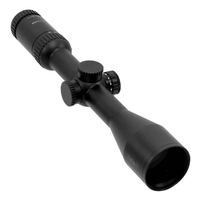
OptiMate Hunter 2-12x50 WA IR Rifle Scope
via Uttings
£279.99
Buying Advice
The single most important specification on any red dot sight for driven shooting is dot size, measured in minutes of angle (MOA). One MOA subtends roughly 29 mm at 100 metres (or about 1.047 inches at 100 yards). A 2 MOA dot offers surgical precision but can be slow to acquire against a cluttered background; a 6 MOA dot fills your eye quickly but may obscure too much of a small quarry species at moderate range. For mixed driven and deer use, 3–4 MOA is the sweet spot most UK shooters settle on. Circle-dot reticles — typically a 65 MOA ring surrounding a 2 MOA centre dot — give you the best of both worlds and are worth the small price premium for anyone who shoots both feathered and furred game.
Budget tiers in 2026 break down roughly as follows. Entry-level red dot sights under £300 — from brands such as Holosun, Sig Sauer Romeo series and PARD — now offer shake-awake, respectable battery life and adequate recoil ratings for calibres up to .308 Win. Mid-range optics between £300 and £600 bring improved glass clarity, longer battery life (often 50,000 hours plus), tighter parallax tolerances and harder-anodised housings that cope better with sustained centrefire recoil. At the premium end above £600, Aimpoint and Trijicon dominate with virtually bomb-proof construction, negligible parallax shift and battery lives measured in years of continuous-on use — an investment that makes sense if driven shooting is your primary discipline.
The most common mistake buyers make is treating all red dots as interchangeable. Parallax error matters enormously on a driven shooting optic: a cheap sight with poor parallax correction can introduce several MOA of shift if your eye is not perfectly centred, and on fast-crossing game your cheek weld is rarely textbook. Look for sights rated as parallax-free (or near parallax-free) from the manufacturer and test them at realistic distances before committing. The second frequent error is ignoring recoil ratings. A sight rated for rimfire or 9 mm pistol recoil will not survive a season on a .30-06 or 8×57 IS — the two most popular UK driven-boar chamberings. Always verify the manufacturer's stated recoil rating and, if possible, cross-reference with user reports in the specific calibre you intend to use.
UK-specific context is essential. Red dot sights are legal for live quarry shooting in England, Scotland and Wales, but deer stalking is governed by species-specific minimum calibre and bullet-weight requirements under the Deer Act 1991 (England and Wales) and the Deer (Scotland) Act 1996. The optic itself is not restricted, but you must still meet the ballistic minimums — for example, .240 calibre with 100 grains and 1,700 ft-lbs muzzle energy for any deer in Scotland. Best Conditions of a Firearms Certificate may specify a scope, so check your FAC conditions before switching to a red dot for deer. For driven pheasant, partridge and duck there is no optic restriction on shotguns or rifles where rifles are permitted. Purchase from established UK retailers — including Optics Warehouse, Jackson Rifles, Edgar Brothers-stocked dealers, and Uttings — who offer proper UK warranty support and can advise on legal specifics.
Matching the sight to your use case starts with honestly appraising your quarry and range envelopes. Driven pheasant and partridge on a rifle (where legal and appropriate) sit inside 60 metres and demand the widest possible window and fastest dot acquisition — a large-window reflex or open-emitter sight with a 4–6 MOA dot excels here. Driven boar, typically engaged between 30 and 120 metres, benefits from a tighter 2–4 MOA dot or circle-dot reticle and an enclosed-emitter tube sight that is immune to rain and debris fouling the lens. If you also stalk roe or fallow from a high seat at dawn, consider whether a small magnifier on a flip mount might extend your effective range without sacrificing speed — several Aimpoint and Holosun models now ship as magnifier-compatible kits that make economic sense for dual-purpose use.
The brand landscape for red dot sights in the UK hunting market has diversified considerably. Aimpoint remains the benchmark for durability and has a loyal following among Scandinavian-influenced driven shooters. Holosun has disrupted the mid-range with features like solar-cell backup and titanium housings at sensible price points. Vortex offers an unconditional lifetime warranty that carries real weight for hard-use optics. PARD, increasingly visible in the UK market through its thermal and digital optics range, has extended into reflex sight territory and offers competitive entry-level options that pair well with their night-vision and thermal clip-on systems — worth considering if you already own PARD thermal kit. Trijicon and EOTech remain strong in holographic sight hunting UK use, though their premium pricing means they are typically chosen by shooters who want one optic to last a lifetime.
Frequently Asked Questions
Red dot or low-power scope for driven shooting: which gives faster target acquisition on driven game in the UK?
A red dot sight almost always delivers faster first-shot target acquisition than a low-power variable scope, because there is no eye-box restriction and both eyes can stay open. A 1–6× LPVO on 1× is close, but the slight tunnel effect and critical eye relief still cost fractions of a second on fast-crossing game. For pure driven shooting the red dot wins on speed; if you also need magnification for longer deer-stalking shots, an LPVO or a red dot with a flip magnifier is a better compromise.
What MOA dot size works best for driven boar and driven pheasant shooting?
For driven boar at 30–120 metres most experienced shooters prefer a 3–4 MOA dot, which is easy to pick up yet precise enough for a clean heart-lung hit. For driven pheasant engaged at closer range and faster crossing speeds, a 6 MOA dot or a 65 MOA circle-dot reticle is ideal because you can snap onto the bird almost instinctively. If you shoot both disciplines regularly a circle-dot reticle is the best single compromise.
Are red dot sights legal and practical for deer stalking in England, Scotland and Wales?
Yes, there is no legal restriction on optic type for deer stalking in any UK jurisdiction — the Deer Act 1991 and Deer (Scotland) Act 1996 regulate calibre, bullet weight and muzzle energy, not the sighting system. However, check your FAC conditions: some police forces add a condition specifying a telescopic sight, and switching to a non-magnifying red dot could technically breach that condition. If in doubt, contact your licensing department before fitting a red dot for deer stalking use.
Which red dot or holographic sight holds up best to centrefire recoil on a driven shooting rifle?
Aimpoint Micro series and CompM5 models are the gold standard for centrefire recoil resistance, tested to withstand tens of thousands of rounds of heavy-calibre fire. Holosun enclosed-emitter models such as the 509T and 512T also perform well on calibres up to .300 Win Mag. EOTech holographic sights are rated for sustained centrefire use but draw more battery. Always verify the manufacturer's recoil rating against your specific calibre — a sight rated only for .223 or pistol recoil is not suitable for .30-06 or 8×57 IS driven-boar rifles.
What are the best budget red dot sights under £300 for UK driven shooting in 2026?
In the sub-£300 bracket, the Holosun 403 and 503 series offer excellent value with shake-awake, long battery life and adequate recoil ratings for moderate centrefire calibres. The Sig Sauer Romeo5 remains a reliable and widely available choice at well under £200. PARD's entry-level reflex sights also sit in this price band and offer the advantage of ecosystem compatibility with their thermal clip-ons. At this tier, expect good but not perfect parallax performance and housings that are water-resistant rather than truly submersible.
Do I need an enclosed-emitter or open-emitter red dot for driven shooting in British weather?
British weather strongly favours enclosed-emitter (tube-style) red dots for driven shooting. Open-emitter reflex sights are lighter and offer wider fields of view, but the exposed emitter lens can collect rain, snow and mud during a driven day. Enclosed-emitter sights protect the emitter inside a sealed tube and are far more reliable in sustained wet conditions. If you prefer an open-emitter design, choose one with a deep hood or fit an aftermarket rain guard.
Can I use a red dot sight on an air rifle for pest control, and does dot size matter?
Red dot sights work well on sub-12 ft-lb air rifles for pest control within realistic effective ranges of approximately 30–50 yards. A 2–3 MOA dot is ideal at these distances because quarry like rats and squirrels present small kill zones, and a larger dot can obscure the point of aim at 40+ yards. Ensure the red dot you choose can handle the unique bi-directional recoil of a spring-powered air rifle — some sights rated for centrefire recoil actually fail on springers due to the reverse pulse. Models specifically listed as spring-piston compatible are the safest choice.
How does parallax affect a red dot sight on driven game, and what should I look for?
Parallax error occurs when your eye is off-centre behind the sight, causing the dot to shift relative to the true point of aim. On fast-moving driven game your cheek weld is rarely perfectly consistent, so parallax can introduce practical aiming errors of 2–4 MOA with cheaper sights. Look for sights advertised as parallax-free or with parallax specified at less than 2 MOA at 100 metres. Premium models from Aimpoint and Trijicon achieve near-zero parallax, which translates directly into real-world hit probability on crossing game.
Is a holographic sight better than a reflex red dot for driven shooting in the UK?
Holographic sights (EOTech, Vortex UH-1) project the reticle at the target plane rather than on the lens, which some shooters find faster and more intuitive with both eyes open. They also maintain full reticle brightness and clarity even if the front window is partially obscured by mud or rain. The trade-offs are heavier weight, higher battery consumption and a significantly higher price point. For most UK driven shooters a quality enclosed-emitter reflex sight offers the best balance of speed, durability and value, but if budget is not a constraint a holographic sight is a genuinely excellent choice.
Related guides
Choosing the best scope for driven shooting in the UK? We compare red dot sights and low-power variable optics for fast-moving driven game, covering legality, speed, and budget in 2026.
Best Driven Shooting Scopes Under £500 in 2026Discover the best scope for driven shooting in the UK under £500 for 2026. Expert advice on low-power variable optics, reticles, and budget brands like Vortex and Burris.
Best Scopes for Driven Shooting in 2026Find the best scope for driven shooting in 2026. Our UK buyer's guide covers magnification, reticles, red dots and budget picks for fast, ethical shots on driven game.
Red Dot vs Scope for UK Deer Stalking: The Definitive GuideRed dot sight or rifle scope for deer stalking in the UK? Our 2026 guide covers legality, magnification, brands, and exactly which optic suits your hunting style.
Best Air Rifle Scopes for Rabbit Shooting in 2026Discover the best scope for rabbit shooting in the UK for 2026. Expert advice on magnification, parallax, reticles and budget picks for airgun pest control.
Not sure which scope is right for you?
Try our AI-powered scope finder — answer a few questions and get personalised recommendations.
Find My Scope →Get a UK scope tip every day
Follow AiScopes on Facebook for daily buying guides, deals and gear advice.
Follow on Facebook