Area 419 20 MOA Remington 700 Short Action Scope Rail
By Peter Makulek · Senior Optics Editor · · Live prices from UK retailers
If you shoot PRS, F-class, or long-range target disciplines with a Remington 700 short action in the UK, your choice of scope rail is far more than an afterthought. The Area 419 improved Picatinny rail with a built-in 20 MOA cant has become one of the most talked-about base upgrades in 2025–2026, and for good reason: it addresses several shortcomings of factory and mil-spec rails while offering a precision-machined platform that pairs beautifully with modern tactical and long-range optics. For UK shooters running calibres such as .308 Win, 6.5 Creedmoor, or .243 Win on their FAC-rated Rem 700 short actions, this rail can make a meaningful difference to how much usable elevation your scope turret retains at extended range.
The 20 MOA forward cant built into the rail effectively tilts the scope's optical axis downward relative to the bore, giving you roughly 20 MOA of additional upward elevation travel before you run out of internal adjustment. In practical terms, that means more clicks available for dialling at 800, 1,000, or even 1,200 yards — distances that UK ranges such as Diggle, Bisley, and various Scottish hill venues increasingly cater for. Without that cant, many scopes — even premium models from Nightforce, Vortex, or Leupold — can run out of elevation well before you reach the distances your rifle and ammunition are capable of.
What sets the Area 419 rail apart from a generic 20 MOA Picatinny base is its improved recoil lug engagement and tighter manufacturing tolerances. The rail indexes positively into the Remington 700 action's front screw hole and recoil lug slot, eliminating the slight lateral play that plagues many aftermarket rails. This matters enormously for repeatable zero, especially if you swap optics between competitions or between a day scope and a clip-on thermal for night-time fox control under your FAC conditions. The rail is machined from 7075-T6 aluminium or steel depending on variant, and most UK dealers stock them for between £80 and £140.
In this guide we cover why the 20 MOA cant matters for UK long-range shooters, how to pair the rail with the right scope mount and optic, and what mistakes to avoid when fitting it to your Rem 700 short action. We also answer commonly asked questions — including whether the new Arken 2–12× SFP is a sensible partner for this setup — and suggest optics at several budget tiers that complement the rail's precision-oriented design.
Top Picks — Live UK Prices

Nikko Stirling Diamond Long Range 30mm Tactical 4-16x50 IR Rifle Scope
via Uttings
£199.00

Hawke Endurance 30 WA 1-4x24 IR (Tactical Dot 4x) Telescopic Sights
via BushWear
£251.10
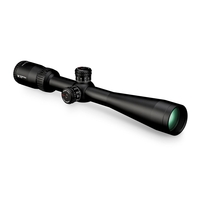
Vortex Diamondback Tactical 4-12x40 Riflescope - VMR-1 Reticle (MOA)
via Uttings
£299.00
Buying Advice
Understanding the key specifications starts with the 20 MOA figure itself. One MOA subtends approximately 1.047 inches at 100 yards (roughly 2.9 cm at 100 metres). A 20 MOA canted rail therefore shifts your scope's mechanical centre downward by about 21 inches at 100 yards, freeing that same amount of upward elevation travel on the turret. Most tactical and long-range scopes offer between 80 and 130 MOA of total internal elevation adjustment; without a canted base, you lose half of that to below-bore-line travel you will never use. The rail's Picatinny cross-slot spacing conforms to MIL-STD-1913, so any standard Picatinny scope mount or ring set will fit. Check that your chosen mount — whether two-piece rings from Vortex or a one-piece cantilever from Nightforce or Spuhr — clamps securely and is torqued to the manufacturer's specification, typically 15–18 in-lbs for ring cap screws and 25–30 in-lbs for base screws into the action.
Budget tiers in the UK break down roughly as follows. Under £100 you will find basic 20 MOA Picatinny rails from brands like EGW and Warne — perfectly functional but with looser tolerances. Between £100 and £150, the Area 419 rail sits alongside offerings from Badger Ordnance and Seekins Precision, all of which feature improved recoil-lug engagement and tighter machining. Above £150 you enter the territory of integrated scope mounts with built-in cant — such as Spuhr one-piece units, which can exceed £350 — offering the ultimate in rigidity and repeatability. For most UK PRS and F-class shooters, the Area 419 rail at around £90–£130 paired with a quality ring set or mount in the £100–£250 bracket represents the sweet spot of value and performance.
Common mistakes UK buyers make include fitting a 20 MOA rail when they do not actually need one. If your shooting is confined to 100–300 yards — typical of many UK club ranges — and your scope has ample elevation, the cant simply shifts your mechanical zero awkwardly and wastes downward adjustment. Another frequent error is failing to lap or properly torque the action screws, which can introduce stress and inconsistent point-of-impact shift. Some shooters also confuse MOA and MRAD rails: a 20 MOA rail is not the same as a 6 MRAD rail (which would equate to approximately 20.6 MOA). Ensure your scope's adjustment units match the rail specification, or at least understand the conversion. Finally, always confirm whether your Rem 700 is a genuine short action (suited to cartridges up to .308 Win length) rather than a long action, as the screw spacing and overall rail length differ.
For UK-specific context, any centrefire rifle — including a Remington 700 in .308, 6.5 Creedmoor, or similar — requires a Firearms Certificate issued by your local police force. Ensure any optic or accessory you buy is compatible with the conditions on your certificate; for example, some FAC conditions specify approved quarry or permitted land. If you plan to use a clip-on night-vision or thermal unit in conjunction with this rail for nocturnal foxing or deer management, you will need specific conditions permitting night shooting on your ticket. BASC and your local firearms licensing department can advise on current requirements. Regarding quarry, species such as roe deer have defined open seasons (in England and Wales, bucks 1 April–31 October, does 1 November–31 March), and you must always use a legal minimum calibre and muzzle energy for deer.
Matching your rail and optic to your use case is essential. For PRS competition, a first focal plane (FFP) scope in the 5–25× or 4–16× range with MRAD turrets — such as offerings from Vortex (Razor HD Gen III), Nightforce (ATACR or NX8), Athlon (Ares ETR), or Zeiss (Conquest V4) — pairs superbly with this rail. The FFP reticle ensures your holdover and windage marks are accurate at any magnification, which is critical in timed PRS stages. For F-class at known distances, a higher-magnification scope (up to 40× or beyond) with fine MOA turrets may be preferable; here Nightforce Competition or Leupold Mark 5HD models shine. For general long-range target work, a mid-priced scope from Bushnell (Match Pro) or the newer Arken optics can deliver excellent glass-for-pound value.
The brand landscape for both rails and compatible optics continues to evolve in the UK market. Area 419 has built a strong reputation through its Hellfire muzzle brakes, ARCALOCK accessories, and now these improved Picatinny rails. UK dealers such as Hannams Reloading, Henry Krank, and several online PRS-focused shops regularly stock or can order Area 419 products. For scopes, Vortex remains dominant at the mid-to-upper price range in the UK due to their transferable VIP warranty and broad dealer network. Nightforce commands the premium tier for PRS and F-class. Budget-conscious shooters are increasingly looking at Athlon and Arken, though Arken's UK distribution is still developing — verify warranty support before purchasing from overseas. Pulsar and HikMicro dominate the thermal and night-vision space if you plan to add a clip-on to this rail setup for pest control or deer management duties.
Frequently Asked Questions
Why do I need a 20 MOA canted rail on my Remington 700 short action?
A 20 MOA rail tilts the scope's optical axis forward, freeing approximately 20 MOA of additional upward elevation travel on your turret. This is essential if you shoot at distances beyond 600–800 yards, where standard elevation adjustment may run out before you reach your required come-up. If you only shoot to 300 yards, a flat (0 MOA) rail is usually sufficient and avoids unnecessary zero-offset complications.
What makes the Area 419 rail different from cheaper 20 MOA Picatinny bases?
The Area 419 rail features an improved recoil-lug interface that indexes positively into the Rem 700 action, eliminating the lateral slop common on generic rails. It is machined to tighter tolerances and uses premium 7075-T6 aluminium or steel, ensuring consistent zero retention even under sustained recoil. The cross-slot spacing is true MIL-STD-1913 Picatinny, guaranteeing compatibility with all standard mounts and rings.
Will the Area 419 20 MOA rail fit a Remington 700 long action?
No — the short-action and long-action Remington 700 variants have different screw spacings and receiver lengths. The Area 419 short-action rail is designed exclusively for short-action receivers (cartridges up to .308 Win OAL). If you have a long action in .30-06 or similar, you need the dedicated long-action version. Always verify your action type before ordering.
Is the new Arken 2–12× SFP a good scope to pair with this rail?
The Arken 2–12× SFP is an interesting budget-friendly option offering a wide zoom range and clean glass for its price bracket. However, as a second focal plane (SFP) design, its reticle subtensions are only accurate at one magnification — typically the highest. For PRS or precision work where you regularly use reticle holdovers at varying magnifications, an FFP scope is generally preferable. That said, if you primarily dial your turrets and use the reticle only for wind holds at max power, the Arken 2–12× can work well, especially for shooters on a tighter budget.
What torque settings should I use when fitting this rail?
Area 419 typically recommends 25 in-lbs for the action screws securing the rail to the Remington 700 receiver, using a calibrated torque wrench and a small amount of blue thread-lock (e.g., Loctite 243). Ring or mount cap screws are usually torqued to 15–18 in-lbs depending on the manufacturer's specification. Always follow the specific instructions included with your rail and mount, as over-torquing can strip aluminium threads or stress the action.
Can I use this rail with a clip-on thermal or night-vision device?
Yes. The Picatinny interface is fully compatible with clip-on thermal units from Pulsar or HikMicro, as well as dedicated night-vision clip-ons. The rail's extended length usually provides sufficient space for both a scope mount and a clip-on adaptor forward of it. Remember that in the UK, using a thermal or NV device for shooting at night typically requires specific conditions on your Firearms Certificate — check with your local firearms licensing department or BASC before proceeding.
Do I need to lap the scope rings after fitting them to this rail?
Lapping is less critical with precision-machined rails and high-quality rings, but it can still help eliminate minor misalignment between the ring halves. If you are using premium matched rings or a one-piece mount (such as Spuhr or Nightforce Unimount), lapping is generally unnecessary. With budget two-piece rings, a light lap with a lapping bar and compound can improve contact area and reduce the risk of scope-tube marring or uneven clamping pressure.
Is 20 MOA too much cant for shorter-range UK shooting?
For shooting under 400–500 yards, 20 MOA of cant can be more than you need, leaving your mechanical zero well above the turret's optical centre and potentially limiting your ability to dial down at close range. A 10 MOA rail may be a better compromise if your shooting spans 100 to 600 yards. Reserve the full 20 MOA cant for genuine long-range work at 800 yards and beyond, where the extra elevation travel is genuinely necessary.
What scope magnification range works best for PRS shooting in the UK?
Most UK PRS competitors favour a scope in the 5–25× range, as stages typically involve targets from 200 to 1,000 yards or more. The lower 5× end provides enough field of view for close positional stages, while 25× gives adequate detail for small steel at distance. Some shooters prefer 4–16× for faster target acquisition and a lighter package. Whichever range you choose, an FFP reticle with MRAD subtensions is the most popular configuration in UK PRS circles, paired with matched MRAD turrets for intuitive dial-up.
Related guides
MOA or MRAD? Our expert guide helps UK shooters pick the right angular measurement system for their discipline…
Your First Thermal Scope for Hunting: UK GuideChoosing your first thermal hunting scope? Our 2026 UK guide covers key specs, budget tiers in GBP, legal context, and top picks from Pulsar…
New Scope Day – Getting It Right First TimeExcited for new scope day? Our 2026 UK guide covers fitting, FFP vs SFP, MOA vs MRAD, parallax, and the best rifle scopes for every discipline and budget…
Not sure which scope is right for you?
Try our AI-powered scope finder — answer a few questions and get personalised recommendations.
Find My Scope →Get a UK scope tip every day
Follow AiScopes on Facebook for daily buying guides, deals and gear advice.
Follow on Facebook