Snapped Optic Screw: What to Do Next & How to Prevent It
By Peter Makulek · Senior Optics Editor · · Live prices from UK retailers
Few things ruin a day's shooting faster than hearing a metallic ping and watching your carefully zeroed optic shift — or worse, come loose entirely — because a mounting screw has sheared. It happens more often than manufacturers would like to admit, and UK shooters across every discipline encounter it: from sub-12 ft-lb springer owners fighting double-recoil to FAC-rated centrefire stalkers who over-torqued a ring screw in the car park. Understanding why screws fail is the first step toward ensuring it never happens to you again, and the good news is that the fix is almost always straightforward if you approach it calmly.
The UK shooting landscape places particular stress on optic mounting hardware. Our damp climate accelerates corrosion, especially on cheaper zinc-alloy screws. Spring-piston air rifles — still the most popular platform in England and Wales thanks to the sub-12 ft-lb no-licence category — subject scope mounts to vicious bidirectional recoil that hammers screws in ways a centrefire rifle never does. Even PCP and rimfire shooters are not immune: dissimilar-metal galvanic corrosion between steel screws and aluminium rings quietly weakens joints over months, and a frozen screw that snaps during disassembly is a common workshop headache.
This guide covers three things in depth. First, we walk through the immediate steps when a screw has already snapped — extraction methods, when to attempt it yourself, and when to hand it to a gunsmith. Second, we look at the mounts, rings, and rails that reduce the risk in the first place, with product picks from brands like Vortex, Nightforce, and Swarovski that UK shooters trust. Third, our buying advice and FAQ sections address torque specifications, thread-locking compounds, material choices, and the key differences between MOA and MRAD turret systems that affect how confidently you can re-zero after a mount failure.
Whether you are mounting the best scope for long-range deer stalking, fitting a thermal scope for foxing at night, bolting a compact optic onto an air rifle for ratting in a barn, or upgrading to a quality night-vision unit for pest control, the principles of secure, damage-free mounting are universal. We write exclusively for the UK market — prices are in pounds sterling, legal context reflects England, Wales, Scotland, and Northern Ireland, and quarry references stick to the species and seasons that matter here. Let us get that snapped screw sorted.
Top Picks — Live UK Prices
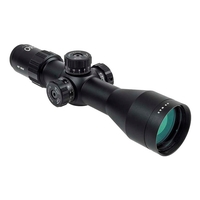
PAO HD MAX 4-16x44 SF FFP Ultra Compact Riflescope
via Uttings
£219.00
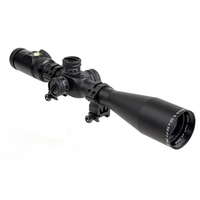
PAO F1 5-20x50 IR SF FFP Rifle Scope
via Uttings
£239.00

Wulf Tornado FFP 6-24x50 W-MIL3 Side Focus Rifle Scope
via BushWear
£249.99
Buying Advice
When choosing replacement screws or upgraded mounts, pay attention to the specifications that actually matter. Thread pitch must match exactly — mixing metric and imperial threads is a leading cause of cross-threading and eventual failure. Grade-8 or 12.9-class steel screws offer dramatically higher shear strength than the grade-5 equivalents bundled with budget mounts. Torque values vary by manufacturer but typically fall between 15 and 25 inch-pounds for ring screws and 30 to 65 inch-pounds for base screws. A small inch-pound torque wrench — available from around £25 to £60 — is the single best investment you can make to prevent future failures. Never substitute a hex key and guesswork for a calibrated wrench.
Budget tiers in the UK mount market are clearly defined. Below £30 you will find adequate aluminium rings for PCP air rifles and rimfires where recoil is negligible. Between £40 and £100, brands like Hawke, Sportsmatch, and Warne offer one-piece mounts and arrestor-block designs suitable for spring-piston airguns. From £100 to £250, precision-machined steel rings from Vortex, Leupold, and Athlon deliver the consistency needed for repeatable centrefire zeroing. Above £250, Nightforce, Swarovski, Schmidt Bender, and Spuhr provide mounts engineered for extreme conditions and heavy recoil — these are the choice for serious long-range rifle work and professional deer-management stalkers who cannot afford a zero shift mid-season.
Common mistakes UK buyers make include using mounts rated for centrefire on spring-piston air rifles. A springer's rearward recoil spike followed by forward lurch is uniquely destructive; standard rifle rings slide, loosen, and snap screws within a few hundred pellets. Always choose mounts specifically marketed as springer-rated, ideally with a recoil pin or arrestor block. Another frequent error is applying permanent thread-lock (such as Loctite 271) instead of medium-strength removable grades (Loctite 243 or equivalent). Permanent compounds make future disassembly almost impossible without heat, which risks damaging optical coatings and the scope tube itself. Also, never over-tighten screws onto a scope tube — you will dent the tube and wreck the erector assembly.
UK-specific context matters more than many guides acknowledge. In England and Wales, sub-12 ft-lb air rifles require no licence, meaning many new shooters mount optics without professional guidance — and mistakes follow. Scotland requires an Air Weapon Certificate for any air weapon, so Scottish shooters often interact with dealers who can advise on mounting. For FAC-rated rifles used in deer stalking — roe, muntjac, fallow, and others in their respective open seasons — a loose or failed mount during a stalk is not just an inconvenience but a welfare concern, because a wounded animal is unacceptable. Investing in quality mounting hardware is therefore an ethical obligation as much as a practical one. Consult BASC or your local police firearms licensing department for current legal requirements in your area.
Matching your mount choice to your specific use case prevents most problems before they start. A sub-12 ft-lb springer used for rabbit and grey squirrel at 25 to 40 yards needs a low-profile, arrestor-equipped mount with close-range parallax adjustment — many airgun-specific scopes set parallax as close as 10 yards, and the mount must hold zero through thousands of bidirectional recoil cycles. A centrefire stalking rifle demands rings matched to the scope-tube diameter (30 mm and 34 mm are now standard on quality optics) and the rail type (Picatinny, Weaver, or proprietary). Long-range target shooters benefit from FFP reticles with MRAD adjustments — 0.1 mil clicks move the point of impact 1 cm at 100 metres — and their mounts must return to zero perfectly if removed and refitted. Thermal and night-vision scopes, such as those from Pulsar, often have specific mounting interfaces; always use the manufacturer's recommended hardware.
The brand landscape for mounts mirrors that for optics. Vortex offers a lifetime warranty and solid mid-range rings that UK dealers stock widely. Nightforce and Schmidt Bender sit at the premium end, favoured by professional stalkers and target shooters who demand the best scope mounting solutions available. Leupold's aluminium rings remain popular for lighter-weight setups. Swarovski's proprietary mounts are engineered specifically for their optics and deliver superb repeatability. Athlon provides excellent value in the mid-tier. Weaver's rail standard, while somewhat legacy, remains common on many UK sporting rifles. For airgun-specific needs, Sportsmatch and BKL dominate the UK market with springer-rated designs. Whatever brand you choose, verify screw material, torque specification, and compatibility before you buy — a £5 error in mount selection can destroy a £1,500 optic.
Frequently Asked Questions
How do I extract a snapped mounting screw from my scope ring or rail?
Start by applying a quality penetrating oil and leaving it to soak for at least 30 minutes — longer if corrosion is visible. If enough of the screw protrudes, grip it with fine locking pliers and turn it anti-clockwise slowly. If the break is flush or below the surface, use a screw extractor (easy-out) set: centre-punch the broken stub, drill a small pilot hole, then wind in the extractor. If the screw is seized or the surrounding material is aluminium, consider taking it to a gunsmith rather than risking damage to the mount or rail.
Why do optic mounting screws snap in the first place?
The most common causes are over-torquing during installation, corrosion weakening the screw over time, metal fatigue from repeated recoil cycles, and using low-grade screws that lack sufficient shear strength. Spring-piston air rifles are particularly notorious because their bidirectional recoil pattern stresses screws in ways centrefire rifles do not. Dissimilar-metal corrosion — steel screws in aluminium rings exposed to UK moisture — is another frequent culprit. Using a torque wrench, applying anti-seize compound, and choosing quality hardware dramatically reduce the risk.
What torque should I use for rifle scope ring screws?
Always follow the mount manufacturer's specification, which is typically printed in the instructions or available on their website. As a general guide, ring-cap screws usually call for 15 to 25 inch-pounds, while base screws may require 30 to 65 inch-pounds depending on the design. Never guess — an inch-pound torque wrench is inexpensive and essential. Over-torquing can dent the scope tube and damage internal mechanisms, while under-torquing allows the scope to shift under recoil.
Should I use thread-locking compound on scope mount screws?
A medium-strength, removable thread-locker such as Loctite 243 (the blue variant) is recommended for most scope mounting applications. It prevents screws from vibrating loose under recoil while still allowing disassembly with standard tools. Avoid permanent (red) thread-lockers — they require significant heat to break free, which can damage scope coatings and seals. Apply sparingly: a tiny drop on the thread is sufficient. Some manufacturers pre-apply a patch-lock compound, so check before adding more.
Do I need different mounts for a spring-piston air rifle compared to a PCP or rimfire?
Yes, absolutely. Spring-piston (springer) air rifles produce a violent double-recoil impulse — first rearward, then sharply forward — that destroys mounts not designed for it. Springer-rated mounts feature recoil pins, arrestor blocks, or integrated stops that lock into the dovetail rail. PCP air rifles and rimfires produce negligible or single-direction recoil, so standard rings are fine. Using centrefire-rated mounts on a springer may actually be worse than airgun-specific ones because they lack the arrestor features needed for rearward recoil.
What is the difference between FFP and SFP reticles, and does it affect mounting?
First Focal Plane (FFP) reticles scale with magnification, meaning holdover and windage markings remain accurate at every power setting — ideal for long-range work where you may need to range or hold off quickly. Second Focal Plane (SFP) reticles stay the same apparent size regardless of zoom and are only dimensionally accurate at one specified magnification. Mounting considerations are identical for both, but FFP scopes tend to be higher-end and more expensive, so protecting them with quality mounts and correct torque is even more important.
Can a snapped screw damage my scope permanently?
It can. If the scope shifts or falls due to a failed screw, the scope tube can be dented by the remaining ring hardware, or the impact of hitting the rifle or ground can misalign the erector assembly internally. Dents on the main tube may prevent smooth adjustment or cause the scope to lose its ability to hold zero. In the worst case, lens elements can crack or coatings can be chipped. After any mounting failure, carefully inspect the scope for dents, scratches, or tracking irregularities before relying on it in the field.
How often should I check my scope mounting screws?
For spring-piston air rifles, check screws every 200 to 300 shots initially, extending the interval once you are confident the mount is settled. For centrefire rifles, a check at the start of each season and after any significant string of fire is sensible. If you transport your rifle frequently, a quick torque check before each outing takes under a minute and can prevent a lost zero or worse. Always use a torque wrench set to the manufacturer's specification rather than simply tightening by feel.
Is MOA or MRAD better for re-zeroing after a mount replacement?
Neither system is inherently better — both allow precise adjustment. MRAD (milliradians) uses 0.1 mil clicks, each moving the point of impact 1 cm at 100 metres, which pairs naturally with metric measurements common in UK target shooting and stalking. MOA (minute of angle) clicks are typically ¼ MOA, moving impact roughly 0.7 cm at 100 metres (or about 1.047 inches at 100 yards). Choose whichever system matches your reticle markings for consistency. The critical point after a mount replacement is to have enough adjustment travel remaining to achieve zero — quality mounts with consistent centring help ensure this.
Related guides
Expert UK guide to choosing a new rifle optic in 2026. FFP vs SFP, MOA vs MRAD, parallax explained, budget tiers in GBP…
Optic Risers: The Beginner's GuideWondering what an optic riser does and whether you need one? Our UK-focused 2026 guide explains heights, compatibility…
Best Scopes for the Air Arms S510 & Top PCP Air RiflesExpert UK buyer's guide to the best scopes for the Air Arms S510 and PCP air rifles. Covers magnification, parallax, mounts, sub-12 vs FAC…
Choosing a Scope for Your CZ 457 Varmint MTR: Base ClassExpert UK guide to choosing the best rimfire scope for a CZ 457 Varmint MTR in Base class. Covers magnification, reticle, budget tiers in GBP…
Not sure which scope is right for you?
Try our AI-powered scope finder — answer a few questions and get personalised recommendations.
Find My Scope →Get a UK scope tip every day
Follow AiScopes on Facebook for daily buying guides, deals and gear advice.
Follow on Facebook