Laser Rangefinder or Not? Choosing Between LRF and Non-LRF Night Vision and Thermal Scopes for UK Foxing
By Peter Makulek · Senior Optics Editor · · Live prices from UK retailers
Most UK thermal and digital night vision scopes are now sold in two versions of the same model: a standard version and an LRF version with a built-in laser rangefinder. The LRF version always costs more, and it is not always obvious whether that extra cost buys you anything at typical UK fox-control ranges. This guide works through when a built-in rangefinder genuinely earns its keep and when your money is better spent elsewhere.
Take a common real-world case: a stalker running a flat-shooting .204-calibre rifle for night fox work on typical Welsh farmland does not need an LRF for that setup. The reasoning is straightforward — the .204's trajectory is flat enough that ranging error simply does not translate into a meaningful miss within the distances most foxes are actually taken, with a comfortable working limit of around 300 yards without needing a rangefinder at all, and fieldcraft and terrain knowledge doing more practical work than a laser beep.
That does not mean LRF is never worth having. It earns its place when you are shooting a less flat cartridge where range genuinely changes your holdover meaningfully within realistic engagement distances, when you already run a scope with an onboard ballistic calculator and want range fed straight into the solution rather than estimated by eye, or simply when you want a hard number confirming you are within your own ethical and legal maximum range before you commit to a shot. If you already carry a separate rangefinding thermal spotter to scan and locate before you ever raise the rifle — a common two-unit UK setup — duplicating LRF inside the riflescope itself buys you comparatively little.
As with every guide on this site, the UK legal context matters. Night shooting of deer is illegal throughout the UK, so this discussion of LRF versus non-LRF night vision and thermal applies to fox and other pest control under the relevant general licence conditions, not deer stalking. Whatever thermal or NV platform you choose, you will need a Firearms Certificate with the appropriate conditions to use it on a centrefire rifle for fox control at night.
Top Picks — Live UK Prices
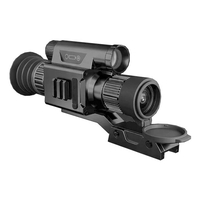
Fuego DS-X7 4K Day & Night Vision Rifle Scope
via Uttings
£299.99
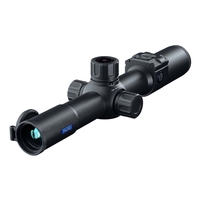
Pard Night Stalker Mini Night Vision Riflescope - 35mm
via Uttings
£339.00
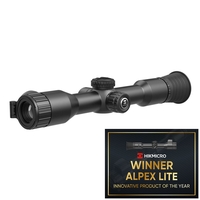
HIKMicro Alpex 4K Lite Digital Day/Night Riflescope
via Uttings
£399.00
Buying Advice
The clearest UK pricing evidence for what LRF actually costs comes from manufacturers who sell both versions of the same core scope side by side. Pulsar's Thermion 2 XP50 Pro thermal riflescope is sold both as a standard model and as the Thermion 2 LRF XP50 Pro with an integrated laser rangefinder. As of September 2026, the non-LRF XP50 Pro sells for around £3,000 (down from a launch price nearer £3,700), and the LRF version sells for around £3,060. Treat these as a snapshot rather than a fixed 'LRF premium' — UK pricing and discounting moves regularly — but the underlying pattern holds across the market: LRF is sold as a genuinely separate model rather than a simple on/off toggle, and it adds real cost.
Where LRF pays for itself is when it feeds directly into a ballistic solution. A scope with a first focal plane MRAD or MOA reticle and an onboard ballistic engine can turn an exact laser-measured range into a precise holdover or dialled correction — worth remembering that in MRAD terms, 0.1 mil equals 1 cm of correction at 100 metres, so an accurate range genuinely changes where you should hold. On a simpler scope without that ballistic calculation built in, knowing the range to the exact metre buys you far less, because you still have to translate that number into a holdover by eye or from memory.
For shooters who value rangefinding but do not want to pay the premium for an LRF riflescope, a dedicated rangefinder is a legitimate alternative worth pricing separately. Many stalkers prefer a dedicated rangefinding binocular such as the Leica Geovid Pro over a scope-integrated LRF — useful for general scouting and glassing as well as ranging a specific target, at the cost of carrying a second piece of kit.
Cartridge choice changes the calculus more than most buyers expect. A genuinely flat-shooting round such as .204 Ruger, .223 Rem or similar has a trajectory forgiving enough that a reasonable range estimate, built on experience of the ground you shoot, produces essentially the same point of impact as a laser-exact one within normal UK fox-control distances. A slower or more arced cartridge, or a shooter regularly extending toward their practical maximum range, has far less margin for a ranging mistake, and that is where LRF starts to earn real value rather than just convenience.
For sub-12 ft-lb air rifle shooters, this entire discussion is largely academic, and it is worth saying so plainly: a humane-kill ceiling of roughly 35–45 yards on rabbit or squirrel-sized quarry does not leave room for the kind of ranging uncertainty an LRF exists to solve. If you are choosing a night vision or thermal add-on for airgun pest control, spend the budget on sensor quality and detection range rather than on a laser rangefinder you are very unlikely to need at those distances.
Frequently Asked Questions
What does LRF mean on a night vision or thermal scope?
LRF stands for laser rangefinder — a built-in laser that measures the exact distance to your target. On scopes with an onboard ballistic calculator, that range can feed directly into a holdover or dialled elevation solution rather than requiring you to estimate distance and correction manually.
Do I need a laser rangefinder for fox control in the UK?
Often not, particularly if you shoot a flat trajectory cartridge and stay within sensible UK fox-control distances. Ranging error makes little practical difference on flat-shooting rounds like .204 Ruger within a few hundred yards, and fieldcraft and terrain knowledge do more of the real work than a laser reading.
Does a flatter-shooting calibre make an LRF less necessary?
Yes. The flatter a cartridge's trajectory, the less a given ranging error changes your actual point of impact, so a reasonable estimated range performs almost as well as a laser-exact one. Slower or more arced cartridges, or shots taken near your practical maximum range, are where an accurate range genuinely starts to matter more.
Is a separate rangefinder better than a built-in LRF scope?
It depends on your setup. If you already carry a rangefinding thermal spotter or premium rangefinding binoculars to scan before you raise the rifle, adding LRF inside the riflescope itself is often unnecessary duplication. If you shoot with just a single riflescope and no separate optic, a built-in LRF removes the need to carry anything extra.
How much more does an LRF version of a scope cost?
As one live UK example, the Pulsar Thermion 2 XP50 Pro sells for around £3,000 without LRF, while the Thermion 2 LRF XP50 Pro sells for around £3,060 with LRF (prices as of September 2026). Exact premiums vary by promotion, but LRF versions are consistently sold as separate models rather than a simple optional extra, and they cost more.
Can I use LRF ranging with a MOA or MRAD reticle?
Yes — this is where LRF is most valuable. Feeding an exact laser-measured range into a scope's ballistic calculator produces a precise MOA or MRAD holdover or turret correction. In MRAD terms, 0.1 mil equals 1 cm of correction at 100 metres, so an accurate range changes your hold meaningfully once you are using reticle subtensions or dialling turrets rather than a simple duplex crosshair.
Do air rifle shooters need a rangefinding night vision scope?
Generally no. A sub-12 ft-lb air rifle's humane-kill range on rabbit or squirrel-sized quarry is realistically 35–45 yards, which leaves very little room for ranging error to matter. Budget for airgun night vision or thermal add-ons is usually better spent on sensor quality and detection range than on a laser rangefinder.
Related guides
Our in-depth UK guide to the HIKMICRO Alpex A50T digital night vision scope. Covers specs, performance, price bands, legal context…
TKN-1 Night Vision Periscope: Your Questions AnsweredExplore the TKN-1 night vision periscope with real pictures, technical breakdown, and UK-relevant buying advice.
Trading a PVS-14 for Thermal & LPVO: Is It Worth It?Should you swap a used PVS-14 for a thermal scope and LPVO? We break down the trade-offs, UK legalities, top picks and budget tiers for night vision…
Best PARD Night Vision Scopes for UK ShootersDefinitive UK buyer's guide to PARD digital night vision scopes for foxing, deer stalking and vermin control.
Not sure which scope is right for you?
Try our AI-powered scope finder — answer a few questions and get personalised recommendations.
Find My Scope →Get a UK scope tip every day
Follow AiScopes on Facebook for daily buying guides, deals and gear advice.
Follow on Facebook