MOA vs MRAD: Which Is Right for You?
By Peter Makulek · Senior Optics Editor · · Live prices from UK retailers
Every adjustable rifle scope uses either MOA (Minute of Angle) or MRAD (Milliradian, often called "mil") for its turret clicks and reticle subtensions. Choosing between them is one of the most common questions new precision shooters face — and the answer is simpler than most guides make it seem.
MOA and MRAD are both angular measurement systems. One MOA equals approximately 1 inch at 100 yards (technically 1.047 inches). One MRAD equals 0.1 metre at 100 metres, or approximately 3.6 inches at 100 yards. Neither is inherently more accurate — they are different units measuring the same thing. The practical question is which system makes the maths easier for the way you shoot.
Top Picks — Live UK Prices

Richter Optik Crystal 4x20 Riflescope with Mounts
via BushWear
£9.99

Caldwell Orange Peel Silhouette Target 12x18 5pk
via BushWear
£10.39
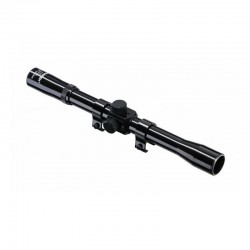
Umarex 4x20 Scope
via DAI Leisure
£19.95
Buying Advice
For UK target shooters working in metric distances and metric wind data, MRAD is generally the simpler system — corrections in mils match metric range calculations directly. For hunters or stalkers who think in yards and inches, MOA adjustments feel more intuitive. PRS and practical precision competition in the UK has largely standardised on MRAD — if you plan to compete, mil-based scopes integrate better with the correction cards and ranging maths used at most UK ranges.
The most important rule: match your reticle and your turrets. A scope with an MRAD reticle and MOA turrets (or vice versa) requires constant conversion and is a recipe for errors under pressure. All modern quality scopes are consistent — an MRAD reticle always comes with MRAD turrets. If in doubt, ask the retailer to confirm before buying.
Frequently Asked Questions
What does MOA mean on a rifle scope?
MOA stands for Minute of Angle — an angular measurement equal to 1/60th of one degree. At 100 yards, 1 MOA equals approximately 1.047 inches. Most MOA scopes click in ¼ MOA increments, meaning one click moves point of impact approximately ¼ inch at 100 yards (½ inch at 200 yards, ¾ inch at 300 yards, and so on).
What does MRAD or mil mean on a rifle scope?
MRAD stands for Milliradian — 1/1000th of a radian. At 100 metres, 1 MRAD equals 10 centimetres (or 1 cm per 10 metres). Most MRAD scopes click in 0.1 mil increments, so one click moves point of impact 1 cm at 100 metres, 2 cm at 200 metres, and so on. Metric calculations are very straightforward.
Is MOA or MRAD better for UK shooters?
For UK range shooting and PRS competition (which uses metric distances), MRAD is generally easier because the maths is decimal: 0.1 mil per click, 1 cm per 10 metres. For hunters who zero at 100 yards and make simple hold-over corrections, MOA is intuitive. Both systems work perfectly — the only wrong choice is mixing MRAD reticles with MOA turrets or vice versa.
What is the difference between mil-dot and MRAD?
Mil-dot is a reticle type; MRAD is the measurement unit. A mil-dot reticle uses dots spaced 1 mil apart for ranging and holdover reference. Modern MRAD reticles often use hash marks or Christmas-tree patterns rather than simple dots, but all are based on the same 1 MRAD unit. "Mil" and "MRAD" mean the same angular quantity.
Can I convert MOA adjustments to MRAD?
1 MRAD = 3.438 MOA (approximately 3.44 MOA). So if you need to move 1 mil, that's about 3.4 MOA clicks. For practical shooting it's much simpler to stay in one system: MRAD for metric distances, MOA for yards/inches. Conversion at the range under time pressure is error-prone and unnecessary if you choose the right system from the start.
Do I need an FFP or SFP scope for MRAD to work correctly?
For MRAD subtensions on the reticle to be accurate at all magnifications, you need a First Focal Plane (FFP) scope. On a Second Focal Plane (SFP) scope, the MRAD marks on the reticle are only correct at one specific magnification (usually maximum). For turret-only adjustments without using reticle subtensions, SFP is fine — the turret clicks are always the same regardless of power.
Related guides
MOA or MRAD? Our expert guide helps UK shooters pick the right angular measurement system for their discipline…
Is MRAD Worth It for UK Shooters?Wondering if MRAD is worth the investment for UK shooting? Our 2026 guide covers mil-rad turrets, reticles, budget tiers in GBP…
Best Air-Rifle Ballistic Apps & Building Reticle Aim PointsChairgun is gone — discover the best air-rifle ballistic apps for UK shooters in 2026, plus how to build accurate reticle aim points for sub-12 and FAC…
Not sure which scope is right for you?
Try our AI-powered scope finder — answer a few questions and get personalised recommendations.
Find My Scope →Get a UK scope tip every day
Follow AiScopes on Facebook for daily buying guides, deals and gear advice.
Follow on Facebook