Best Scopes for Deer Stalking in 2026: A UK Beginner's Guide
By Peter Makulek · Senior Optics Editor · · Live prices from UK retailers
Choosing a rifle scope for deer stalking is one of the most consequential decisions a new UK stalker will make. Your optic is the final link in the chain between you and a clean, ethical kill, and getting it wrong can mean poor shot placement, wasted venison, or — worst of all — a wounded animal. With the UK market offering everything from sub-£200 entry-level glass to four-figure European optics, the sheer choice facing a beginner buying a first centrefire rifle can feel overwhelming. This guide cuts through the noise and focuses on what actually matters for UK deer stalking in 2026.
The vast majority of deer stalking in the UK takes place at ranges between 50 and 200 metres. Woodland stalking — by far the most common discipline for beginners — typically involves shots well under 150 metres, often at dawn or dusk when light is fading fast. Hill stalking in Scotland may stretch to 200 metres or occasionally beyond, but even then, most experienced stalkers prefer to close the distance. These real-world conditions should drive every buying decision you make: you need excellent low-light performance, a sensible magnification range, and a reticle you can read quickly and confidently under pressure.
UK law adds its own layer of context. You must hold a Firearms Certificate (FAC) to possess a centrefire rifle, and the calibre minimums for deer are set by species-specific legislation — .240 calibre and 100 grains for the larger species in England and Wales, for example. While the law does not mandate a specific scope, ethical shooting practice and the Deer Stalking Certificate (DSC) training strongly emphasise the importance of a quality optic that allows precise shot placement. Choosing the best scope for deer stalking in the UK is not about marketing hype; it is about optical clarity, mechanical reliability, and honest self-assessment of the ranges you will actually shoot.
In this guide we explain the key specifications, walk through realistic budget tiers in GBP, highlight common mistakes that new stalkers make, and answer the most frequently asked questions from UK beginners. Whether you are fitting a scope to a .243 Winchester, a .308, or a 6.5 Creedmoor, the principles are the same. Read on to find the right deer stalking scope for your needs, your budget, and your quarry.
Top Picks — Live UK Prices
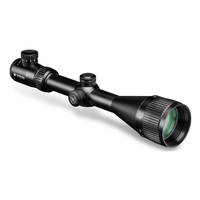
Vortex Crossfire II 3-12x56 AO Hog Hunter Riflescope
via Uttings
£279.00
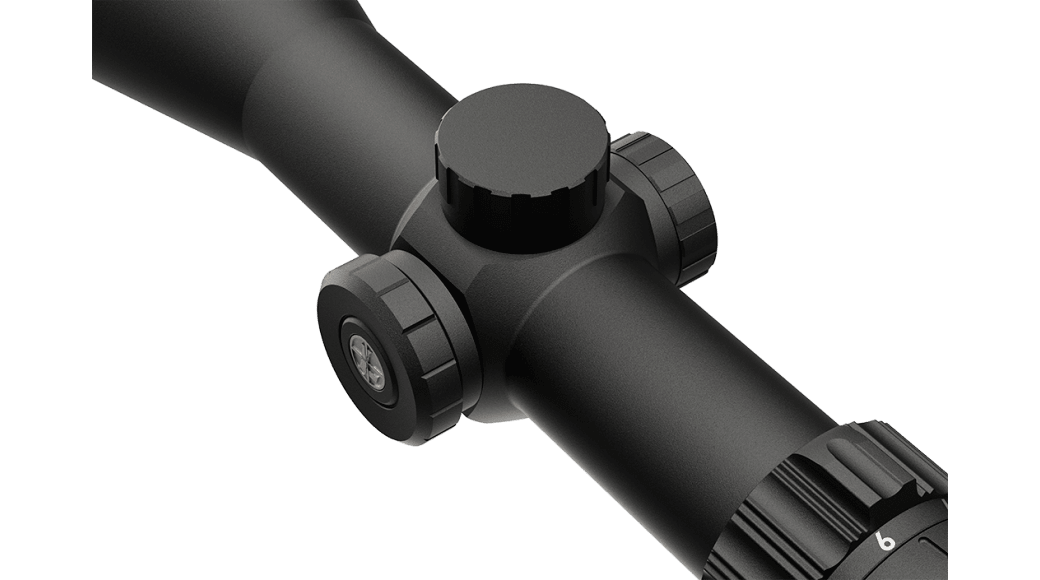
Leupold VX-Freedom 3-9x50 IR Scope- Illuminated Twilight Hunter Reticle
via Livens
£789.00

Bsa Genesys Hunter 2.5-10x50 Ir Scope
via Sportsman Gun Centre
£253.99
Buying Advice
Start with the numbers that actually matter. Magnification range determines versatility: a 3-12×56 or 2.5-10×50 covers virtually every UK stalking scenario from close woodland encounters to open-hill shots at 200 metres. The "×56" or "×50" refers to the objective lens diameter in millimetres — bigger objectives gather more light, which is critical for the low-light conditions typical of legal UK stalking hours. Exit pupil (objective diameter divided by magnification) is a useful proxy for brightness: at 5× on a 50 mm scope you get a 10 mm exit pupil, far more than the human eye can use, but at 10× it drops to 5 mm, which is about the maximum a young eye can dilate to. For dawn and dusk shooting, keep the exit pupil above 4 mm at your most-used magnification.
Budget tiers in the UK deer stalking scope market break down roughly as follows. Under £300 you can find serviceable scopes with acceptable glass, though coatings and mechanical precision will be basic — fine for a first season if you stick to sensible ranges and maintain the scope carefully. Between £300 and £700 the quality jump is significant: better multi-coated lenses, more precise turret tracking, improved fog-proofing, and more consistent eye relief. Above £700 and into four figures you enter premium territory with HD or fluoride glass, illuminated reticles with daylight-visible dots, rock-solid repeatability, and build quality that will outlast several rifles. For a beginner on a first centrefire, the mid tier often represents the best value — good enough to last years and teach you nothing but good habits.
Common mistakes among new stalkers include over-magnifying. A 6-24×50 long-range target scope sounds impressive but is heavy, has a narrow field of view at close range, and encourages shots at distances the shooter has not practised. Another pitfall is ignoring eye relief: centrefire rifles recoil, and anything under 80 mm of eye relief risks "scope eye" — a cut above the brow from the eyepiece. Cheap scopes with poor repeatability can also shift zero without warning, which is dangerous on live quarry. Finally, many beginners fixate on the reticle having dozens of hash marks. For deer stalking at typical UK ranges, a simple duplex or German #4 reticle with a fine centre crosshair is faster to use and far less cluttered than a Christmas-tree reticle designed for long-range precision shooting.
UK-specific context matters more than many guides acknowledge. Deer seasons vary by species and country — roe bucks open on 1 April in England but 1 May in Scotland, for example — and the expectation is that you will be shooting in conditions ranging from Scottish hill fog to English woodland half-light. Scopes sold in the UK by reputable dealers will be nitrogen-purged and O-ring sealed, but always confirm this. Popular centrefire calibres for deer — .243 Win, 6.5 Creedmoor, .308 Win, .270 Win — all produce moderate recoil that any quality scope can handle, but avoid scopes marketed primarily for air rifles or rimfire, as these are not built for centrefire recoil forces. Buy from established UK retailers who offer proper warranty support and can advise on ring height and mounting.
Matching the scope to your use case is ultimately about honesty. If you will spend 90% of your time in English woodland shooting muntjac and roe at 60–120 metres, a lightweight 2-10×42 or 3-12×50 on low rings is ideal — nimble, bright, and quick to acquire a target through undergrowth. If your ambition includes open-hill red deer stalking in the Highlands, you may want slightly more magnification headroom and a larger objective, but even then 12× is ample for 200-metre shots. Illuminated reticles are a genuine advantage in deep shade or heavy overcast but are not essential — many experienced stalkers manage perfectly well without one. Prioritise optical clarity over features: a sharp, bright, simple scope will always outperform a feature-packed but optically mediocre one.
The brand landscape for deer stalking scopes in the UK is broad. European manufacturers with long hunting-optics heritage dominate the mid-to-premium tiers, while several Japanese-made lines offer exceptional value in the mid range. Budget options from various global manufacturers have improved markedly in recent years, but quality control can be inconsistent, so buying from a dealer who will test and exchange is wise. Ultimately, the best scope for hunting deer is the one you can afford that delivers clear glass, reliable mechanics, and sensible specifications for the ranges and conditions you will actually encounter. Spend time behind the scope before your first outing — confirm zero at 100 metres, practise from field positions, and understand your hold-over or dial at 150 and 200 metres. The optic is only as good as the shooter behind it.
Frequently Asked Questions
What magnification do I actually need for woodland deer stalking in the UK?
For typical UK woodland stalking, where shots are taken between 50 and 150 metres, you rarely need more than 10× magnification. A scope in the 3-12× or 2.5-10× range is ideal: the low end gives you a wide field of view for spotting and acquiring deer in cover, while the upper end provides enough detail for precise shot placement at moderate range. Over-magnifying narrows your field of view and makes target acquisition slower, which is a real disadvantage in dense woodland.
Should I choose a first or second focal plane scope for deer stalking at close-to-medium range?
For UK deer stalking at close-to-medium range, a second focal plane (SFP) scope is the more practical choice for most beginners. The reticle stays the same apparent size regardless of magnification, which keeps it easy to read in all conditions. First focal plane (FFP) scopes, where the reticle scales with magnification, are advantageous for long-range precision shooting where reading subtensions at any power matters — but at stalking distances under 200 metres this benefit is largely academic. SFP scopes also tend to be lighter and less expensive at equivalent quality levels.
What is the minimum scope quality I need for safe, ethical deer stalking in the UK?
At a minimum, your scope must hold zero reliably after repeated recoil cycles, offer clear enough glass to positively identify your target species and confirm a safe backstop, and provide sufficient brightness for shooting in the low-light conditions common during legal stalking hours. Mechanically, the turrets must track consistently so your zero is trustworthy. Practically, this means avoiding the very cheapest unbranded scopes and investing in at least a reputable entry-level model from an established manufacturer. A scope that shifts point of impact unpredictably is genuinely dangerous on live quarry.
Do I need a scope with a zero stop for deer stalking, or is that overkill?
A zero stop — a mechanical limit on the elevation turret that lets you return to your confirmed zero by feel — is a useful feature but not essential for deer stalking. It is primarily valuable for long-range target or competition shooting where you frequently dial elevation for varying distances and need to return to zero quickly. Most UK stalkers zero at 100 metres and use holdover for the modest adjustments needed at 150 or 200 metres, so a zero stop adds little practical benefit. It is a nice-to-have rather than a must-have at stalking distances.
What is the best scope for deer stalking on a budget under £300 for a first centrefire rifle?
Under £300 you can find capable scopes from several well-known manufacturers offering 3-9×40 or 3-12×50 models with fully multi-coated lenses and reliable mechanics. At this price point, expect decent but not exceptional low-light performance and basic turret feel. Focus on scopes with a proven track record for holding zero under centrefire recoil and buy from a UK dealer who offers a warranty. A best budget scope in this bracket will serve you well for your first seasons, and you can always upgrade once you know exactly what features matter most to your style of stalking.
MOA or MRAD — which adjustment system should I choose for deer stalking?
Either system works perfectly well for deer stalking. MRAD (milliradians) adjustments are metric-friendly — 0.1 mil moves the point of impact 1 cm at 100 metres — which suits the metric ranges and calibre data common in the UK. MOA (minutes of angle) adjustments move the point of impact approximately 1.047 inches at 100 yards, or roughly 2.9 cm at 100 metres. The important thing is consistency: if your turrets adjust in MRAD, choose a reticle marked in MRAD, and vice versa. For most beginners at stalking distances, the choice is academic — pick whichever your preferred scope comes in and learn it thoroughly.
How important is an illuminated reticle for deer stalking in the UK?
An illuminated reticle is a genuine advantage during dawn and dusk — precisely when most UK deer stalking takes place. In deep woodland shade or against a dark hillside, a fine black crosshair can disappear against the background, making precise aiming difficult. A subtly lit centre dot solves this problem without washing out the rest of the image. However, it is not strictly essential: many stalkers use non-illuminated scopes successfully by choosing reticles with slightly thicker outer posts that taper to a fine centre. If your budget allows, illumination is well worth having for UK conditions.
What scope mounting height and ring type should I use for a deer stalking rifle?
Mount the scope as low as possible while keeping the objective bell clear of the barrel. Low or medium rings suit most stalking scopes with objectives up to 50 mm on standard-profile barrels. Lower mounting lowers your cheek weld and improves consistency and comfort. Use quality steel or aluminium rings rated for centrefire recoil, torqued to the manufacturer's specification with a torque wrench. One-piece mounts offer extra rigidity, but two-piece rings are perfectly adequate if properly installed. Always confirm zero after mounting and after any knock or journey — a shifted scope on a stalking outing is a wasted outing.
Can I use a long-range target scope for deer stalking?
You can, but it is usually a poor fit. A scope designed for long-range precision — say a 5-25×56 FFP with a complex Christmas-tree reticle — will be heavy, bulky, and slow to acquire targets at close range. The high minimum magnification limits your field of view in woodland, and the busy reticle adds visual clutter that hinders fast, instinctive aiming on live quarry. A dedicated deer stalking scope with a lower magnification range and simpler reticle will be lighter, faster, and better suited to the snap decisions and varying light conditions that define real-world UK stalking.
Related guides
Our 2026 UK buyer's guide to the best rifle scopes for deer stalking with a Remington 700 in .308 or .300 Win Mag.
Red Dot vs Scope for UK Deer Stalking: The Definitive GuideRed dot sight or rifle scope for deer stalking in the UK? Our 2026 guide covers legality, magnification, brands…
Best Scopes for Highland Red Deer Stalking in 2026Our expert UK buyer's guide to the best scopes for Highland red deer stalking in 2026. Covers magnification, reticles, light transmission…
NV Clip-On vs Thermal Clip-On: Which Suits Your Stalking?Digital night vision or thermal clip-on for UK deer stalking? Our 2026 guide compares detection, ID, legal use…
Best Scopes for Deer Stalking Under £300 in 2026Our 2026 UK buyer's guide to the best scopes for deer stalking under £300. Expert advice on riflescopes for deerstalking — magnification…
Best Long-Range Scopes UK 2026: Mid-Budget Buyer's GuideDiscover the best scopes for long-range shooting in the UK for 2026. Our expert guide covers FFP vs SFP, MOA vs MRAD…
Best Budget Air Rifle Target Scopes Under £100 (2026)Our expert guide to the best scopes for air rifle target shooting under £100 in the UK for 2026. Covers HFT, FT and plinking — magnification, parallax…
Not sure which scope is right for you?
Try our AI-powered scope finder — answer a few questions and get personalised recommendations.
Find My Scope →Get a UK scope tip every day
Follow AiScopes on Facebook for daily buying guides, deals and gear advice.
Follow on Facebook