Best Deer Stalking Scopes for the Remington 700 in 2026
By Peter Makulek · Senior Optics Editor · · Live prices from UK retailers
Deer stalking in the UK demands a particular kind of optic — one that performs reliably in the half-light of dawn and dusk when deer are most active, holds zero through recoil session after session, and offers a reticle clear enough to place a humane shot at realistic woodland and hill distances. The Remington 700, whether chambered in .308 Winchester or the harder-hitting .300 Winchester Magnum, remains one of the most popular bolt-action platforms on UK deer ground, and choosing the right scope to sit on top of it is arguably the single most important equipment decision a stalker makes after selecting the rifle itself.
For .308 Win users — the workhorse calibre for roe, fallow, and muntjac across England, Wales, and Scotland — engagement distances typically range from fifty metres in dense forestry to two hundred metres on open parkland. The .300 Win Mag contingent, often pursuing red or sika deer on exposed Highland or upland ground, may need to reach out to three hundred metres or occasionally beyond. These two scenarios place quite different demands on magnification range, turret precision, and reticle design, so a one-size-fits-all recommendation rarely serves a stalker well.
In this guide we focus on scopes available to UK buyers in 2026, drawing on real-world stalking requirements rather than bench-rest specifications. We consider optical quality in low light, the practical differences between second focal plane and first focal plane reticles at stalking magnifications, turret reliability under the recoil of magnum cartridges, and the weight and balance implications of mounting a full-sized optic on a Remington 700 action. Where relevant, we reference thermal and digital clip-on units from brands like PARD, which have become increasingly popular for legal foxing and night work but sit outside the scope of lawful deer shooting in the UK.
Whether you are a newly certificated stalker fitting out your first .308 or an experienced hill hunter upgrading the glass on a well-worn .300 Win Mag, the buying advice and product picks below are designed to help you make a confident, informed decision. Every recommendation reflects the realities of UK deer legislation, UK retail availability, and the specific recoil and ballistic profiles of these two Remington 700 chamberings.
Top Picks — Live UK Prices
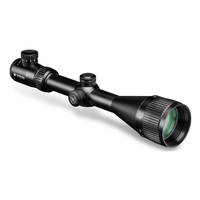
Vortex Crossfire II 3-12x56 AO Hog Hunter Riflescope
via Uttings
£279.00
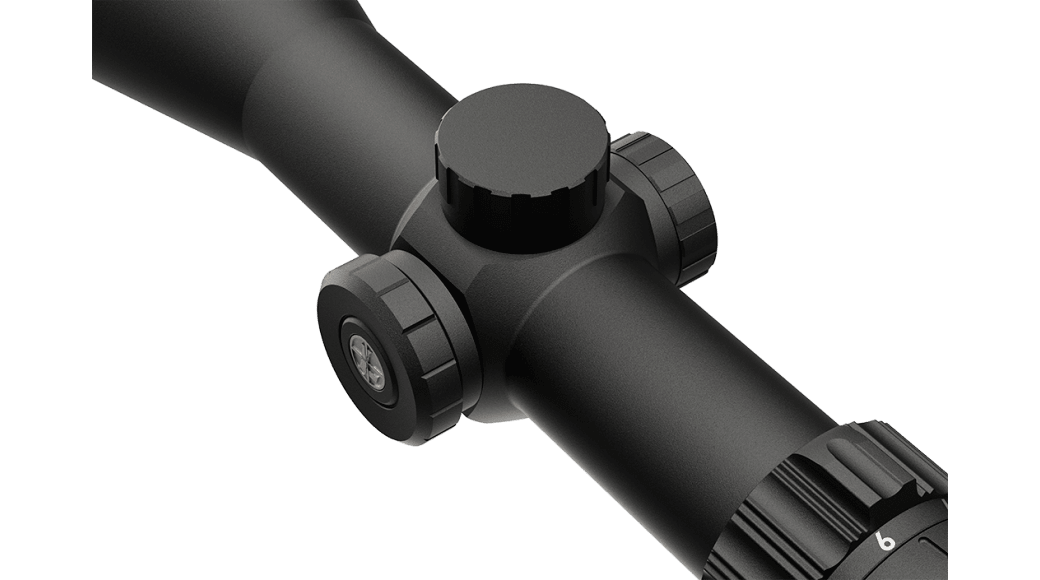
Leupold VX-Freedom 3-9x50 IR Scope- Illuminated Twilight Hunter Reticle
via Livens
£789.00

Bsa Genesys Hunter 2.5-10x50 Ir Scope
via Sportsman Gun Centre
£253.99
Buying Advice
Start with the key specifications. Magnification range matters more than peak power: a 3-12×56 or 2.5-15×56 covers almost every UK stalking scenario, offering a wide field of view at the low end for driven or close-woodland shots and enough reach at the top for open-hill work. Objective lens diameter directly affects the exit pupil — divide the objective by the magnification to find it — and an exit pupil of at least 4 mm at your most-used setting is essential for low-light performance. A 56 mm objective at 12× gives a 4.67 mm exit pupil, comfortably above the threshold. Tube diameter (30 mm vs 34 mm) primarily affects the range of internal adjustment available in the erector system; 30 mm is perfectly adequate for stalking unless you plan significant elevation dialling at extended range.
Budget tiers in the UK broadly break down as follows. Entry-level stalking scopes offer good optical coatings and reliable tracking but may lack illuminated reticles, capped turrets, or premium glass; they suit .308 users shooting inside 200 metres. Mid-range optics typically add fully multi-coated lenses, robust illumination with daylight-visible settings, better chromatic correction, and improved mechanical repeatability. Premium European and Japanese glass — from houses such as Swarovski, Zeiss, Kahles, Leica, Schmidt & Bender, and Nightforce — deliver edge-to-edge clarity, exceptional twilight performance, and turret mechanisms built to endure decades of magnum recoil. For a .300 Win Mag that will be dialled at range, investing in the mid or premium tier is strongly advisable.
Common mistakes include over-magnifying: a 6-24×50 target scope is unnecessary weight and restricted field of view for a stalking rifle, and the additional magnification amplifies mirage and heartbeat wobble when shooting unsupported. Another frequent error is ignoring reticle subtension at the chosen focal plane. In a second focal plane scope (SFP), the reticle subtensions — whether MOA or MRAD — are only accurate at one specific magnification, usually the highest. In a first focal plane scope (FFP), subtensions remain correct at every magnification, but the reticle can appear very fine at low power. For pure stalking, SFP is the more popular and practical choice, since most shots are taken at or near maximum magnification after careful observation.
UK-specific context is critical. Under the Deer Act 1991 and its Scottish equivalent, minimum legal calibre and bullet weight requirements apply: .240 calibre with 100-grain bullet and 1,700 ft-lbs muzzle energy for most species in England and Wales, and broadly similar provisions in Scotland. Both .308 Win and .300 Win Mag comfortably exceed these thresholds. Scopes must not incorporate any form of artificial light projection unless used for species and under conditions specifically permitted by law — this means thermal clip-on units from manufacturers like PARD are legal for foxing under the appropriate general licence but must not be used for deer. UK retailers such as Sporting Saint, Jackson Rifles, BASC-affiliated dealers, and Edgar Brothers stock the full range of stalking optics and can advise on ring height, rail compatibility, and Remington 700 action-specific mounting solutions.
Matching the scope to your use case requires honest self-assessment. If you stalk exclusively in lowland woodland pursuing roe and muntjac at distances under 150 metres, a compact 2-10×42 or 3-12×50 with a simple illuminated dot reticle and capped turrets is ideal — light, fast, and unfussy. If you pursue red deer on open Scottish hills at distances that may approach 300 metres, consider a 3-18×56 or 4-16×56 with exposed, zero-stop turrets calibrated in 0.1 MRAD (where each click moves the point of impact 1 cm at 100 metres) or ¼ MOA (roughly 0.7 cm at 100 metres). For .300 Win Mag rifles, prioritise scopes with proven recoil resistance and generous eye relief — 90 mm or more — to prevent scope-eye under the sharper recoil impulse of magnum loads.
The brand landscape in 2026 is broad. European manufacturers Swarovski, Zeiss, Kahles, Leica, and Schmidt & Bender dominate the premium tier with outstanding glass and mechanical precision. Nightforce and Vortex offer superb mid-to-premium options with strong warranty programmes. Brands like Meopta, Minox, and Nikko Stirling serve the mid and entry tiers well. PARD continues to expand its digital and thermal line-up, increasingly relevant for UK pest control, though not for deer. Japanese-made optics from Nikon (where still available) and the OEM glass inside several European-branded scopes remain excellent value. Always buy from an authorised UK dealer to ensure warranty coverage, correct import duties, and access to after-sales support.
Frequently Asked Questions
What magnification range is best for deer stalking in the UK?
For the majority of UK deer stalking, a variable scope in the 3-12× to 4-16× range covers all realistic scenarios. Low magnification provides the wide field of view needed for close-range woodland shots or following a moving animal, while the upper end is sufficient for open-hill engagements out to 300 metres. Going beyond 18× is rarely necessary and adds weight, bulk, and mirage sensitivity that work against the stalker in field conditions.
Should I choose MOA or MRAD turrets for a deer stalking scope?
Both systems work perfectly well. MRAD (milliradians) is increasingly popular because the metric relationship is intuitive: 0.1 MRAD equals 1 cm at 100 metres. MOA (minutes of angle) is traditional and widely understood, with 1 MOA equalling approximately 1.047 inches at 100 yards, or roughly 3 cm at 100 metres. The key is to match your turret units to your reticle units — an MRAD reticle with MOA turrets creates unnecessary confusion in the field.
Is first focal plane or second focal plane better for stalking?
For dedicated deer stalking, second focal plane (SFP) is generally preferred. SFP reticles maintain a consistent visual size regardless of magnification, keeping the crosshair clearly visible in low light at any setting. The trade-off is that holdover subtensions are only accurate at one magnification, typically the highest. First focal plane (FFP) scopes keep subtensions correct throughout the zoom range, which benefits long-range target shooting but offers less practical advantage for a stalker who dials corrections rather than holding over.
How much eye relief do I need on a .300 Win Mag Remington 700?
A minimum of 90 mm (approximately 3.5 inches) of eye relief is advisable for the .300 Win Mag to prevent the eyepiece striking your brow under recoil, an injury commonly called scope-eye. Most quality stalking scopes offer 85–100 mm of eye relief. Ensure you check this specification at the magnification you most commonly use, as some designs lose eye relief at higher settings. Correct ring spacing and stock fit also play a role in maintaining safe eye distance.
Do I need an illuminated reticle for UK deer stalking?
An illuminated reticle is not essential but is extremely useful during the dawn and dusk periods when UK stalking is most productive. A finely illuminated centre dot allows rapid target acquisition against dark backgrounds without washing out the image. Look for scopes with multiple brightness settings and a true off position between each setting so you can quickly cycle to the correct intensity. Battery life and ease of battery replacement in cold, wet conditions are practical considerations often overlooked.
Can I use a PARD thermal clip-on for deer in the UK?
No. Under current UK legislation, the use of artificial light or image-intensifying or thermal-imaging sighting devices for shooting deer is not permitted. PARD thermal and digital night-vision clip-ons are legal and increasingly popular for foxing and pest control under appropriate general licences, but they must not be used to shoot deer. Always check the latest BASC or Deer Initiative guidance for your specific country within the UK, as regulations can differ between England, Wales, Scotland, and Northern Ireland.
What scope rings and mounts work best on a Remington 700?
The Remington 700 action is drilled and tapped for two-piece Weaver or Picatinny-style bases, making it compatible with a huge range of ring and mount systems. Talley lightweight one-piece mounts are popular for their simplicity and precision. Two-piece steel bases from Warne, Nightforce, or Leupold paired with matched 30 mm or 34 mm rings offer maximum rigidity for magnum calibres. Ensure the ring height allows sufficient clearance between the objective bell and the barrel without raising the optical axis so high that you lose a natural cheek weld on the stock.
Is a 56 mm objective too large for a stalking rifle?
A 56 mm objective delivers excellent low-light performance but adds weight and requires higher rings, which can compromise cheek weld and increase the overall profile of the rifle. For hill stalking where every gram counts and shots are often taken in reasonable light, a 50 mm or even 44 mm objective may be the better compromise. In dense woodland where you are frequently stalking into deep shade at dawn and dusk, the extra light-gathering of 56 mm is a genuine advantage. Consider your primary terrain and shooting conditions before committing.
How do I zero my scope for deer stalking distances?
A common and practical approach is to zero at 100 metres, which keeps the point of impact within the kill zone of most UK deer species out to 200 metres with .308 Win, requiring only modest holdover or turret adjustment beyond that distance. With .300 Win Mag's flatter trajectory, a 100-metre zero remains effective to approximately 250 metres with minimal correction. Use a ballistic calculator with your exact load data — bullet weight, ballistic coefficient, and muzzle velocity — to produce a drop chart or turret tape specific to your ammunition. Confirm zero at the range before every season.
Related guides
Choosing the best scope for deer stalking in the UK? Our 2026 beginner's guide covers magnification, reticle type…
Best Scopes for Highland Red Deer Stalking in 2026Our expert UK buyer's guide to the best scopes for Highland red deer stalking in 2026. Covers magnification, reticles, light transmission…
NV Clip-On vs Thermal Clip-On: Which Suits Your Stalking?Digital night vision or thermal clip-on for UK deer stalking? Our 2026 guide compares detection, ID, legal use…
Best Scopes for Deer Stalking Under £300 in 2026Our 2026 UK buyer's guide to the best scopes for deer stalking under £300. Expert advice on riflescopes for deerstalking — magnification…
Best Scopes for Deer Stalking in 2026: A UK Buyer's GuideFind the best scope for deer stalking in the UK for 2026. Expert advice on magnification, low-light performance, reticles…
Premium PRS Scopes Compared: ATACR vs Razor Gen 3 vs Mark 5HD vs NX6Nightforce ATACR, Vortex Razor HD Gen III, Leupold Mark 5HD and NX6 compared for UK PRS shooters — real trade-offs and honest opinions at the £1,800+…
Christmas Tree vs Simple Reticles: Which PRS Reticle Is Right for You?Christmas tree reticle or clean holdover design for PRS? Our 2026 UK guide compares Tremor3, EBR-7C, PR2 and more to help you pick the right precision…
Not sure which scope is right for you?
Try our AI-powered scope finder — answer a few questions and get personalised recommendations.
Find My Scope →Get a UK scope tip every day
Follow AiScopes on Facebook for daily buying guides, deals and gear advice.
Follow on Facebook